


Gazprom Begins Production at Badra
Posted on 24 July 2014 .
By Patrick M Schmidt.
The Iraqi Ministry of Oil has announced that Gazprom Neft, a division of the Russian state-owned Gazprom, had begun production at Badra oilfield in the eastern province of Wasit.
"Oil flow from Badra has started on Monday to fill the oilfield storages in preparing to feed the export," said Ministry of Oil spokesman Asim Jihad.
Badra is expected to average 15,000 barrels of oil per day in the short term, but experts suggest its production figures could rise to 170,000 barrels of oil per day by 2017.
(Source: Reuters)
Posted in Iraq Oil & Gas News Comments Off on Gazprom Begins Production at Badra
Iran Denies Supply of Sukhoi Fighters to Iraq
Posted on 07 July 2014 .
By John Lee.
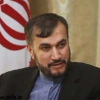
The Iranian Fars News reports that Iranian Deputy Foreign Minister Hossein Amir Abdollahian (pictured) has dismissed suggestions that his country had dispatched Sukhoi fighter jets to Iraq.
In an interview with the Iran-based Arabic-language Al-Alam on Sunday he said:
"The Iraqis have not yet made any demands from the Islamic Republic of Iran for arms shipments; of course if they ask for it, we will certainly consider their request positively ... but the Islamic Republic of Iran has not sent any weapons or fighter jets to Iraq".
He also dismissed claims that Commander of Iran's Islamic Revolution Guards Corps (IRGC) Quds Force General, Qassem Soleimani, is in Iraq to help the country in its war on terrorists, but he confirmed that Iran is providing Iraqi officials with consultations on fighting terrorism, but through diplomatic channels.
While waiting for delivery of US-made F-16 fighter jets, Iraq has bought Russian Sukhoi jets, some of which have already arrived in Baghdad, and have flown at least two missions last week, according to the Sunday Times.
(Sources: Fars News, Sunday Times)
Posted in Security Comments Off on Iran Denies Supply of Sukhoi Fighters to Iraq
Iraq Receives First Russian Attack Helicopters
Posted on 03 July 2014 .
By John Lee.
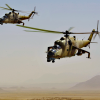
Citing Russian state media, IHS Jane's 360 reports that Iraq has taken delivery of its first three Mil Mi-28NE 'Havoc' (Night Hunter) attack helicopters, as well as additional four Mil Mi-35M 'Hind' assault helicopters (pictured).
The helicopters arrived aboard Antonov An-124 'Condor' transport aircraft and were delivered in a combat configuration, with full night-vision capability.
The arrival of the Mi-28NEs and additional Mi-35Ms will provide an added boost to the Iraqi government's efforts to combat the Islamic State.
(Source: IHS Jane's 360)
Posted in Security Comments Off on Iraq Receives First Russian Attack Helicopters
Video: Iraq Prepares for the Su-25
Posted on 02 July 2014 .
From CNN. Any opinions expressed are those of the authors, and do not necessarily reflect the views of Iraq Business News.
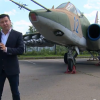
CNN's Phil Black gives us a look around the Su-25 warplane, the model that Iraq has bought from Russia.
Posted in Security Comments Off on Video: Iraq Prepares for the Su-25
Iraq Receives Russian Fighter Jets
Posted on 30 June 2014 .
By John Lee.
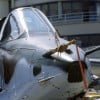
Iraq has received the first batch of fighter jets from Russia to help it repel the offensive by Sunni rebels.
The defence ministry said five Sukhoi SU-25 attack aircraft would enter service in "three to four days".
Prime minister Nouri al-Maliki told the BBC last week that his government had signed a deal with Russia and Belarus to supply jet fighters.
The deals are reportedly worth up to $500 million.
(Source: BBC News, Ministry of Defense)
Posted in Security Comments Off on Iraq Receives Russian Fighter Jets
Allawi: US Policy toward Iraq 'Without a Compass'
Posted on 28 June 2014 .
By Mustafa al-Kadhimi for Al-Monitor. Any opinions expressed are those of the author, and do not necessarily reflect the views of Iraq Business News.
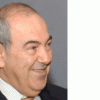
Ayad Allawi, the former Iraqi prime minister and leader of the Iraqi Nationalist ("Wataniya") Party, blamed the Iraqi government for policies that have allowed it to be "defeated by a bunch of dwarfs and killers as it sought outsiders’ help," instead of drawing on the "strength from its honorable people, from the tribes, army officers, dignitaries and politicians."
Allawi, in an interview with Al-Monitor via telephone and email from Amman, said that protests in Anbar province "have been met with repression and intimidation instead of [the government] adopting some of their demands by dealing with them morally and through a national dialogue." He described the protests as "initially peaceful, constitutional."
Allawi said, "The valiant Iraqi army has nothing to fight for. This brave army has lost its identity and its role. It doesn’t know whether it is fighting for the country or fighting for the sect or for the person or for the party."
The former prime minister, whose party gained 21 seats in the Council of Representatives during the April 30 elections, said US policy in Iraq is "without a compass" while Russian influence is growing, "a crescent stretching from the Crimea [Peninsula] and the Black Sea through Iran, Iraq, Syria and part of Lebanon."
The text of the full interview follows:
Al-Monitor: You suggested a road map to resolve the current crisis. What is this map?
Allawi: The problem doesn’t lie in just putting in new faces, although this is important. Perhaps more important, regarding how to get out of the impasse and the causes that led to it, is this map, which employs two axes: goals and mechanisms.
The essence of the goals are an inclusive political process without discrimination, quotas, exclusion or elimination — except for terrorists and those who steal public money; then achieving national reconciliation immediately; then building the institutions of a state that is professional and able to perform its duties away from regionalism, starting with internal security, the armed forces and the judiciary and its institutions.
Posted in Security Comments Off on Allawi: US Policy toward Iraq 'Without a Compass'
Video: Investor Peter Schiff on Iraq and World Economy
Posted on 20 June 2014 .
From Russia Today. Any opinions expressed are those of the authors, and do not necessarily reflect the views of Iraq Business News.
Iraq's largest oil refinery shut down Wednesday amid ongoing fighting between military forces and insurgents with the Islamic State in Iraq and Syria.
The Beji refinery accounts for a quarter of the country's refining capacity, and the shutdown showcases how the economic effects of the crisis may quickly spiral.
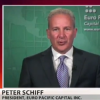
RT's Ameera David discusses the potential economic impacts of the fighting with Peter Schiff, president of Euro Pacific Capital:
Posted in Investment, Security Comments Off on Video: Investor Peter Schiff on Iraq and World Economy

Baghdad’s Revenue-Sharing Deal: Avoiding a Kurdish Split
Posted on 19 June 2014 .
By Ruth Lux, Managing Director of political risk consultancy Strategic Analysis.
The security situation in Iraq has significantly declined over the last week. Mosul and Tikrit fell to the Islamic State of Iraq and the Levant (ISIS), an al-Qaeda off-shoot, and Tal Afar, in the Nineveh province, was seized on Monday.
Additionally, Baquba, only 37 miles from Baghdad, was briefly over-run by the militants. ISIS have engaged the Iraqi army in Diyala and Salahuddin provinces and reportedly now control up to 75% of the Baiji oil refinery, the largest in Iraq. This oil refinery is 210 km north of Baghdad and should the militants follow-through on their threat to cut off domestic oil supplies, an already fragile domestic situation will be exacerbated.
The Kurds have benefitted from this security vacuum and the Iraqi army’s inability to secure the country. They have moved their peshmerga forces into areas claimed to historically be part of Iraqi Kurdistan and are unlikely to withdraw. The presence of the peshmerga is undoubtedly securing oil-rich Kirkuk and the Mosul dam, which provides Baghdad with its water supply, however, some critics identify this move as opportunistic.
The deteriorating security environment in Iraq has also bolstered the Kurdish region’s position with regards to its’ revenue-sharing agreement with Baghdad. The Kurdish region has been eager to identify export routes for its crude oil and on 5th June Turkey and Kurdistan signed a 50 year oil export deal. With Baghdad facing more pressing security concerns, the Kurdish region is unlikely to face the usual backlash entailed in acting without the authorisation of the federal government.
The Kurdistan Regional Government (KRG) has actively sought export routes for its crude oil and its latest oil export deal with Turkey meets this objective. Kurdistan has proven oil reserves of 45 billion barrels, with production capacity quickly rising and expected to reach 1 million barrels per day (bpd) in 2015, compared to the current level of 400,000 bpd.
Posted in Iraq Oil & Gas News, Politics, Ruth Lux, Security 5 Comments

Iraq to Launch Satellite this Month
Posted on 03 June 2014 .
By John Lee.
The Ministry of Science and Technology announced that it will launch a satellite for research purposes on 20th June from a base in the north of Russia.
Built in conjunction with La Sapienza University in Rome, the "Tigrisat" satellite (pictured) will also detect dust storms over Iraq.
It weighs just 4 Kg and measures 10 x 10 x 30 cm.
(Sources: Aswat Al Iraq, Ministry of Science and Technology)
Posted in Iraq Education and Training News, Iraqi Communications News Comments Off on Iraq to Launch Satellite this Month
Iraq to Invest in Associated Gas
Posted on 29 May 2014 .
By Nassir al-Hassoub for Al-Monitor. Any opinions expressed are those of the author, and do not necessarily reflect the views of Iraq Business News.
The official spokesman for the Iraqi Oil Ministry, Assem Jihad, announced that the licensing contracts with international oil companies bound them to formulate systems to invest in associated petroleum gas, stressing that Iraq has what it takes to be on the list of countries exporting natural gas by 2019.
The Ministry of Oil and the Ministry of Electricity have been trading accusations during the past two weeks, following the decrease in electricity supplies. The Ministry of Electricity confirmed that this is due to the failure of the Ministry of Oil to meet the requirements of natural gas in thermal power plants.
Under a contract that was signed on July 22, 2013, and was the first of its kind, the Iraqi Ministry of Electricity bound the Iranian Ministry of Oil to supply it with natural gas. The agreement will provide Iraq with 5 million cubic meters of gas per day for the next three years at world market price. The contract, which is subject to renewal, is seen by Iraq as the perfect solution to the problem of round-the-clock electricity supplies for Iraqis.
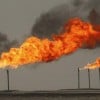
“There is a problem in the quantities of natural gas associated with oil extraction,” said Jihad. In an interview with Al-Hayat he said, “Iraq has failed to invest in this wealth [i.e. associated petroleum gas] throughout the past few years. The gas is being totally burned with a waste of 700 million cubic feet [per day], which is seen as high record.”
Posted in Iraq Oil & Gas News Comments Off on Iraq to Invest in Associated Gas