



Basra International Oil & Gas Conference
Posted on 25 August 2010 .
Basra International Oil & Gas Conference and Exhibition
25–28 November 2010
International Exhibition Center, Basra – IRAQ
Our participants has passed 100!
Why Exhibit
- Have a key role in rebuilding of Iraqi Oil & Gas Sector.
- Build a network of new and productive business contacts and establish local partnerships which is important to do business in the region
- Meet with state officials whose purpose is to promote private sector involvement
- Develop your profile by supporting conference that will be taking place at the event or by being a sponsor of the exhibition
Basra Oil & Gas Conference Part
Our conference programme’s draft is ready and speakers will be put in order after the election of abstracts by our conference commitee.
Speakers whose abstracts are approved up-to-now:
| National Iranian Oil Company | Abdollah Esmaili |
| Chemical Engineering Department, Basrah University, Basrah, Iraq | Assist. Prof. Dr. Ala'a Abdulrazaq & Eng. Abeer Al-Hamdani |
| Breitling Oil and Gas | Chris Faulkner, CEO |
| Baghdad University, Department of Petroleum Engineering & Maysan Oil Company | Dr. Sameera M. Hamad-Allah & Mr. Munqith N. Reshag |
| Bentec GmbH Drilling & Oilfield Systems | Thomas Kipker |
| Islamic Azad University, Omidieh Branch, Iran | Maryam Dehghani |
| Department of Petroleum Engineering, Baghdad University | Mohammed Muhy Daway Al-Temeemy and Nuha Rajy Nahy Al-Masody |
| North Oil Refinery Company & South Oil Company | Iman Hasan Kareem & Wathiq J. Mohammed Al-Mudhafer |
| National Iranian South Oil Company, Ahvaz, Khouzestan, Iran & China National Logging Company(CNLC) | Reza Salehi Moorkani & Fatemeh Deilami |
| Weatherford International | Robert Kuchinski |
| Sun Petroleum Consultancy Co | Dr. Adam Ibrahim |
| Weatherford International | Hamed Soroush, Said Zaki and Hani Qutob |
| Shell Abu Dhabi & Weatherford International | Salar Babajan & Hani Qutob |
| Petrolog | Tariq Shafiq |
| Global Energy Talent | Yagya Abuja |
| Vinson & Elkins LLP | Christopher Strong and James Loftis |
Due date for submission of abstracts for papers has been extended to September 15th.
Sergi Tour Inc., the official travel agency for Basra Oil & Gas has announced the Accommodation Program. Please visit: http://www.basraoilgas.com/travel_and_accommodation.html
We have announced “official forwarder” and “official custom stand designers” of Basra Oil & Gas 2010. Please visit : http://www.basraoilgas.com/services.html
Please do not hesitate to contact us for further details…
| Burcu Uca ( Sales Representative) | [email protected] |
| Nazli Candemir ( Event Director) | [email protected] |
| Cagatay Ersahin ( Event Director) | [email protected] |
Posted in Iraq Oil & Gas News Comments Off on Basra International Oil & Gas Conference

Weatherford Starts Drilling in Amara
Posted on 15 August 2010 .
U.S. firm Weatherford embarked on drilling a new oil well in eastern al-Amara city on Sunday, as part of a $224 million [262 billion Iraqi dinars] deal to drill 20 wells in 0rder to increase oil production, said Missan Oil Company’s information director.
“Weatherford started drilling the new well in the al-Bazrakan oilfield, (70 km) eastern Amara,” Ali Abbas al-Tarfi told Aswat al-Iraq news agency.
“The step is the first in a deal to drill 20 oil wells to increase the productivity of the province’s oilfields that now yield 100,000 barrels per day,” he added.
Tarfi noted that the production capacity for each well will be ranging between 20,000 and 30,000 bpd.
“The investment contract concluded with the company requires the wells to be drilled within 31 months,” he said.
Missan is home to six productive oilfields – al-Bazrakan, Abi Gharb, al-Fokka, al-Halfaya, al-Amara and the Majnoon filed that is shared with the South Oil company.
The province also has five explored non-productive oilfields – al-Huwayza, al-Rafie, Rafidain al-Sharqi, al-Dujaila and Kemit.
One of the largest oilfield services companies, Weatherford operates in more than 100 countries and employs more than 50,000 people worldwide. With a product and service portfolio that spans the life cycle of a well - drilling, evaluation, completion, production and intervention - and a robust research and development effort, the company is well positioned to meet the ever-evolving needs of the oil and gas industry.
(Source: Aswat al-Iraq)
Related articles:
Posted in Iraq Oil & Gas News Comments Off on Weatherford Starts Drilling in Amara

Eni to Award Oilfield Drilling Contracts
Posted on 28 July 2010 .
Italian oil major Eni is expected to award a tender to drill more than 100 new oil wells at its Zubair oil field in southern Iraq in August, according to a report from Dow Jones.
"We received the bids and we are in the process of assessing them," an executive told the news agency.
Several well-known oil services companies submitted offers, including Weatherford International Ltd (WFT), Schlumberger AS (SLBS.VI) and Egyptian General Petroleum Corp. among others, the executive said. The wells will be drilled over three years.
On Tuesday ENI reported that it will be "[reinforcing] the cooperation between Eni, the [Egyptian] Ministry of Petroleum, and the two Egyptian state oil and gas companies, EGPC and EGAS".
Earlier in June, Eni said it would drill 12 new wells and 'overwork' five others this year to boost output by 10%, according to its initial plan. The field, with 6.5 billion barrels of proven oil reserves, is currently producing 183,000 barrels a day.
Eni, in partnership with Occidental Petroleum Corp. and Korea Gas Corp. (Kogas), set a plateau target of 1.2 million bpd for Zubair to be reached in 2016.
The consortium won the right to develop the field at Iraq's first postwar licensing auction last year. The license for the field wasn't awarded at the auction in June, but a deal was reached in January this year following subsequent negotiations.
Eni has a 32.81% stake in the venture, while Occidental holds a 23.44% stake, Kogas 18.75% and Iraq's state-run Missan Oil Co. holds the remaining 25%.
(Sources: Dow Jones, ENI)
Related articles:
Posted in Iraq Oil & Gas News Comments Off on Eni to Award Oilfield Drilling Contracts
Rumaila Drilling Spree
Posted on 20 July 2010 .
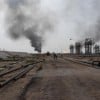
Yesterday we reported that Michael Townshend, President of BP Iraq, was planning to increase production at the supergiant Rumaila oilfield by 10% over the next six months; today we can give you details of more than 100 new wells to be drilled at the field by the end of next year.
Three international service companies, including Weatherford International, have already been awarded contracts worth nearly $500 million to drill 49 new wells in Rumaila this year.
Reuters quotes a company official as saying that they will award contracts for a further 40 to 50 wells for this year, and a similar number next year.
According to Dow Jones, Rumaila, which is Iraq's oldest oil field, went onstream in 1953 and has around 800 existing wells, some 500 to 600 of which are not producing and need a workover.
Rumaila, with 17 billion barrels in estimated crude reserves, is the workhorse of Iraq's oil industry, producing almost half its total output of 2.5 million bpd. The field's reserves alone are bigger than those of the whole of Algeria.
BP holds a 38% stake in the Rumaila venture, while CNPC has 37% and Iraq’s state-run South Oil Co. the remaining 25%. The three contractors will receive a fixed fee of $2 for each additional barrel of oil produced from Rumaila.
The consortium has also awarded a contract to a local Iraqi company to build a small man camp. There are 30 to 50 expatriates already working at the Rumaila field and over 3,000 Iraqis.
(Sources: Reuters, Dow Jones, Upstreamonline.com)
Related articles:
Posted in Iraq Oil & Gas News 1 Comment
Special Equipment to Dig 20 Oil Wells Arrives in Amara
Posted on 18 July 2010 .
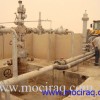
Special equipment to dig 20 oil wells arrived in the al-Bazerkan oilfield in Amara, according to the media director of the Missan Oil Company.
“U.S. oilfield services company, Weatherford (WFT.N) sent equipment to the oilfield to start digging 20 wells, 70 km east of Amara,” Ali Abbas told Aswat al-Iraq news agency.
“The project will contribute to raising the production capacity of the company,” he explained.
“The production capacity of each well ranges from 20 to 30 thousand barrels daily and the investment contract concluded with the company stipulates digging the wells within 31 months at a cost of $224 million,” Engineer Walied Khaled, representing the U.S. company, told Aswat al-Iraq news agency.
Iraq has opened the doors to foreign oil companies through two bidding rounds for oilfield servicing contracts, and has also invited specific foreign firms to compete for development contracts in others.
Iraq needs foreign companies to invest in drilling more oil wells as it does not have the capacity on its own to more than double output of 2.3-2.4 million barrels per day of crude, its oil minister has said.
Iraq, which plans to raise its oil output capacity to 6 million bpd in five-six years, holds the world’s third-largest proven oil reserves, but its fields are largely underexploited due to decades of war, sanctions and underinvestment.
(Source: Aswat al-Iraq)
Posted in Iraq Oil & Gas News Comments Off on Special Equipment to Dig 20 Oil Wells Arrives in Amara
West Qurna Phase-2 Tenders Open
Posted on 13 July 2010 .
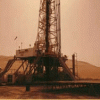
Russia's Lukoil and Norway's Statoil have started issuing tenders for the multibillion project to develop Iraq's supergiant West Qurna Phase 2 oil field in southern Iraq, a person familiar with the plans said Sunday, as reported by Reuters.
The "first tender is a 3D seismic survey at the field", the person said. A second tender calls for drilling between 50 and 60 oil wells, the source said, adding that the drilling will be carried out in stages.
The first stage could be for the drilling of between seven to 10 wells in order to produce up to 120,000 barrels a day, which needs to be achieved by 2012, according to the deal Iraq signed with the two oil firms, the person added.
Lukoil will also issue a series of tenders for surface installations at the field, such as personnel camps, pipelines and production facilities.
Lukoil is said to expect to award these contracts to "big and well-known firms such as Halliburton, Weatherford International, Schlumberger and others."
These oil services companies are already involved in projects in southern Iraq. Operator Lukoil and Statoil were awarded a 20-year service contract for West Qurna Phase 2 in Iraq's second licensing round last December. Both promised to get the southern field pumping at a rate of 1.8 million barrels a day for payment of $1.15 per barrel. The development project is one of 11 that Iraq awarded in two licensing rounds last year. If all the companies deliver to the letter of their contracts, nearly 10 million barrels a day of capacity will be added to Iraq's existing 2.5 million barrels a day by 2017.
(Source: Dow Jones)
Posted in Iraq Oil & Gas News 1 Comment
Shell to Award Deals to Develop Iraq's Oil Fields
Posted on 08 July 2010 .
Shell and its Iraqi state partner are in the process of awarding a deal to drill new oil wells at the super giant Majnoon oil field in southern Iraq, the head of Iraq's state-run South Oil Co., Dhiaa Jaafar, said on Tuesday.
Dow Jones reports that Shell, which partnered Malaysia's state-run Petronas to develop Majnoon, will also award engineering, procurement and construction contracts to build various production installations at the field, an Iraqi oil industry source familiar with the project said.
Jaafar told Dow Jones Newswires that both deals have not yet been awarded but they are "in process." He gave no further details.
Separately, an Iraqi oil industry source said that firms including Halliburton, Weatherford International, and Petrofac have been invited to submit bids for these two tenders.
A Shell executive contacted by Dow Jones refused to comment.
Shell said earlier that it was planning to drill 15 new wells over the next two years at Majnoon. This would help lift production to 175,000 barrels a day by 2012 from the current level of 45,000 barrels a day.
The Anglo-Dutch giant and Petronas were awarded a contract in December to develop the Majnoon field, which is located in Basra governorate and holds some 12.6 billion barrels of proven oil reserves. Shell owns 45% of the venture and Petronas 30%, with Iraq's state-run Missan Oil holding 25%.
Halliburton and Weatherford are already involved in oil services projects in southern Iraq. Petrofac said last month that it was establishing a presence in Iraq as it moves to increase its massive order book of projects.
World oil companies are moving ahead with development work at oil fields despite a political vacuum in Iraq after a general election in March produced no outright winner and raised concerns about increased violence in the country. U.S. Vice President Joe Biden concluded a visit to Baghdad on Monday, trying to mediate a solution among the various political blocs.
Shell is still keen to capture and sell gas in Iraq. As we reported last week, the Iraqi cabinet last week ratified a $12.5 billion deal with Shell and Mitsubishi to develop a gas-structure project in southern Iraq, paving the way for a final signature of the deal.
Iraqi officials said that the venture could produce up to 2.5 billion cubic feet a day when the project is developed.
Shell also partnered with ExxonMobil won a deal to develop the prized West Qurna Phase 1 oil field in southern Iraq. ExxonMobil holds the majority stake in that field.
(Source: Dow Jones)
Posted in Iraq Oil & Gas News Comments Off on Shell to Award Deals to Develop Iraq's Oil Fields
Gulf Keystone Warns of Delays
Posted on 24 June 2010 .
Gulf Keystone, the Kurdistan-focused oil explorer, has had to delay the drilling of its Shaikan-2 exploration well, after running into difficulties with its current Bijeel-1 well.
Mechanical problems were encountered when testing and evaluating the lower section of Bijeel-1. This has necessitated a sidetrack and re-drill of this portion of the well to "fully evaluate and test the remaining intervals, which is expected to take up to eight weeks to complete".
Shaikan-2 will use the Weatherford 842 rig currently on location at Bijeel-1, so drilling at that location will be delayed; it is now expected to spud during the third quarter of 2010.
Gulf Keystone's share price has not been significantly affected.
Posted in Iraq Oil & Gas News 1 Comment
Oil Firms ‘plough ahead’ and Ignore Politics to Invest in Iraq’s South
Posted on 20 June 2010 .
Rumaila, the workhorse of Iraq’s oil industry and its largest producing oilfield, is buzzing with activity as executives, engineers and drillers begin a massive overhaul to nearly triple its million barrels per day output.At the airport in Basra, capital of southern Iraq, officials struggle to process the unprecedented numbers arriving to join the country’s nascent oil boom. Iraq may be struggling to form a new government almost three months after elections, but oil firms chosen to carry out the largest oilfield development projects on the planet are ploughing ahead with investments that could take the country into the elite of global oil producers. And, though the old administration failed to pass a new law to govern an energy sector vital to rebuilding the country after years of war and sanctions, Iraq’s oil industry is booming. “The companies are not going to sit back and just wait,” said Raad Alkadiri of Washington-based PFC Energy. “Iraq’s government has itself encouraged this by saying ‘keep going and the politics will sort itself out” The Rumaila project is the most advanced and was the first Baghdad signed, with BP and China’s CNPC taking it on. Oil Service Company Weatherford International is already up and running on the ground there. It was one of the firms that won part of a $500 million deal to drill wells at the field and already has 300 people working in Iraq. “It’s still very early days,” said Alex Munton of Edinburgh-based consultancy Wood Mackenzie. “But the drilling contract’s in place and the pace of activity so far is an indicator of them hitting the ground running, as they said they would do.” Iraq sits on the world’s third-largest oil reserves and has signed contracts that would boost its output by around 10 million barrels per day by 2017, generating an additional $700 million a day in oil revenues at current prices. Though it may never reach that target and output gains over the next year or so are expected to be much more modest at around 600,000 bpd, the contracts themselves have encouraged companies to move ahead as quickly as possible. To start recuperating investment, oil companies need to boost output at producing fields by 10 percent. From Iraq’s untapped fields, firms have an early target called first commercial output to trigger cost recovery. Hitting the targets fast reduces capital investment exposure to Iraq by allowing oil firms to recycle money already invested. The faster oil firms hit the targets, the faster they can begin recycling investments, reducing the need for new exposure. “The reality is that the quicker you can get to commercial output on these contracts, the quicker you can recover investment and begin receiving remuneration,” Alkadiri said. While the outgoing government failed to pass a new oil law to provide a framework for investment, it said the deals were legal under existing legislation. So far, legal uncertainty has done little to discourage investment, said Hadeed Hassan, a Baghdad-based lawyer for Al-Tamimi & Co, who worked on the deals. “It’s not enough to stop them,” said Hassan. “They’re already signing subcontracts, they wouldn’t be signing such contracts if they weren’t ready to go ahead and move down south.”
In the political vacuum that has emerged from an inconclusive election, neither leading contender Iyad Allawi nor Prime Minister Nuri al-Mailiki has indicated he would embark on what would be a political nightmare for the oil companies – a full review and overhaul of the deals. Iraq’s take of revenues from the deals is among the highest in the world. It would be hard for the government to squeeze more out of the contracts, oil industry executives say. With so much at stake, a new administration would be reluctant to turn back the tide of activity the contracts has unleashed. Seven years after the US-led invasion, the country is still pumping below pre-war levels. “Iraq has no choice but to move ahead with these contracts,” said Luay al-Khatteeb, of the London-based Iraq Energy Institute. “Any government will honor them, not because they are perfect, but because they have no choice. They’ve already wasted too much time.” Iraq faces huge challenges building the capacity to deal with the size of the oil projects underway. Many of Iraq’s most skilled workers and bureaucrats left the country during the years of sectarian violence after the war. That has left its administration and its national oil company with little capacity to deal with the megaprojects at most of its largest oilfields. Already, oil firms were finding Iraq’s South Oil Company a frustrating partner, industry sources said.
“These are some of the biggest projects on the planet,” said one source familiar with operations in Basra. “And Iraq’s strategic planning capacity is showing the wear and tear of years of decline and brain drain.” Across the administration, efforts are underway to train bureaucrats to handle the surge of activity ahead. “There is an unprecedented level of activity right now in Basra,” said Andrew Doust, of Coffey International Development, which has been involved in training over 100,000 Iraqi public sector workers since the war. “This will certainly place greater demands on Iraqi systems than they have ever had before.” At Basra airport, the old Iraq is already struggling to deal with the new. People arriving to join the nascent oil boom crowd around a counter for hours staffed by one official approving visas that have already been granted by Baghdad, a consultant who just visited the region said on condition of anonymity. “They can’t even staff and manage properly the one gateway to the country for a few hundred billion dollars,” he said.
William Wakeham, Managing Director of AAIB, the foreign insurance brokers based in Iraq observes that this news shows that international oil companies have taken strategic decisions to position themselves as future key partners in the emerging Iraq, sound in the knowledge that whatever shape the next Iraqi government takes, the economic underpinnings of the economy and the need to expand oil production will remain.
Iraq itself arguably lacks the technical resources and expertise to quickly refurbish existing capacity and to put in place new capacity, at the rate needed for the Governments recently published output targets to be met. Hence the reliance on outside expertise and the volume of contract awards over the last two years.
Whereas the political stalemate creates a degree of uncertainty as to the status of some oil contract awards and whether they will be honoured, renegotiated or cancelled, this risk seams to have been factored in by companies when bids were made and contracts were signed.
Oil and gas companies and their supporting infrastructure and service companies cannot avoid “political risk” totally when investing in Iraq or in other transition economies, however some risks can be mitigated by insurance programmes.
‘Political risk” insurance gives companies a degree of protection against certain politically based events or conditions that result in a financial loss. These may include politically motivated violence, such as revolution, insurrection, civil unrest, terrorism or war; Governmental expropriation or confiscation of asset, repudiation of contracts, or for example, inconvertibility of foreign currency or the inability to repatriate funds.
Clearly the continuing interest of foreign companies and their preparedness to commit sizable funds into Iraqi projects shows that these types of potential risks are not perceived to be probable enough, or their impact large enough, to halt future investments.
It’s expected that such risks will subside even further once the new political status quo emerges, the new government is formed and when government policies, including economic development policies are given a fresh impetus.
Posted in Blog 4 Comments
US firm sees Iraq oil sector growth in phases
Posted on 30 April 2010 .
Schlumberger, the world’s largest oilfield services company, expects that in order to avoid extra costs, the companies now setting up shop in Iraq to extract oil will only expand as they win new work.
Schlumberger chief executive Andrew Gould also said the companies would be unlikely to earn much money from early work in the country, which mainly involves rehabilitation of existing fields and drilling wells in known locations.
He noted that every piece of infrastructure built there added to a company's security risk and security costs.
'Every time you have a new base, you have to have more security and it costs you more,' he said on a call to discuss first-quarter results.
'So I think people will build out, or certainly we will build out, project by project.'
But Gould, whose views of the oil business are watched closely, said the future of Iraq's industry would likely belong to its national oil companies, with privately owned companies less likely to commit more money than they already have.
'I don't think that the oil companies will hesitate to spend on the first phase of the activity in Iraq, just because at this point in time there is no stable government,' he said.
'Two or three years down the road, if they don't have a satisfactory judicial, fiscal and political atmosphere, they will hesitate before they go into the very large spending that will be required for the new development,' he added.
Schlumberger is part of a joint venture that has been awarded work on the Rumaila oilfield, along with smaller rival Weatherford International Ltd.
Weatherford said this week it had 1,000 people working in Iraq as it tries to get nine separate drilling operations up and running this quarter. The Wall Street Journal reported last week that Schlumberger was completing a 40-acre compound near Basra, and expected to have 300 employees there by July.
Posted in Iraq Oil & Gas News Comments Off on US firm sees Iraq oil sector growth in phases