



Privatisation Opportunities to Continue in Iraq
Posted on 30 September 2010 .
One striking characteristic of business in Iraq is the extent of state-ownership of enterprise and assets. Mudher Kasim, a senior advisor to Iraq's Central Bank, claimed that “the problem in Iraq is that 90 percent of the wealth of the nation is in the hands of the government. So centralism always dominates the mindset everywhere”.
Last week an economist argued that the “best solution for the return of Iraq’s industrial activity” is to privatise all companies affiliated with the Ministry of Industry, and adjust the prices of their products to compete with imported products from industrial countries.
It is surely a coincidence that within days the Deputy Minister for Industry announced a plan to divest the Ministry of the 250 production facilities it currently owns, starting with “joint strategic partnerships on a 15-year production-sharing basis” for several businesses in the cement, petrochemical, steel and pharmaceutical sectors.
Posted in Blog, Iraq Industry & Trade News Comments Off on Privatisation Opportunities to Continue in Iraq
Russian Company to Invest in Maysan Gas
Posted on 29 September 2010 .
An initial agreement has been reached with a Russian company to invest in gas produced from the Missan oilfields, the Chairman of the local council’s energy committee said on Tuesday.
“The agreement will help to increase the revenues allocated to the province, and to meet the local demand, in addition to using the gas produced in operating the gas-fired al-Kahlaa power station,” Aamer Nasrallah told Aswat al-Iraq news agency.
As we reported on Monday, a Russian/Swiss group is also planning to build two power stations in Maysan.
(Source: Aswat al-Iraq)
Posted in Iraq Oil & Gas News Comments Off on Russian Company to Invest in Maysan Gas
Russian/Swiss Firm to Build 2 Power Stations in Amara
Posted on 27 September 2010 .
The local administration in the province of Maysan [Missan] has reportedly agreed a deal with a Swiss-Russian firm to set up two power stations in the city of al-Amara, according to Aswat al-Iraq.
“The Missan local government agreed today (Sept. 25) with Russia’s Wintercroft Capital to build two steam-operated power stations with capacities of 650 megawatt and another gas-operated plant with a capacity of 500 megawatt,” Amer Nasrallah, Missan provincial council’s energy committee chairman told the news agency.
“The two power plants, to be carried out by means of deferred payment over a period of 8-10 years, would solve many of the electricity-related problems in the province and with even provide a surplus of more than 650 megawatt,” added Nasrallah.
Missan’s actual power needs are estimated at more than 400 megawatt. It gets only 200 megawatt now from neighboring provinces through the transformer station 400 KV, set up in 2008 and lies near the al-Kahlaa power station.
A delegation from Wintercroft Capital arrived in Maysan on Wednesday (Sept. 22) to activate a memorandum of understanding signed with the Missan provincial council in April this year.
IBN has so far been unable to find any background information on this "Wintercroft Capital".
(Source: Aswat al-Iraq)
Posted in Construction & Engineering In Iraq, Iraq Public Works News Comments Off on Russian/Swiss Firm to Build 2 Power Stations in Amara

Erbil Shows Baghdad Path Out of Political Impasse
Posted on 27 September 2010 .
By Eugen Iladi.
The opinions expressed here are those of the author, and do not necessarily reflect the views of Iraq Business News.
The inability of Iraqi political elites to form a government more than six months after the March elections is hardly surprising given the fragmented poll results and deep divisions separating top leaders. All major parties and their representatives seem determined to hold onto power as a matter of political, economic and perhaps even physical survival.
The stalemate is aggravating the security and economic situation and threatens to drive the war-ravaged country further into political instability and massive unrest. An uptick in violence since March could signal renewed sectarian divides and a new impetus for the insurgency.
But things don’t have to escalate to that level and Baghdad need only look in its own backyard for models of a better arrangement.
Erbil, the capital of the autonomous region of Iraqi Kurdistan, has transformed itself into a haven of safety, functionality and prosperity by regional standards. The Kurdistan Regional Government, while not free of infighting and political maneuvering, is by far a more efficient administrator of local resources and services compared to the overall situation elsewhere in Iraq.
Instead of opposing further Kurdish autonomy and self-reliance, Baghdad could learn from the region and emulate some of its successes. Incorporating functional elements that work in Erbil would not only help the entire country move forward but could also foster a bond and a sense of shared values between the regions that form the emerging federal democracy of Iraq.
The two dominant political parties of Kurdistan, the Patriotic Union of Kurdistan (PUK) and the Kurdistan Democratic Party (KDP) have between them monopolized most aspects of life in Kurdistan based on their historical and heroic fight against Saddam Hussein’s regime. When a new challenging opposition movement, Gorran, gained the second highest number of seats in the 2009 local elections, none of the players resorted to overt violence to overcome their opponents. Instead, they expressed their differences and fought at the polls.
Another stark contrast between the thriving Kurdistan region and the rest of the country is its ability to provide basic services for the population. While Baghdad continues to be plagued by massive power shortages, Erbil enjoys a constant flow of electricity with only minor interruptions. In fact, Kurdistan consumers get an average of 20 hours of constant electricity per day and projections call for closing that gap by early next year when new power plants are due to come on line.
This is in large part due to investment programs and incentives that attracted foreign operators to build generating facilities in the autonomous region, taking advantage of its vast oil and gas resources. Kurdistan estimates its oil reserves at about 45 billion barrels and its natural gas reserves at 20 trillion cubic meters.
Erbil is also welcoming of investment from abroad. The German Chamber of Commerce chapter in Erbil promotes business ties and attracts major German companies to the region. Italian, French, Austrian, American, Russian Turkish and other Arab energy, construction, apparel, and manufacturing companies are also investing in the region at an accelerated pace. RWE, Rosneft and a slew of smaller but significant players clamor for a piece of the action in this most stable of all Iraqi regions. Turkey is emerging as the premier trading partner of Kurdistan with economic ties expected to push towards $10 billion by next year, a significant development given the uneasy historical relations between Ankara and Erbil.
Cultural and travel ties are also increasing with Erbil stealing the lime light from Baghdad. France maintains a cultural center in Erbil and the German School reopened its first location in the country earlier this month after its previous Baghdad school was closed down in 1990. Austrian Airlines has a direct Vienna-Erbil link and Lufthansa resumed its Erbil route this spring, after a two-decade hiatus, while postponing indefinitely the resumption of Baghdad flights.
The Erbil Stock Market is scheduled to start trading during the first quarter of 2011 with a startup capital of nearly $10 million. With an open attitude towards investment and a legislation to match it, the KRG is forging ahead with major oil and gas, commercial and residential construction projects worth several billion dollars.
The new Baghdad central government, when one is formed again, would be well served to learn from Erbil.
The opinions expressed here are those of the author, and do not necessarily reflect the views of Iraq Business News.
Posted in Blog Comments Off on Erbil Shows Baghdad Path Out of Political Impasse
Egyptian Firms Claim Under Iraq Oil-for-Food Program
Posted on 24 September 2010 .
Egyptian private- and public-sector officials have criticized the Foreign Ministry's seeming disregard for demands by the Trade Ministry’s Trade Representation Agency for US$1.1billion in compensation to be paid out to Egyptian companies and workers in Iraq as part of the UN's longstanding Oil-for-Food Program, according to a report in Al-Masry Al-Youm.
Egyptian companies operating in Iraq are reportedly owed a total of nearly US$1.1 billion [1.3 trillion Iraqi dinars], not including deposits made in Iraqi banks before the 2003 US-led invasion of Iraq.
Following a report in Al-Masry Al-Youm on Friday that the reimbursement process was currently underway, a number of company officials contacted the paper to deny the report.
“The ministry has not budged since the Iraqi Council of Ministers issued a decision last June to reimburse companies and countries as part of the implementation of the Oil-for-Food program,” one company official said on condition of anonymity.
According to other corporate sources, Egyptian firms are second on the list of companies and workers to be compensated. Since the Iraqi government issued its decision on the matter, they say, only Russia has been reimbursed in full, while no action has yet been taken by the Egyptian Foreign Ministry to settle the issue.
Russia and Egypt are followed on the list by France, which is followed in turn by several Southeast Asian and European nations, the same sources say. The United Nations, they add, has maintained its refusal to release frozen Iraqi government assets amounting to US$100 billion, which the world body says it will release only following the settlement of debts owed to companies as part of the Oil-for-Food program.
The 30 Egyptian companies now waiting for reimbursement reportedly include the state-run Food Industries Holding Company and the Holding Company for Pharmaceuticals, along with a number of private-sector firms.
The United Nations initially launched its Oil-for-Food program in 1996 following the imposition of an international embargo on Iraq in the wake of the US-led Gulf War in 1991.
(Source: Al-Masry Al-Youm)
Posted in Iraq Industry & Trade News, Iraq Oil & Gas News Comments Off on Egyptian Firms Claim Under Iraq Oil-for-Food Program
Designs Completed for Airport in Maysan
Posted on 24 September 2010 .
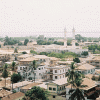
A group of Swiss and Russian firms have completed the designs of a civil airport in Amara city, Maysan province, according to a report in Aswat al-Iraq.
“The airport will be like others constructed by the group in Kazakhstan, Brazil, and Libya,” a source from the group told Aswat al-Iraq news agency on Thursday.
He explained that the designs were executed according to an agreement signed by the group in April, 2010.
The agency also reports that a delegation from a group of Russian, Swiss, and Ukrainian firms had a meeting in Amara city with the Missan Provincial Council, to discuss further investment projects in the province.
(Source: Aswat al-Iraq)
Posted in Iraq Transportation News Comments Off on Designs Completed for Airport in Maysan
Russia's Rosneft Sets Sights on Iraq
Posted on 18 September 2010 .
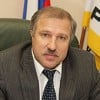
Rosneft, reportedly Russia's biggest oil producer, is discussing projects in Iraq, its newly appointed president said on Friday.
"We are discussing," Eduard Khudainatov told reporters on at the Sochi economic forum, without going into further details.
The company is planning for continued growth, and intends to hire of world-class specialists; it is expected to announce a new business plan in the coming weeks.
(Sources: Reuters, Businessweek, Rosneft)
Posted in Iraq Oil & Gas News Comments Off on Russia's Rosneft Sets Sights on Iraq
G4S Wins Lukoil De-Mining Contract at West Qurna 2
Posted on 18 September 2010 .
Russia's Lukoil has awarded a mine clearing contract at Iraq's West Qurna 2 oil field to G4S Risk Management, a division of the London-based G4S Ordnance Management, Lukoil said in a statement sent to Dow Jones Newswires.
Lukoil did not disclose the value of the contract, but said work should finish in early 2011, when oil drilling would start at the project.
It said 60 foreign and Iraqi experts as well as 40 sets of search equipment and 9 vehicles will work on the de-mining operation.
According to the Iraqi Regional Mine Action Committee, more than 27 million unexploded shells and mines remain on Iraq's territory from its war with Iran in the 1980s, but Iraqi authorities said the West Qurna 2 area is not heavily mined.
West Qurna Phase 2 is being developed by the Russian company together with Norway's Statoil. Lukoil holds a 56.25 percent stake in the project, Statoil 18.75 percent and the Iraqi state company holds the remaining 25%.
Under the terms of the 20-year-long service contract, Lukoil and Statoil are required to pump at a rate of 1.8 million barrels a day by 2017, for payment of $1.15 a barrel.
As we reported recently, Lukoil has issued tenders to drill new wells and carry out a 3D seismic survey.
(Source: Dow Jones)
Posted in Iraq Oil & Gas News, Security Comments Off on G4S Wins Lukoil De-Mining Contract at West Qurna 2
Iraqi Gas Auction to be Delayed?
Posted on 15 September 2010 .
Iraq is still planning to hold a licensing auction to award three major gas field licences as scheduled on 1st October, but according to Dow Jones, an Iraqi oil official has conceded that a delay is possible.
Eleven international companies have paid the participation fees. They are reported to include Italy's Edison (EDN.MI), France's Total (TOTF.PA), South Korea's KOGAS, Russia's TNK-BP (TNBPI.RTS), Turkiye Petrolleri (TPAO), India's Oil & Natural Gas Corp (ONGC.BO), Kuwait Energy, and Itochu of Japan.
The Iraqi oil official said the auction could be delayed for a few weeks to give companies enough time to study a model contract submitted to them last week.
We understand that several companies have requested more time, and the companies have been consulted as to whether they would all prefer this.
An oil executive says the companies have been given until Wednesday to reply.
Earlier, Abdul Mahdy al-Ameedi, head of the state-run Petroleum Contracts and Licensing Directorate, said he was still intending to hold the auction on Oct. 1.
Click here for more details of the gas fields being auctioned.
(Sources: Reuters, Dow Jones)
Posted in Iraq Oil & Gas News Comments Off on Iraqi Gas Auction to be Delayed?

Iraq to Achieve 'Self-Sufficiency' in Wheat
Posted on 06 September 2010 .
Iraq is expected to achieve self-sufficiency in wheat production during the next two years thanks to the government’s large subsidy to farmers and encouragement to cultivate grains, a trade ministry official said on Sunday.
“The targeted self-sufficiency can be achieved also due to an increase in prices of the amounts given to the trade ministry’s supply center to attain the objective of dependence on local production,” the grains trade company director Muthanna Abduljabbar was quoted in a trade ministry press release received by Aswat al-Iraq news agency.
He reiterated claims that Iraq is not affected by the global crisis in wheat supply caused by the drought and fires in Russia.
He pointed out that Iraq now has good strategic stock of wheat that would be sufficient for the coming months, resulting from the trade ministry’s policy of diversifying its imports.
The report also says that Iraq’s local production of wheat has reached 1.8 million tons, and is expected to grow to 2.5 million tons within the next couple of years, while Iraq’s needs hit 4 million tons annually, which seems to contradict claims of 'self-sufficiency' in two years.
(Source: Aswat al-Iraq)
Posted in Agriculture Comments Off on Iraq to Achieve 'Self-Sufficiency' in Wheat