


Russian Delegation Considers Investment in Basra
Posted on 29 August 2010 .
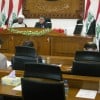
A delegation of Russian companies met with the chairman of Basra Council on Thursday to discuss investment opportunities in the city, a media official of the Basra council said.
"A delegation of Russian companies’ representatives held a meeting with Jabbar Amin, with whom they discussed investment opportunities in the city," Hashem Ubeidi told Aswat al-Iraq news agency.
The Iraqi official highlighted the importance of international companies to the development of the city.
(Source: Aswat al-Iraq)
Posted in Investment, Iraq Public Works News Comments Off on Russian Delegation Considers Investment in Basra
Tenders for Seismic Surveys at West Qurna-2
Posted on 28 August 2010 .
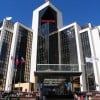
Reuters reports that Russian energy company Lukoil and its partners have issued a tender for seismic surveys at Iraq's West Qurna-2 oilfield, according to a statement published on Saturday.
Lukoil, which along with Norway's Statoil won a contract to develop the field, invited companies to bid for carrying out 3D field seismic surveys at the oilfield, with a deadline of Sept. 26, according to a statement published in the Assabah newspaper.
Lukoil and Statoil signed a 20-year deal to develop the 12.9-billion-barrel West Qurna Phase Two oilfield in southern Iraq, in an auction in December, pledging to boost output to a plateau target of 1.8 million barrels per day (bpd).
Production at West Qurna will hit 120,000 bpd in 2012, a senior executive from Statoil said in April.
(Source: Reuters)
Posted in Iraq Oil & Gas News Comments Off on Tenders for Seismic Surveys at West Qurna-2
Heritage Oil Up Slightly on Results
Posted on 27 August 2010 .
Shares in Heritage Oil, which is actively drilling in Iraqi Kurdistan, were up 1.3% this morning following the announcement of interim results:
HERITAGE OIL ANNOUNCES 2010 INTERIM RESULTS
Heritage Oil Plc (LSE: HOIL), an independent upstream exploration and production company, announces the publication of its interim results for the six months ended 30 June 2010.
Operational Highlights
· Miran West-2 well, Kurdistan Region of Iraq ("Kurdistan"), is drilling ahead close to the base of the Jurassic section where initial results from wireline logging, shows and sampling indicate the presence of hydrocarbon-bearing fractured reservoir intervals
· It was previously announced on 7 April 2010 that the well had intersected significant hydrocarbon-bearing intervals over approximately 1,800 metres in the Cretaceous section
· In addition to intervals already secured behind casing in the Cretaceous section of the well, which are designated for testing, further intervals have been identified for testing in the Jurassic after reaching total depth
· The well is drilling ahead at 3,468 metres and testing of these numerous intervals will commence once total depth, estimated at 4,600 metres, has been reached in the Triassic
· 336 kilometres of seismic was acquired during the first quarter of 2010 on the Zamzama North Licence, Pakistan
· Net average daily production of 583 bopd in the first half of 2010
Financial Highlights
· Completed the sale of the Ugandan assets in July 2010 for which Tullow Uganda Limited ("Tullow") paid $1.45 billion in cash (including the contractual settlement of $100 million), of which Heritage received and retained $1.045 billion
· Remaining proceeds have been set aside due to an assessment by the Uganda Revenue Authority ("URA") of tax payable, which Heritage is disputing. Heritage deposited $121,447,500 with the URA and $283,447,500 has been retained in escrow
· Special dividend of 100 pence per share declared on 2 August 2010 and paid on 27 August 2010 to shareholders on the register on 13 August 2010
· Strong balance sheet with cash of approximately $700 million, excluding amounts related to the tax dispute, stated after the receipt of $1.045 billion and the payment of the special dividend
Outlook
· Full results from the Miran West-2 well expected late September/early October
Posted in Iraq Oil & Gas News Comments Off on Heritage Oil Up Slightly on Results

Rosneft Invests $630m in Crescent JV
Posted on 23 August 2010 .
Reuters, quoting a top Russian official, says Russia's largest oil producer Rosneft will invest $630 million in a joint project with UAE firm Crescent Petroleum to drill for gas in the Middle East.
In May, Rosneft's Chairman Igor Sechin, who is also Russia's Deputy Prime Minister, said Russia was keen for projects to drill for gas in Iraq.
Last year, Crescent Petroleum formed a consortium with Dana Gas of the UEA, Austria's OMV, and Hungary's MOL, that aims to pump enough gas from Iraq's Kurdistan region to kick-start the Nabucco pipeline to Europe via Turkey. Nabucco is seen by many as the main competitor of the Gazprom-led South Stream pipeline and is aimed at lessening European dependence on Russia, which supplies a quarter of the EU's gas needs.
Meanwhile, according to both Itar-Tass and RIA Novosti, Russian Prime Minister Vladimir Putin met with Crescent's Chairman, Hamid Jafar, on Saturday to discuss energy cooperation in the Middle East.
"During the talks, future cooperation in the energy sector of Iraq and other Middle Eastern countries was discussed," the Russian government press service said.
RIA Novosti also mentions that former (and possibly future) Iraqi Prime Minister Ayad Allawi is a board member of Crescent Petroleum, and that he was present at the meeting with Putin, but he is not listed as a director on Crescent's website.
Crescent in Iraq
Crescent Petroleum has been present in Iraq for almost 20 years, with offices in Baghdad, Erbil and Basra, all staffed 100% by qualified and experienced Iraqis. The Company has been actively engaged with the Ministry of Oil since the late eighties, carried out studies and training for the Iraqi Ministry of Oil and completed a full field development plan for the Ratawi oil field in Basra province, and would be able to achieve 250,000 barrels of new oil per day in just 18 months. The agreement was fully negotiated in the mid-nineties but not signed due to respect for international sanctions.
Crescent Petroleum is in partnership with its affiliate Dana Gas, and currently implementing a major integrated natural gas project in the Kurdistan Region of Iraq, under a service agreement signed with the regional authorities, to produce, process and deliver 300 million cubic feet per day of gas supplies urgently needed for power generation. The combined project investment of $650m is the largest private-sector investment currently being undertaken in Iraq, and involves the construction of about 180km of pipelines and two LPG plants. The project will sustain two power plants to generate 1250 MW providing cost effective electricity for 4 million Iraqis, freeing the extra 300 MW of electricity to other provinces, saving Iraq $2.5bn a year in imported fuels, and creating over 2000 new jobs. The first phase of the project was accomplished within record time, highlighted by the servicing and completion of the wells, laying the pipeline across challenging mountainous and hazardous terrain, and the installation of brand new processing facilities. 50,000 tonnes of equipment were imported. The first gas production commenced on 05 October 2008, delivering the much needed fuel to the region’s electrical power generation facilities.
In addition, Crescent Petroleum and Dana Gas are developing a joint gas strategy with the Kurdistan Regional Government, including gas export plans to Europe, and are jointly leading the "Kurdistan Gas City" project to use gas supplies to fuel local industry and job creation.
Crescent has already engaged with the Basra Development Commission, as well as the federal Ministries of Industry and Investment Commission, with a view to meeting local infrastructure needs including utilising currently flared gas and launching a Basra Gas City project on an even larger scale than the one in Kurdistan.
(Sources: Reuters, Itar-Tass, RIA Novosti, Crescent Petroleum)
Posted in Iraq Oil & Gas News Comments Off on Rosneft Invests $630m in Crescent JV

Wheat Crisis - Iraq Not Concerned
Posted on 16 August 2010 .
The Russian drought and fires have caused the price of wheat to rocket, and this is expected to be reflected in the price of essentials such as bread and beer.
Shortages are to be expected in the coming months.
Iraq is one of the world's biggest importers of rice and wheat, but its Trade Ministry has said that there is no cause for concern. According to Reuters, it has harvested just under 2 million tonnes of wheat and did not expect to be affected by the Russian drought.
Aswat al-Iraq quotes the Ministry as saying “Iraq has stored enough wheat to cover the ration card system until the end of this year, ... [and] Dispatches of wheat are on the way to Iraq from Canada, the U.S., and Australia”.
This weekend the Kurdistan Regional Government has reported an excellent harvest.
(Sources: Aswat al-Iraq, Reuters, AKnews)
Related articles:
Posted in Agriculture Comments Off on Wheat Crisis - Iraq Not Concerned

ENI Target 15% Increase From Zubair By December
Posted on 16 August 2010 .
The managing director of the Italian national oil company, ENI, confirmed on Monday that the company aims to increase oil production by 15 percent in southern Iraq’s Zubair oil fields by the end of this year.
AKnews reports that the remarks by Gino Jianoa came during a visit to Basra to discuss the Zubair contract with local officials.
Salem Al-Taqi, the official spokesman for Basra's governor, said the company’s delegation met with Basra's governor, Sheltag Abboud, to discuss the development of the Zubair oil field with ENI.
ENI will coordinate with other companies in the area, such as BP, Shell and the Russian Lukoil to increase the economic growth in the city
(Source: AKnews)
Related articles:
Posted in Iraq Oil & Gas News Comments Off on ENI Target 15% Increase From Zubair By December
Gas Auction Postponed, but Terms Sweetened
Posted on 02 August 2010 .
Iraq is about to sweeten the contract terms for its third bidding round for its three prized natural gas fields, in an attempt to entice international companies to enter the auction, according to a report in the Wall Street Journal.
Unlike oil deals for the first and second bidding rounds for oil fields last year, winning companies won't need to pay 'signature bonuses' to the Iraqi government for the three natural gas fields on offer, a company executive said on the sidelines of two-day roadshow held by the Iraqi oil ministry in Istanbul.
International oil companies have had to pay bonuses of between $100 million and $500 million for deals they won in the first and second licensing auctions.
Iraq has also delayed the bidding by a month, with it now scheduled to be held Oct. 1, according to a reporf from Reuters.
Iraq's oil minister, Hussein al-Shahristani, said that one of the incentives for interested companies would be to allow them to export 50% of the natural gas produced from these fields. The Iraqi government will commit to purchasing half of the gas produced.
However, for some companies the export clause is a "negative condition," said another company official. Iraq hasn't the infrastructure to export gas from these fields, he said. So if half of the produced natural gas would be for exports, pipelines, reservoirs and gathering stations for exports would need to be built. Companies also need to look for customers for the Iraqi gas, he added.
Bloomberg reports that developers will be paid on the basis of barrels of oil equivalent, and will not be involved in setting the prices of gas exports.
The three natural gas fields to be bid for are:
- the Akkas field in Anbar province, near the Syrian border, which the oil ministry puts at 5.6 trillion-cubic feet of gas reserves. Discovered in 1998, Akkas already has six wells, and Iraq is interested mainly in exporting associated gas produced there along with oil. There was a single bid for this field last year, from a consortium of five companies led by Italy’s Edison, but it was rejected;
- the Mansouriya field in Diyala, with 4.5 trillion-cubic feet of reserves. There were no bids for this last year. Discovered in 1979, this would be used first for domestic consumption, then later for exports, possibly supplying the proposed Nabucco pipeline; and,
- the Siba field, located in Basra province, with 1.13 trillion-cubic-feet of reserves and three existing wells. Discovered in 1968, Siba was withdrawn from a previous auction last year.
Fifteen international companies have so far shown interest in taking part in the third bidding round, reports the Wall Street Journal. Sabah Abdulkadhem al-Saaidi, head of the legal and commercial section at the oil ministry's petroleum contracts, also said that Aug. 20 would be the last date for companies to register for the natural gas bidding round.
The roadshow in Istanbul was reportedly attended by companies including Total of France, Italy's Edison, South Korea's KOGAS, India's Oil & Natural Gas Corp Japan Oil, Gas and Metals National Corp (JOGMEC), Itochu Corp, Russia's TNK-BP (half-owned by BP), Kuwait Energy, Turkey's state-run TPAO, and Kazakh KazMunaiGaz
It is believed that companies like Total, Royal Dutch Shell, and KOGAS are favoured because of their experience; the state energy companies may also take stakes of up to 25% in the projects, similar to the earlier oil contracts.
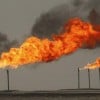
Despite huge gas reserves estimated at 112 trillion cubic feet—the fifth highest in the region, according to U.S. Energy Information Agency data—Iraq is producing 1.65 billion cubic feet a day of gas, some 700 million cubic feet a day of which is flared due to lack of infrastructure.
The goal is to fuel turbines ordered for new power stations with gas instead of crude, and the fields on offer could start commercial production in one to two years.
(Sources: Wall Street Journal, Reuters, Bloomberg)
Related articles:
Posted in Iraq Oil & Gas News 1 Comment
Basra Council Discusses $240m Projects
Posted on 28 July 2010 .
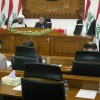
On Tuesday, Basra Council discussed projects which will be implemented in 2011, according to a head of the reconstruction committee.
The projects are in several budgetary categories and have a total value of 286 billion Iraqi dinars ($240m).
“The council made a comprehensive assessments of all projects for 2011 in the areas of health, electricity, education, water and other services sectors, as part of the budget to develop the region,” Mustapha Attiya told Aswat al-Iraq news agency.
“The total cost of these projects is 286 billion Iraqi dinars,” he added, without giving more details.
(Source: Aswat al-Iraq)
Related articles:
Posted in Iraq Education and Training News, Iraq Public Works News Comments Off on Basra Council Discusses $240m Projects
Diamonds in Demand in Kurdistan
Posted on 27 July 2010 .
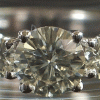
A source at the directorate of jewelry quality control in Erbil told AKnews on Sunday that 19 Kg of diamonds have been imported into the Kurdistan Region so far this year. A diamond dealer confirms that demand for diamonds has grown in the Region in recent months.
“We check diamonds and other jewelry imported into the Region before it is sold on the local market,” said Ismael Sabir, an official in the jewelry quality control. “The diamonds come along with gold and are used for decorative purposes.”
Najat Nemat, a jewelry store owner in the Kurdish capital of Erbil, said Czech diamonds are purer than other brands of Russian, German and Indian diamonds available in local markets. The most expensive type of diamond in Kurdistan markets sells at $1,500 per karat (200 milligrams).
Diamonds are mostly imported into Iraq through Erbil International Airport, Nemat said, because custom tariffs for one kilogram of diamond and gold are only $10 in Erbil while in Baghdad the authorities charge $100 per kilogram.
(Source: AK News)
Posted in Iraq Industry & Trade News Comments Off on Diamonds in Demand in Kurdistan
Russian 'Neftegaz Export' Discusses Oil Opportunities in Basra
Posted on 26 July 2010 .
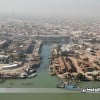
An official spokesman of Basra province said Sunday that a delegation from Russian energy company Neftegaz Export has arrived to the city to discuss investment projects with the governor.
Sheltagh Abboud received on Sunday the Deputy Director of Neftegaz Export, Vladimir Fumujev, and a delegation accompanying him, who were seeking a foothold in Iraq for the "friendly Russia", referring to the likelihood of Neftegaz Export obtaining contracts in local oil fields.
"The Russian company has expertise in a range of disciplines important to Iraq, especially in the areas of generating and distributing electricity, refining drinking water, and sewage water treatment, in addition to the implementation of oil projects in the fields of northern Rumaila, West Qurna and Al-lahis", spokesman Salem al-Taqi said.
Fumujev expressed the desire to invest in a number of projects in Basra, al-Taqi added.
Neftegaz maintains offices in many cities in the world with the main headquarters in the French capital Paris. It is ready to open an office in Basra in the coming days as well, according to the spokesman.
Basra, due to its strategic location, has been attracting foreign companies recently especially companies investing in the sectors of electricity, tourism, housing.
(Source: AK News)
Related articles:
Posted in Iraq Oil & Gas News Comments Off on Russian 'Neftegaz Export' Discusses Oil Opportunities in Basra