


Gazprom to Drill New Wells in Badrah
Posted on 20 July 2010 .
A group led by Gazprom Neft aims to start drilling in Iraq's Badrah oilfield next year as part of its plan to reach 15,000 barrels per day by the last quarter of 2013, a company executive said yesterday.
Gazprom and its partners plan to issue a tender this month to drill three to four new wells and could award a contract later in the year, said Alexander V Kolomatsky, project director Middle East at Gazprom Neft, the oil unit of Russia's Gazprom, according to a report from Reuters.
"We will call for several tenders for 3D seismic I think within a week, then for drilling... we will issue (drilling) tenders during this month," he told Reuters on the sidelines of a conference between international oil companies and the Oil Ministry in Baghdad.
In January, Iraq signed a deal with Gazprom, Turkey's TPAO, Korea's Kogas and Malaysia's Petronas to develop its eastern Badrah oilfield, which has estimated reserves of 100 million barrels of oil. The field is near Iraq's border with Iran.
Kolomatsky said initial expectations of total investment in Badrah were about $2 billion. The company was also in the "final stage" of negotiations with Iran to develop the Azar oilfield, a part of Iraq's Badrah field which lies across the border, he said.
"I think talks are going well... but it's difficult with sanctions," he said. The Russian company last year signed a memorandum of understanding with the National Iranian Oil Co (NIOC) to study the development of Azar and Shanguletwo oilfields in Iran.
Iran, a major oil exporter and holder of the world's second-largest gas reserves, has been hit by a new wave of international sanctions for its nuclear program and the United States has also stepped up its push to isolate Tehran economically.
Kolomatsky also said the Russian firm is looking for other opportunities to increase its activities in Iraq and could be interested in bidding for exploration and production rights in areas like the unexplored Western Desert along the border with Saudi Arabia and Jordan.
(Source: Reuters)
Related articles:
Posted in Iraq Oil & Gas News Comments Off on Gazprom to Drill New Wells in Badrah
West Qurna Phase-2 Tenders Open
Posted on 13 July 2010 .
Russia's Lukoil and Norway's Statoil have started issuing tenders for the multibillion project to develop Iraq's supergiant West Qurna Phase 2 oil field in southern Iraq, a person familiar with the plans said Sunday, as reported by Reuters.
The "first tender is a 3D seismic survey at the field", the person said. A second tender calls for drilling between 50 and 60 oil wells, the source said, adding that the drilling will be carried out in stages.
The first stage could be for the drilling of between seven to 10 wells in order to produce up to 120,000 barrels a day, which needs to be achieved by 2012, according to the deal Iraq signed with the two oil firms, the person added.
Lukoil will also issue a series of tenders for surface installations at the field, such as personnel camps, pipelines and production facilities.
Lukoil is said to expect to award these contracts to "big and well-known firms such as Halliburton, Weatherford International, Schlumberger and others."
These oil services companies are already involved in projects in southern Iraq. Operator Lukoil and Statoil were awarded a 20-year service contract for West Qurna Phase 2 in Iraq's second licensing round last December. Both promised to get the southern field pumping at a rate of 1.8 million barrels a day for payment of $1.15 per barrel. The development project is one of 11 that Iraq awarded in two licensing rounds last year. If all the companies deliver to the letter of their contracts, nearly 10 million barrels a day of capacity will be added to Iraq's existing 2.5 million barrels a day by 2017.
(Source: Dow Jones)
Posted in Iraq Oil & Gas News 1 Comment
Lukoil Allocates $5 Billion to West Qurna
Posted on 07 July 2010 .
According to a report from Bloomberg, OAO Lukoil, Russia’s largest non- state oil producer, allocated $5 billion to finance the West Qurna-2 project in Iraq.
The funds were provided as a loan to its Lukoil Mid-East Ltd. unit exclusively for the Iraq project, spokesman Dmitry Dolgov said. The loan matures at the end of 2030, the company said in a regulatory filing.
Lukoil, which reportedly has the most overseas assets of all the Russian oil producers, has looked abroad for profit and expansion because of Russia’s tax burden and the preference given to state companies in gaining licenses to domestic deposits. The company said in March that it planned an initial investment of $3.7 billion in West Qurna-2, after which the project will use free cash flow to fund development.
With partner Statoil ASA, Lukoil won the rights to develop the second phase of Iraq’s “super giant” West Qurna deposit in December after agreeing to pump 1.8 million barrels a day for a fee of $1.15 per barrel. Lukoil holds 56.25 percent, Statoil has 18.75 percent, and Iraq’s North Oil Co. the rest.
The Bloomberg report quotes Deputy Chief Executive Officer, Leonid Fedun, as saying that drilling will begin next year, and that oil output may begin in 2013. The field has recoverable reserves of about 12.9 billion barrels. West Qurna may produce 95 million tons of crude a year, CEO Vagit Alekperov said in February.
Lukoil expects to book 8 million to 10 million metric tons of oil a year from the project, Fedun said June 2. “Over the next few years, Lukoil’s oil output increase will come because that compensation crude we get from West Qurna-2 will provide a stable cash flow and oil flows.”
(Source: Bloomberg, Businessweek)
Posted in Iraq Oil & Gas News Comments Off on Lukoil Allocates $5 Billion to West Qurna
Report on Kurdistan Conference in London
Posted on 22 June 2010 .
The Kurdistan Region of Iraq’s international trade conference is proclaimed a success as potential investors welcome the strongest news yet on impending oil flows from the Region – and look to seize the wider investment opportunities available in other sectors.
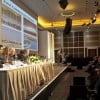
The event on June 15th and 16th was hosted in the City of London by the Kurdistan Regional Government UK Representation with Prime Minister Barham Salih the keynote speaker, and attended by over 500 delegates including potential investors representing international businesses from 26 countries, and diplomats from 12 countries.
Prime Minister Salih declared that the fine detail on international oil contracts would soon be ironed out between the Kurdistan Regional Government and Baghdad, and oil revenues would start flowing into the country again on an increasingly large scale.
Minister for Natural Resources, Ashti Hawrami stated that the Region will have pipeline capacity to carry 100million barrels per day within 15months, will be a net exporter of oil within two years, and will actually be pumping 100million barrels per day out of the ground within four years.
British government ministers joined delegates in heralding the conference a success and welcoming the opportunities it has created.
Speaking at the conference, Alistair Burt, UK Foreign Office Minister for the Middle East, welcomed the “great opportunity for British businesses to build strong commercial links between the UK and the Kurdistan Region”.
Also speaking at the conference, UK Trade and Investment Minister Baroness Wilcox said: "The Iraqi Kurdistan region is a gateway for British companies looking to establish a foothold in Iraq. The Iraqi Kurdistan region offers huge potential across a range of sectors for British companies that want to secure a share of this emerging market."
Paul Brunet, Atlantic Oil Field Services, said: “We are already active in the Kurdistan Region, so we appreciate the stable and secure business environment it offers. News of progress in agreement between Baghdad and Erbil regarding oil revenue-sharing is to be warmly welcomed. This will surely be instrumental in stimulating the Region’s ongoing development.”
Chris Frost, Partner at PriceWaterhouseCoopers, said: “This event has presented great opportunities to renew existing relationships and build new ones. PriceWaterhouseCoopers are delighted to let people know about our office in Erbil, and we’re keen to help facilitate further investment in this exciting and dynamic Region.”
Stephan John, People 1st, said: “This conference has been tremendously successful in demonstrating the breadth of investment opportunities the Kurdistan Region has on offer – not just in the oil and natural gas sectors, but in areas as diverse as education, telecoms, agriculture and finance. We are working to develop higher and vocational education in the Region – something we see a fundamental to its long-term development. We have been extremely impressed by both the ambition of the Region, and the strides it has made so far.”
Pasquale Cataldo, Business Manager at New Holland Agriculture – part of the Fiat Group – said: “This conference has been a huge success, and made clear that the economic regeneration of the Kurdistan Region is no distant dream – rather, an exciting reality. The opportunities are expansive and the territory favourable. The Kurdistan Region has a promising economic future ahead.”
International companies represented a range of critical sectors at the event, including:
- Banking & finance: HSBC, Credit Suisse, the Trade Bank of Iraq, Standard Chartered Bank, Forbes & Manhattan
- Consumer: Pepsico
- Construction: Lafarge, Caterpillar
- Defence & aerospace: Aegis, BAE Systems, Lufthansa
- Oil & gas: Shell, GE International, Heritage Oil, Genel Enerji, Korea National Oil Corporation
- Professional services: PriceWaterhouseCoopers, Norton Rose, DLA Piper, YouGov
- Telecoms: Asiacell, Motorola, Korek Telecom
- Czech Republic
- Germany
- Hungary
- Islamic Republic of Iran
- Kuwait
- Poland
- Spain
- Republic of Slovenia
- Republic of Turkey
- Russia
- USA
- Catalonia
Representatives from the following Embassies attended:
About Kurdistan
The Kurdistan Region is an autonomous region in federal Iraq. It borders Syria to the west, Iran to the East and Turkey to the north. Iraq’s Constitution recognises the democratically elected Kurdistan Regional Government, the Kurdistan Parliament and the Peshmerga guard as the legitimate regional forces.
Economy
Iraq’s GDP was $112 billion in 2009 (this is the figure at purchasing power parity. GDP at the official exchange rate was $71 billion). Iraq’s economy is expected to grow by an estimated 7.3% in 2010, 7.9% in 2011 and at similar rates for the next few years. This is above the average projected growth for the Middle East.
General Investment
A liberal foreign investment law was ratified in 2006, with incentives for foreign investors such as the possibility of owning land, up to 10-year tax breaks and repatriation of profits.
Kurdistan has attracted more than 12 billion US dollars (8.3 billion pounds) from local and foreign investors in non-oil sectors over the last three-and-a-half years, mainly in housing, agriculture and banking.
Foreign companies have invested around $3.1 billion from August 2006 to April this year. The largest foreign investors in terms of money were from Kuwait and Lebanon.
Investment from Iraqi national companies was about $8.7 billion during the same period. Joint ventures accounted for around $664 million.
Top areas of investment since 2006 are: public and high-income housing (nearly $4.8 billion); banking ($2.29 billion); industry ($1.6 billion) and tourism ($1.3 billion).
Oil and Gas Investment
The investment figures above do not include the oil sector, where 35 oil and gas firms from 17 countries have struck production-sharing agreements. These include Austria’s OMV, the Korean National Oil Corporation, India’s Reliance, Channel Islands-based Heritage Oil, Canada’s Talisman and the US’s Hunt. Norway's DNO and Turkey's Genel Enerji are already producing oil from their discoveries.
The Kurdistan Region is also developing gas following the UAE consortium Dana Gas and Crescent Petroleum reappraisal of the Khor Mor gas field in 2008. The field, which is expected to produce 8.5 million cubic metres per day in later phases, now feeds two power plants that together produce 1,250 megawatts of electricity to meet Kurdistan’s growing power needs. The nearby field of Chemchemal may hold gas reserves of 6.2 billion cubic metres.
Case studies
There are 1,200 foreign companies working in Kurdistan including: Byblos bank of Lebanon; National Real Estate of Kuwait; Forbes & Manhattan of the United States – a privately funded investment company; Coca Cola; Pepsi Cola; ArcelorMittal; Lafarge; and Rotana.
Posted in Iraq Industry & Trade News 1 Comment
No Need to Increase Supply
Posted on 10 June 2010 .
The Organization of Petroleum Exporting Countries said Wednesday it wouldn't need to boost its supply after cutting demand forecasts for its crude and boosting supply estimates for rival producers, despite the impact of a U.S. oil spill.
In its monthly report for June, the organization also warned of likely downgrades in global consumption estimates in the second half, and slightly cut its annual forecast amid a slowing recovery.
OPEC cut 2010 demand estimates for its crude by 70,000 barrels a day and now sees a year-on-year decline of 175,000 barrels a day. "This would leave no room for additional crude oil supplies in the market," it said. OPEC's next meeting is not due until October.
The organization, which members currently produce over a third of the oil consumed worldwide, is loosing market share to non members, which include Russia and the U.S.
It boosted non-OPEC oil supply estimates by 110,000 barrels a day for 2010, making it an increase of 640,000 barrels a day.
The largest upgrade came from U.S. supply, despite OPEC warning production there could be affected by an extension of a Gulf of Mexico drilling moratorium and a hurricane season expected to be worse than usual.
The moratorium, which follows an explosion and a huge spill at BP's Macondo well on Apr. 20, is affecting 35 wells "which will have a heavy influence on production in 2010 and 2011," OPEC said.
The group also warned "an expected moderation in the pace of the economic recovery is likely to impact demand growth forecasts for the second half."
It cut its global oil demand forecast for the year by about 10,000 barrels a day to 85.37 million barrels a day, but kept consumption growth unchanged at about 950,000 barrels.
Despite the challenges they face in finding buyers for every new barrel they produce, OPEC members have been steadily increasing their output in the past twelve months.
In May, quota-bound members increased production by 19,600 barrels a day to 26.83 million barrels a day, despite agreeing to 4.2 million barrels a day in cuts late 2008.
Iraq, the only OPEC not subject to quotas, experienced the largest rise in the month, with 121,300 barrels a day.
Posted in Iraq Oil & Gas News Comments Off on No Need to Increase Supply

Transneft Backs Turkish Crude Quota
Posted on 09 June 2010 .
Russia’s oil pipeline monopoly Transneft may support quotas on oil shipments through Turkey's straits to fill a pipeline to the Mediterranean.
Transneft may take up to a 50% stake in the $3 billion Samsun-Ceyhan pipeline project, co-led by Italy's Eni , that will link the Black Sea and the Mediterranean and advance Turkey's plan to turn its southern port of Ceyhan into a regional energy hub.
"There is an idea to give all the crude oil to Samsun-Ceyhan and leave only oil products and petrochemicals across the straits," Transneft president, Nikolai Tokarev told Reuters.
"Or we could introduce quotas for each trader, and ship the rest of the oil through the pipeline."
Istanbul's Bosphorus Strait and the Dardanelles Strait are the only navigable route for tankers carrying oil from Black Sea ports to international markets in the Mediterranean. The two straits are bottlenecks for the amount of traffic they already handle.
" The ecological conditions are critical here from the boat traffic point of view," Tokarev said.
Turkish energy ties with Russia have been strengthened recently by nuclear agreements and Russia signing the South Stream pipeline deal with Greece on Monday, a deal of which Turkey has been a great supporter.
( Upstreamonline.com )
Posted in Iraq Oil & Gas News Comments Off on Transneft Backs Turkish Crude Quota
Russian Company Mulls Implementing Oil Projects in Basra
Posted on 04 June 2010 .
A Russian company met with Basra's Governor, Shaltagh Abboud al-Mayah, on Thursday to discuss new investment projects in the oil sector, according to a report from Aswat Al Iraq.
“Talks addressed the rehabilitation and reconstruction of the oilfields,” the source said.
“The company presented a study on the Basra oilfields and ways to solve their problems, expressing readiness to cooperate with the Iraqi side,” he added.
(Source: Aswat Al Iraq )
Posted in Iraq Oil & Gas News Comments Off on Russian Company Mulls Implementing Oil Projects in Basra
Rosneft Ventures into Middle East
Posted on 20 May 2010 .
Rosneft, the Russian state oil company, has made its first foray into the Middle East with an agreement to develop projects with Crescent Petroleum, an Emirates-based private energy company.
Badr Jafar, Crescent Petroleum's executive director, said the two companies were planning to form a joint operating company based in the Middle East, and were looking at possible projects in Iraq. He said he expected the first Gulf-based gas project to be announced within three weeks.
"The potential reserves in place are such that it is a significant opportunity," he said. The agreement comes after months of diplomatic exchanges between the UAE and Russia focusing in part on strengthening their ties in energy ventures.
Posted in Iraq Oil & Gas News Comments Off on Rosneft Ventures into Middle East
Iraq Cuts June Crude Supplies
Posted on 13 May 2010 .
Iraq will supply crude to at least two Asian buyers at around 10 percent below contract volumes for June, possibly the first major cut in allocations by the OPEC producer this year, industry sources said on Wednesday.
The cut was on medium-heavy Basrah Light crude, they said.
It was not immediately known why Iraq cut the supply, but it might be related to production problems at its oilfield, the sources said.
Oil output and exports from Iraq fell last month due to repeated attacks against the Kirkuk-Ceyhan export oil pipeline and possible pumping problems in Basra fields.
A Reuters survey showed oil output in Iraq -- the only member of the 12-member OPEC producer group that does not have an agreed production limit -- fell to 2.28 million barrels per day (bpd) in April from 2.32 million bpd in March.
Iraq's oil exports fell slightly in April to 1.767 million bpd from 1.79 million bpd the month before, an Iraqi Oil Ministry official has said.
Iraq exported an average of 1.42 million bpd from the southern oil hub of Basra and 341,965 bpd from the northern oilfields around Kirkuk, including about 9,983 bpd by trucks to Jordan.
The fall in exports was due to bad weather in Basra and a brief halt of exports via the Kirkuk-Ceyhan pipeline after a bomb attack last month.
Term buyers of Iraqi crude have not been eager to take Basrah Light in the first quarter of this year due to increased supplies of other medium-heavy grades, such as from Saudi Arabia, Qatari al Shaheen crude and the new Russian ESPO Blend, traders have said.
Reflecting the weak demend, Iraq's State Oil Marketing Organisation (SOMO) made a rare offer of 3 million barrels of Basrah Light on the spot market for loading in March.
Demand for Basrah Light improved slightly last month, with some cargoes heard to have traded at premiums to the official selling price (OSP), trader said.
Iraq raised the OSP of its Basrah Light crude loading in June to customers in Asia by 10 cents to a discount of $1.05 to the average of Oman/Dubai quotes.
Top oil exporter Saudi Arabia earlier this week said it would supply full volumes to at least seven Asian clients in June, steady from May, as oil held within the kingdom's preferred range and Asia was expected to lead demand growth. (Additional reporting by Florence Tan, James Topham in TOKYO, Ahmed Rasheed in BAGHDAD and Alex Lawler in LONDON; Editing by Ramthan Hussain)
Posted in Iraq Oil & Gas News Comments Off on Iraq Cuts June Crude Supplies

Investment Funds Start to Target Iraq
Posted on 12 May 2010 .
The business community in Iraq, and internationally, is focused on the task of rehabilitating the oilfields and re-building the country. This is hardly a surprise; quite apart from the investments to be undertaken directly by the oil companies, Iraq's National Development Plan foresees over $200 billion in investment in services, economic stimulus and environmental protection from 2010 to 2014.
For investors not directly involved in energy and construction, however, it has not been so easy to get exposure to the Iraqi economy. Yes, there is a stock market, but it is relatively small and companies tend to be thinly traded.
But as Mark DeWeaver, of Quantrarian Asia Hedge, points out, there are many parallels between Iraq and the frontier markets we have seen develop in recent years:
- Like Sir Lanka after 2001, a civil war is coming to an end;
- like Russia in the mid-‘90s, inflation has come down dramatically; and
- like Taiwan in the late-‘80s or, even better, Saudi Arabia ten years ago, exports are set to soar.
If that's really the case, and if the political factions can successfully conclude the ongoing election process in a peaceful and democratic manner, then it will be reasonable to expect the investment community to start taking more notice.
Both Northern Gulf Partners and Godvig Capital already operate Iraq-focused funds, while FMG's Special Opportunity Fund will soon give exposure to shares on the Iraqi stock market, in addition to shares in companies that derive a significant part of their business from Iraq. The fund can also hold Iraqi dinars, dollars, euros, and bonds.
Clearly this is at the high-risk end of the spectrum, and although the minimum investment is just $10,000, the fund is restricted to high-net-worth individuals. But if Iraq can stay on track this may be the first of many investment products to benefit from Iraq's future success.
Posted in Blog 2 Comments