


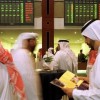
Bank Ratings Maintain Positive Trend
Posted on 11 May 2010 .
Banks in the Middle East and Africa saw stable outlooks at a very high level of 92.8 per cent at the end of the first quarter, a latest report on Global Banking Trends Q1 2010 by Fitch Ratings said.
Negative rating actions for banks globally halved in the first quarter and the proportion of positive ratings increased to 76 per cent in the quarter compared to 54 per cent in the last quarter of 2009, the rating agency said.
Most of Fitch's bank ratings globally continued to have Stable outlooks (for 71.1 per cent) at the end of first quarter. Even as rating activity fell slightly in Q1, the ratio of negative to positive outlooks recorded a significant improvement, the rating agency said.
Banks in the Middle East and Africa witnessed high-level stable outlooks with 77 of the 83 banks showing stable outlook on long-term IDRs with five in the negative.
According to the report, the last quarter saw 126 rating actions of which 54 per cent were positive. "Evidence began to emerge in mid-2009 that global economic recovery was gaining momentum," Fitch said.
The positive development is driven by emerging markets, it said. There are increasingly encouraging signs that the economic recovery will continue even with the expected decrease in government support, the report said. "Nevertheless, Fitch notes that despite improvements throughout major advanced eco-nomies, the pressure on banks has only just started to ease, as banks' asset quality typically lags the underlying economic recovery," it added.
In the first quarter, number of positive rating actions increased to 90 from 68 in Q4 of 2009, to represent more than 75 per cent of rating actions. In contrast, negative rating actions halved to 29. Overall, rating activity fell slightly to 119 rating actions in the first quarter this year, compared with 126 in the last quarter of 2009.
While globally, the ratio of negative to positive outlooks improved significantly to (-)11.2 at the end of first quarter from (-)24.1 at the end of last quarter of 2009, in case of the developed markets this ratio was (-)11.9 compared to (-)16.
In developed markets, the number of total rating actions fell to 33, from 49. The proportion of negative rating actions increased slightly to 66.7 per cent in the first quarter from 59.2 in the previous quarter.
Fitch downgraded 12 and upgraded four banks. In developed Europe, Greek and Portuguese banks were affected by negative changes. The rating agency said deteriorating public finances in these countries have increased banks' sensitivity to capital markets.
In emerging markets, the proportion of positive rating actions was near 92 per cent driven by the Russian Federation, where the banking sector performed better-than-expected during the global financial crisis.
Following the upgrade of the Indonesian sovereign to 'BB+' from 'BB' in the first quarter, eight Indonesian banks were upgraded, accounting for the majority of upgrades in emerging markets.
The downgrades in emerging markets can be mainly attributed to Greek banks' subsidiaries. These came as a consequence of the downgrade of the Greek sovereign, said Fitch.
Posted in Iraq Banking & Finance News 2 Comments
A Perfect Storm for Iraqi Stocks
Posted on 11 May 2010 .
By Mark A. DeWeaver, of Quantrarian Asia Hedge
Two good rules for emerging stock market investors have always been: (1) buy crises and (2) buy export booms. The first would have worked well in Sri Lanka in the weeks following the Tamil Tiger suicide attack on the country’s main airport in July, 2001. Had you bought Sri Lankan stocks then and held them until February, 2007 you would have made about six times your money. Another case was Russia in April, 1995 when inflation was running at 229% and the communists seemed to have a good chance of winning the 1996 elections. By September, 1997, the market had gone up eight times as inflation fell to 13% and Yeltsin won another term as president.
As for rule two, consider the Taiwan market during the period from December, 1985 until February, 1990. The index rose about twelve times in local currency terms as exports doubled and the exchange rate strengthened from 40 to 26 New Taiwan dollars to the US dollar. Or more recently, think of the Saudi market, which went up ten times from December, 2000 to February, 2006 while exports tripled on increased oil production and a rise in the price from $30 to $70 a barrel.
Anyone trying to follow these two rules would find little to like about most of the emerging markets that make the headlines today. The crises (e.g. in the Chinese property sector) generally seem to be just beginning rather than nearing resolution while the export booms (e.g. in Brazilian resources) are for the most part old news. Surprisingly, however, one of the world’s least noticed markets not only combines features of all four of the above examples but is also open to foreign investors. Like Sir Lanka after 2001, a civil war is coming to an end; like Russia in the mid-‘90’s, inflation has come down dramatically; and like Taiwan in the late ‘80’s or, even better, Saudi Arabia ten years ago, exports are set to soar.
Yes, I’m talking about the Iraq Stock Exchange.
Blood in the streets
It’s easy to understand why Iraqi stocks aren’t on the radar screen of most foreign fund managers at the moment. While the third Baron Rothschild advised buying “when there’s blood in the streets,” no one wants that blood to be their own. And Baghdad, which is home to the stock exchange and the majority of the brokers and listed companies, remains a scary place to visit.
But conditions of travel for the investor aren’t really the best indicator of when it’s safe to invest. A more relevant signal is the fall in Iraqi civilian deaths from violence. At the height of the insurgency from mid-2006 to mid-2007, Iraq Body Count put the death toll at 2,500 – 3,000 a month. So far this year it’s been in the range of 200 – 300. While no one would argue that this is an acceptable state of affairs, it tends to be during just such transitions from the absolutely appalling to the merely awful that the big money in emerging markets gets made.
Naturally, things could get worse again. But this seems unlikely for the simple reason that restarting the sectarian civil war isn’t really in anyone’s interest. The Sunni insurgents effectively lost in 2007 and have no reason to expect a different outcome today. The Shia have found that political power is more likely to stem from the ballot box than the barrel of a gun (contrary to Chairman Mao’s famous dictum). And the Kurds are clearly better off as part of a unified Iraq than as citizens of an independent state that neither their neighbors nor, presumably, the US would recognize.
The threat from Al Qaeda-linked extremists seems to be receding as well. They no longer appear to have the capability to stage monthly mass casualty bombings—recently their attacks have only occurred every other month—and the deaths of the leaders of Al Qaeda in Iraq and the Islamic State of Iraq at the hands of Iraqi and American forces on April 18 may well turn out to be a turning point in the government’s “war on terror.”
From zero to hero
Equally important for stock market investors has been the drop in Iraqi inflation, which fell from 65% in 2007 to 6.8% in 2009. Year-on-year core inflation for February was just 3.35%. The currency has strengthened significantly as well—from 2,354 Iraqi dinars to the US dollar in April 2003, in the middle of the invasion, to 1,170 today.
This made it possible for the Central Bank of Iraq to lower its benchmark overnight rate from 20% in 2007 to 7% by the end of 2009. Effective April 1, this rate was cut again, to 6%, while at the same time the required reserve ratio was reduced from 25% to 20%. (The required reserve ratio is a percentage of deposits that commercial banks are required to hold as reserves at the central bank.)
Cuts in the central bank’s benchmark interest rate are particularly significant because cash, rather than loans, continues to be the biggest asset of the Iraqi banks. (Their main operating businesses consist of charging fees for services such as wire transfers.) Since there is little lending, either inter-bank or to nonfinancial companies and individuals, central bank reserves are the banks’ main source of interest income. Lowering the benchmark rate reduces this income stream, thereby forcing them to lend more.
While much of the rest of the world continues to deleverage, in Iraq the trend is thus in the opposite direction—from a state of practically zero leverage to one where the banks play their normal role as financial intermediaries. This is clearly positive for the stock market because a general increase in the supply of credit naturally means that more funds will be available for local investors to buy shares—either because they buy with borrowed money or because taking out loans frees up their existing cash holdings.
The coming oil bonanza
As if all this weren’t enough, Iraq is sitting on vast reserves of low-cost oil, which after three decades of war and sanctions remain largely unexploited. Since June of last year, international oil companies have won bids to develop over 10 million barrels a day in additional capacity. Added to current production of 2.6 million barrels a day in 2009, this new supply would allow Iraq to surpass Saudi Arabia as the world’s biggest producer.
While the Oil Ministry is hoping to get to this point in six years, many believe such a timeframe is unrealistic—for example, because it doesn’t allow enough time to build the pipelines and other facilities needed to transport such an enormous amount of oil. But even a doubling of Iraq’s oil output would still lead to a boom not unlike those experienced by the OPEC countries (including Iraq itself) during the 1970’s. The resulting fiscal surplus would quickly make its way into the economy via tax cuts, subsidies, and an increase in investment and salaries at the state-owned enterprises, which account for the lion’s share of Iraqi employment.
The effect on the stock market would be explosive. Rising oil exports would have a direct impact on the supply of funds available to speculators as repatriated US dollar revenues were converted into local currency. At the same time, listed company profits and dividends would rise rapidly as Iraq began a dramatic ascent from poverty to affluence.
A great story
The combination of reduced violence, increased leverage, and an impending oil windfall would seem to be a ‘perfect storm’ for Iraqi stocks. So far the market remains becalmed: the index is still at 2007 levels, recent daily trading values have been only about a million US dollars. But things could easily pick up long before the banks start lending or the new oil begins to flow.
Already a number of fund management companies are said to have started marketing the Iraq story to potential clients. It will be an easy story to tell—a crisis is ending and an export boom is beginning. And while there’s no way of knowing how much they will raise, in a pool of liquidity as small as the Iraq Stock Exchange even a relatively small inflow will seem like a storm surge.
Mark A DeWeaver, PhD, manages the hedge fund Quantrarian Asia Hedge (www.quantrarian.com), and can be reached at [email protected].
The opinions expressed here are those of the author, and do not necessarily reflect the views of Iraq Business News.
Posted in Blog 6 Comments
ExxonMobil to use water injection to enhance southern Iraqi oil ouput
Posted on 08 May 2010 .
The Iraqi Oil Ministry has awarded ExxonMobil a project to inject water in crude oil fields in an effort to enhance production. The contract, estimated at several billions of dollars, was meant to take place in oil fields in southern Iraq.
Officials said ExxonMobil would inject 12 million barrels of water per day from the Gulf into the wells. They said Exxon would share the costs of the project with companies selected to manage the wells, including Russia's LUKoil, Italy's Eni and Royal Dutch Shell
The Oil Ministry has determined that water-injection would be required to maximize production of the southern oil fields. Baghdad has sought to increase oil production to up to four million barrels per day.
Posted in Iraq Oil & Gas News Comments Off on ExxonMobil to use water injection to enhance southern Iraqi oil ouput
TNK-BP and IOCOI Establish a Joint Venture to Develop Fields in Iraq
Posted on 07 May 2010 .
06 May 2010 - oilvoice
TNK-BP Holding and Iraq Oil Company for Oil Investments (IOCOI) have signed an agreement to establish a joint venture aimed at identifying potential projects to acquire, develop and operate oil and gas fields on the territory of Iraq.
The two companies will consider joint acquisition of fields with commercial reserves within Iraqi provinces. TNK-BP has been qualified by the Ministry of Oil of Iraq to develop oil and gas projects.
'Iraq is one of the world's leading oil producing countries. We welcome the establishment of the joint venture with IOCOI, part of the HMBS group, which has a century-long history and a substantial opportunity set in the Iraqi market. TNK-BP is interested in the expansion of its international business; it possesses cutting-edge exploration and production technology, and world-class cadre required to identify and implement joint projects in Iraq', Mikhail Fridman, interim Chief Executive Officer of TNK-BP, said.
'We welcome our partnership with TNK-BP, one of the leading Russian oil companies, which is aimed at identifying and implementing joint oil and gas projects in Iraq. IOCOI enjoys vast opportunities in transport and logistics business and is interested in entering the Iraqi oil sector. We are also interested in delivering necessary consulting support in the framework of the activity of the joint venture in Iraq', Mustafa A.W.M.Al-Bunnia, General Manager of IOCOI, said
Posted in Iraq Oil & Gas News 2 Comments
Russia's TNK-BP Creates JV to Tap Iraqi Oil and Gas
Posted on 06 May 2010 .
Russia's TNK-BP, half owned by BP, has establish a joint venture to develop oil and gas fields in Iraq, TNK-BP said on Wednesday.
It said, it has signed an agreement with the Iraq Oil Company for Oil Investments (IOCOI) to establish the venture.
"The two companies will consider joint acquisition of fields with commercial reserves within Iraqi provinces," the Russian company said in a statement.
(Reporting by Vladimir Soldatkin)
( AFX News Limited )
Posted in Iraq Oil & Gas News Comments Off on Russia's TNK-BP Creates JV to Tap Iraqi Oil and Gas
Iraq oil development swift despite politics
Posted on 30 April 2010 .
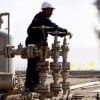
Development of Iraq's oilfields by foreign oil companies is progressing swiftly despite the lengthy process of government formation after Iraqi elections in March, a senior Statoil executive said on Tuesday.
"The major oil companies are starting to move forward at a very high speed. Oil companies are tendering huge contracts and making commitments in the market," said Kjetil Tonstad, Statoil's vice-president for International Exploration and Production, Middle East. "Execution is going full speed ahead despite the political situation."
International oil firms have signed up to deals that could vault Iraq into the top three of world oil producers in 2017. But final deals were signed just months before elections in March, leading to concern that politics could delay work.
Iraq is in a political vacuum after an inconclusive vote, with former Prime Minister Iyad Allawi winning a slim lead over Prime Minister Nuri al-Maliki and neither side yet to conclude tie-ups with groups that would give them a majority.
"Both Maliki and Allawi are positive on the contracts," said Tonstad, talking to reporters on the sidelines of an energy event. "No questions were raised in the election campaign or after questioning the contracts. A contract is a contract, it's awarded and then you have an obligation to go ahead."
Norway's Statoil and Russian partner LUKOIL would increase output to 120,000 barrels per day (bpd) at Iraq's West Qurna phase two oilfield in 2012, Tonstad said. That was the level set by Iraq for first commercial production at the field.
The consortium has already started issuing tenders for work at the field, he said. He declined to give further details.
Lukoil and Statoil sealed the 20-year deal to develop the West Qurna Phase Two, a 12.9 billion barrel oilfield in the south, in an auction in December.
In a presentation to an industry event, Tonstad hailed the opening of Iraq's oilfields to foreign investment last year as marking the largest opening in an oilfield province since the collapse of the former Soviet Union.
"We still haven't captured the significance of this historical moment," he said.
Plans to reach around 12 million bpd of output under the contracts in 2017 were feasible, but faced a myriad of challenges, he said. The development would mark an unprecedented build in capacity in the oil industry, marking an increase of around 10 million bpd from Iraq's current capacity of 2.5 million bpd.
Challenges included security in a country emerging from war and sectarian violence, access to water, and limited construction capacity and workforce availability, he said.
The ability of the world oil market to absorb 10 million bpd of increased output in such a short time was also unclear, he said.
"From my point of view, the fields can deliver, the infrastructure can be dealt with, but can the market take all this oil? And if not, does Iraq want to invest billions of dollars in building capacity that would remain idle?"
Statoil was evaluating the possibility of taking part in an upcoming bidding round for Iraqi gas fields, he said.
Posted in Iraq Oil & Gas News Comments Off on Iraq oil development swift despite politics
Shell Beats Estimates
Posted on 29 April 2010 .
Royal Dutch Shell Plc, Europe’s biggest oil company, posted a 57 percent increase in earnings after production climbed for the first time in more than three years following startups in Brazil and Russia.
Net income in the first quarter rose to $5.48 billion from $3.49 billion a year earlier, The Hague-based Shell said in a statement today. The shares jumped to the highest in almost two years in London trading after earnings adjusted for inventories and one-time items beat analyst estimates.
( Bloomberg )
Posted in Iraq Oil & Gas News Comments Off on Shell Beats Estimates
Russian Flour Ship Reached Um Kaser Port
Posted on 23 April 2010 .
The Public Company for Cereals Trade said that a ship loaded with 52.5 tones of Russian flour had reached Um Kaser port. The shipment falls within the framework of the Ministry of Trade Flour imports.
The company representatives in Um Kaser will transport the load to the port silos and the flour will be distributed after testing to make sure that it complies with the standards stipulated in the contracts and that it is edible. It will then be distributed throughout Iraq.
( Al SumariaTV )
Posted in Iraq Industry & Trade News Comments Off on Russian Flour Ship Reached Um Kaser Port
Petronas Recruiting Hundreds of Staff for Four Iraqi Projects
Posted on 18 April 2010 .
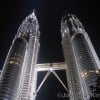
Malaysia's Petroliam Nasional Bhd, or Petronas, has started recruiting hundreds of Iraqis for four oil projects the company won during Iraq's second post-war licensing auction in December, a senior Iraqi oil official said yesterday.
"Petronas is looking for Iraqis to staff its two offices it is planning to open in Iraq and also some security personnel," the official told Dow Jones Newswires.
Petronas will open an office in Baghdad and another one in Missan province where the firm along with China National Petroleum Corp and Total S.A. won a deal to develop the 4.1-billion-barrel Halfaya oil field in the southern Missan province. Petronas' officials weren't immediately available for comment.
The Malaysian firm in a team with Japan Petroleum Exploration Co Ltd also won a deal to develop the 1-billion-barrel Garraf oil field in Dhi Qar province in southern Iraq. Petronas is the field operator.
The company will hold the first joint management meeting with the Iraqi authorities on May 1, the official said. The meeting will discuss a preliminary plan and a one-year tentative budget for the field development.
Petronas also won the right to develop the super-giant 12.8-billion-barrel Iraq's Majnoon oil field in partnership with Royal Dutch Shell. Shell holds 45 per cent in the venture, while Petronas owns 30 per cent and Iraq's state-run South Oil Co holds 25 per cent.
The Malaysian firm also has a stake along with Russia's Gazprom, Turkey's TPAO and South Korea's state-run Korea Gas Corp, or Kogas, on the Badra oil field in Diyala province in eastern Iraq.
Meanwhile, the Iraqi oil ministry is seeking unrecoverable signature bonuses, rather than recoverable five-year soft loans, from international oil companies planning to develop two of the country's giant oil fields, a senior Iraqi oil official said yesterday.
"We have asked companies to pay signature bonuses instead of the soft loans for West Qurna Phase 1 and Zubair oil fields," Abdul Mahdy Al Ameedi, director-general of the oil ministry's Petroleum Contracts and Licensing Directorate, said.
Posted in Construction & Engineering In Iraq 6 Comments

AVEVA Wins Iraq Reconstruction Role
Posted on 18 April 2010 .
16 April 2010 -Business Weekly
AVEVA Group in Cambridge, one of the world's leading providers of engineering data and design IT systems to the plant, power and marine industries, has won work in Iraq.
State Industrial Design and Consultation Company (SIDCCO), one of the largest EPC contractors in Iraq, has selected AVEVA Plant solutions for ongoing and future projects in the strife-torn country.
SIDCCO is owned by the Ministry of Industrial and Minerals. As one of the largest EPC contractors in Iraq, SIDCCO offers services ranging from feasibility studies to turnkey constructions. Ministry of Industry and Mineral Companies, Ministry of Oil Companies and Ministry of Electricity are among the company’s biggest clients.
Ali Al-Naama, SIDCCO DG, said: "We are impressed by AVEVA Plant's engineering and business benefits, which make it possible to work in the most complex projects by enabling coordination amongst various disciplines in a clash-free environment.
“We look forward to benefiting from AVEVA solutions for more productivity and site rework reduction. SIDCCO's engineering and design teams are having intensive training to be able to start implementing and using AVEVA's solutions immediately.”
Louay Dahmash, VP of AVEVA Middle East, said AVEVA had increased its presence in the Middle East despite the economic downturn.
“We are very excited to be entering such a promising market and being a part of Iraq's reconstruction projects with SIDCCO.
“I am confident that AVEVA will continue proving itself with its proven and evolving technology in Iraq, which will play a great role for AVEVA's growth in the region."
The Iraq success adds to further significant export wins in the first quarter of this year for the Cambridge company.
AVEVA says that sales of its AVEVA NET Information Management solution have surged forward in Russia over recent months despite challenging worldwide economic conditions.
AMET University, India's premier marine industry university, will be featuring AVEVA Marine solutions as part of its curriculum. Located in Chennai, AMET University is the first private maritime academy in India.
Peter Finch, president, AVEVA Asia Pacific, said: “India's prominence as a source of skilled labour in the marine industry is seen in the rise of outsourced marine engineering projects by the world's leading shipyards.
“The AVEVA Academic Initiative equips graduates with hands-on skills in using the leading shipbuilding range of solutions preferred by top global shipyards.”
Posted in Construction & Engineering In Iraq 2 Comments