



Agreement Expected with Kuwait on Joint Oil Fields, Gas Exports
Posted on 27 August 2018 .
By John Lee.
Kuwait reportedly expects to reach agreement with Iraq on joint oil fields and the import of Iraqi gas by the end of this year.
KUNA quotes Kuwait's Oil Minister and Minister of Electricity and Water Engineer, Bakheet Al-Rashidi, as saying:
"We are in the process of selecting a global consultant to study the joint fields project."
(Source: KUNA)
Posted in Iraq Oil & Gas News, Politics Comments Off on Agreement Expected with Kuwait on Joint Oil Fields, Gas Exports
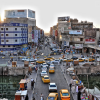
Basra Protests spark Govt Scramble to Create Jobs
Posted on 26 August 2018 .
By Adnan Abu Zeed for Al Monitor. Any opinions expressed here are those of the author and do not necessarily reflect the views of Iraq Business News.
The Iraqi Cabinet announced Aug. 12 that it has approved a regulation by the Ministry of Labor requiring that 50% of foreign oil company employees working in the country be Iraqis.
The move followed mass demonstrations in Basra calling for better public services, including clean water and working and reliable electricity, and job opportunities for the unemployed in the city. Iraq's largest oil reserves lie beneath Basra province.
Basra Governor Assaad al-Eidani had on July 31 announced that an agreement had been concluded with the foreign oil companies to secure job opportunities for Basra residents. Days earlier, the Associated Press reported Deputy Governor Dhirgham al-Ajwadi saying that the unemployment rate in Basra, population 4 million, had risen sharply to at least 30%.
On July 13, demonstrators had stormed the headquarters of the Russian oil company LUKOIL at Basra's West Qurna 2 field, one of the largest, leading workers to pack their belongings. A number of them were evacuated by helicopter.
Click here to read the full story.
(Picture Credit: Ahmed Mahmoud)
Posted in Employment, Iraq Oil & Gas News, Politics Comments Off on Basra Protests spark Govt Scramble to Create Jobs

Talks continuing on Iraq-Kuwait Electricity Link
Posted on 25 August 2018 .
By John Lee.
Talks are reportedly continuing to complete the electricity linkage between Iraq and Kuwait.
KUNA quotes Kuwait's Oil Minister and Minister of Electricity and Water Engineer, Bakheet Al-Rashidi (pictured), as saying:
"We expect that these negotiations will ultimately lead to linking Iraq's electricity grid with the Gulf network and then link with Turkey and Europe on the long-term.
"We are always ready to help our brothers in Iraq, according to the instructions of the political leadership."
(Source: KUNA)
Posted in Iraq Oil & Gas News, Politics Comments Off on Talks continuing on Iraq-Kuwait Electricity Link

Iran, Sanctions and Iraq: The Bigger Picture
Posted on 20 August 2018 .
By Ahmed Tabaqchali. Originally published by Iraq in Context; re-published by Iraq Business News with permission. Any opinions expressed are those of the author, and do not necessarily reflect the views of Iraq Business News.
Current analysis of renewed Iran sanctions often overlooks the wider context of Iraq's regional trading relations.
The extent of Iraq’s compliance with US sanctions on Iran has raised concerns regarding the loss of Iranian exports to its economy. However, Iraq’s trade with Iran, when looked at in the context of the wider region, shows these concerns in a different light.
It is arguably smaller than is widely perceived, especially given the long border between the two nations and the supposedly strong influence of Iran in Iraq, something which is contested.
There are many variables, following the imposition of sanctions, that will influence Iraq’s economy and trading relationships, making it difficult to examine any change in Iraq-Iran trade in isolation. Some of these variables are China’s response to these sanctions – its continued or increased purchase of Iranian oil or to impose tariffs on US crude- in light of its escalating trade war with the US.
Add to this the effects on oil demand from a change in world growth prospects as a result of an intensifying US-China trade war. Balancing or complicating events is the success of Saudi Arabia in sustaining increased oil production, or Iraq’s ability to increase its oil production. Finally, the state of the Turkish economy and the declining value of the Turkish Lira (TL[i]), in light of recent events, will play essential roles given Turkey’s substantial trading relationship with Iraq.
Much of the recent coverage of Iran’s trading relationship with Iraq refers to the significant annual exports of USD 12bn- which while significant, should be taken in the framework of Iraq’s overall imports and the trend of these imports from 2003-2017 (chart below). Additionally, Iran’s trade like, all other neighbouring nations’ trade with Iraq, is one-sided to its benefit. Iranian exports to Iraq are made up of goods and services, with the goods element at about USD 6bn for the 12 months ending March 2018[ii], which corresponds to about 15% of Iraq’s imports for 2017.
Iraq’s imports exploded six-fold from 2003 until 2013 to satisfy the population’s demand for goods after the isolation of the years under the sanctions. All of Iraq’s neighbours: Turkey, Iran and Jordan saw massive growth of exports to Iraq during this period for all types of goods, from fresh foods to finished products, given the near destruction of Iraq’ capacity to produce during the 14 years of sanctions and the ensuing civil war.
Iraqi Imports 2003-2017

(Source: https://tradingeconomics.com/iraq/imports)
Iraq imports peaked in 2013, after which the twin shocks of the ISIS war and the collapse in oil prices crushed the economy and with-it Iraq’s demand for goods. The effects of the ensuing ISIS conflict on overland trade routes affected the relative performance in the following years of each country’s exports.
The transit routes and volumes for 2014 (before the full effects of conflict and economic contraction) show the relative importance for each route, not only for the trade with a particular country, but that country’s additional role as a source of re-exports (chart below). In particular, Turaybill for Jordanian exports and re-exports coming from Aqaba, Kuwait’s Safwan, and Basra as a route for world exports as well as for UAE exports and re-exports from Jebil Ali. By 2014 exports from Syria ceased with the exception of the Al Waleed crossing, until it too ended when it fell under ISIS control in May 2015[iii]. Trade with Saudi Arabia ended with the invasion of Kuwait in 1990.
Iraq: Trade transit routes & volumes 2014

(Source: Chart taken from a World Bank Report[iv])
Iranian exports peaked in absolute terms in 2013, declining by about 6% by 2017, while Iraq’s imports declined by 36%, with the result that Iran increased its market share from 11% in 2013 to 15% in 2017. However, this has more to do with the trade routes than any special relationship that Iraq might have with Iran or Iran’s competitiveness. The ISIS occupation closed Iraq’s trade route with Jordan, Syria and degraded the value of the routes with Turkey given ISIS’s occupation of Mosul and surrounding areas.
The growth in Iran’s exports from 2004 is shown in the chart below (data are based on the Iranian calendar up to the year 1395, ending in March 2017). Latest reports indicate that the figure was almost unchanged for the year ending in March 2018. Yet, Iraq’s overall imports recovered by 13% in 2017 vs 2016, and its imports from Jordan and Turkey increased by 8% and 19% respectively. All of which put the relative value of trade with Iran in context.
Given Iran’s natural geographical advantages from the long border and its supposed hegemony over Iraq, it can be argued that it should have accounted for much more of Iraq’s imports or at least cemented its conflict enhanced position when Iraq’s imports recovered. Instead it lost market share from 2016 to 2017, implying that it would continue to lose market share without the imposition of sanctions, and as such the sanctions would only accelerate this trend.
Iranian exports to Iraq 2004 – 2016

(Source: http://www.iraqbase.com/trade_with_iraq/iraq_tradition.aspx#c_31)
While Turkey’s exports of around USD 12bn in 2013 were twice Iran’s levels, most of these exports were destined for the Kurdistan Region of Iraq (KRI) in which Turkish goods and companies played a significant role in the economic boom the region witnessed until 2014. The KRI, in 2017, accounted for 67% of all Turkey’s exports to Iraq up from 50% in 2007[v].
Turkish exports to Iraq suffered significantly due to the triple shock to the KRI’s economy – the loss of federal budget transfers, the ISIS conflict and the oil price collapse – as well as from the contraction of the Iraqi economy. Turkish exports declined 36% in 2013-2016 vs a decline of 43% in Iraq’s total imports, increasing its market share from 20% to 22%. The effective gain in market share is more significant than that, as most of these exports were for Iraq overall as opposed to being concentrated in the KRI. Turkish exports’ 18% recovery in 2017 and total imports’ 13% increase vs flat Iranian exports emphasises the competitiveness of Turkey’s exports whether due to quality or currency competitiveness vs the Iranian Rial.
Finally, the value of Turkish exports actually increased by about 25% in TL terms[vi], as the TL exchange rate against the USD decreased from TL 2.15 by end of 2013 to TL 3.79 by the end of 2017. All of which underlines the importance to Turkey of its exports to Iraq, especially in light of the 40% decline in the TL vs the USD so far in 2018. The significance of these exports might very well increase Iraq’s bargaining power with Turkey over many issues, particularly the water flow of the Tigris and Euphrates. Iraq’s relative bargaining power is further enhanced by the fees -converted to TL- collected for the oil that is shipped through Turkey to its port of Cihan, especially if Iraq resumes the Kirkuk oil exports of 250,000-300,000 barrels per day (bbl/d) that were cut after it reasserted feral authority over these fields in October 2017[vii].
Turkish exports to Iraq 2004 – 2017

(Source: https://tradingeconomics.com/turkey/exports/iraq)
Jordan’s exports and re-exports to Iraq suffered a great deal due to the closure of the land routes as a result of the ISIS occupation and subsequent conflict. The chart below shows a decline of 64% from 2013 to 2016 in Jordan’s exports, and probably a similar decline for re-exports. The mild recovery of 8% by 2017 from 2016’s low levels should be seen in the context that the trade route only reopened in October 2017, which argues well for meaningful growth in 2018[viii]. While Jordan’s economy is too small to fully replace Iran’s exports, its fresh foods[ix] would fill some of the gap and its much larger re-exports through Aqaba will make a difference.
Jordan’s exports to Iraq 2003-2016

(Source: https://tradingeconomics.com/jordan/exports/iraq)
Kuwait’s exports to Iraq recovered meaningfully in 2017 after a decline in 2013-2016, yet overall volumes are small. Most of these are re-exports through Safwan as Kuwait’s ports complement Basra.
Kuwait’s exports to Iraq 2003-2017

(Source: https://tradingeconomics.com/kuwait/exports/iraq)
The biggest potential beneficiaries from the sanctions would be Saudi Arabia and the UAE. Developing their relationship and influence in Iraq through trade and investments is magnified without competition from Iranian goods. Their economies would benefit from both the opportunity to replace Iranian products and from a sizeable recovering market. Even though 2016[x] was a low point for UAE’s total exports to Iraq, exports accounted for 53% of the mix making Iraq the seventh largest export market, while re-exports accounted for 47% of the mix, with Iraq as the fourth largest re-export market. All of which highlights Iraq’s importance to both the UAE’s economy and its vital re-export business.
UAE’s exports to Iraq 2003-2016

(Source: https://tradingeconomics.com/united-arab-emirates/exports/iraq)
Trading with Saudi Arabia ended with the occupation of Kuwait, and while it saw a recovery since 2003, it remained tiny compared to the sizes of the two economies. The re-opening of the Arar border crossing in late 2017, coupled with the re-setting of the relationship, will change this significantly with Saudi expectations that trading values would approach those of Iran in ten years’ time[xi].
Saudi Arabia’s exports to Iraq 2003-2016

(Source: https://tradingeconomics.com/saudi-arabia/exports/iraq)
However, there is more to Iraq’s trade with Iran other than its exports of goods, as the relationship includes the export of electricity and gas, as well religious tourism in the form of at least three million religious tourists a year, especially during the annual Arbaeen pilgrimage.
Iran’s recent exports of electricity have been about 1.0 gigawatts[xii] (GW) increasing available domestic supply to 18.91 GW[xiii] by end of 2016. However, the supply has been frequently interrupted since 2015 as Iraq has failed to make the required contractual payments to Iran[xiv]. The supply cut in July 2018 being the latest case - which was a combination of over-due bills of about USD 1bn[xv] and Iran’s increased domestic needs for electricity. The argument over the importance of this supply has been made moot as Iran would not be able to resume exports in the near future, due to its own domestic needs[xvi]. Short-term solutions to replace this lost supply from Kuwait and Saudi Arabia have the potential to become long-term solutions that will further cement the relationship.
For instance, Kuwait supplying fuel for some of the inactive power stations would go some way for Iraq to increase the utilization of its available but unutilized generating capacity due to lack of fuel. This relationship could be developed to one of mutual benefits with Kuwait supplying electricity in return for Iraq supplying gas[xvii], which while mutually beneficial would help the rebuilding of trust. Similarly, discussions with Saudi Arabia for the supply of electricity, possibly under much more advantageous commercial terms[xviii] than those with Iran, would further develop this relationship.
Much more troublesome and very difficult to replace would be the supply of Iranian gas to power stations in Baghdad and Basra - these were based on deals signed in 2013 to supply 9.1 Billion Cubic Meter (BCM) a year to each city. Exports to Baghdad started in June 2017 and totalled 1.2 BCM by November 2017[xix], while exports to Basra were supposed to start after May 2018[xx]. Both sides have been silent on this recently, as media reports have only covered Iraq’s implementation of the sanctions in the form of banking transactions and closing access to Iranian goods. While details could be delayed until the November implementation of the oil sanctions or Iraq would seek waivers. Either way, there are no easy or short-term solutions for the replacement of this vital supply apart from increased focus and spending on capturing flared gas. However, this gas has been only available recently, and in relatively small quantities, while its eventual replacement, i.e. gas recovered from flaring, is substantially cheaper as the Iraqi government pays the Basra Gas Company (BGC) about USD 2.50 per MMBtu vs for Iranian USD 6.6 - 7.2 per MMBtu[xxi] (data as of early 2018).
Religious tourism is an important sector, employing about 160,000 people directly, extending to 447,000 beneficiaries (2014 data[xxii]). While, Iranian pilgrims and visitors are an essential component in religious tourism, yet a significant percentage of pilgrims or visitors are Iraqis. Moreover, the importance to Iraq’s economy from the spending of Iran’s pilgrims is somewhat misunderstood or overstated. For instance, during the Arbaeen, Iraqis provide hospitality through offering accommodation in their homes and providing free food as part of their religious duties towards the pilgrims[xxiii]. As such, the extra consumer spending during the most prominent religious event comes from Iraqis. The spending by regular Iranian religious visitors, throughout the year, will not be so easily replaced- although it is mitigated by the fact that almost all those visitors use Iranian airlines and employ Iranian tour operators.
Finally, the effects, of the loss of USD access for Iran, on Iraq would take a long time to assess. In 2012, the governor of the Central Bank of Iraq[xxiv] suggested that there were increased demands of 40-50% for the USD following the imposition of sanctions on Syria and Iran, which led to an increase in the market price of the USD vs the Iraqi Dinar (IQD) as can be seen from the chart below.
Iraqi Dinar (IQD) exchange rate versus the USD Jan 2011 – August 2018

(Source: Central Bank of Iraq, Iraqi currency exchange houses, Asia Frontier Capital)
(Note: The sharp pikes in 2012, 2013 & 2015 were due to CBI policies that restricted the sale of USD, but abandoned after causing a rise in market rates)
The convergence of the market price of the USD and the official exchange rate vs the IQD came to an end in 2011 and diverged in 2012 due to the increased demand for the USD. Apart from the spikes due to policies to limit the official supply of the USD, the normal range was 2-4% premium of the market price over the official rate. This increased up to a 10% premium during the worst of the crisis as oil revenues were substantially below expenditures and exports were less than imports. This divergence came to an end with the recovery in oil prices and the declining cost of war until it stabilized at around 1.5% premium to the official exchange rate.
It’s difficult to make the same argument today about the increased demand, or at least a sharp increase, from the current round of sanctions given that the re-integration of Iran with the world economy following the signing of the JCPOA (The Joint Comprehensive Plan of Action) still suffered from the reluctance[xxv] of most banks to deal with Iran. In particular, Iran’s access to the USD continued to be severely limited. All of which might explain that the signing of the JCPOA had not affected the market price of the USD vs the IQD.
However, it is worth noting that after a stabilization over the last few months, the premium of the market price over the official rate increased in early August from about 1.5% to over 2%. This might be related to the sanctions effect or to the signs of recovery of the local economy from increased consumer spending and the resultant increase in demand for imports. A full recovery in consumer demand for imported products would likely take the premium to a range of 2-4%.
It can be argued, that while Iraq genuinely disapproves of the Iranian sanctions given its own bitter 14 years’ experience with them, yet it stands to benefit from their imposition as they will fast-track a number of positive trends that are already taking place.
Iraq’s new-found ability to self-fund its reconstruction, estimated at about USD 18.8bn by end of 2018[xxvi], will accelerate its economic recovery through a liquidity injection of 14.5% into the non-oil economy once reconstruction projects are underway. In the process making the country extremely attractive for its neighbours’ economies, both as a goods export destination and for re-construction businesses. The opportunity to replace Iranian goods increases the benefit for these exporters. Ultimately, this will cement the USD 30bn pledged for the reconstruction of Iraq at the Kuwait Conference[xxvii] from promises into actual spending that will benefit the economies of the providers as much as Iraq’s economy. The deeper implication is a change in their relationship from that of benefactors into partners which will ensure its sustainability- in the process speeding Iraq’s re-integration in the region and ensure a balanced relationship with its neighbours.
The re-opening of the Iraq-Saudi Arabia border crossing and the Iraq-Jordan border crossings will accelerate the rehabilitation of Anbar (arguably disenfranchised after 2003 and a seat of resentment for the post-2003 political order), and the southern governorates (neglected by both the current and the prior regimes). The resumption of trade-links with their associated economic activities would provide a huge boost to the local economies, which while contributing meaningfully to the healing process, will build upon and magnify the economic revival until it becomes self-sustaining with the boost from reconstruction.
Meanwhile, the relationship with Iran might mature if the Iranians look beyond their frustration at Iraq’s compliance with the sanctions and listen closely the anti-government sentiment within Iran following the December 2017 demonstrations. What is vital here, and something that would increase stability within Iraq, is a complete rethinking the relationship to that of a state to state basis from the current relationship involving sub-state actors. This would subsequently benefit Iran by making another Iraqi security crisis less likely, and ensuring the relationship is based on national sentiment, rather than non state actors.
Disclaimer
Ahmed Tabaqchali’s comments, opinions and analyses are personal views and are intended to be for informational purposes and general interest only and should not be construed as individual investment advice or a recommendation or solicitation to buy, sell or hold any fund or security or to adopt any investment strategy. It does not constitute legal or tax or investment advice. The information provided in this material is compiled from sources that are believed to be reliable, but no guarantee is made of its correctness, is rendered as at publication date and may change without notice and it is not intended as a complete analysis of every material fact regarding Iraq, the region, market or investment.
[i] The code for Turkish Lira is TYR, but TL is used widely. https://en.wikipedia.org/wiki/Turkish_lira
[ii] The 12 months ending in March 2018 correspond to the Iranian year 1396. Iranian data are provided using this calendar.
https://financialtribune.com/articles/economy-business-and-markets/81287/iran-third-biggest-trading-partner-of-iraq-with-16-share
[iii] Al Waleed crossing was freed by Iraqi forces in June 2017. https://www.reuters.com/article/us-mideast-crisis-iraq-syria/iraqi-forces-remove-islamic-state-fighters-from-vicinity-of-u-s-base-in-syria-idUSKBN19807Y
[iv] http://documents.worldbank.org/curated/en/672671468196766598/pdf/106132-v2-main-report-P159972-PUBLIC-KRG-Economic-Reform-Roadmap-post-Decision-Review-05-30-16.pdf
[v] https://www.washingtoninstitute.org/policy-analysis/view/turkey-and-the-krg-signs-of-booming-economic-ties-infographic
[vi] Arrived at by diving the value of exports by the year end value of the TL.
[vii] Iraq’s bargaining power is further enhanced if it links this with plans to double Kirkuk’s output over the next few yeaes
The Kurdistan Regional Government (KRG) exported an average of 550,000 bbl/d in 2017 until October 2017. After which they ranged between about 240,000-370,000 bb/d for an average of 311,000.
http://auis.edu.krd/iris/sites/default/files/Statehood in KRI through an Economic Lens_ FINAL.pdf pages 6 & 7, page 7 footnote 15.
The #JODIData report is out for the month of May. Let's begin with #SaudiArabia.
Once again, we're not on the same page when it comes to exports. They posted a FAR LOWER figure than what we tracked. Off by half a million barrels a day, or >15 million barrels for the month. #OOTT pic.twitter.com/5wtBw3d3Rm
— TankerTrackers.com, Inc. (@TankerTrackers) July 18, 2018
[viii] http://www.jordantimes.com/news/local/industrial-exports-iraq-resume-after-border-reopening
[ix] Although most of Jordan’s exports are currently value-add products. In 2016, Pharmaceutical Products accounted for 16% of total exports, Electrical & Electronic Equipment for 13%; Fertilizers for 12%; plastics for 11%. While Vegetable, Fruits & Nut food preparation accounted for only 2.3%, and Edible Vegetables, certain roots and Tubers accounted for 2.2% for a total under 5%.
[x] http://iraqieconomists.net/en/2017/09/19/uae-iraq-trade-touches-7-billion-2016/
[xi] https://www.thenational.ae/world/mena/saudi-iraqi-trade-to-reach-23-billion-saudi-riyals-within-10-years-1.706487
[xii] https://en.mehrnews.com/news/122562/Iran-to-resume-electricity-exports-to-Iraq-within-weeks
[xiii] Table 3, page 79 ““A New Hope: Iraq Oil’s Way Forward” http://www.bayancenter.org/en/2018/02/1435/
Figures from the Ministry of Electricity show that available capacity, was 16.0 GW by end of July 2018, which does not include the lost Iranian supply. https://moelc.gov.iq/index.php?name=News&file=article&sid=4212
[xiv] This article explains the nature of the relationship and the history of the under-payments https://www.washingtoninstitute.org/policy-analysis/view/the-irgc-may-try-to-divert-iraqs-electricity-payments
[xv] https://theiranproject.com/blog/2018/07/08/iran-cuts-electricity-supplies-to-iraq-over-unpaid-bills/
[xvi] https://theiranproject.com/blog/2018/07/17/govt-spox-iran-not-to-resume-electricity-supplies-to-iraq-in-near-future/
[xvii] https://www.middleeastmonitor.com/20170202-kuwait-considers-export-of-electricity-to-iraq/
[xviii] https://www.bloomberg.com/news/articles/2018-07-29/iraq-says-saudis-to-sell-it-power-at-a-fraction-of-iran-s-price
[xix] Page 82 “A New Hope: Iraq Oil’s Way Forward” http://www.bayancenter.org/en/2018/02/1435/
[xx] http://www.irna.ir/en/News/82906994
[xxi] Page 82 “A New Hope: Iraq Oil’s Way Forward” http://www.bayancenter.org/en/2018/02/1435/
[xxii] http://documents.worldbank.org/curated/en/255111529495871846/pdf/Jobs-in-Iraq-a-primer-on-job-creation-in-the-short-term.pdf
[xxiii] http://www.bbc.com/travel/gallery/20171220-the-iraq-city-that-opens-its-doors
[xxiv] https://www.alarabiya.net/articles/2012/04/12/207233.html
[xxv] https://www.reuters.com/article/us-iran-banks-kerry-idUSKCN0Y30OJ
[xxvi] A recent report by the author covers this in further detail.https://www.iraq-businessnews.com/2018/06/15/forget-the-donations-stupid-new-dynamics-in-funding-reconstruction/
[xxvii] https://uk.reuters.com/article/mideast-crisis-iraq-reconstruction/factbox-pledges-made-for-iraqs-reconstruction-in-kuwait-idUKL8N1Q55RY
Posted in Ahmed Tabaqchali, Investment Comments Off on Iran, Sanctions and Iraq: The Bigger Picture

Siemens to Upgrade Shatt Al Basra Power Plant
Posted on 13 August 2018 .
Germany's Siemens will upgrade one of the country’s largest gas-fired power plants.
Under a new contract, Siemens will add 650 megawatts (MW) to Shatt Al Basra Gas Power Plant, which currently has a power generation capacity of 1,250 MW and consists of non-Siemens turbines operating in simple-cycle mode.
Siemens will supply five of its highly-efficient steam turbines, ensuring the additional power supply comes at no extra fuel requirement. With this upgrade, the facility will be converted to operating in combined cycle mode and its overall efficiency will increase to more than 50 percent. Once the works are completed, the power plant will supply around one million Iraqis with reliable and clean electricity.
Siemens was awarded the contract by China Machinery Engineering Corporation (CMEC). The developer of the project is KAR Electrical Power Production Trading FZE (KEPPT).
Earlier this year, Siemens was contracted to supply two of its robust SST-5000 steam turbines to a similar project in Rumaila in Iraq, making it the first large-scale open cycle conversion project in the country. The upgrade works for both the Rumaila and the Shatt Al Basra power plants are scheduled for completion by 2020.
Jean-Claude Nasr (pictured), Senior Executive Vice President, Power Generation at Siemens in the Middle East, said:
“Iraq is rebuilding its power infrastructure and we are eager to support the country’s future aspirations. A reliable and efficient power supply is the backbone of a prosperous economy and today’s announcement underscores an important step towards realizing Iraq’s aspirations towards building a robust power system and a sustainable economy for its people.”
Siemens recently received an order to modernize the Rumaila gas-fired power plant in Iraq, adding 700 MW to the plant. The scope of supply includes two SST-5000 steam turbines.
From energy supply and industry to financing and training, Siemens outlined its roadmap and commitment to supporting the development of Iraq in February at the Iraq reconstruction conference held in Kuwait.
The roadmap identified the country’s short, mid and long-term development needs. It focused on key areas including energy management, resource efficiency, education, anti-corruption and financing. It detailed how Siemens can support the country’s transformation. Siemens envisions 40 million Iraqis living in vibrant cities, powered by reliable and efficient energy; a strong industrial sector and sustainable economic development, led by world-class, home-grown talent.
(Source: Siemens)
Posted in Construction & Engineering In Iraq Comments Off on Siemens to Upgrade Shatt Al Basra Power Plant
Iraq to Easy Entry Visas for Investors
Posted on 13 August 2018 .
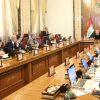
The Iraqi Cabinet held its weekly regular meeting in Baghdad on Tuesday under the chairmanship of Prime Minister Haider Al-Abadi.
It approved funding to support the implementation of measures to improve public services, with a focus on electricity supply, water, health and education.
It also discussed a range of policies to encourage foreign investment, and agreed measures to streamline and simplify procedures for individual investors and companies applying for entry visas and residency permits.
(Source: Govt of Iraq)
Posted in Investment Comments Off on Iraq to Easy Entry Visas for Investors

UNHCR welcomes New Donation from Finland
Posted on 08 August 2018 .
UNHCR welcomes the generous donation of 1.5 million euros from the Government of Finland. The new funds will help UNHCR support vulnerable Iraqis and Syrian refugees in a rapidly changing context.
A year on from the end of fighting in Mosul, the situation in Iraq is increasingly complex.
While the country recovers from conflict, the needs of Iraqis diversify. Almost 3.9 million people displaced by the recent conflict returned to their homes and are restarting their lives. Children are back at school, water and electricity networks are functioning, and devastated communities are seeing the shoots of regrowth. In places hard-hit by the conflict, the conditions for sustainable return are not yet met. Assistance for the 2 million internally displaced Iraqis and the communities that host them must continue for some time to come to discourage people from returning home too soon.
In addition, around 700 people cross the border every month to escape the fighting in Syria that shows no sign of abating.
To meet diversifying needs, UNHCR provides support over a broadening spectrum. From comprehensive humanitarian assistance in camps to community-based projects to promote social cohesion in slowly reforming communities; from psychological assistance for survivors of gender-based violence to support in acquiring the new or replacement identification documents people need to access state social welfare benefits.
“Iraq is an important partner to Finland and the EU,” said Ms. Päivi Laine (pictured), the Finnish Ambassador to Iraq. “We want to support the Iraqis to return home after years of conflict and continue their lives in home communities. It is remarkable that despite its own complicated situation Iraq is generous towards refugees from Syria. UNHCR has been for years a reliable partner and Finland is very satisfied to continue the co-operation in Iraq. The latest donation is 1.5 million euros.”
“The changing context in Iraq requires us to be ever-more nimble in our response,” said Mr. Bruno Geddo, UNHCR’s Representative in Iraq. “Even as cities are rebuilt and communities begin to flourish, hundreds of thousands of people struggle to make ends meet. Flexibility and creativity are at the heart of UNHCR’s work in Iraq, to consistently meet people’s changing needs. Unearmarked funding from donors like the Government of Finland enables us to be responsive and compassionate to the changing situation Iraqis face. With their ongoing support, we will stand with the people of Iraq until the job is done.”
(Source: UN)
Posted in Security Comments Off on UNHCR welcomes New Donation from Finland

Baker Hughes wins Iraq Flare Gas Contract
Posted on 06 August 2018 .
Baker Hughes, a GE company has been awarded a contract by the South Gas Company of Iraq (SGC) for fast-track solutions to help the recovery of flare gas for Nassiriya and Al Gharraf [Garraf] oilfields. The importance of the project was highlighted by the attendance of several high-level officials, including HE Jabbar Al-Luaib, the Minister of Oil of Iraq, at the agreement-signing ceremony.
As per the agreement, BHGE will develop solutions for flare gas recovery at Nassiriya and Al Gharraf oilfields using advanced modular gas processing (NGL) technology developed in the United States and Italy. The project will utilize the modular skid-mounted Gas Processing technology to build 200 million standard cubic feet per day (MMSCFD) NGL plant and is expected to be completed by 2021.
The project will support the development of a fully integrated natural gas liquid (NGL) plant at Nasiriya that will recover 200 MMSCFD of dry gas, liquefied petroleum gas (LPG) and condensate.
The modular solution will support power plants with dry gas for efficient power generation, thus helping meet the growing demand for electricity using clean fuel. It will also contribute to curtailing the amount of gas flared in the fields of Nassiriya and Gharraf that otherwise goes to waste.
The advanced technology used to develop the plant will help produce more than 1,000 tons of LPG per day and recover more than 900 cubic meters per day of condensates, which will help to meet the domestic demand for cooking gas.
The surplus LPG and condensate will be exported, generating high revenue to the Iraqi government. Contributing to the social and economic development of Nassiriya, the project is aligned with the vision of the Ministry of Oil and the government.
H.E. Jabbar Ali Al-Allaibi, Iraq’s Minister of Oil said, that this project is important achievement for the Ministry and marks the entry of a new phase for the sector, highlighted by time optimal utilization of flare gas, which is a major milestone in the government’s extensive efforts to drive a better future for Iraq.
H.E. also highlighted the prominence of this project for the province of Dhi Qar specifically and for Iraq in general adding that BHGE will provide it latest and advanced technologies and solutions to optimize the use of flare gas at the Nassiriya and Al Gharaf oilfields recovering 200 MMSCFD of dry gas daily.
Rami Qasem, President, MENAT & India, BHGE, said:
“As a local trusted partner to Iraq, BHGE is bringing advanced technologies and solutions that can help meet the Ministry’s goals for the industry. This contract is a testament to our continued commitment to supporting the Ministry of Oil’s strategic goals by deploying advanced flare gas solutions to build the country’s oil and gas infrastructure. The project will create more than 500 direct and indirect jobs for Iraqis, build local capabilities and strengthen the local supply chain.”
BHGE is the first and only company in the world to provide a fullstream offering covering products, services and digital solutions for the oil and gas sector, from upstream, to midstream to downstream.
BHGE has been a committed partner to Iraq for more than 50 years, with three offices in Iraq - Baghdad, Erbil and the Basra – and more than 350 employees in country, BHGE continues to deliver its latest technology and expertise to its local customers.
(Source: Baker Hughes)
Posted in Iraq Oil & Gas News Comments Off on Baker Hughes wins Iraq Flare Gas Contract
Why Iraq’s Anti-Govt Protests may be Doomed to Fail
Posted on 05 August 2018 .
This article was originally published by Niqash. Any opinions expressed are those of the author, and do not necessarily reflect the views of Iraq Business News.
By Mustafa Habib.
There are anti-government protests in Iraq every summer. But the recent batch are different, and in ways that could hinder any resolution.
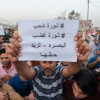
The protests that have been rocking the Iraqi political establishment for almost a month now began when dozens of unemployed young men from the village of Bahila, on the outskirts of the southern city of Basra, gathered outside an oil company premises demanding jobs. The protests then spread to the city centre and widened their scope, with participants demanding better state services and regular water and power supplies.
Protests are expected in Iraq in summer. It’s so hot that a lack of potable water and power to cool things down, or keep food, is enough to drive people onto the streets in anger. But these protests – which spread from Basra to other provinces, including the capital Baghdad – are different from past ones in several ways.
For one thing, they appear to be spontaneous and leaderless, their demands are many, often non-specific and in some cases, unrealistic. And if the protestors have one thing in common, it is their distrust of, and lack of confidence in, the whole of the Iraqi political establishment. They are not targeting any one party or sector; basically, they don’t like anyone.
All of these factors make it unlikely that the protestors will be able to achieve what they want. In fact, it may hamper them in the long run.
The lack of leadership makes it hard to find anyone to negotiate with. Some of the demonstrators said they were heading to Baghdad, having organised delegations to meet with the current prime minister, Haider al-Abadi. But as soon as they said this, other demonstrators were quick to announce that the delegations going to Baghdad did not represent them.
In this case it’s hard to negotiate a solution, let alone following up on any plans.
The absence of any leadership could see the protests fade away. There is also the danger that other less well-intentioned parties could exploit the protests.
During last year’s anti-government demonstrations, the leaders tended to be members of civil society groups and secular movements. They created a culture of protest going back to 2010. The other leader of that movement was the influential Shiite Muslim cleric Muqtada al-Sadr and a large number of his followers.
But all of those former organisers are now somehow tainted by their recent win in the federal elections, held in May this year. They are now seen as part of the political process and therefore, unable to participate in this round of anti-government anger.
Al-Sadr, whose alliance won the most seats in the next parliament, had proposed postponing government formation negotiations in order to respond to the demonstrators. But when al-Sadr tried to send a delegation of his supporters to speak with the Basra demonstrators, the Basra locals refused to receive the group. It was an unexpected rejection.
“Winning has its downsides,” says an MP for al-Sadr’s alliance, who is likely to be awarded a seat in Baghdad’s parliament; he could only speak anonymously as he was not supposed to comment on the situation. “The protestors believe we have become powerful in the country’s politics before the government has even been formed, or the parliament chosen. We do support the demonstrators and if we were asked to choose between taking power or supporting their demands, we would choose protests rather than becoming part of a government that is unable to provide the necessary services,” he told NIQASH.
Another unusual thing about the current protests, and a sign that the demonstrators are opposed to all kinds of elites in Iraq: They were even criticizing the country’s highest Shiite Muslim religious authority, Ali al-Sistani, who is usually not an acceptable target. Protestors had banners criticizing al-Sistani and asking why he had not spoken in support of the protests during the first week they happened.
Al-Sistani finally spoke out about the protests during last Friday’s sermons. He called upon demonstrators to keep up the pressure on the country’s politicians and demanded that the new government be finalized as quickly as possible, and that it be headed by a “strong and brave” prime minister. Al-Sistani also called on the politicians to think carefully about what they did in the past.
By talking about the past, al-Sistani was thought to be referring to the Sunni-Muslim-majority anti-government protests of 2013. The government did not respond to the protestors’ demands, or it clamped down violently – all of which enabled extremists to weaponize the protests. This can be seen as part of the reason for the rise of the extremist Islamic State group in Sunni Muslim areas.
Angry protestors also attacked and set alight the headquarters of Shiite Muslim political parties in southern Iraq. They did not appear to care which offices they damaged and even attacked the headquarters of the Shiite Muslim militias. Until just a few months ago the latter had been revered – and in many cases, considered above criticism within their own communities – for fighting the extremist group known as the Islamic State, and sacrificing their lives to do so.
Iraqi Prime Minister Haider al-Abadi is a more obvious target for the protestors and is often criticised. But over the past three weeks, his acting government – in power until the formation of the next one – has tried rapprochement. Al-Abadi travelled to Basra but was unable to get very far as he was besieged by angry locals. He later decided to receive delegations in Baghdad instead.
To appease the protestors, al-Abadi has fired his minister of electricity and also promised the creation of thousands of new jobs. The government has also tried to engage influential local personalities – including community and tribal leaders and local politicians – to help restore peace.
Unfortunately nobody believes the government. “They are lying to us,” Abdul Ridha al-Rubaie, a community leader in Basra, told NIQASH. “Months ago, when the budget was being discussed, the government announced that it would not be able to create jobs because of the financial crisis in Iraq. Now it is suddenly offering thousands of jobs. But if it is really unable to create jobs – as they said previously – then this promise is worth nothing.”
All this pressure from the demonstrations, as well as al-Sistani’s reproach, has meant that Shiite Muslim political parties are renewing attempts to try and form a government. The political elites of Iraq are currently riven by infighting.
Nonetheless they also remain confused. They’ve been having to try and negotiate with angry mobs and deal with al-Sistani’s call to form a government of technocrats that can change the country for the better, rather than one based on Iraq’s controversial quota system. Some political parties have even stopped saying that one of their members should get the job of prime minister because they know it angers those on the street.
And now they must deal with the even more difficult part: Iraq has never formed a government that ignores the quota system before. To take a new untried route to power, makes things more difficult. And despite ongoing calls to hurry the process of government formation up, it is quite possible that doing so according to al-Sistani’s call, will delay it even further.
Posted in Iraq Public Works News, Politics, Security Comments Off on Why Iraq’s Anti-Govt Protests may be Doomed to Fail
Market Review: “Frenzies and Market Bottoms”
Posted on 03 August 2018 .
By Ahmed Tabaqchali, CIO of Asia Frontier Capital (AFC) Iraq Fund.
Any opinions expressed are those of the author, and do not necessarily reflect the views of Iraq Business News.
The market, as measured by the RSISUSD index, marked an important bottom in July as part of a likely bottoming process. The multi-month bank selling shifted into high gear. This intensified into a frenzy, climaxing by the middle of the month with the liquidation of a large foreign position in the Bank of Baghdad (BBOB) – one of the top banks on the Iraq Stock Exchange (ISX). At the worst point in July, BBOB and the index were down -24% and -12% respectively for the month, after which both reclaimed these losses to end up +2.4% and +0.5%.
The selling in the banking sector over the last few months, driven by concerns over declining FX margins (as explained here in the past), was paced by consistent foreign selling in BBOB. The size of the selling exaggerated the stock’s declines which had a knock-on effect on other banks which declined in-tandem and dragged the market with them given the sector’s dominance of trading on the ISX.
Local retail trading is dominated by speculators, yet locals tend to appreciate the true values of local assets especially at extreme valuations. At the worst point, BBOB’s market capitalization was equal to about 0.3x Book Value, 8.5% of assets and 15% of cash (based on the trailing 12 months) which would suggest that the stock was discounting some sort of end of the world type event. The locals, aware that such a catastrophe was not around the corner and that the decline was a function of a portfolio liquidation, raised funds from family, friends and banks in order to buy BBOB. Joined by a few foreign investors, undoubtedly aware of the same valuations, the combination absorbed all the significant selling, after which the stock began to climb.
Irrespective of BBOB’s strong position among local banks, it too suffered from the same forces that crushed the sector’s earnings, as discussed in last month review of banks (Of Banks and Budget Surpluses). Furthermore, it had its share of company specific issues and structural weaknesses that were exposed by the pains of 2014-2017, including the recent pressure on FX margins. The bank’s focus on addressing these weaknesses at the expense of revenue growth is hindering near term growth. However, given the quality of its management, strong position with high quality customers (in particular foreign companies) and the strength of its franchise, it should emerge in a position to resume growth in the recovering economy.
As explained last month, the banks’ leverage to the economy crushed their earnings. In particular, the double whammy of the ISIS conflict and the collapse in oil prices squeezed government finances as expenses soared while revenues plummeted. The government resorted to dramatic cuts to expenditures by cancelling capital spending and investments which, due to the centrality of its role in the economy, led to year-year declines in non-oil GDP of -3.9%, -9.6% and -8.1% for 2014, 2015 and 2016 respectively. Ultimately, the government had a cumulative deficit of around USD 41bn during this period and accumulated significant arrears to the private sector in the process.
The same leverage should work in reverse as the expected budget surpluses of USD 28.5bn for 2017-2019 should have simulative effects on economic activity which ultimately should translate to stronger future earnings for the banks. These were discussed in further details at: “Forget the Donations, Stupid.”
For BBOB, the changes for the worse during the years of conflict can be seen through the three charts below that look at loans/non-performing loans (NPL’s), deposits and trade finance and their association with budget surpluses/deficits. BBOB Data as supplied by the research team at Rabee Securities is gratefully acknowledged. Data from 2010-2014 are based on Iraqi accounting standards, while data from 2015-2017 are based on IFRS.
BBOB’s loan book growth peaked in 2015, while NPL’s grew at the height of the crisis in 2016. The sharp decline in the loan book since then exaggerated the growth of NPL’s as a percentage of loans, as NPL’s declined in absolute terms marginally in 2017 vs. 2016.
Bank of Baghdad: Loans, NPL’s & Loan provisions 2011-2017

(Source: Central Bank of Iraq (CBI), Rabee Research, Asia Frontier Capital (AFC))
Though NPL’s are relatively high, even during the relative boom times, loans as a percentage of deposits have been very low at the mid-20%’s level as can be seen below. Moreover, most of these loans are collagenized by property as most banks’ loans are in Iraq where the norm is for collateral value at 2x the loan. BBOB’s relatively large NPL’s were a function of the relative size of their loan book which meant a larger exposure to riskier loans taken during the boom years.
Bank of Baghdad: Deposits and Loan/Deposit ratio 2011-2017

(Source: Central Bank of Iraq (CBI), Rabee Research, Asia Frontier Capital (AFC))
The decline in deposits as a function of the economic contraction was made worse by the decline in BBOB’s trade finance business as that meant the loss of funds deposited as partial collateral required for the provisioning of trade finance.
Trade finance, once an engine of growth for the bank suffered as a result of the sharp economic contraction brought about by investment cuts and the slowdown in consumer spending.
Bank of Baghdad: Trade Finance 2011-2017

(Source: Central Bank of Iraq (CBI), Rabee Research, Asia Frontier Capital (AFC))
It’s logical to conclude that the sea change which has taken place in the government’s financial health would reverse the trends that affected the sector’s earnings as the significant stimulus to non-oil GDP should lead to sustainable economic activity which would provide BBOB room to recover, address its weaknesses and grow.
The question- when will these budget surpluses find their way into the economy through government action- has been partly answered by the government’s response to nationwide protests that erupted in early July, demanding the provision of services. The first response was to allocate USD 3bn to the city of Basra to fund long delayed infrastructure projects, a USD 669mn injection into the country’s housing fund to provide about 25,000 housing loans, plus a number of smaller projects in the southern governorates.
The eruption of protests in the city of Basra and their spread across the southern governorates right to Baghdad has, as is the usual case in all Iraqi events, led to two polar views. The first dismisses these as the usual ritual of summer protests ignited by the scorching heat that would soon settle with a few government handouts and the end of summer - echoing perhaps an old Iraqi politician who likened Iraqis’ anger to effervescent salts that erupt with a great fanfare before settling down. The second warns of the emergence of instability given that the Iraqi political establishment is incredibly slow to change its bad old habits, if at all, but that the young angry population is running out of patience.
While both arguments have merit, current protests should be seen from a wider prism in that they are the fourth instalment of a protest movement that began in 2010 and developed in both scope and maturity. The last incarnation in 2015 had a profound effect on how the election was fought and its ensuring results, as it led to the break-up of the ethno-sectarian monolithic blocs that were dominant over the past 15 years and which were at the root of Iraq’s instability. Thoughts supporting this line of thinking appear in (The Protest Movement, the Politicians and the Elections).
The influential religious leadership has supported the protest movement calling for the quick formation of a government focused on meeting the demands of demonstrators. This should hasten the formation of the government ending the current uncertainty. However, irrespective of how it is formed, the government would have the financial wherewithal to start the reconstruction of the country and the provisioning of infrastructure in the form of cumulative two-year budget surplus of USD 18.8bn by end of 2018- equal to a stimulus of 14.5% of non-oil GDP once reconstruction projects are underway. These would be enhanced by potential budget surplus of USD 9.3bn in 2019 or a further 6.8% stimulus to non-oil GDP. (Details available in a recent article).
It worth noting that while Iraq has its share of challenges, none are unsolvable in that the key issue of the last few years has been a sequence of crises that have forced successive governments into short -term solutions without providing overall long-term solutions. For instance, the current demonstrations were started by anger over the lack of electricity coverage beyond a few hours each day. Yet, “of 26 gigawatts installed generation, theoretically enough to meet the current 23 GW of demand, less than 17 GW is operable because of lack of fuel, maintenance and transmission capacity: source.” As such, these are addressable in a reasonable timeframe by a focused government with a clear mandate which could emerge given the current pressures from the electorate supported by the religious authority.
Finally a report on Iraq’s debts addresses a number of misconceptions on its debt profile that would have a huge implication for its ability to fund the needed reconstruction and the provisioning of services is here (Understanding Iraq’s Debt).
Please click here to download Ahmed Tabaqchali’s full report in pdf format.
Mr Tabaqchali (@AMTabaqchali) is the CIO of the AFC Iraq Fund, and is an experienced capital markets professional with over 25 years’ experience in US and MENA markets. He is a non-resident Fellow at the Institute of Regional and International Studies (IRIS) at the American University of Iraq-Sulaimani (AUIS). He is a board member of the Credit Bank of Iraq.
His comments, opinions and analyses are personal views and are intended to be for informational purposes and general interest only and should not be construed as individual investment advice or a recommendation or solicitation to buy, sell or hold any fund or security or to adopt any investment strategy. It does not constitute legal or tax or investment advice. The information provided in this material is compiled from sources that are believed to be reliable, but no guarantee is made of its correctness, is rendered as at publication date and may change without notice and it is not intended as a complete analysis of every material fact regarding Iraq, the region, market or investment.
Posted in Ahmed Tabaqchali, Investment Comments Off on Market Review: “Frenzies and Market Bottoms”