



New Power Plant inaugurated in Sulaymaniyah
Posted on 01 August 2018 .
Kurdistan Regional Government Prime Minister Nechirvan Barzani inaugurated a new power station in Sulaymaniyah.
In a speech during the ceremony, Prime Minister Barzani thanked South Korea for helping build the plant, which generates 400 KV electric power. He also said that despite major challenges, the KRG has taken serious steps ahead, and it allocated significant resources to the electricity sector.
Below is the transcript of Prime Minister Barzani’s speech:
Ladies and gentlemen,
Good morning. I welcome you all to the grand opening ceremony of the 400 KV power plant in Bazian. I congratulate everyone on successfully finishing this important project, and I hope this project will contribute to solving the electricity issue in the area and in the Kurdistan Region in general.
I commend the Ministry of Electricity, the Korean National Oil Company (KNOC), the project implementer Posco from South Korea, the Ministry of Natural resources and all others involved in delivering this project after facing many obstacles and issues such as the fight against terror and the financial crisis. Although it has taken a long time, the project was finally finished and started operating.
I would like to especially thank the local community here and those respected individuals who some of them are present here today. They have played an important role in resolving many issues related to social issues or land ownership disputes or compensation issues. I again applaud them for their efforts, and I welcome them again.
Ladies and gentlemen,
This project is part of a wider strategic plan set out by the KRG for the electricity sector. However, similar to other projects, it has been delayed due to the war against the terror and financial crisis. It is true that the war and the financial crisis have adversely affected all aspects of life, but the KRG, with the support of its loyal citizens and friends of Kurdistan Region, has always striven to overcome the problems and the crises by implementing the projects to its best capacity even during the hardships.
Yes, I agree that there is a problem in the electricity sector. There has been the inability for the projects and plans to be implemented adequately. And, a there has been an exponential increase in demand on electricity and other public services due to urban development of the cities and towns, constant building of mega constructions such as malls, industrial areas and the renovation of the villages. And an imposed war was among other reasons that KRG could not implement its plans and projects as it should have.
Despite all that, the KRG made serious steps ahead, and it allocated significant resources to the electricity sector. Meanwhile, it encouraged private investors to initiate large projects for that sector in Erbil, Sulemani, Duhok, Halabja and other areas.
And now, enforced by the perseverance of our patient people and the heroic sacrifices of our valiant Peshmergas, we have vanquished the plans of our foes. The hard days are passing. The KRG, with all its capacity, will make steps ahead on all fronts, and it will, again, resume the projects. For the electricity sector too, we are in need of small and large steps, and this project is one of those steps. It is an attempt to reduce the issues of electricity.
Besides those attempts by the KRG to better the electricity, as previously announced that the KRG is going ahead with the implementation of Smart-Meters for electricity. This new system will have a major role in reorganizing the electricity distribution process; therefore, it would translate into providing more electricity to the public.
In addition, this system will help in changing a bad cultural habit of over-consumption of electricity and tampering with it. Instead, it will help create a new and good habit. The habit of energy conservation and reducing the consumption of electricity is very necessary for the Kurdistan Region. This system will encourage everyone to use only the amount of electricity that is needed and when needed.
Ladies and gentlemen,
This project in Bazian benefits the national grid, but it also has a special benefit to the area, which is an industrial area, as industrial projects can benefit from it. As planned by the KRG, I hope to see more projects in other sectors to be implemented in this area.
Bazian and its surrounding area with its patient and forbearing people have a history full of pride, and they undoubtedly deserve more projects and better services. The KRG will diligently continue in pursuing its mission of equally reconstructing every part of Kurdistan without distinction. It will equally provision services and implement projects in all areas.
The KRG has never made distinctions between two different areas or between cities. Because of political competitions and rivalries, some people have irresponsibly resorted to creating a false image of KRG for being unequal to different areas of the Kurdistan Region. There are some people are ready to do anything just to make people lose trust and faith in their own government. They continuously work on disseminating the culture of rejection of everything.
They do this for only one reason because they are not in power and they have not been able to win the trust of people. This is a very damaging phenomenon, because the nation, the government, and institutions belong to the people of Kurdistan, but not any political party or any other faction. It is correct that there are shortages and problems, but not everything in this country is negative.
The people of Kurdistan are very aware and mindful than to listen to those dark pessimistic voices. It was because of the strong awareness of the people of Kurdistan, we were able to surpass all those recent years of hardship and crises. It was because of the loyalty and deep understanding of the people of Kurdistan for the situation, we were able to withstand all the problems, the war, and the crises, as they never lost faith and trust.
Here, I would like to express the utmost gratitude and reverence of the government to the people of Kurdistan and those who are on the payroll of the KRG. They have demonstrated their faithfulness to their nation, and they showed their maximum understanding of the serious situation and the threats that were engulfing the Kurdistan Region.
I would like to applaud the courageous Peshmergas, security forces and volunteers, who fought with soul and blood in defending what is achieved so far. I salute our fallen heroes. Our heartfelt condolences to the martyr’s family members and their relatives.
Dear fellow citizens of Kurdistan,
The interests of the Kurdistan Region and protecting its accomplishments requires us to be united. It is normal for the political parties to be competitive with each other. But for the public interest, for attaining the constitutional rights for the Kurdistan Region and in critical matters, we need to be together and unified.
I, again, call upon all factions in the Kurdistan Region to put aside their political discords, and go to Baghdad as one team, formed on the basis of the interests of the people of Kurdistan.
In conclusion, I congratulate all who participated in succeeding in this project. I wish for us to meet again in ceremonies similar to this project in this area and all other areas in the Kurdistan Region.
Thank you all.
(Source: KRG)
Posted in Construction & Engineering In Iraq Comments Off on New Power Plant inaugurated in Sulaymaniyah

Electricity Ministry Denies Saudi Solar Power Deal
Posted on 31 July 2018 .
By John Lee.
The spokesman for the Ministry of Electricity, Dr. Musab Sari al-Mudaris [Mussab Serri al-Mudaris] (pictured) has denied reports that he had told Bloomberg about an agreement to buy electricity from Saudi Arabia.
He said the statement from the news agency is incorrect.
Bloomberg had cited Mudaris as saying that Saudi Arabia agreed to build a 3,000-megawatt solar power plant in Saudi Arabia and sell the electricity to Iraq at $21 per megawatt-hour, a quarter of what it paid Iran for the imports.
Iran recently stopped supplying electricity to Iraq due "the accumulation of debts owed by Baghdad".
(Source: Ministry of Electricity, Bloomberg)
Posted in Iraq Industry & Trade News Comments Off on Electricity Ministry Denies Saudi Solar Power Deal
Minister for Electricity Suspended
Posted on 30 July 2018 .
By John Lee.
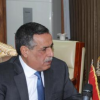
Prime Minister Haider al-Abadi suspended Electricity Minister Qassim al-Fahdawi (pictured) on Sunday for what he described as the "poor performance of the sector".
Protests against unemployment and poor public services turned violent earlier this month, with several protesters killed.
Many areas of Iraq are struggling to cope with insufficient electricity supply during the annual heatwave.
(Source: Office of the Prime Minister)
Posted in Iraq Industry & Trade News, Politics Comments Off on Minister for Electricity Suspended
Iraq Immediate Stabilisation Programming, FY17-18
Posted on 30 July 2018 .
The Iraq Governance and Security and Justice Programmes are key in delivering the UK’s mission to support the Iraqi Government and people as they build a stable, prosperous and democratic nation.
Working with the Government of Iraq, the UN Mine Action Service (UNMAS) and the UNDP, CSSF funding has helped to rebuild essential infrastructure in areas liberated from Daesh, and cleared it of explosive hazards, enabling over 3.6m people to return home and access basic services, including healthcare, education, water and electricity.
CSSF support to the UNDP-led Funding Facility for Stabilisation, a multi-donor pooled fund, has helped deliver over 1,500 stabilisation projects restoring services and essential infrastructure in liberated areas. UNDP has staff deployed across Iraq, including embedded stabilisation advisors in 10 municipalities to support project planning.
The programme has provided cash for work for both men and women, and stimulated local business through reconstruction contracts. Over 15,000 residents earned a wage whilst restoring their homes and city.
Inclusion is critical to the stabilisation effort—and women have been recruited as engineers, social workers and in local councils. In total over 2,000 jobs and more than 1,000 small business grants have been created for women, and over 1,000 vulnerable women and female headed households have benefitted from cash for work programmes.
As well as the ‘pooled’ Funding Facility for Stabilisation projects, CSSF funding has specifically paid for the rehabilitation of a water plant serving over 300,000 people in Mosul and repaired over 2,000 homes in the city.
In Mosul the UNMAS demining programme has facilitated the removal of more than 585,000 explosive hazards, helping to enable the return of nearly 1 million people. Clearance locations include Al Khansa Hospital in Mosul and four schools in Al Qayarra, helping 1,286 children return to school.

To download the full report from the UK's Foreign and Commonwealth Office, please click here.
Posted in Construction & Engineering In Iraq, Healthcare, Iraq Public Works News, Security Comments Off on Iraq Immediate Stabilisation Programming, FY17-18

Internet Shuts Down, Fake News Blossoms
Posted on 29 July 2018 .
This article was originally published by Niqash. Any opinions expressed are those of the author, and do not necessarily reflect the views of Iraq Business News.
By Mustafa Habib.
Iraqi Internet Shuts Down, Fake News Blossoms During Information Blackout
When it came to disinformation, shutting down the Internet to prevent protests in Iraq may have backfired. Iraqis get most of their information from social media and there was none, so false reports circulated wildly.
On June 14, the Iraqi government shut down the Internet in an effort to try and prevent the spread of anti-government protests. The demonstrations, which called for better state services, power and water, had spread from the southern city of Basra to nine other provinces, including Baghdad. And clearly the government wanted to prevent them from going any further.
For the past few years, these types of protests have broken out every summer. In stifling heat rising to 50 degrees Celsius, the lack of power to refrigerate foods or keep houses cool and the fact that water coming out of the taps is salty, is enough to drive Iraqis to protest. But these demonstrations spread further than previous years.
And one imagines that the Iraqi government was trying to prevent the spread of information about the protests, in order to contain them. They are able to block the Internet thanks to the fact that most of infrastructure used for relaying the Internet is government-owned.
However the Internet blockage seemed to only frustrate Iraqis further. Locals here rely heavily on social media to get their news; they tend not to trust local media, believing it to be partisan or funded by interested parties who push their own agenda. What friends and relatives post on Facebook has become a major and important source of information – and when the Internet is down they obviously cannot access this.
So locals found themselves watching TV to get more information about the protests or resorting to VPN – virtual private networks – to access the online world. Iraqis have become accustomed to using this kind of software when the government shuts down, or throttles the Internet here, but as digital privacy experts point out, these too can be dangerous, especially with regard to privacy.
Clearly Iraqis right around the country were interested to know more about the protests. But pictures and videos were hard to come by, given the Internet shutdown. This led dozens of Facebook pages, specializing in Iraqi news and current affairs, to write up stories about the protests – but as they did, they also used older pictures and videos and many ended up publishing unsubstantiated rumours.
Iraqis who sympathized with the demonstrators didn’t just publish news reports on their pages, they also uploaded pictures and videos to Facebook – some of these were real and some were not. News organisations, like NIQASH, received these kinds of items via messages from people who appeared to be private citizens; however, due to the Internet shutdown, it was difficult to verify the content that was being sent and some of it was certainly not from the current demonstrations.
In fact, as Internet-rights activist and head of the Ansam Network, Haidar Hamzouz, says, the Internet blockade may well have had the opposite of the government’s intended effect. “Shutting down the Internet is a violation of the freedom of expression,” Hamzouz told NIQASH. “And the decision to do this was not the right one – it actually contributed to the spread of false news and it also became very difficult to inform anyone that certain items were false news.”
It seems that in Iraq, as elsewhere in the world, false reports and emotion-generating half-truths spread far faster than the truth.
Even though the government owns the public broadcaster, Iraqi Media Network, and they have huge resources, they still have not been able to stop the spread of these false reports and rumours, Hamzouz says. “We need institutions that are capable of relaying the facts and combatting fake news, rather than those who just shut down the Internet,” he argues. “Combatting fake news and untrue reports requires a change in the communal culture, one that values verification and checks sources. Unfortunately this doesn’t yet exist in Iraq,” he notes.
One of the more dangerous pieces of false news involved reports that the security forces, who were clashing with the demonstrators in the south, were actually from elsewhere, and more specifically from Anbar and Mosul. The message was that Sunni Muslim soldiers – who mainly come from central and northern Iraq - were abusing Shiite Muslim protestors, who mainly live in southern Iraq. It was clearly a report aimed at fuelling sectarian conflict.
“It is so unfortunate that this news incited hatred against us,” says Ali al-Rubaie, a police captain based in Rustafa, Baghdad. “The members of the security forces who were deployed to the protests were actually residents from the same cities. Each province has its own police and counter-terrorism forces. It would be impossible to do that job with troops from outside of the provinces in which the protests occurred,” he argues.
Additionally when the protests first started, news that the demonstrators were clashing with Iraqi security forces spread fast. But given the internet blockade, it was difficult to find pictures from incidents. One picture that was shared many times shows an Iraqi soldier pointing his gun at an unarmed civilian lying on the ground. However the picture was actually taken during a military training exercise in 2014, organized for a military training graduation ceremony in Karbala.
Another dangerous piece of news had Talib Shaghati, the head of Iraq’s special forces troops, commenting on the clashes between the demonstrators and the security forces. “This is not our battle and we will not stain our hands with the blood of our sons and brothers for the sake of some corrupt officials,” Shaghati was alleged to have said in a statement that was widely circulated on social media.
The same report said that Shaghati had been asked to send his troops to the protests but he had refused, and that he had asked the government to listen to the demonstrators’ demands before it was too late. Thousands of Iraqis believed this report and some even said that there should be a military coup because it was clear that the protests had no impact on the government, and the military were on the protestors’ side.
The US was not coming to the rescue either: One report said that US president Donald Trump had said his government was keeping a close eye on the protests in Iraq. This was followed by video footage of two military divisions landing at Baghdad airport. None of this was true: The video was an old one.
Saudi Arabia was not coming to the rescue either. As the protest movement gained momentum, its critics were divided. Some said Iran was behind the protests because the neighbouring nation was going to stop supplying power to Iraq. Others said Saudi Arabia was at fault and was pushing people to demonstrate in order to cause chaos in Iraq.
One of the obviously false reports was started by a page on Facebook called Saudi News. It said that Saudi Arabia’s ruling monarch had ordered water lines and electricity transmission lines to be built urgently for the southern parts of Iraq. The report spread quickly throughout Iraqi social media despite its fanciful nature.
Posted in Iraqi Communications News, Politics, Security Comments Off on Internet Shuts Down, Fake News Blossoms
Video: Why Oil-Rich Iraq Needed Kuwait Energy Deal
Posted on 28 July 2018 .
From Al Jazeera. Any opinions expressed are those of the authors, and do not necessarily reflect the views of Iraq Business News.
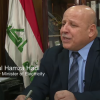
Many ask why oil-rich Iraq needed to make Kuwait energy deal
Iraq's government has signed a deal with Kuwait in a bid to alleviate its energy crisis after the lack of kerosene and electricity led to widespread unrest.
But many are asking why Iraq, which holds the world's fifth-largest petroleum reserves, needs help from Kuwait.
Al Jazeera's Imran Khan reports from Baghdad:
Posted in Iraq Oil & Gas News Comments Off on Video: Why Oil-Rich Iraq Needed Kuwait Energy Deal
Kuwait donates Generators to Iraq
Posted on 26 July 2018 .
Kuwait has donated 17 mobile electric generators with a total capacity of 30,000 kilowatts to Iraq, the Undersecretary of the Kuwaiti Ministry of Electricity and Water, Mohammed Bushehri has announced.
In a press statement, Bushehri said the donation came “to alleviate the electricity crisis in the Iraqi city of Basra”.
“In the light of the current difficult circumstances faced by our brothers in Iraq, which is partly due to a severe shortage of electricity, His Highness the Emir of Kuwait, Sheikh Sabah Al Ahmad Al Jaber Al Sabah has instructed us to provide urgent assistance to brotherly Iraq” he said.
The Iraqi Ministry of Electricity announced last Friday that Kuwait would supply it with fuel to operate the power stations in the country.
Videos were circulated on social media showing a convoy of generators and fuel tankers heading to Iraq.
Iran has recently stopped exporting electricity to Iraq as a result of Baghdad’s accumulated debt.
(Source: Middle East Monitor)
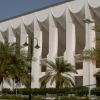
(Picture: Parliament in Kuwait City. Credit, Leshonai)
Posted in Construction & Engineering In Iraq, Iraq Industry & Trade News, Iraq Oil & Gas News 2 Comments

Video: Iraq Struggles as Protests Spread
Posted on 19 July 2018 .
From Al Jazeera. Any opinions expressed are those of the authors, and do not necessarily reflect the views of Iraq Business News.
Police and medical sources say at least 11 people have now died in protests in southern Iraq against the poor state of public services.
The unrest began in Basra last week and has spread to several other large cities.
One of the main reasons for the anger is the frequent power blackouts that are severely worsening living conditions.
Some in Iraq are hoping that Iran can supply them with electricity via Iran's national grid, prompting Saudi Arabia to offer aid.
The government in Baghdad is racing to find a way to meet some of the protesters' demands for economic and energy reforms and bring an end to the protests before they turn into a large, nationwide movement.
Al Jazeera's Imran Khan reports from Baghdad:
Posted in Politics, Security Comments Off on Video: Iraq Struggles as Protests Spread
Iraq Fails to convince Iran to Resume Power Supply
Posted on 19 July 2018 .
Iraqi Electricity Minister Qassem Al-Fahdawi (pictured) said yesterday that his country has failed to convince Iran to resume supplying Iraq with electricity.
Last Friday, Al-Fahdawi along with an Iraqi delegation arrived in Tehran where they held talks with Iranian officials to resume supplying Iraq with 1,000 megawatts of electricity, which Tehran cut off about two weeks ago due to the accumulation of debts owed by Baghdad.
Al-Fahdawi explained in a statement received by Anadolu News Agency that his ministry “has put [forward] an alternative plan to importing electricity from Iran”.
Iraq has been importing electricity from Iran for many years after their power infrastructure was destroyed by decades of war and blockade.
According to figures released by the Iraqi Ministry of Electricity in August, last year the country produces 15,700 megawatts of electricity, however it needs more than 23,000 megawatts of electricity to meet its population needs.
The power outage caused by the Iranian move contributed to fueling violent protests in the southern Iraq provinces which led to at least five people being killed and 190 wounded after security forces fired on protesters.
(Source: Middle East Monitor)
Posted in Iraq Industry & Trade News Comments Off on Iraq Fails to convince Iran to Resume Power Supply
Video: Death Toll Rises in Southern Iraq Protests
Posted on 17 July 2018 .
From Al Jazeera. Any opinions expressed are those of the authors, and do not necessarily reflect the views of Iraq Business News.
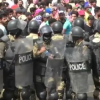
For two weeks, demonstrators have gathered in southern Iraq to protest against the lack of access to electricity, clean water, and jobs.
Protesters have said that they are organising peacefully and the response of the security forces has been excessive, after at least eight people have been killed.
The government in Baghdad has promised to address the protesters' concerns, but many say that they don't trust any of Iraq's politicians.
Al Jazeera's Osama Bin Javaid reports:
Posted in Politics, Security Comments Off on Video: Death Toll Rises in Southern Iraq Protests