


Video: Who can solve Iraq's Electricity Crisis?
Posted on 02 October 2018 .
From Al Jazeera. Any opinions expressed are those of the authors, and do not necessarily reflect the views of Iraq Business News.
This week, German conglomerate Siemens announced that it's in discussions to help rebuild and boost Iraq's power generation infrastructure.
So, what are the challenges facing the new Iraqi government? Why can't one of the world's top oil producers keep the power on? Are Siemens power stations the solution to Iraq's electricity crisis? And what will it take to rebuild Iraq's power grid?
Posted in Iraq Industry & Trade News Comments Off on Video: Who can solve Iraq's Electricity Crisis?
Iraq seeks Sanctions Waiver on Iran Energy Trade
Posted on 25 September 2018 .
Iraq is negotiating with the U.S. for exemptions from the impending snap-back of sanctions against Iran, arguing that it could not cut consumption of Iranian electricity and natural gas immediately without suffering serious economic harm and social instability.
An Iraqi delegation was in Washington last week seeking a waiver for its cross-border trade, meeting with senior officials in the State Department, Treasury Department, and National Security Council, according to multiple officials familiar with the talks.
More details here from Iraq Oil Report (subscription required)
(Source: Iraq Oil Report)
Posted in Iraq Industry & Trade News, Iraq Oil & Gas News Comments Off on Iraq seeks Sanctions Waiver on Iran Energy Trade
Siemens Pushes for Major New Iraq Electricity Deal
Posted on 23 September 2018 .
By John Lee.
German business newspaper Handelsblatt reports that Chancellor Angela Merkel has personally intervened with Prime Minister Haider al-Abadi to persuade the Iraq Government to sign a major contract with Siemens to upgrade the country's electricity infrastructure.
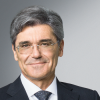
It is understood that the State Secretary for Economic Affairs, Thomas Bareiß, accompanied Siemens Chief Executive Joe Kaeser (pictured) on a visit to Baghdad on Sunday in the hope of agreeing a multi-billion euro deal.
The German export credit guarantee company Hermes would be expected to underwrite any contract.
US-based General Electric (GE) is believed to be also in the running.
(Source: Handelsblatt)
Posted in Iraq Industry & Trade News 1 Comment
S Korea supports UNHCR Humanitarian Activities
Posted on 21 September 2018 .
Republic of Korea supports UNHCR’s humanitarian activities in Iraq
The Government of the Republic of Korea continues its support to UNHCR’s humanitarian activities in Iraq with a new donation of US$ 1.2 million.
Despite promising signs of recovery in parts of the country, millions of Iraqis still need comprehensive humanitarian and protection assistance. Some 1.9 million people are displaced; hundreds of thousands are in camps. Many will not be able to return home any time soon.
Rebuilding Iraq is no small task. As the country gets back on its feet, it is vital that the people who need emergency assistance continue to receive it for as long as they need it.
Communities affected by the recent conflict are beset by hardships. Thousands of vulnerable people arrive in UNHCR-managed camps every month because they cannot find work or pay rent in their home areas, because progress in clearing explosive hazards is slow, or because services like water and electricity are not functioning.
In July alone, 1,700 families - over 10,000 people - arrived in camps across Iraq. The majority of the new arrivals were displaced at least once before. With each displacement, people become more vulnerable.
H.E. the Korean Ambassador to Iraq, Mr. Song Woong-Yeob (pictured), said,
“The Republic of Korea is deeply committed to supporting humanitarian activities in Iraq and will continue to stand by Iraqi people who are in need of humanitarian assistance. I firmly believe that Korea’s continuing support for the activities through the Iraqi Government and international organizations like UNHCR will further help the endangered Iraqi people to recover and rebuild their communities by imbuing them with hope for a new future.”
Mr. Bruno Geddo, UNHCR’s Representative in Iraq.
““There is no quick fix for Iraq. For people to see tangible improvements in their lives we must continue to respond to the situation, and stand beside the Iraqi people until they can return home safely. Sustainable return is a cornerstone of long-term peace and stability, and thanks to donors like the Republic of Korea, UNHCR is able to backstop Iraq’s journey to recovery. We will support the country’s most vulnerable people for as long as they need us.”
(Source: UN)
Posted in Healthcare, Politics Comments Off on S Korea supports UNHCR Humanitarian Activities
New Demographic Survey of the Kurdistan Region
Posted on 21 September 2018 .
The Statistics Office, IOM, and UNFPA launch the Demographic Survey of the Kurdistan Region of Iraq
The Kurdistan Region Statistics Office (KRSO), UNFPA, and IOM have launched the demographic survey of the Kurdistan Region of Iraq (KRI), one of the largest statistical exercises conducted in the region since 1987.
The survey provides a comprehensive profile of the current population demographics, employment and income, housing, household possessions, literacy and education levels. This socio-demographic study gathered information from 12,699 households, including long term residents and displaced families in the three KRI governorates of Duhok, Erbil and Sulaymaniyah.
This research is timely as it comes at a time where the country is emerging from the conflict and economic hardship; while a significant portion of displaced families have returned or are considering to go back home.
The 2014-2017 war against the Islamic State of Iraq and the Levant (ISIL) has had a severe impact on the Kurdistan Region: from the start of the crisis, KRI has provided refuge to more than one million displaced Iraqis and continues to host more than 800,000 internally displaced persons.
Dr Ali Sindi, Minister of Planning for the Kurdistan Regional Government (KRG), said:
“The information in this survey establishes a reference base for future statistical studies, and will assist the Kurdistan Regional Government with better planning and allocation of resources.”
Mr Gerard Waite, IOM Chief of Mission said:
“This survey is a true collaborative effort with the KRG and UNFPA and hopefully will contribute to addressing the needs of the most vulnerable households, in this critical post-crisis period.”
Mr Ramanathan Balakrishnan, UNFPA Representative to Iraq added:
“This demographic survey fulfils the need for updated population and socio-economic statistics and will serve as a roadmap for future, policy development and planning with KRG and partners.”
The survey was made possible through the collaboration of the Kurdistan Region Statistics Office (KRSO) within the Kurdistan’s Regional Government’s Ministry of Planning; IOM – the UN Migration Agency - and the United Nations Population Fund (UNPFA). Data was collected from October to November 2017.
Support for the publication of the report is provided by the U.S. Department of State, Bureau of Population, Refugees and Migration, and by UNFPA.
Key Finding & Statistics:
- 87 per cent of households have a monthly income of less than 1,000,000 Iraqi Dinar (approximately 850 United States dollars).
- More than 20 per cent of youth (18-34 ages) out of workforce are reported to have lost hope in finding a job.
- In 27 per cent of households the head of household had not worked in the week preceding the survey. Over 40 per cent of the KRI population aged between 15 and 64 years is an active part of the labour force with the public sector employing0 nearly half of the working population.
- Overall data indicates that the average household size in KRI is 5.1 members.
- 35 per cent of the population is younger than 15 years, 61 per cent belongs to the active labour force age group of 15-65 years and 4 per cent is 65 or above.
- KRI families currently enjoy an adequate standard of living: nearly all possess most common household appliances (television, stove or refrigerator). Three quarters of all families own the house they live in connected to the public water (90 per cent) and electricity networks and equipped with sanitation facilities.
(Source: UN)
Posted in Employment, Iraq Industry & Trade News, Politics Comments Off on New Demographic Survey of the Kurdistan Region
Siemens to Boost Power Output at Al-Sadder
Posted on 19 September 2018 .
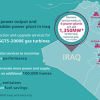
In line with Iraq’s goal to improve the efficiency and availability of the country’s power plants, Siemens will provide inspection and upgrade services for two power generation units at Al-Sadder Power Plant.
Located in Baghdad, the 600-megawatts (MW) facility is one of the country’s major power plants that currently supplies approximately 600,000 homes with power. The works will be conducted as part of a new contract between Siemens’ Power Generation Services Division and the Ministry of Electricity.
Under the agreement, Siemens will overhaul two SGT5-2000E gas turbines and perform its advanced 3-dimensional turbine blades and vanes (Si3D) upgrade. The Si3D upgrade is designed to improve power output and thermal efficiency through a combination of 3D aerodynamic design, cooling improvements, and advanced materials. These will help the power assets at Al-Sadder to generate enough power to supply an additional 100,000 homes with electricity.
“Siemens has been a development partner to Iraq for over 80 years. We are committed to supporting the country to strengthen its power infrastructure by offering innovative services that can be instrumental in upgrading existing facilities,” said Gianluigi Di Giovanni, Senior Executive Vice President of Siemens Power Generation Services in the Middle East and North Africa. “The latest upgrade and maintenance services at Al-Sadder, provided in collaboration with the Ministry of Electricity, will bring additional power to households, public buildings and industries.”
In addition to increasing the power output, the upgrade project will improve the efficiency of the turbines by up to 2 percent, resulting in significant fuel savings and reduced CO2 emissions. The agreement also includes the plant’s SPPA-T3000 control system, the supply of anti-virus solutions as well as the support from Siemens’ Remote Expert Center, which is a 24/7 online maintenance support service, enabling more efficient fault diagnosis and troubleshooting.
The latest project at Al-Sadder plant follows a series of service agreements with Iraq’s Ministry of Electricity to carry out critical service and maintenance works at six power plants throughout the country. Once completed, the upgraded units will add 1,350 MW to the national grid, enough to supply approximately 20 million Iraqis with reliable electricity.
(Source: Siemens)
Posted in Iraq Industry & Trade News Comments Off on Siemens to Boost Power Output at Al-Sadder
IOCs discuss Basra’s Oil and Gas Megaprojects
Posted on 18 September 2018 .
BP, Shell, Basra Gas Company, LUKOIL, Petronas and Chevron discuss Basra’s oil and gas megaprojects
The 5th annual CWC Basra Megaprojects Conference - Oil, Gas & Environment will be held from 9-10 October in Istanbul, Turkey chaired by the EU Ambassador to Baghdad, Ramon Blecau.
In a show of support for the rebuilding of Iraq, Ambassador Blecau and industry experts will highlight the business opportunities available in the resource-rich South of Iraq with the aim of driving more investment to develop the country’s industrial infrastructure.
The conference takes place under the patronage of Basra’s Governorate, Council and oil company and looks to find solutions to the challenges of Basra’s oil and gas megaprojects and increasing Iraq’s oil and gas production, as well as highlighting the upcoming infrastructure projects for: gas, water, electricity and environment. All the major operators will be participating in discussions including: BP, Shell, Basra Gas Company, LUKOIL, Petronas and Chevron.
Further to these discussions, there will be a strong focus on Iraq’s environment and how to build a legislative framework to tackle Basra’s environmental issues; tackling all types of challenges including the demining projects.
New technology will play a significant role in achieving operational excellence in the execution of Iraq’s projects; whilst Iraq’s new generation of workforce are eager to embrace the technologies, the conference will touch upon the training programmes that are imperative for helping Iraqis compete for job opportunities and increase the role of the Iraqi local workforce in the execution of the latest projects.
Water and desalination projects will be the centre of discussion on the second day of the conference as well as the electricity requirements for such projects and ideas for renewable projects in Iraq.
Gas and petrochemical projects will also be covered by industry experts, which will be instrumental in creating new jobs for Iraqis but raise further questions on how the environment can be preserved during these processes. During the conclusion of the Conference, all the available tenders for the new projects will be outlined.
The interactive networking sessions will be at the centre of the conference with great number of functions including the Gala Dinner at the end of the first day of the Conference. The achievements of individuals in environmental technology projects will also be celebrated at the Environmental Awards Ceremony, which will take place during the Gala Dinner with awards being given out by the Iraqi delegation.
We look forward to seeing everyone at the Intercontinental Istanbul from 9-10 of October. To download the latest programme, please visit www.cwcbasraoilgas.com/brochure-download/.
Distinguished Speakers to include:
- Ambassador Ramon Blecua, Ambassador / Head of Delegation, Delegation of the European Union to Iraq
• HE Kameran Ali Hassan, Deputy Minister of Environment, Ministry of Environment, Federal Government of Iraq
• HE Asaad Abdulamir Abdulghafar Al – Idan, Governor of Basra, Federal Government of Iraq
• HE Engineer Mohammed Al Tamimi, First Deputy Governor of Basra, Governorate of Basra, Federal Government of Iraq
• Ihsan Abduljabbar Ismaael Al – Saade, Director General of the Basra Oil Company, Ministry of Oil, Federal Government of Iraq
• HE Dara Reshid, Deputy Minister, Deputy Head of Reconstruction Fund for Areas Affected by Terroristic Operations (REFAATO), Ministry of Construction, Housing & General Municipalities, Federal Government of Iraq
• HE Ali Dawai Lazem, Governor of Maysan, Federal Government of Iraq
• Nafaa Abdulsada Ali Al-Hmidawi, Director General of Training & Development Office, Ministry of Electricity, Federal Government of Iraq
• Mohammed Hashim, Director General of Electricity Distribution, Ministry of Electricity, Federal Government of Iraq - MP Dr Jamal Abdul-Zahra Muhammadawi, Member of the Parliament Representing Basra, Federal Parliament of Iraq • Kevin J. Kveton, Ph.D.Director, Iraq Exploration & Business Development, Chevron Europe, Eurasia & Middle East Exploration & Production
• Zaid Elyaseri, Country Manager, BP Iraq
• Dr Mark Wharton, Development & JV Manager Shell Iraq, Shell EP International Ltd.
• Abd Malik Jaffar, Iraq Country Chairman, PETRONAS Carigali Iraq Holding B.V.
• Yaroslav Okulov, Financial Director, LUKOIL Mid-East Ltd
• Dr Jaafar Oklany, Commercial Director, Basrah Gas Company
View the full list of speakers here: http://www.cwcbasraoilgas.com/speaker/
The renowned Conference will address opportunities, projects and tenders in each one of these industries through its 2 day Strategic Programme. Attendees can expect the following topics to be discussed:
- Current updates on Basra’s oil fields
- Iraq’s Environment
- Infrastructure for Upstream Oil & Gas Projects ( Technology Showcasing- upstream activities suppliers, pipelines suppliers, demining technologies, logistics suppliers, security suppliers ) & Training on the New Skillsets
- Finance, Laws & Regulations & Procurement
- Water Projects: Increasing Efficiency for the Oil & Gas Projects
- Electricity Expansion & Renewables for the Oil & Gas Projects
- Gas & Petrochemicals
- Energy Tenders Announcements; Downstream, Midstream, Petrochemicals & Electricity projects
View the full programme here: www.cwcbasraoilgas.com/brochure-download/
(Source: CWC)
Posted in Construction & Engineering In Iraq, Iraq Oil & Gas News Comments Off on IOCs discuss Basra’s Oil and Gas Megaprojects
UN Urges Speedy Formation of Govt to Tackle Iraq’s Problems
Posted on 05 September 2018 .
UN’s Kubiš Urges Calm and Speedy Formation of Government to Tackle Iraq’s Persistent Problems
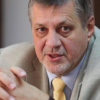
The Special Representative of the United Nations Secretary-General (SRSG) for Iraq, Mr. Ján Kubiš, expresses grave concern over the casualties during violent protests over the lack of critical public services in Basra. He offers condolences to the families of the dead and wishes the injured a speedy recovery.
Mr. Kubiš calls for calm and urges the authorities to avoid using disproportionate, lethal force against the demonstrators, provide the necessary protection for the people of Basra, ensure human rights while protecting law and order, and investigate and hold accountable those responsible for the outbreak of the violence.
The Special Representative calls on the Government of Iraq to do its utmost to respond to the people’s rightful demands of clean water and electricity supplies as a matter of urgency.
Mr. Kubiš urges political leaders and the newly elected Council of Representatives to assume their duties and act responsibly and without delay, including taking all the necessary steps to expeditiously agree on a new national, patriotic and pro-reform government that will quickly and effectively respond to the people’s longstanding needs and deliver on their basic demands of water and electricity and the longer-term goal of job creation and life in dignity.
Long-term stability and improved economic performance go hand-in-hand, and tackling these challenges rests with the political leaders uniting and working together in the national interest.
(Source: UN)
Posted in Politics, Security Comments Off on UN Urges Speedy Formation of Govt to Tackle Iraq’s Problems

Crescent Petroleum, Dana Gas support AMAR IDP Clinics
Posted on 03 September 2018 .
Crescent Petroleum and Dana Gas deliver vital support to AMAR IDP clinics
As Iraq’s security conditions have improved, international donors have turned their attention to other troubled parts of the world, leaving many IDP camps in the country on the brink of closure.
Thanks to the continued support of Crescent Petroleum and Dana Gas, however, AMAR have continued to deliver much needed healthcare and support to Khanke Camp’s 16,000 residents
Nearly 2 million Iraqis remain displaced within Iraq, a vast proportion of them still in camps for internally displaced people (IDPs). From victims of conflict who have lost homes and livelihoods to families too afraid to return to their homes after the violence of recent years IDPs remain among the most vulnerable population in the country.
After the trauma of violence and displacement, families in the camps continue to rely on the safe, supportive and nurturing environment in the camp to start rebuilding their lives. But with charitable funding drying up, many camp facilities, especially health care centres, are facing imminent closure.
Dana Gas and Crescent Petroleum, which have contributed considerably to causes within Iraq, remain committed to AMAR’s services in Khanke, delivering vital health and wellbeing services to the thousands of residents at the camp.
Crescent, one of the Middle East’s oldest and largest upstream oil companies, and Dana, one of the largest private-sector natural gas companies in the region, are committed to helping AMAR deliver vaccinations, antenatal care and child health monitoring at the camp.
“IDPs are among the most vulnerable people in Iraq, but sadly they are often overlooked by donors,” said Majid Jafar, CEO of Crescent Petroleum. “We are proud to be partnering with AMAR to provide critical healthcare services and training to the people in Khanke camp.”
A key part of the health programme at the camp are the Woman Health Volunteers (WHVs), who are the front line to identifying health and wellbeing issues among the residents and are trained to deliver health care when needed. Between April and June of this year, the WHVs made thousands of home visits to families at the camp, providing basic healthcare services and delivering health advice, in addition to providing mental health outreach. In all, the WHVs offered support and services to more than 15,000 people during the spring period.
One AMAR WHV, Thikra, for example, recently paid a visit to the Jamila family in the camp. One of the family’s sons had been showing distressing changes in behaviour, including fatigue, excessive sleep and weight gain. Thikra identified the signs of depression in the boy and confided in Mrs. Jamila to openly discuss her son’s symptoms. She then advised the mother to seek a medical assessment for boy’s the condition and set the family on the path to recovery.
Thikra’s work is funded by Dana and Crescent, and is emblematic of the kind of support the companies are funding and promoting in the community.

The companies also provide funds for vocational training programmes in the camps, including sewing and design, IT, and English lessons, providing residents the opportunity to develop skills that can boost their chances of finding employment or to set up their micro-business of their own.
Crescent Petroleum and Dana Gas are among the largest private foreign investors in Kurdistan. Their focus is on developing the region’s natural resources in sustainable way to deliver lasting benefits to local communities. Their US$1.1bn development of the Khor Mor gasfield provides the natural gas to power electricity plants in Erbil and Chamchamal, delivering 1,700 MW of electricity to over 4m people living in the region.

LPG Plant in Kor Mor
Patrick Allman-Ward, CEO of Dana Gas’, said:
“We are committed to developing resources in Kurdistan to provide power to communities and build the structures for inclusive growth, as well as to tackle the economic and social factors that are a barrier to this development. We look forward to strengthening our partnership with AMAR in the future so that we can continue working towards these goals across the region.”
Other projects Dana and Crescent have funded in Kurdistan include renovating and supplying schools, funding hospitals and providing potable water to villages.
Baroness Nicholson, AMAR’s Founder and Chairperson said:
“It is vital that we continue to provide healthcare and education in the camps, as people living there continue to experience extreme deprivation. Thanks to the exceptional generosity of Dana and Crescent, we are able to do this in Khanke. We are very grateful to them for giving us the opportunity to bring relief and support to communities in real need.”
(Source: AMAR)
Posted in Healthcare, Iraq Education and Training News, Iraq Oil & Gas News Comments Off on Crescent Petroleum, Dana Gas support AMAR IDP Clinics
Netherlands Substantially Increases Support to Iraq
Posted on 30 August 2018 .
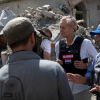
The Netherlands has contributed an additional USD 23.2 million (EUR 20 million) to UNDP’s Funding Facility for Stabilization (FFS), which finances fast-track initiatives to stabilize areas liberated from the Islamic State of Iraq and the Levant (ISIL). This brings the Netherlands’ total contribution to USD 65.4 million (EUR 57 million).
Marta Ruedas, Deputy Special Representative of the UN Secretary-General for Iraq, said:
“The impact of stabilization activities is clearly visible across the country. Schools are reopening, clean water is flowing and bridges are reconnecting communities.
“Almost 70 percent of the 5.9 million people who fled during the conflict have returned home. The scale of work still left to do cannot be underestimated, however, which is why this generous contribution from The Netherlands comes at exactly the right time.”
Sigrid Kaag, Dutch Minister for Foreign Trade and Development Cooperation, said:
“It is of the utmost importance to restore stability here and in other places destroyed by ISIS ... Giving people the prospect of a brighter future is essential because their property and livelihoods lie in ruins. This includes re-establishing water and electricity supplies, schools and other basic services.”
The Minister recently visited the Old City of Mosul to assess the impact of stabilization activities in the region.
At the request of the Government of Iraq, UNDP established the Funding Facility for Stabilization (FFS) in June 2015 to facilitate the return of displaced Iraqis, lay the groundwork for reconstruction and recovery, and safeguard against the resurgence of violence and extremism.
The Facility currently has over 2,400 projects underway in 31 liberated cities and districts, helping local authorities to quickly rehabilitate essential infrastructure. Almost 1,200 projects have now been completed, with some 95 percent of projects carried out by the local private sector employing local labour. In Mosul alone, FFS is implementing over 750 projects. With over 300 projects now completed across the city, residents have improved access to healthcare, education, electricity, and clean running water.
Since the start of the most recent conflict in 2014, almost 70% of the 5.8 million displaced Iraqis have returned to their homes. The impact of FFS has been significant in supporting people upon their return home. FFS has 26 donors that have committed over USD 800 million to stabilization efforts in Iraq.
(Source: UNDP)
Posted in Construction & Engineering In Iraq, Security Comments Off on Netherlands Substantially Increases Support to Iraq