



Video: Fmr US Ambassador on ISIS
Posted on 07 October 2014 .
From CNN. Any opinions expressed are those of the authors, and do not necessarily reflect the views of Iraq Business News.
VP Joe Biden wasn't wrong, Turkey, UAE, Saudi Arabia need to do more to fight ISIS, says Christopher Hill:
Posted in Security Comments Off on Video: Fmr US Ambassador on ISIS

PM calls to end Boycott of Saudi Products
Posted on 20 September 2014 .
By John Lee.
Newly-appointed prime minister Haidar al-Abadi has called for an end to the boycott by a number of governorates of products from neighbouring countries, including Saudi Arabia.
He urged those provinces to instead develop their economies through regional cooperation, particularly with neighbouring states.
A number of provincial councils, including Baghdad, Basra and Najaf, had taken a decision to boycott products from Saudi Arabia, Turkey and Qatar and gave merchants a month to get rid of the products without affecting the sale of basic commodities.
Meanwhile, a number of other governorates called for boycotting Iranian products, in protest of Tehran’s meddling in Iraqi affairs.
(Source: Al Arabiya)
(Flag image via Shutterstock)
Posted in Iraq Industry & Trade News Comments Off on PM calls to end Boycott of Saudi Products
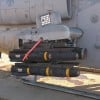
$69m Contract for Hellfire Missiles
Posted on 16 September 2014 .
By John Lee.
Hellfire Systems LLC, of Orlando, Florida, has been awarded a $68,721,521 [80 billion Iraqi dinar] modification (P00104) to firm-fixed-price, foreign military sales contract W31P4Q-11-C-0242 to acquire 1,361 Hellfire II tactical missiles in containers and air-to ground missiles: model AGM-114R, AGM-114R-3, AGM-114P-4A, TGM M36E7, and ATM-114Q-6.
The countries involved in this foreign military sales contract are Iraq, Jordan, Indonesia, Saudi Arabia and Qatar.
Fiscal 2012, fiscal 2013 and fiscal 2014 other procurement funds in the amount of $68,721,521 [] were obligated at the time of the award.
Estimated completion date is Nov. 30, 2016. Work will be performed in Orlando, Florida. Army Contracting Command, Redstone Arsenal, Alabama, is the contracting activity.
(Source: US Dept of Defense)
Posted in Security Comments Off on $69m Contract for Hellfire Missiles

UN calls for more Shelter, Protection
Posted on 16 September 2014 .
After concluding a three-day visit to Iraq, UN Humanitarian Chief Valerie Amos (pictured) said today that additional support is needed ahead of the long winter months for people who have been displaced by fighting, and for the communities supporting them.
Iraq is facing an escalating emergency with up to 1.8 million Iraqis displaced since January. The crisis has affected over 20 million people across the country.
Speaking about her visit to Khanke camp and other sites in Dohuk in the Kurdistan region of Iraq, Under-Secretary-General and Emergency Relief Coordinator Amos said people told her they urgently need shelter and protection.
“There is a serious humanitarian crisis in Iraq. Brought on by the violence and brutality meted out by terrorist organizations,” said Ms. Amos.
“I met families who are living camps, schools and unfinished buildings. They have had to flee their homes and are terrified. I was introduced to a girl who asked to meet me. She had one request: to return to school. She insisted that was all she wanted. The humanitarian community will do all it can to help those in need of protection, shelter and basic assistance, including education and healthcare,” she added.
There are half a million displaced Iraqis in the Dohuk area. The number in the Kurdistan Region of Iraq as a whole has increased to over 850,000 displaced since January.
During her visit Valerie Amos held talks with Iraq President Masum and with Dr. Mutlaq, Deputy Prime Minister and Chairman of the High Level Committee for IDPs, and Prime Minister Barzani of the Kurdistan Regional Government.
“The newly formed Government is facing significant challenges in making sure that the displaced get the assistance needed. UN agencies and their partners in Iraq will continue to work to ensure that all Iraqis, regardless of their ethnicity or religious beliefs, are being given the best support,” she added.
“Thanks to the generosity of donors, especially from the Kingdom of Saudi Arabia, we’ve been able to build camps, deliver food and water as well as care for the sick. But further funding will be needed as people are refusing to return home. They don't feel safe. This will take time and requires a concerted effort by all,” concluded USG Amos.
(Source: UN)
Posted in Security Comments Off on UN calls for more Shelter, Protection
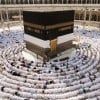
IS-Controlled Areas Banned from Hajj
Posted on 16 September 2014 .
By John Lee.
The Iraqi government has not provided planes for citizens of the provinces of Nineveh, Salahaddin, Anbar and all areas under the control of Islamic State insurgents, who wish to undertake Hajj pilgrimage.
According to the report from BasNews, the has angered Sunni people who live in IS-controlled areas.
Hajj is an annual Islamic pilgrimage to Mecca, Saudi Arabia, and the largest gathering of Muslim people in the world.
(Source: BasNews)
(Hajj image via Shutterstock)
Posted in Security Comments Off on IS-Controlled Areas Banned from Hajj
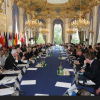
International Community Supports Baghdad Against IS
Posted on 15 September 2014 .
At an international conference in Paris, the five permanent members of the U.N. Security Council, representatives of European and Arab states, and representatives of the EU, Arab League and United Nations, have all pledged to help the government in Baghdad fight against Islamic State militants.
The full statement from the French Ministry of Foreign Affairs is shown below:
Communiqué from the Ministry of Foreign Affairs and International Development
Paris, September 15, 2014
1. At the invitation of the President of the French Republic and the President of the Republic of Iraq, an international conference on peace and security in Iraq was held today in Paris.
2. The conference participants (Bahrain, Belgium, Canada, China, the Czech Republic, Denmark, Egypt, France, Germany, Iraq, Italy, Japan, Jordan, Kuwait, Lebanon, the Netherlands, Norway, Oman, Qatar, Russia, Saudi Arabia, Spain, Turkey, United Arab Emirates, United Kingdom, United States of America, Arab League, European Union, United Nations) expressed their commitment to the unity, territorial integrity and sovereignty of Iraq. They welcomed the formation of a new government under the authority of the Prime Minister, Mr Haïdar al-Abadi, and offered him their full support to strengthen the rule of law, implement a policy of inclusiveness, and ensure that all components are fairly represented within the federal institutions and all citizens are treated equally. All of these measures are necessary in order to successfully combat Daech (ISIL) and terrorist groups, which represent a threat to all Iraqis.
3. The conference participants asserted that Daech (ISIL) is a threat not only to Iraq but also to the entire international community. They condemned the crimes and acts of mass violence that Daech (ISIL) commits against civilians, including the most vulnerable minorities, which may amount to crimes against humanity. They agreed to cooperate and do everything to ensure that the culprits are brought to justice. They confirmed support for the inquiry led by the Office of the High Commissioner for Human Rights to that end.
Posted in Security Comments Off on International Community Supports Baghdad Against IS

UNESCO targets 10,000 Out-of-School Children
Posted on 11 September 2014 .
UNESCO officials concluded a series of meetings held with director generals in Ministries of Education in the central government in Baghdad and the Kurdistan regional government, as well as representatives from local NGOs, to discuss ways to enhance cooperation and accelerate the implementation of UNESCO programmes targeting 10,000 out-of-school children and youth in Iraq.
“UNESCO is committed to extend its technical and financial support to related Ministries to allow 10,000 IDPs children and youth re-enroll in academic institutions”, stated Zulfiqar Ali, Education Project manager in UNESCO Office for Iraq. “Providing a learning opportunity for all children and youth, and making sure that their education is not interrupted by displacement is a main priority for UNESCO in this stage, and a pillar for its projects in Iraq”, he added. UNESCO’ expert’s statement came following his three days’ meetings with the Iraqi officials from 5 to 7 September 2014 in the city of Erbil, in the Kurdistan region of Iraq.
UNESCO’s response is based on two main projects focusing on schools renovation, reconstruction, examination, organizing catch-up classes and providing psychosocial support. With the aim to guarantee IDPs’ children and youth right to quality education, UNESCO Office for Iraq is implementing the “Educate A Child Initiative (EACI) in Iraq” and “Providing access to quality education to adolescents and young adults in conflict affected areas in Iraq”, two pioneering initiatives funded respectively by the governments of Qatar and the Kingdom of Saudi Arabia. These interventions will provide access to education for internally displaced out-of-school children and youth at primary and secondary level in camps, as well as in host communities in Iraq.
Dr. Yousif Othman, Director General of Educational Planning, at the Ministry of Education in the Kurdistan regional government praised UNESCO efforts, and stressed that “schools used as shelter by IDPs need to be evacuated, and UNESCO already committed to renovate and reconstruct secondary schools for IDPs children and youth allowing them to start schooling from new academic year”.
Posted in Iraq Education and Training News, Security Comments Off on UNESCO targets 10,000 Out-of-School Children

Saudi Announces 900km Fence on Iraq Border
Posted on 09 September 2014 .
By John Lee.
Al Jazeera reports that Saudi Arabia has unveiled a 900-km multi-layered fence along its border with Iraq.
The project, which includes five layers of fencing equipped with watch towers, night-vision cameras and 50 radars is aimed at cutting the "number of infiltrators, drug, arms and cattle smugglers to zero".
In 2009, Riyadh signed a deal with EADS to secure the Iraq border, but with increasing fears over infiltration by anti-government groups and al-Qaeda, the interior ministry expanded the scope to cover all the country's borders.
In July, Saudi Arabia sent 30,000 soldiers to its border with Iraq after Iraqi soldiers withdrew from the area.
(Source: Al Jazeera)
(Saudi Arabia image via Shutterstock)
Posted in Security Comments Off on Saudi Announces 900km Fence on Iraq Border

Saudis Provide Homes to Displaced Families
Posted on 05 September 2014 .
Funding from Saudi Arabia to the UN will allow UN-Habitat to provide shelter options for internally displaced people, commonly referred to as IDPs, in the Kurdistan region of Iraq.
Following the takeover of Mosul by the Islamic State of Iraq and the Levant movement – ISIL – last June and the influx of more than 600,000 IDPs to other areas in the country, UN-Habitat was granted USD 8 million from the Saudi government to work with other agencies in the response activities to the IDP crisis in Iraq.
Through this grant, UN-Habitat has started implementing a “Sustainable Shelters for IDPs” programme that focuses on providing convenient housing and early recovery services for approximately 1,000 IDP families in the Kurdistan Region of Iraq in addition to limited intervention in other Iraqi governorates.
Speaking of the new initiative, UN Under-Secretary-General and UN-Habitat Executive Director, Dr Joan Clos, said: “This programme allows us to assess the rapidly changing situation and develop appropriate shelter responses for those affected by the ongoing crisis in Iraq. UN-Habitat is grateful for the generous and timely contribution of the Saudi Arabian government which will enable us to support some of the most vulnerable displaced people in Iraq.”
Each family will be housed in a prefabricated housing unit or in a composite unit within a collective shelter as appropriate, and will have access to electricity, water, and sanitation services. Shelters will be built on identified sites that will include public service centres, including police stations, medical clinics, parks and green spaces.
It is of great concern that IDP families will have access to basic services and employment opportunities. The UN Development Programme, UNDP, is supporting infrastructure component of this initiative and the UN Office for Project Services, UNOPS, will provide solar panels for electrical supply and streets lightening.
In Bahraka and Erbil UN-Habitat has finalized the topographic survey, site plan, designs and bills of quantities of the housing units and the governor of Erbil has endorsed these. Current available resources will cover the erection of between250 and 300 prefab units and proposals have been submitted to donors for additional funding to complement this.
Posted in Security Comments Off on Saudis Provide Homes to Displaced Families
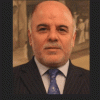
Abadi: Govt. Formation Talks "Positive".
Posted on 26 August 2014 .
By John Lee.
Iraqi PM Haider al-Abadi has issued a statement saying that government formation is going well and that on the security front, all militias loyal to the government must come under government control.
The remarks are another sign of the PM's departure from the governing style of Nouri-al-Maliki, who originally appeared tough on militias such as the now defunct Jaish-al-Mahdi, only to later tolerate the presence of non-state armed groups such as Asa'ib ahl-al-Haq. Abadi also remarked that government formation negotiations were "positive", noting,
"We will never allow any armed group to operate outside of the framework of the state," before continuing that politics was progressing:
"Several meetings and dialogues were held with the political blocs to form a unified vision for our governmental program. The negotiations were generally positive and constructive. I hope we will agree to form a unified vision for the governmental program in the next two days."
Abadi's remarks are also another sign that the new PM can potentially gather greater regional and international support for his efforts to unify Iraq and bring reconciliation to the long troubled country.
Renewed attempts at reconciliation have won Abadi the tentative support of governments around the region, including Saudi Arabia, who were previously at loggerheads with Nouri-al-Maliki.
(Source: The Daily Star-Lebanon)
Posted in Politics Comments Off on Abadi: Govt. Formation Talks "Positive".