


Plans Made to Recapture Mosul
Posted on 21 August 2014 .
By Barbara Slavin for Al Monitor. Any opinions expressed are those of the author, and do not necessarily reflect the views of Iraq Business News.
US officials have begun discussions with local leaders in Iraq’s Ninewa province about how to recapture the city of Mosul in the wake of the successful operation to recover control of Mosul Dam from the Islamic State (IS), a US official said.
In an interview Aug. 20 with Al-Monitor, the official, who spoke on condition of anonymity, predicted that recovering Iraq’s second largest city — which was seized by IS on June 10 — would “require local forces” and be a long-term project.
“We’re in touch with the governor of Ninevah and all the Iraqi leaders and a number of sheikhs from the area about how to begin to take territory away from ISIL,” the official said, using an alternate acronym for the extremist group.
Posted in Security Comments Off on Plans Made to Recapture Mosul
UNHCR Launches Major Aid Push
Posted on 20 August 2014 .
The United Nations refugee agency said on Tuesday that it is launching one of its largest humanitarian aid pushes in response to the deteriorating situation in Iraq, aiming to help close to a half million people who had been forced to flee their homes.
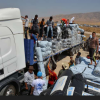
Barring last minute delays, an air, road and sea operation will begin tomorrow with a four-day airlift from Aqaba in Jordan to Erbil in Iraq. This will be followed by road convoys from Turkey and Jordan, and sea and land shipments from Dubai via Iran over the next 10 days.
“The major focus is on improving living conditions for the displaced in the region, particularly people without shelter or housing,” said Adrian Edwards, spokesperson for the UN High Commissioner for Refugees (UNHCR). “Conditions remain desperate for those without access to suitable shelter, people struggling to find food and water to feed their families, and those without access to primary medical care.
“Many are still coming to grips with the tragedy they’ve been through in recent weeks – fleeing homes with nothing, and many trying to cope with the loss of loved ones. Emergency support is an urgent need that we are trying to meet,” he told reporters in Geneva.
Included in the initial aid shipments are 3,300 tents, 20,000 plastic sheets, 18,500 kitchen sets, and 16,500 jerry cans. This assistance and further aid deliveries is being made possible thanks to a recent $500 million donation from Saudi Arabia, as well as support from the United States, the United Kingdom, Japan, Denmark, Kuwait, Luxembourg, Norway, Sweden and global retailer IKEA – a UNHCR corporate partner.
Posted in Security Comments Off on UNHCR Launches Major Aid Push
US Airstrikes Alone will not Defeat IS
Posted on 10 August 2014 .
By Mushreq Abbas for Al-Monitor. Any opinions expressed are those of the author, and do not necessarily reflect the views of Iraq Business News.
The United States has finally decided that Iraq's security and humanitarian situations require immediate military intervention. US President Barack Obama's Aug. 7 speech consolidated this decision and spelled out the US mission on two levels: implementation of "limited" military aerial operations, and a humanitarian intervention to save Iraq from the ethnic cleansing of its minorities.
The US intervention, however, conveys different messages on timing and goals. When it comes to timing, the United States exerted serious pressure on all Iraqi parties to reach a settlement over the formation of an Iraqi consensus government. Iraqis themselves would have to liberate their land, but not before unanimously agreeing upon the clear foundations of the Iraqi state.
Secretary of State John Kerry elaborated on this idea in an Aug. 7 statement, where he stressed the need for Iraqi politicians to agree on an inclusive and consensus governmental formula.
Before its limited military intervention, the United States waited for Iraqi parties to get past their attempts to politically benefit from the security collapse and to reach a foregone conclusion: There is no chance whatsoever for a monopoly on power in Iraq on the part of any sect, party or individual. Some decisions that could be made amid crises and collapses, such as a coup d’état or neutrality, would only usher in greater collapses.
Iraq’s crises and challenges, bolstered by the unprecedented entrenchment and expansion of the Islamic State (IS), could constitute an ideal portal for the region to realize the brittleness of borders. All countries are in danger. Such a realization could open the door for a regional repositioning and make countries more cautious when employing dogmas and sectarian affiliations in open wars.
Countries that intersect politically, such as Iran, Saudi Arabia, Jordan and Turkey, feel they are facing a genuine threat to their internal security. Time may force countries to adopt a more realistic vision on the poles of conflict in the Middle East.
Posted in Security Comments Off on US Airstrikes Alone will not Defeat IS
Iran Dominates Market after Occupation of Mosul
Posted on 27 July 2014 .
By Omar al-Jaffal for Al-Monitor. Any opinions expressed are those of the author, and do not necessarily reflect the views of Iraq Business News.
After the occupation of the Iraqi town of Mosul by armed groups, including the Islamic State (IS) and the Baath Party — banned by the Iraqi Constitution — prices of food increased significantly, a result of blocked roads and fighting near border crossings, preventing the flow of goods.
Iraq has only two sea routes, the ports of Umm Qasr and Khor al-Zubair, and the following border crossings: Trebil with Jordan; al-Waleed, al-Qaim and Rabia with Syria; Ibrahim Khalil with Turkey; Mundhiriyah with Iran; Arar with Saudi Arabia; and Safwan with Kuwait.
Iraqi markets rely heavily on border crossings for supplies, especially crossings with Turkey, Syria and Iran. The occupation of Mosul reduced access to the crossing of Ibrahim Khalil with Turkey, meaning there are no safe roads from the border to Baghdad and other provinces.
Moreover, the Rabia crossing recently fell out of central government control and into the hands of Kurdish forces. Yet, even before the occupation of Mosul, this border crossing was not favored by merchants.
The three border crossings on the frontiers of Anbar province that link Iraq to Jordan and Syria are basically inoperative, since Iraqi security forces launched a massive military operation in Anbar to eradicate terrorism in December 2014. Crucially, the Mundhiriyah crossing with Iran has remained out of the hands of the mainly Sunni militants since it is located in the majority Shiite Wasit province.
Furthermore, the Iranian government opened two other crossings with Iraq to facilitate the entry of goods. According to a statement issued by the Council of Ministers, the Iraqi government facilitated the procedures for the entry of goods through this crossing to speed up the flow of imports. The government now accepts certificates of origin, provided by inspecting companies, without taking random samples at border points.
Trade between Iraq and Turkey reached $12 billion (14 trillon Iraqi dinars) in 2013, however, on July 2, the Turkish Exporters Assembly said exports to Iraq had declined by 21%, dropping from second to third place, trailing behind the United Kingdom.
Posted in Iraq Industry & Trade News, Security Comments Off on Iran Dominates Market after Occupation of Mosul

ISIS "Greater Threat" to West than al-Qaeda
Posted on 26 July 2014 .
By Daniella Peled.
This article was originally published by the Institute for War and Peace Reporting, iwpr.net, and it is reproduced by Iraq Business News with permission. Any opinions expressed are those of the author, and do not necessarily reflect the views of Iraq Business News
The Islamic State of Iraq and Syria (ISIS) poses a greater threat to Western security than al-Qaeda did in its day, according to an IWPR briefing this week.
Visiting London from Baghdad, IWPR Iraq chief of party Ammar al-Shahbander told the July 22 gathering that ISIS was an independent entity that operated in diverse ways and with different alliances in Syria and Iraq.
Speaking at the briefing via video link, IWPR Syria programme coordinator, Z.E., gave a snapshot of life in Aleppo and her work supporting citizen activism there. (Her name is not given here for security reasons.)
“Many people think that ISIS is not a threat to the West,” said al-Shahbander. “I completely disagree. ISIS is a much greater threat than al-Qaeda – it is the number one magnet for jihadis internationally.”
Not only has ISIS created its own de facto state, but it has a much more open recruitment policy than al-Qaeda.
“This is a very dangerous mix of people with top fighting capability and no ethics. ISIS is capable of violence beyond anything seen by al-Qaeda,” he continued, adding that the international mix of fighters made it all the more likely that they would bring extremist ideas back to their own countries.
At the same time, Shahbander argues that ISIS’s days are numbered in Iraq, as the range of Sunni groups that have struck up a temporary alliance with it and operate under its flag will ultimately turn on it – and they have significantly more military clout than it has.
Posted in Security Comments Off on ISIS "Greater Threat" to West than al-Qaeda
Najaf, Qom take Different Approaches in Iraq
Posted on 22 July 2014 .
By Ali Mamouri for Al-Monitor. Any opinions expressed are those of the author, and do not necessarily reflect the views of Iraq Business News.
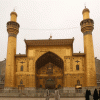
Najaf and Qom have taken two different approaches in dealing with general political affairs in Shiite communities since the introduction of the idea of velayat-e faqih. Although this idea was put forward for the first time in Najaf by the founder of the Islamic Republic of Iran, Ayatollah Ruhollah Khomeini, it has not been welcomed by the Shiite hawza (seminary).
Finally, Khomeini managed to attain his wish to implement velayat-e faqih on the ground after the victory of the Islamic Revolution in Iran, which made this idea widely popular within the Iranian seminary of Qom.
The period after 2003 was a great challenge for both Najaf and Qom, during which competition emerged between them on how to deal with the political affairs of Iraq. Qom tended to implement its religio-political vision in Iran on the situation in Iraq, while Najaf had a different perspective over the situation in Iraq — which has a wider religious and ethnic diversity than that of Iran — therefore considering it impossible to have a narrow Shiite perspective over Iraq.
Najaf thus opted for dealing positively with the change by building an inclusive civil state in Iraq that does not only take into consideration the Shiite majority. On the other hand, Qom only saw in Iraq an American threat to Iran’s interests on the one hand and the Shiite majority on the other. According to it, the American threat must be eliminated and the Shiite authority must be in control.
The difference also appeared during the recent Iraqi crisis. Grand Ayatollah Ali al-Sistani contented himself with issuing a fatwa urging the support of the army in all of its religious and ethnic components against terrorists, while at the same time repeatedly emphasizing the need to completely ban militias and unofficial armed groups. He never mentioned the word Shiites, or anything else related to Shiism, in his statements and in the declarations made by his office and spokesman.
He was very careful when confirming the need to protect the holy places since he did not mention any specific description portraying these sanctuaries as Shiite shrines. His statements were broad and mentioned Christian and Yazidi temples and others in the areas falling under the control of the Islamic State (IS) — formerly known as the Islamic State of Iraq and al-Sham (ISIS). Meanwhile, Qom authorities focused their attention on the subject of Shiites and the expansion of Shiism in Iraq. Their statements and denouncements made toward the various parties in this crisis were based on this sectarian ideological perspective.
Posted in Security Comments Off on Najaf, Qom take Different Approaches in Iraq
Najaf to Boycott Saudi Goods
Posted on 09 July 2014 .
By John Lee.
The Provincial Council of Najaf has reportedly decided to boycott Saudi Arabian merchandise because of what it describes as Riyadh's support for sectarian and terrorist groups fighting in Iraq.
The Media Director of Najaf's Provincial Council told AIN:
"The merchants who will violate this decision will be punished after the period given to them to sell the current stored Saudi goods."
(Source: FARS)
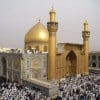
(Picture: Imam Ali Mosque, Najaf)
Posted in Iraq Industry & Trade News, Security 2 Comments
A Thawing of Relations with Saudi Arabia?
Posted on 03 July 2014 .
By Padraig O'Hannelly.
Earlier this week, King Abdullah bin Abdulaziz Al Saud pledged $500 million of humanitarian aid from Saudi Arabia to the Iraqi people, to be administered by the United Nations.
This could be a very significant move, given that relations between Iraq and its powerful and wealthy neighbour have been strained for many years.
As recently as March, the Iraqi prime minister accused Saudi Arabia and Qatar of effectively declaring war on his country by funding Sunni fighters in Anbar province.
And while Saudi Arabia denies any such funding, it is generally believed that wealthy individuals in the country are a key source of funding for insurgents, including ISIS.
This development can only serve to improve relations between Iraq and Saudi Arabia and is to be welcomed.
(Flag image via Shutterstock)
Posted in Blog Comments Off on A Thawing of Relations with Saudi Arabia?

Saudi Pledges $500m in Aid
Posted on 01 July 2014 .
By John Lee.
An official source at the Saudi Arabian Ministry of Foreign Affairs has said that King Abdullah bin Abdulaziz Al Saud has ordered $500 million of humanitarian aid for Iraqi people affected by the recent tragic events, including displaced people, regardless of their religious, doctrinal or ethnic affiliations.
The United Nations Secretary General has been informed of this aid which will be provided through the United Nations organizations for the Iraqi people only.
(Source: SPA)
Posted in Iraq Industry & Trade News, Politics, Security 1 Comment
Allawi: US Policy toward Iraq 'Without a Compass'
Posted on 28 June 2014 .
By Mustafa al-Kadhimi for Al-Monitor. Any opinions expressed are those of the author, and do not necessarily reflect the views of Iraq Business News.
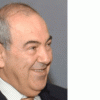
Ayad Allawi, the former Iraqi prime minister and leader of the Iraqi Nationalist ("Wataniya") Party, blamed the Iraqi government for policies that have allowed it to be "defeated by a bunch of dwarfs and killers as it sought outsiders’ help," instead of drawing on the "strength from its honorable people, from the tribes, army officers, dignitaries and politicians."
Allawi, in an interview with Al-Monitor via telephone and email from Amman, said that protests in Anbar province "have been met with repression and intimidation instead of [the government] adopting some of their demands by dealing with them morally and through a national dialogue." He described the protests as "initially peaceful, constitutional."
Allawi said, "The valiant Iraqi army has nothing to fight for. This brave army has lost its identity and its role. It doesn’t know whether it is fighting for the country or fighting for the sect or for the person or for the party."
The former prime minister, whose party gained 21 seats in the Council of Representatives during the April 30 elections, said US policy in Iraq is "without a compass" while Russian influence is growing, "a crescent stretching from the Crimea [Peninsula] and the Black Sea through Iran, Iraq, Syria and part of Lebanon."
The text of the full interview follows:
Al-Monitor: You suggested a road map to resolve the current crisis. What is this map?
Allawi: The problem doesn’t lie in just putting in new faces, although this is important. Perhaps more important, regarding how to get out of the impasse and the causes that led to it, is this map, which employs two axes: goals and mechanisms.
The essence of the goals are an inclusive political process without discrimination, quotas, exclusion or elimination — except for terrorists and those who steal public money; then achieving national reconciliation immediately; then building the institutions of a state that is professional and able to perform its duties away from regionalism, starting with internal security, the armed forces and the judiciary and its institutions.
Posted in Security Comments Off on Allawi: US Policy toward Iraq 'Without a Compass'