


War with ISIS 'AcidTest' of US-Iraq Ties
Posted on 27 June 2014 .
By Andrew Parasiliti for Al-Monitor. Any opinions expressed are those of the author, and do not necessarily reflect the views of Iraq Business News.
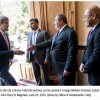
Iraq’s ambassador to US: war with ISIS 'acid test' of US-Iraq ties
Iraq’s ambassador to the United States said June 26 that his country’s preference is to rely on US military assistance to battle the Islamic State of Iraq and al-Sham (ISIS).
Asked about reports of Iranian drone flights and provisions of military equipment to Iraq, as well as Syrian airstrikes on ISIS forces inside Iraq, Ambassador Lukman Faily, who met with Al-Monitor at his office in Washington, said that if US military aid is not forthcoming, “we will not be in a position to choose our partners and whoever is available to help us in our survival war, then we will take that.”
Faily, who was in Baghdad for US Secretary of State John Kerry’s meetings with Iraqi leaders this past week, said many Iraqis are asking if the United States will “support a democratically elected government in this war of aggression by an international terrorist organization.”
Iraq’s ambassador, who was born in Baghdad and completed the April 2014 Boston marathon, said that Baghdad is desperate for air support in its battle with ISIS.
“Any air supremacy support provided to Iraq will surely have a significant effect. That to us is a key game changer,” Faily said.
“We have had offers from the Syrians before and we declined them,” he said. “But it seems that the support that we sought from the US is not coming in a timely manner to deal with our urgency, which is more or less putting us in an uncomfortable position in seeking support from whoever is available on the ground.”
Faily expressed hope that Iraq’s neighbors could rally to provide “unusual” support in this time of crisis in Iraq.
Has ISIS Killed Its Golden Goose?
Posted on 26 June 2014 .
By Mark DeWeaver.
While it has long been assumed that ISIS gets most of its money from donors in the Gulf, recently declassified documents suggest otherwise.
Researchers at the RAND Corporation found that donations actually accounted for less than 5% of the group’s funding during the period from 2005 to 2010. (See this article.)
The city of Mosul, rather than Saudi Arabia or Kuwait, turns out to have been, as one researcher put it, “the area that was keeping the group afloat”—through extortion rackets, kidnapping, and robbery.
Following the fall of the city on June 10, it’s hard to see how this can continue to be the case. Out of a population of 1.8 million, the BBC has reported that 500,000 have fled. Presumably the wealthiest residents will not be returning any time soon. It is also unclear how Mosul’s remaining state employees are going to be paid. Obviously it won’t be possible to extort money from businesses without customers or collect ransoms from people who can’t afford to leave town. You can’t get blood from a stone after all.
It’s not even clear that ISIS could have stolen as much US$ 420 million from the Mosul branch of the Central Bank of Iraq (or, in some accounts, from a combination of the CBI and private banks). While this figure has been widely reported in the media, some analysts have dismissed it as wildly exaggerated.
In any case, looting can be only a short-term source of funds. Once the city’s homes and businesses have been stripped of cash and salable assets, this bonanza will come to an end as well.
ISIS apparently had a pretty good thing going in Mosul, where it could help itself to a share of the economy of one of Iraq’s largest cities with all but complete impunity. Once this golden goose has stopped laying, I wonder if they won’t end up concluding that they should have left well enough alone.
Posted in Investment, Mark DeWeaver on Investments and Finance Comments Off on Has ISIS Killed Its Golden Goose?

John Kerry: Mission Impossible?
Posted on 23 June 2014 .
By John Cookson. Any opinions expressed are those of the author, and do not necessarily reflect the views of Iraq Business News.
US Secretary of State John Kerry's whistle-stop swing through the Middle East and Europe will likely include a meeting this week with Iraq's embattled caretaker prime-minister Nouri al-Maliki.
At the Baghdad summit we can expect Secretary Kerry to again hammer home Washington's demand that the Iraqi premier form an inclusive government of national unity with Sunni politicians given prominent roles. The top US official will also seek assurance that the 300 American military advisers being sent to shore up Iraq's military are immune from prosecution on Iraqi soil.
In my opinion Secretary Kerry's visit to Baghdad is almost certainly mission impossible, as Al-Maliki is not likely to relax his hard-line stance on either issue.
On Sunni inclusiveness Washington has made the same impassioned plea for years and Al-Maliki has ignored it, even as unrest raged in Al-Anbar and UN Secretary General Ban Ki-moon warned Iraq was facing disaster. It was a high-risk political gamble by Al-Maliki, but the recent general election result shows millions of Iraqis supported him and endorsed his policies.
On the question of whether 300 advisers will not be tried in Iraq if they commit crimes; again Al-Maliki is unlikely to U-turn on his consistent policy of non-immunity, especially as few in Baghdad can forget how 4 American Blackwater security guards, working for the State Department, escaped prosecution in Iraq for shooting dead 14 Iraqi civilians in 2007 - their US trial is ongoing.
Al-Maliki's tough position was boosted Sunday when Iran's Supreme Leader Ayatollah Ali Khamenei came out and expressed strong opposition to intervention in Iraq by the United States - or anyone else - and he insisted that the Iraqis themselves can bring an end to chaos sweeping the country.
Khamenei also suspects Washington wants to keep Iraq under its control and place its own stooges in power.
Posted in John Cookson, Politics, Security Comments Off on John Kerry: Mission Impossible?

Iraq: Reconciliation or Partition?
Posted on 18 June 2014 .
By Tariq Abdell. Any opinions expressed are those of the author, and do not necessarily reflect the views of Iraq Business News.
“…The ultimate test of statesmanship is what to do in the face of war…” -- Thatcher’s statecraft
The upsurge in Sectarian violence across Iraq underscores the blatant failure of Iraq’s consensual democracy and the vulnerabilities of its security forces as result of a host of daunting and intricate constraints: A sectarian commander-in-chief, lingering ethno-sectarian loyalties, politicized security apparatus; and the regions geopolitical tensions, namely Syria’s civil war and Saudi-Iran’s rivalries.
Irrefutably, the cumulative effects of Maliki’s sectarian-based policies – marginalization and disenfranchising of Sunnis in particular- are to blame for exacerbating Iraq’s sectarian violence and, subsequently, entrenching Iraq’s centuries-old ethno-sectarian schisms as evidenced by ISIS’s recent offensive, supported by Sunni tribes, in north-central and northern Iraq.
For Washington to help Baghdad fend off a protracted sectarian war and a total chaos, it must first devise a set of benchmarks as a precondition of U.S. military and financial support. The endgame of such benchmarks it to force Maliki to renounce his sectarian-based policies, espouse a genuine and inclusive democracy, and form a government of national unity that heads to the people’s aspirations regardless of their political and religious beliefs; to include an action plan that reflects the country’s pressing priorities:
- Genuine national reconciliation to overcome interfaith communal distrust and sectarian violence.
- Overhauling of Iraq’s security apparatus namely the forces reporting directly to Maliki -SWAT and CTS in particular- to curb sectarian loyalties, rein in corruption, and build a cohesive and effective Military.
- Repealing of the Anti-terrorism law - Article 4 in particular- and the use of secret informants and coerce confessions.
- Reversal of targeted and unjust De-Ba’atification law.
- Merit-based appointments to promote efficiency and accountability.
- Providing access to basic services (e.g., potable water, electricity, running sewer, etc) and equitable distribution of oil revenues.
- Investing in human capital through education and training to fend off societal and political unrest.
- Advancing the principles of human rights and rule of law.
- Diversifying and reviving of Iraq’ strategic industries to curb its dependence on a single commodity – fossil fuel.
Posted in Politics, Security, Tariq Abdell 2 Comments

The Fall of Mosul: Is it Time Washington Woke Up?
Posted on 10 June 2014 .
By John Cookson. Any opinions expressed are those of the author, and do not necessarily reflect the views of Iraq Business News.
Today's audacious jihadist attack on Mosul by Al Qaeda affiliate ISIS must surely be a massive wake up call in Washington that Iraq needs urgent help.
Hundreds of jihadists seized key government offices, banks and the airport in Iraq's second city. Prison doors were smashed open and up to a 1,000 inmates released.
In a damning indictment of Iraqi security forces, army and police officers abandoned their vehicles and uniforms and fled as ISIS forces went on the rampage.
ISIS already effectively controls Al Anbar governorate including Fallujah where it declared an Islamist state. This week saw deadly bombings of Kurdish targets in Diyala. ISIS is increasingly active in Salah-al din. And now Ninevah's capital is its latest target.
Caretaker Prime Minister Nouri al-Maliki has called for an emergency session of parliament on Thursday and by then Iraqi security forces will surely have regained some control of Mosul, where ISIS fighters may just have overreached themselves.
However the fact ISIS is so motivated, so well equipped and battle-hardened to even attempt to take Mosul is a huge blow not only to Baghdad, but also to the morale of Iraqi security forces and of course the long-suffering Iraqi people.
Posted in John Cookson, Security 10 Comments
Iraqi Clerics Challenge Sectarianism
Posted on 05 June 2014 .
By Ali Mamouri for Al-Monitor. Any opinions expressed are those of the author, and do not necessarily reflect the views of Iraq Business News.
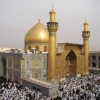
Iraq has a long history of conflict and rapprochement between Sunni and Shiite clerics, which has played a major role in the sectarian conflict or cohesion among the country’s sects. This factor, among with other political and social factors, has defined the historical conflict in Iraq.
The main problem is that Sunni and Shiite clerics are unable to achieve a real rapprochement and establish a network of communication that can be used to reach a solution or alleviate tensions. Instead, they have fueled the conflict in many instances due to the lack of formal communication.
Researchers can find many types of communication in the history of Shiite and Sunni clerics in Iraq. For instance, Shiite clerics have been taught by Sunni teachers and vice versa, and peaceful and calm discussion and dialogue councils have been established. However, friendly relations turned into conflict and enmity as soon as political complications set in between the two sects. What is joined by cultural relations can be separated by political disputes overnight. When political disputes come into play, they spark religious conflicts and make each party evil in the eyes of the other. Mutual accusations fly and all communication is cut off.
Posted in Politics Comments Off on Iraqi Clerics Challenge Sectarianism

Saudis Traveling to Iraq to be Penalised
Posted on 03 June 2014 .
By John Lee.
Saudi citizens caught traveling to Iraq will face a fine of SR10,000 ($2,700) and a three-year travel ban, according to a report from Arab News.
Col. Salman Al-Muhaya, director of the Saudi travel section at the Passport Department, said:
“There are exceptional cases where Saudis may be allowed to travel ... based on specific regulations. In Iraq, for instance, certain procedures must be followed by Saudis that have to be cleared by ad hoc committees in certain areas.”
(Source: Arab News)
(Flag image via Shutterstock)
Posted in Iraq Transportation News Comments Off on Saudis Traveling to Iraq to be Penalised
Will Iraqi Elections be Decided in Iraq?
Posted on 31 May 2014 .
By Mustafa al-Kadhimi for Al-Monitor. Any opinions expressed are those of the author, and do not necessarily reflect the views of Iraq Business News.
Iraqis have long repeatedly said that political decisions are taken outside the country, and that regional and international agreements specify the trajectory of new governments. As soon as the results of last month’s elections were announced, all attention was channeled to outside powers to know the real result.
Political events are not isolated but instead are highly interrelated. One cannot disregard the influence of Iran on major Shiite powers, that of Turkey on Iraqi Kurdistan and some Sunni factions and that of Saudi Arabia on some Sunni powers. Certainly, one also cannot talk about an Iraqi policy away from the role and influence of Washington.
The scenarios of the 2006 and 2010 elections are expected to repeat again this year. Iraqi political forces will likely push the crisis deeper and cling to their positions, while refusing to make concessions. Without hesitation, they will push the political process to the brink, thus creating a perfect environment for foreign interference, as these powers will not hesitate to call for this intervention.
Iraqi political culture still gives foreign powers roles that these powers did not even think about playing. Political conflicts include foreign influences as part of a game, according to which Iraqi parties empower themselves and weaken their rivals.
For example, some political and media circles talked about Washington not supporting Prime Minister Nouri al-Maliki’s quest for a third mandate or of a “political majority” forming the government. Other circles said that Iran supports a third term, while others believed that Iran and Washington support Maliki. Another group, however, said that neither country supported Maliki.
Posted in Politics Comments Off on Will Iraqi Elections be Decided in Iraq?
Iraq could Take Lead in FDI
Posted on 25 May 2014 .
By John Lee.
Growth in foreign direct investment (FDI) to Egypt, Iran, Iraq, Lebanon and Jordan should overtake the "expansion of flows" to the Gulf Cooperation Council (GCC) by 2019, according to a new report from London's Centre for Economics and Business Research (CEBR) and the ICAEW.
The report focuses on the GCC member countries (United Arab Emirates, Bahrain, Saudi Arabia, Oman, Qatar and Kuwait), plus Egypt, Iran, Iraq, Jordan and Lebanon (abbreviated to GCC+5).
It emphasised that Iraq, Iran and Egypt, despite being among the most volatile economies in the region, are attractive due to the sheer number of potential consumers they represent.
For the vast majority of countries in the Middle East, commodities make up more than half of their total goods exports by value, say the authors. The sum is as high as 99.2% in Iraq, where many other export industries have been disrupted by conflict and ongoing violence.
In Iraq, economic growth is forecast to accelerate to 6.5 per cent this year, moving up to 8.6 per cent by 2016, despite increasing violence. Since the toppling of Saddam Hussein in 2003, western and Asian oil majors have vied for a slice of lucrative energy contracts.
The full report -- ICAEW Economic Insight: Middle East Quarterly briefing Q2 2014 -- can be downloaded here.
(Sources: ICAEW)
Posted in Investment, Iraq Industry & Trade News Comments Off on Iraq could Take Lead in FDI
Big Changes Planned for Iraqi Stock Markets
Posted on 22 May 2014 .
By Melissa Hancock for Al-Monitor. Any opinions expressed are those of the author, and do not necessarily reflect the views of Iraq Business News.
With the world's eyes focused on the recent Iraqi elections, little attention is being paid to the major changes taking place in Iraq's banking and finance industry.
As part of an effort to liberalize the economy, in the first three months of 2014, the Iraqi Central Bank granted approval to 15 Arab and international banks to open branches in Baghdad, with additional branches expected to open soon. There is also a notable drive to grow and promote the stock markets, with senior Iraqi government officials and representatives from the country's two stock exchanges hosting a two-day forum in Dubai May 14-15 in a bid to court regional investors.
The Iraq Stock Exchange (ISX) is currently in the process of upgrading to the latest Nasdaq trading platform after signing an agreement with Nasdaq OMX in June 2013. The new platform, currently used by more than 25 exchanges globally, is capable of supporting multiple asset classes, although the ISX concentrates mainly on cash equities. [fxtm trading platform]
"We will complete the implementation at the end of June, and it will go live at the beginning of July," said Taha Ahmed al-Rubaye, chief executive of the ISX. "We are working hard to modernize the exchange."
The ISX is also assisting the Erbil Stock Exchange (ESX), the first exchange in Iraq's semi-autonomous Kurdistan region, in setting up its Nasdaq trading system. It is due to be fully implemented in July, and the ESX hopes to see around five to 10 listings by the end of 2014, including a major telecom company. The ESX has $8 million in initial capitalization and 56 shareholders, primarily from the private sector.
Posted in Investment 1 Comment