


UNHCR Opens Two New Camps
Posted on 30 September 2015 .
The UN refugee agency, its partners and local authorities have opened two new camps for internally displaced persons (IDPs) in Baghdad province, providing shelter to close to 3,500 Iraqis who have had to flee Anbar province due to recent fighting.
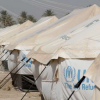
Sadr Al Yusufiya camp (pictured) opened on Tuesday (September 22), six kilometres from Bzeibiz bridge, the main access point between the Baghdad and Anbar provinces, will accommodate some 2,000 people.
Meanwhile, in Baghdad's Ghzaliya neighbourhood, Scout Camp, which opened a few days earlier, on September 16, will provide shelter to some 1,500 internally displaced Iraqis who had been staying in unfinished buildings, with the host community or with relatives in the city.
Naima, 66, fled Anbar's capital, Ramadi, when it fell to the control of armed insurgents in April.
She moved into Scout camp along with her son, his wife and their new-born child. "It's a big relief. We'd been living in an unfinished building ever since we arrived. Although the host community has been generous, providing us with cash, food and household items, it feels good to have a space that is ours", she added.
Scout camp has 250 tents, all connected to electricity, and its new residents have also received essential household items and summer assistance, including mattresses and kitchen utensils, as well as rechargeable fans, cooler boxes and water coolers, to aid their new move. The camp features innovative shaded areas that will be used as communal kitchens, and a 250 KV generator to supplement the power supply when it goes off.
Sadr Al Yusufiya camp has 325 tents, each provided with one electric lamp and a socket outlet connected to two 350 KV generators powering the camp. Public lightning is provided by 36 pole lamp posts across the camp.
Posted in Security 5 Comments
New Help Desk to Streamline Tendering Process
Posted on 17 September 2015 .
The Iraqi Ministry of Planning has opened a new Procurement Help Desk to streamline the tendering process.
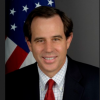
Speaking at the opening of the facility, US ambassador Stuart E Jones (pictured) made the following statement:
"Thank you for those excellent remarks and thank you for your support to the USAID and embassy teams that have been working so closely with the Ministry of Planning.
"I’m really honored and pleased to be here today with you. And, I’m delighted to celebrate the opening of the Procurement Help Desk; this, of course is a project of the Ministry of Planning in partnership with the U.S. Government.
"Let me tell you about the way things used to be. Before this Help Desk, private contractors and government entities had no place to turn to for guidance on public procurement. Each ministry had its own specific methods of procurement. These processes were often confusing and opaque – and overwhelmed in red tape.
"Let me share this one example. Previously, the Ministry of Electricity applied a complicated procurement process that required 28 steps, this involved more than 15 departments, and took 10 months, and this was for every tender to be prepared and awarded. International suppliers lost confidence in the procurement system and, as a result, spare parts were not delivered on time or were of inferior quality. Vital electricity projects were stalled.
"It doesn’t have to be this way. Now, thanks to the Minister of Planning and his team, there are multiple layers of support for government procurers. The Help Desk provides a library of internationally accepted and common standard bidding documents for other ministries to use. Now, Ministry of Planning staff can ensure that all local and central government authorities apply international standards to contract tenders.
"So, going back to the Ministry of Electricity; with support from the Help Desk, the Ministry of Electricity was able to cut out 23 of the 28 steps in its procurement process. Total procurement time went from 10 months to two months.
"This is a game changer. It sends the message that the government of Iraq is a reliable partner, it sends the message that government bidders are going to get fair treatment, and it sends a message that projects are going to get completed in a speedy fashion.
"Already now, 30 pilot tenders with 17 government institutions have benefited from the Help Desk.
"Transparent procurement creates jobs. Transparent procurement means completion of priority capital investment projects. It means the infrastructure that Iraqi citizens need and use every day – roads, buildings, and power plants - can be contracted fairly and completed more quickly and delivered to higher standards.
"This is exactly the kind of reform that his Excellency, Prime Minister Haider al-Abadi has called for. This is exactly the kind of reform that the people of Iraq want. The Help Desk is now fully in Iraqi hands. And, this is only the beginning of the quest to limit corruption and improve business and investment in Iraq.
"So, your Excellency, I want to thank you for your leadership, for your guidance, for your energy behind this project. I want to thank the team here at the Ministry of Planning for guiding this, for driving this and I want to thank my colleagues at USAID and the Tarabot team for supporting the Ministry of Planning in achieving this objective."
(Source: Embassy of the United States)
Posted in Construction & Engineering In Iraq, Iraq Industry & Trade News 5 Comments
Investment Opportunity in New Baghdad Power Plant
Posted on 27 August 2015 .
By John Lee.
Iraq's Ministry of Electricity has invited investment in a new power station at al-Yusufiyah, in Baghdad.
The contract for the 1200-1400 MW plant will be granted on a build, own and operate basis.
Further details are available from the Ministry of Electricity: [email protected]
(Source: National Investment Commission)
(Electricity image via Shutterstock)
Posted in Construction & Engineering In Iraq, Iraq Public Works News 5 Comments
Will Abadi's Reforms work?
Posted on 21 August 2015 .
By Mustafa al-Kadhimi for Al-Monitor. Any opinions expressed are those of the author, and do not necessarily reflect the views of Iraq Business News.
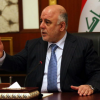
The Iraqi parliament voted Aug. 11 to approve Prime Minister Haider al-Abadi and parliament Speaker Salim al-Jabouri’s economic, political and administrative reform measures in response to the demands of the Iraqi street.
These measures include doing away with the positions of vice president of the republic and deputy prime minister, ending special allocations for the presidency, governmental bodies and institutions, reopening past and current cases of corruption and placing them under the supervision of a supreme committee to combat corruption, and tasking a number of judges to investigate the cases and prosecute corrupt persons.
The reforms also included major measures such as reducing the number of ministers, ending sectarian and party quotas for top government positions, energizing the judiciary to prosecute corrupt officials and limiting law enactments. This followed unprecedented, mounting anti-government protests that carried major weight among Iraq’s politicians.
People have been calling for the realization of their demands for some time. Protests took place on more than one occasion in various cities, including demonstrations in Dhi Qar province south of Baghdad in February 2014 that called for improved services, especially electricity. Thousands of protesters also took to the streets in Basra on Aug. 7, 2014, demanding reform and the fight against corruption.
When the government did not respond to calls for improved services, people then demanded comprehensive reform.
However, this does not necessarily mean that their demands will be implemented on the spot, especially in a country suffering from complex crises at all levels, political divides, economic collapse and an ongoing, raging war against the Islamic State (IS), which controls large swaths of Iraq’s territory.
Posted in Politics 3 Comments
One year later, Struggle Continues for Yazidis
Posted on 14 August 2015 .
By Mohammed A. Salih for Al-Monitor. Any opinions expressed are those of the author, and do not necessarily reflect the views of Iraq Business News.
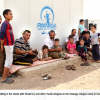
Izzat Abbas, along with a group of men and children, took refuge in the shade by a prefabricated cabin in a refugee camp for displaced Yazidis. They chat and occasionally laugh while they try to keep their spirits up. But their sunburned faces show more exhaustion than content.
The temperature is 47 degrees Celsius (116.6 Fahrenheit) and there is no electricity, which causes the camp residents to flee cabins they described as being as hot as "ovens."
"It's just unbearable," Abbas, 40, said of the excessive heat. “There is little electricity. We get it for three hours and then no electricity for the next three hours. We are given water [by the government] only one hour per day."
Ismael Mohammed, the deputy governor of Dahuk who is in charge of matters involving the refugees and internally displaced persons, told Al-Monitor that nearly 450,000 Yazidis have been scattered around 14 camps in Dahuk province since Aug. 3, 2014, when they were uprooted by the Islamic State (IS) from their historical homeland in Sinjar in western Ninevah province. He said, “Many have also settled in the cities or outside Dahuk.”
Those in the Rwanga camp, halfway between the cities of Dahuk and Zakho close to the border with Turkey, are perhaps among the luckiest. They are living in prefabricated cabins, while the majority of the other camps are sprawling tent cities with little protection against the forces of nature.
A sense of loss and despair is common in those camps. As if losing their homes and valuables was not enough, many have to grapple with systemic obstacles that make their lives much harder. In their haste to escape from the invading IS fighters, Khalaf and his family, like many other Yazidis, lost their Iraqi national identity documents. Khalaf has been trying to obtain a new one, as in the rigidly bureaucratic Kurdish system the national ID card is needed for almost everything.
Posted in Security 3 Comments

IMF Approves $1.24bn Financial Support for Iraq
Posted on 02 August 2015 .
On July 29, 2015, the Executive Board of the International Monetary Fund (IMF) approved SDR 891.3 million (about US$1.24 billion or 75 percent of quota) for Iraq under the Rapid Financing Instrument (RFI).
The purpose of this financial assistance is to help Iraq address present and urgent balance of payment and budget needs in 2015 related to the ISIS insurgency and a decline in oil prices. The IMF financing will support the authorities’ current economic program, which includes fiscal adjustment measures and structural reforms.
Following the Executive Board’s discussion of Iraq, Mr. Mitsuhiro Furusawa, IMF Deputy Managing Director and Acting Chair of the Board, issued the following statement:
“The twin shocks faced by Iraq from the ISIS insurgency and the drop in global oil prices have severely widened the government deficit and caused a decline in international reserves. The authorities’ policies to deal with the shocks, including sizable fiscal adjustment and maintenance of the exchange rate peg, go in the right direction.
"Access under the IMF’s Rapid Financing Instrument will help address Iraq’s urgent balance of payments and budget needs. However, large fiscal and external financing gaps remain.
“The large financing gap calls for the rigorous implementation of the authorities’ policies, but also additional fiscal adjustment measures and identification of domestic and internal financing. In this context, it will be important to implement the new electricity tariff schedule as soon as possible, or adopt compensatory measures.
"Looking ahead, the authorities should lay the ground for medium-term structural reforms that would better support macroeconomic policy management and boost the economy’s resilience to shocks.”
(Source: IMF)
(Dollars image via Shutterstock)
Posted in Iraq Banking & Finance News Comments Off on IMF Approves $1.24bn Financial Support for Iraq

Siemens wins Electricity Order
Posted on 02 August 2015 .
By John Lee.
The Ministry of Electricity has reportedly signed a contract with the German company Siemens for the provision of that includes processing equipment, civil works and the rehabilitation of four 132 kV substations in Baghdad.
Shafaaq News reports that the contract includes processing equipment and the execution of civil works for the four stations, which are already present to the service.
(Source: Shafaaq)
Posted in Construction & Engineering In Iraq Comments Off on Siemens wins Electricity Order

Basra's Beleaguered Governor Under Fire
Posted on 02 August 2015 .
This article was originally published by Niqash. Any opinions expressed are those of the author, and do not necessarily reflect the views of Iraq Business News.
Political Independence Doesn't Pay: Basra's Beleaguered Governor Under Fire
As they have done with the pictures of his predecessors, the protestors in Iraq's southern Basra province were so angry they publicly ripped up pictures of the current governor, Majid al-Nasrawi.
In Iraq, Basra is well known as one of the most corrupt provinces; although the province is a relatively wealthy one – it has oil, agriculture and shipping – a large percentage of the locals and local government services remain poor. The poverty level in Iraq sits at around 22 percent but recent estimates suggest that it’s higher in Basra, indicating that just over a third of the population there live in poverty.
Part of al-Nasrawi's electoral platform included promises to remedy these problems, investigate corruption and provide better services, via a number of infrastructure projects.
However, as the small demonstration by civil society activists in Basra, who ripped up al-Nasrawi's pictures, showed, nothing much has happened. In fact, the demonstrators said, there had been a deterioration in services and an increase in corruption. Surrounded by a disproportionate number of security forces, they demanded the governor's resignation.
To counter these kinds of criticisms, al-Nasrawi held a special session at the provincial council in order to explain exactly what he had achieved, in terms of projects and to present the council’s expenditures in a transparent way.
But it didn't seem to help. The criticism that came after that meeting indicated the level of political antipathy inside the council itself, which has also had a major effect on the council's – and the governor's - ability to achieve any goals.
“That session of the council was a violation of standard procedure,” complained Ahmad al-Sulaiti, a senior politician on the council and the chairman of the provincial committee for financial supervision. “The council itself is supposed to review the governor's work. To do this after only six months of the fiscal year goes against procedure.”
Al-Nasrawi spent money on projects that were not a priority, critics said. “The governor has spent around IQD2 billion [around US$1.5 million],” al-Sulaiti argued. “But there were no tangible results. Additionally the provincial council was not informed as to how the money was spent.”
On the other side of the argument, al-Nasrawi was backed by members of the coalition that had voted for him as governor. It was pointed out that he had inherited the province's problems at a particularly bad time for the country.
Senior council member, Amin Wahab, said that the current provincial leadership had inherited infrastructure projects from the last budget; the governor only took office after the projects were already budgeted for and contracted out. “So we were only able to follow up on those projects,” Wahab explained.
“In 2014 there was no budget approved because of the security crisis [caused by the extremist group known as the Islamic State]. It would be a legal violation if the governor started coming up with new bids for projects when there was no budget approved yet.”
In fact, as Wahab pointed out, the council had focused on power production to cope with the extremely hot Iraqi summer. “In terms of electricity, Basra is now the leading province,” Wahab said. “People are enjoying 20 hours of uninterrupted energy supply here.”
Local political activist, Abbas al-Jurani, also attended the special meeting. He says the governor dutifully answered all the questions that his critics asked him. “But after the meeting ended, the governor's opponents started to contest what he had said. They said that the governor had not convinced them with his answers,” al-Jurani notes. “But they didn't discuss any of that him during the session.”
Al-Jurani says that the local government has been headed by a number of different leaders and parties over the past few years but that none had been able to resolve Basra's problems, which were caused by years of negligence and three different sets of violent conflict. That was due to mismanagement, corruption and partisan political quotas, al-Jurani argued.
Even if a new governor was appointed tomorrow, they still wouldn’t be able to resolve those issues because of the distrust between different political parties in Basra and because of politicians' own self-interest. If local people protest, the political parties simply use it as an excuse to start accusing and insulting one another – no consideration is given to the legitimate demands of the protestors, al-Jurani says. “And the intensity of the backbiting increases every time there are upcoming elections,” al-Jurani concludes.
Despite the protestors' calls for the governor's removal and general political ill will in Basra, it seems unlikely that al-Nasrawi will be forced to step down. “The protestors are trying to change the political map and destabilize the country,” Wahab told NIQASH. “But that won't happen because the most senior political leaders in the country want to retain the balance of power at this time and keep Iraq as stable as possible.”
Posted in Politics, Security Comments Off on Basra's Beleaguered Governor Under Fire

Heatwave Forces Four-Day Weekend
Posted on 29 July 2015 .
By John Lee.
The Iraqi government has declared a four-day holiday starting on Thursday, as the country attempts to cope with temperatures expected to exceed 50 degrees Celsius (122 Fahrenheit).
Highest temperatures are expected on Sunday, and in the Central and Southern areas of the country, including Baghdad.
Poor electricity supplies will continue to cause problems are people rely on air conditioners; Prime Minister Haider al-Abadi ordered planned electricity cuts at state institutions and at the homes of all government officials.
(Sources: Reuters, Shafaaq, Associated Press)
(Heatwave image via Shutterstock)
Posted in Iraq Industry & Trade News 1 Comment
Solar Energy to Meet Electricity Needs?
Posted on 27 July 2015 .
By John Lee.
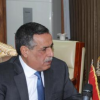
Iraq's Electricity Minister, Qassem Fahdawi [Qassim al-Fahdawi] (pictured), has reportedly said that his ministry is looking to invest in solar energy projects, in an attempt to solve the continuing shortage of electricity.
He said the country produces only about 11,000 MW of power, but needs 21,000 MW.
According to Kuwait's KUNA news agencey, he said that fuel supply was the major stumbling block, especially since the Baiji [Beiji, Bayji] oil refinery had stopped operating following attacks by the Islamic State group (IS, ISIS, ISIL).
(Source: KUNA)
Posted in Iraq Oil & Gas News, Iraq Public Works News 6 Comments