

Iran, Iraq Sign 6-Year Gas Deal
Posted on 13 November 2015 .
Iran has agreed to send 35 mcm/d of its gas to the Iraqi city of Basra for a period of 6-years.
Based on the deal, signed by Head of National Iranian Gas Company (NIGC) Reza Araqi and Iraqi Deputy Minister of Electricity Khalid Hassan Saleh, Iran will supply 20mcm/d of natural gas to Basra in cold seasons and 35mcm/d in hot seasons of the year.
Gas exports to Basra will start with a daily volume of 7 mcm which could increase to 20 mcm/d in three phases.
Iran has prepared the required infrastructures to send gas to neighboring Iraq.
The deal makes Iraq Iran's biggest gas customer as it allows the selling of 40 mcm/d to 65 mcm/d of its gas to Iraqi cities.
Iran will start constructing the required pipelines and pressure boosting facilities within the next 1.5 years to supply the amount to Iraq, Araqi told Shana following the deal's signature.
The gas will be fed to Iraq's gas network from Iran's 6th gas trunkline (IGAT 6), he added. An offshoot of IGAT will cross Iranian city of Khorramshahr to reach Basra. IGAT 6 transfers gas from the giant offshore South Pars gas field in southern Iran to the border province of Khuzestan.
The price of the gas is confidential, but it has been set in accordance with regional market's norms, said the official.
"Exporting gas to Iraq will boost trade between the two countries," Araqi said.
During the deal's 6 year, 40 billion cubic meters of gas will be supplied to Iraq, also said director of international affairs of NIGC.
Iraq has initiated a number of development projects in its energy sector and that is why the deal's duration is only 6 years, Azizollah Ramezani said.
"If Iraq's development projects fail to boost its gas output, the deal may be extended and there is room for more cooperation in this regard," he added.
Iran has several gas deals with neighboring states like gas exports to Turkey, gas swap with Azerbaijan, gas-for-power barter with Armenia, and gas exports to Pakistan, which are yet to become finalized.
Part of the gas to Iraq will be used for generation of gas to address some of Iraq's electricity troubles.
The country, also an OPEC member, is facing serious load-shedding and Iranian companies are operating 33 megaprojects, worth $1.5 billion, in Iraq for the time being.
(Source: Shana)
Posted in Iraq Oil & Gas News 10 Comments

Iraq Falls in Ease of Doing Business index
Posted on 31 October 2015 .
By John Lee.
Iraq has been ranked 161th out of 189 countries in the World Bank‘s recent Doing Business 2016 report, down from 156th place the previous year.
Top of the list were Singapore, New Zealand and Denmark, with last place going to Eritrea, just behind Libya and South Sudan.
The pace of business regulatory reforms picked up during the past year in the Middle East and North Africa, despite conflict and turmoil in the region, says the World Bank Group’s report.
It finds that 11 of the region’s 20 economies implemented a total of 21 reforms facilitating the ease of doing business. This is a significant increase compared to the annual average of 16 reforms during the past five years.
The United Arab Emirates (UAE) is the region’s top ranked economy, with a global ranking of 31, while countries experiencing conflict and violence are amongst the world’s lowest ranked, including Libya (188), Syria (175) and Yemen (170).
Doing Business measures regulations affecting 11 areas of the life of a business. Ten of these areas are included in this year’s ranking on the ease of doing business: starting a business, dealing with construction permits, getting electricity, registering property, getting credit, protecting minority investors, paying taxes, trading across borders, enforcing contracts and resolving insolvency. Doing Business also measures labor market regulation, which is not included in this year’s ranking.
(Source: World Bank)
Posted in Iraq Industry & Trade News 3 Comments
Neglect eats away Historical City of Uruk
Posted on 19 October 2015 .
By Adnan Abu Zeed for Al-Monitor. Any opinions expressed are those of the author, and do not necessarily reflect the views of Iraq Business News.
The current situation of archaeological sites in Iraq is saddening. These sites are neglected, abandoned, lack organized protection, and are covered by sand and exposed to tampering by modernists and thieves. Al-Monitor visited the city of Kish and the ancient city of Uruk where the situation was no different.
Uruk, known as Warka in the local Arabic dialect, lies in Muthanna governorate in southern Iraq, 270 kilometers (168 miles) south of Baghdad. This city was built in the fifth millennium B.C. and witnessed the emergence of the famous epic of Gilgamesh, its hero and king. Such a glorious past could make Uruk a great source of antiquities and research, yet its current situation is a story of neglect.
Since the discovery of the city in 1849 by British archaeologist William Loftus and the excavations by German missions in the 1970s, no archaeological expert has examined the site, which remains to date deprived of urbanization methods and services.
Al-Monitor visited the site in June and found that the ancient city of Uruk is nothing but soil structures, remains of building foundations and walls penetrated by the wind. It is a deserted area, with no administrative organization allowing its introduction to the public, and no water and electricity services.
Ahmed al-Zawalm, a local farmer, told Al-Monitor that he grew up in Uruk. He said, "I only came near this site once in the 1990s when some guests wanted to visit the place. There is no point in visiting this site that shelters forces of evil, harbors demons and witnesses every now and then supernatural phenomena."
Posted in Iraq Public Works News, Leisure and Tourism in Iraq Comments Off on Neglect eats away Historical City of Uruk

Former Minister Charged with Corruption
Posted on 16 October 2015 .
By John Lee.
Iraq's Commission of Integrity has reportedly issued an arrest warrant for a number of Iraqi government officials, including the former minister of electricity Karim Aftan al-Jumaili, on corruption charges.
Accoring to BasNews, former Member of Iraqi Parliament Odai Awad had previously accused al-Jumaili of 27 cases of corruption.
Jumaili was appointed as Minister for Electricity in 2011, following the resignation of his predecessor who had also been charged with corruption.
(Source: BasNews)
(Corruption image via Shutterstock)
Posted in Security 2 Comments
GE to Provide Turbines for Bismayah Plant
Posted on 10 October 2015 .
Further building on its partnerships to support Iraq’s power sector, GE (NYSE: GE) has received an order from Mass Global Investment Company to provide advanced gas turbines for a new 3-gigawatt (GW) power plant in Bismayah, only 30 kilometers away from Baghdad within a massive housing development project.
The Bismayah plant will support Baghdad and Bismayah and be able to generate the equivalent power needed to supply more than 5 million Iraqi households.
A landmark project that will add to the power generation capabilities of the country, Bismayah marks the first-of-its-kind independent power producer (IPP) deal between Iraq’s Ministry of Electricity and Mass Global Investment Company. It also is the first IPP project by Mass Global Investment Company outside Kurdistan, underlining the close collaborations among power sector stakeholders in Iraq to help meet the country’s growing needs for power.
According to the Iraq Energy Outlook by International Energy Agency, Iraq needs to boost its power generation capacity by nearly 70 percent to meet its needs, while over 70 GW of additional installed capacity is needed by 2035, with a focus on moving away from the traditional oil-fired power mix to more efficient gas-fired generation.
The gas-fired Bismayah plant helps meets the larger development goals of the country with GE to supply eight units of its advanced 9F.03 gas turbines. The project will be developed in two phases, each consisting of two blocks of 1,500 megawatts each. Mass Global Investment Company has signed the EPC contract for the project with ENKA and is currently finalizing the plans for the second phase.
Adel Hamid, Minister’s Deputy for Projects Department, Iraqi Ministry of Electricity, said:
“The Bismayah plant marks our continued focus to strengthen the power infrastructure through IPP partnerships that will help meet the needs of the people.
"Through our partnership with Mass Global Investment Company, which has proven expertise in power generation, we are also bringing advanced technologies in power generation through global companies such as GE for greater operational efficiency. We are committed to developing the power project that will support Bismayah, the largest city development in the country which will energize the economy.”
Posted in Construction & Engineering In Iraq, Iraq Public Works News 4 Comments
UNHCR Opens Two New Camps
Posted on 30 September 2015 .
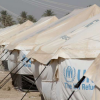
The UN refugee agency, its partners and local authorities have opened two new camps for internally displaced persons (IDPs) in Baghdad province, providing shelter to close to 3,500 Iraqis who have had to flee Anbar province due to recent fighting.
Sadr Al Yusufiya camp (pictured) opened on Tuesday (September 22), six kilometres from Bzeibiz bridge, the main access point between the Baghdad and Anbar provinces, will accommodate some 2,000 people.
Meanwhile, in Baghdad's Ghzaliya neighbourhood, Scout Camp, which opened a few days earlier, on September 16, will provide shelter to some 1,500 internally displaced Iraqis who had been staying in unfinished buildings, with the host community or with relatives in the city.
Naima, 66, fled Anbar's capital, Ramadi, when it fell to the control of armed insurgents in April.
She moved into Scout camp along with her son, his wife and their new-born child. "It's a big relief. We'd been living in an unfinished building ever since we arrived. Although the host community has been generous, providing us with cash, food and household items, it feels good to have a space that is ours", she added.
Scout camp has 250 tents, all connected to electricity, and its new residents have also received essential household items and summer assistance, including mattresses and kitchen utensils, as well as rechargeable fans, cooler boxes and water coolers, to aid their new move. The camp features innovative shaded areas that will be used as communal kitchens, and a 250 KV generator to supplement the power supply when it goes off.
Sadr Al Yusufiya camp has 325 tents, each provided with one electric lamp and a socket outlet connected to two 350 KV generators powering the camp. Public lightning is provided by 36 pole lamp posts across the camp.
Posted in Security 5 Comments
New Help Desk to Streamline Tendering Process
Posted on 17 September 2015 .
The Iraqi Ministry of Planning has opened a new Procurement Help Desk to streamline the tendering process.
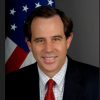
Speaking at the opening of the facility, US ambassador Stuart E Jones (pictured) made the following statement:
"Thank you for those excellent remarks and thank you for your support to the USAID and embassy teams that have been working so closely with the Ministry of Planning.
"I’m really honored and pleased to be here today with you. And, I’m delighted to celebrate the opening of the Procurement Help Desk; this, of course is a project of the Ministry of Planning in partnership with the U.S. Government.
"Let me tell you about the way things used to be. Before this Help Desk, private contractors and government entities had no place to turn to for guidance on public procurement. Each ministry had its own specific methods of procurement. These processes were often confusing and opaque – and overwhelmed in red tape.
"Let me share this one example. Previously, the Ministry of Electricity applied a complicated procurement process that required 28 steps, this involved more than 15 departments, and took 10 months, and this was for every tender to be prepared and awarded. International suppliers lost confidence in the procurement system and, as a result, spare parts were not delivered on time or were of inferior quality. Vital electricity projects were stalled.
"It doesn’t have to be this way. Now, thanks to the Minister of Planning and his team, there are multiple layers of support for government procurers. The Help Desk provides a library of internationally accepted and common standard bidding documents for other ministries to use. Now, Ministry of Planning staff can ensure that all local and central government authorities apply international standards to contract tenders.
"So, going back to the Ministry of Electricity; with support from the Help Desk, the Ministry of Electricity was able to cut out 23 of the 28 steps in its procurement process. Total procurement time went from 10 months to two months.
"This is a game changer. It sends the message that the government of Iraq is a reliable partner, it sends the message that government bidders are going to get fair treatment, and it sends a message that projects are going to get completed in a speedy fashion.
"Already now, 30 pilot tenders with 17 government institutions have benefited from the Help Desk.
"Transparent procurement creates jobs. Transparent procurement means completion of priority capital investment projects. It means the infrastructure that Iraqi citizens need and use every day – roads, buildings, and power plants - can be contracted fairly and completed more quickly and delivered to higher standards.
"This is exactly the kind of reform that his Excellency, Prime Minister Haider al-Abadi has called for. This is exactly the kind of reform that the people of Iraq want. The Help Desk is now fully in Iraqi hands. And, this is only the beginning of the quest to limit corruption and improve business and investment in Iraq.
"So, your Excellency, I want to thank you for your leadership, for your guidance, for your energy behind this project. I want to thank the team here at the Ministry of Planning for guiding this, for driving this and I want to thank my colleagues at USAID and the Tarabot team for supporting the Ministry of Planning in achieving this objective."
(Source: Embassy of the United States)
Posted in Construction & Engineering In Iraq, Iraq Industry & Trade News 5 Comments
Investment Opportunity in New Baghdad Power Plant
Posted on 27 August 2015 .
By John Lee.
Iraq's Ministry of Electricity has invited investment in a new power station at al-Yusufiyah, in Baghdad.
The contract for the 1200-1400 MW plant will be granted on a build, own and operate basis.
Further details are available from the Ministry of Electricity: [email protected]
(Source: National Investment Commission)
(Electricity image via Shutterstock)
Posted in Construction & Engineering In Iraq, Iraq Public Works News 5 Comments
Will Abadi's Reforms work?
Posted on 21 August 2015 .
By Mustafa al-Kadhimi for Al-Monitor. Any opinions expressed are those of the author, and do not necessarily reflect the views of Iraq Business News.
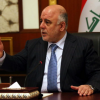
The Iraqi parliament voted Aug. 11 to approve Prime Minister Haider al-Abadi and parliament Speaker Salim al-Jabouri’s economic, political and administrative reform measures in response to the demands of the Iraqi street.
These measures include doing away with the positions of vice president of the republic and deputy prime minister, ending special allocations for the presidency, governmental bodies and institutions, reopening past and current cases of corruption and placing them under the supervision of a supreme committee to combat corruption, and tasking a number of judges to investigate the cases and prosecute corrupt persons.
The reforms also included major measures such as reducing the number of ministers, ending sectarian and party quotas for top government positions, energizing the judiciary to prosecute corrupt officials and limiting law enactments. This followed unprecedented, mounting anti-government protests that carried major weight among Iraq’s politicians.
People have been calling for the realization of their demands for some time. Protests took place on more than one occasion in various cities, including demonstrations in Dhi Qar province south of Baghdad in February 2014 that called for improved services, especially electricity. Thousands of protesters also took to the streets in Basra on Aug. 7, 2014, demanding reform and the fight against corruption.
When the government did not respond to calls for improved services, people then demanded comprehensive reform.
However, this does not necessarily mean that their demands will be implemented on the spot, especially in a country suffering from complex crises at all levels, political divides, economic collapse and an ongoing, raging war against the Islamic State (IS), which controls large swaths of Iraq’s territory.
Posted in Politics 3 Comments
One year later, Struggle Continues for Yazidis
Posted on 14 August 2015 .
By Mohammed A. Salih for Al-Monitor. Any opinions expressed are those of the author, and do not necessarily reflect the views of Iraq Business News.
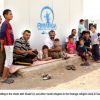
Izzat Abbas, along with a group of men and children, took refuge in the shade by a prefabricated cabin in a refugee camp for displaced Yazidis. They chat and occasionally laugh while they try to keep their spirits up. But their sunburned faces show more exhaustion than content.
The temperature is 47 degrees Celsius (116.6 Fahrenheit) and there is no electricity, which causes the camp residents to flee cabins they described as being as hot as "ovens."
"It's just unbearable," Abbas, 40, said of the excessive heat. “There is little electricity. We get it for three hours and then no electricity for the next three hours. We are given water [by the government] only one hour per day."
Ismael Mohammed, the deputy governor of Dahuk who is in charge of matters involving the refugees and internally displaced persons, told Al-Monitor that nearly 450,000 Yazidis have been scattered around 14 camps in Dahuk province since Aug. 3, 2014, when they were uprooted by the Islamic State (IS) from their historical homeland in Sinjar in western Ninevah province. He said, “Many have also settled in the cities or outside Dahuk.”
Those in the Rwanga camp, halfway between the cities of Dahuk and Zakho close to the border with Turkey, are perhaps among the luckiest. They are living in prefabricated cabins, while the majority of the other camps are sprawling tent cities with little protection against the forces of nature.
A sense of loss and despair is common in those camps. As if losing their homes and valuables was not enough, many have to grapple with systemic obstacles that make their lives much harder. In their haste to escape from the invading IS fighters, Khalaf and his family, like many other Yazidis, lost their Iraqi national identity documents. Khalaf has been trying to obtain a new one, as in the rigidly bureaucratic Kurdish system the national ID card is needed for almost everything.
Posted in Security 3 Comments