


After Liberation, Iraqi Cities Await Reconstruction
Posted on 07 January 2016 .
By Mustafa al-Kadhimi for Al-Monitor. Any opinions expressed are those of the author, and do not necessarily reflect the views of Iraq Business News.
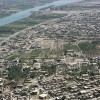
The year 2015 saw the liberation of several areas of Salahuddin (Tikrit) and Anbar (Ramadi - pictured) provinces from the grasp of the Islamic State with operations toward that end ongoing.
Yet, to date no serious reconstruction projects have been undertaken in those liberated areas, as the Iraqi government is faced with a difficult challenge — eradicating terrorism not only requires military effort, but also mobilization aimed at rehabilitating the residents before the area's infrastructure can be rebuilt.
Mosul fell on June 10, 2014, after a surprise attack by IS and the withdrawal of the Iraqi army and other security forces from the city. IS subsequently continued to rapidly advance toward Baghdad, and in a matter of days gained control of areas adjoining the capital, approximately 40-60 kilometers (25-37 miles) away, in Salahuddin province in the north and Anbar province in the west.
IS’ thrust came to a halt only after large numbers of volunteers, such as the Popular Mobilization Units, joined the ranks of the security forces to combat IS, following a fatwa issued by Grand Ayatollah Ali al-Sistani on June 13, 2014. In September 2014, IS began a gradual retreat from occupied areas as a result of the aerial campaign that was initiated the month before by the US-led military coalition.
In 2015, IS experienced a major setback in Iraq, where it lost control of key cities and large swaths of land, among them Tikrit, liberated in March, Sinjar, freed in November, and Ramadi, where Iraqi forces are currently routing IS out of its last strongholds, on Dec. 28.
Areas in Iraq occupied by IS suffered extensive damage to infrastructure, the local economy and private property, with the Parliamentary Services Committee estimating a total of $25 billion in damages up to April 2015.
Posted in Construction & Engineering In Iraq, Iraq Public Works News Comments Off on After Liberation, Iraqi Cities Await Reconstruction
Kurdish Regional Government Fights Reform Battle
Posted on 24 December 2015 .
By Simon Kent.
The Kurdish Regional Government has announced a plan to implement a series of economic reforms in the face of a growing recession.
Currently, the region has debt of up to $18 billion, a crisis made far worse by expenditures in the war against ISIS, the collapse in oil prices and a bloated public sector payroll which consumes 70% of the region's budget. Public servant salaries are costing the region almost $800 million a month.
The new reforms will involve the slashing of public sector pay, the restructuring of pensions and the elimination of some perks for politicians and senior public servants. Electricity and fuel subsidies will be assessed as well.
Notably, these are the same challenges Baghdad has been trying to overcome, including the presence of "ghost employees" at state owned companies. Two Kurdish lawmakers complained that these new cuts were only superficial, and much deeper reforms were needed to help the economy.
(Source: Reuters)
Posted in Politics 5 Comments

Iraq to Receive $1.2bn World Bank Loan
Posted on 19 December 2015 .
A US$1.2 billion loan will support Iraq in strengthening fiscal stabilization and improving efficiency in the energy sector to help counter the effects of the drop in oil prices and rising security costs.
The World Bank Group’s Board of Directors acknowledged the Government of Iraq’s engagement in a rigorous reform program and approved the Emergency Fiscal Stabilization, Energy Sustainability and State-Owned Enterprise Transparency Development Policy Financing.
The operation is aligned with the Government’s recovery blueprint for 2015-2018, that committs to reforms to achieve inclusive growth, efficient service delivery and improved social protection.
“The World Bank’s support for the current reform momentum in Iraq is very important at this critical time as the country grapples with long standing challenges in the financial sector, public financial management and energy efficiency and security,” said Ferid Belhaj (pictured), World Bank Director for the Mashreq Region.
The proposed operation will focus on reforms in three areas. Reforming the public wage system by reducing the highest salaries and increasing the lowest ones will improve expenditure allocation. There will also be reforms in public investment and debt management, and the pension scheme.
Posted in Iraq Banking & Finance News 8 Comments

APR Energy Extends Basra Contract
Posted on 14 December 2015 .
By Simon Kent.
APR Energy plc has announced that it has signed for an extension of its power generation contract in Iraq. The company run a gas fired power station that provides electricity for Iraq's southern port city of Basra.
According to APR, the power plant has been in operation since 2012 and comprises six GE TM2500 mobile gas turbines. APR Energy acquired the plant in 2013 as part of its acquisition of GE's power rental business.
The plant will be run by APR through 2016, one of a number of gas fired plants in the south.
(Source: APR Energy.)
Posted in Iraq Public Works News 6 Comments

Gulf Keystone Appoints New Non-Executive Directors
Posted on 08 December 2015 .
Gulf Keystone Petroleum (GKP) has announced that Cuthbert ("Cuth") McDowell and Keith Lough have been appointed to the Board as Non-Executive Directors with immediate effect. Jón Ferrier, CEO, has also been appointed to the Board with immediate effect.
Cuth McDowell
Having read Technological Economics at Stirling University, Cuth (59) began his career in 1979 at BP where he spent eight years in a variety of economic and commercial roles. In 1987 he moved to Clyde Petroleum as Senior Economist, before being promoted to Group Commercial Manager ahead of the eventual sale of the business to Gulf Canada.
In 1997 Cuth joined Paladin Resources and in his commercial and finance director roles, played a key part in building Paladin into an E&P company which was ultimately acquired by Talisman Energy in 2006. He currently sits on the Board of IGas, the UK onshore oil & gas company. Until earlier in 2015 Cuth was a Non-Executive Director of Pitkin Petroleum, where he had also served as Finance Director.
Keith Lough
Keith Lough (54) read Economics at Edinburgh University before qualifying as a chartered certified accountant with British Gas in 1985. He subsequently obtained an MSc in Finance from London Business School. In 1988 Keith joined LASMO PLC where over the course of the next eleven years he held a range of senior financial and operational roles, including MD of the North Sea, and then Europe and North Africa before LASMO was sold to ENI.
Keith was CFO of PetroKazakhstan for two years before being headhunted for the CFO role of British Energy, the nuclear power company. At British Energy he oversaw the complex restructuring of the business and the interaction with the UK Government and its creditors. In 2004 Keith founded coal bed methane focused Composite Energy Ltd, which was acquired by Dart in 2011.
The team from Composite spent a year at Hutton Energy, during which time Keith was CEO. Keith is currently a Non-Executive Director of Rockhopper Exploration PLC, Cairn Energy PLC, Papua Mining PLC and the UK Gas and Electricity Markets Authority (Ofgem).
Commenting on today's announcement, Andrew Simon, Non-Executive Chairman of Gulf Keystone said:
"With shareholders having approved the changes to the Company's Bye-Laws, we are pleased to confirm that our CEO Jón Ferrier has now been appointed to the Board.
"We have made clear our intent to rebuild the Board with high calibre individuals, and to ensure that the Board is truly fit for purpose. We are therefore extremely pleased to have secured the services of Keith Lough and Cuth McDowell. Both Keith and Cuth have a deep knowledge of the strategic, operational and financial dimensions of the oil & gas sector. They bring decades of experience in the building of businesses, but also in the realisation of the value in them for shareholders. Their track records also span both executive and non-executive roles within London listed companies.
"On behalf of everyone at Gulf Keystone I warmly welcome all three Directors at this important juncture in the Company's development. With shared values and goals we see a strong cultural fit with Gulf Keystone and are confident they will make a significant contribution."
(Source: GKP)
Posted in Iraq Oil & Gas News 7 Comments
Iran, Iraq Sign 6-Year Gas Deal
Posted on 13 November 2015 .
Iran has agreed to send 35 mcm/d of its gas to the Iraqi city of Basra for a period of 6-years.
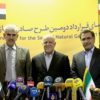
Based on the deal, signed by Head of National Iranian Gas Company (NIGC) Reza Araqi and Iraqi Deputy Minister of Electricity Khalid Hassan Saleh, Iran will supply 20mcm/d of natural gas to Basra in cold seasons and 35mcm/d in hot seasons of the year.
Gas exports to Basra will start with a daily volume of 7 mcm which could increase to 20 mcm/d in three phases.
Iran has prepared the required infrastructures to send gas to neighboring Iraq.
The deal makes Iraq Iran's biggest gas customer as it allows the selling of 40 mcm/d to 65 mcm/d of its gas to Iraqi cities.
Iran will start constructing the required pipelines and pressure boosting facilities within the next 1.5 years to supply the amount to Iraq, Araqi told Shana following the deal's signature.
The gas will be fed to Iraq's gas network from Iran's 6th gas trunkline (IGAT 6), he added. An offshoot of IGAT will cross Iranian city of Khorramshahr to reach Basra. IGAT 6 transfers gas from the giant offshore South Pars gas field in southern Iran to the border province of Khuzestan.
The price of the gas is confidential, but it has been set in accordance with regional market's norms, said the official.
"Exporting gas to Iraq will boost trade between the two countries," Araqi said.
During the deal's 6 year, 40 billion cubic meters of gas will be supplied to Iraq, also said director of international affairs of NIGC.
Iraq has initiated a number of development projects in its energy sector and that is why the deal's duration is only 6 years, Azizollah Ramezani said.
"If Iraq's development projects fail to boost its gas output, the deal may be extended and there is room for more cooperation in this regard," he added.
Iran has several gas deals with neighboring states like gas exports to Turkey, gas swap with Azerbaijan, gas-for-power barter with Armenia, and gas exports to Pakistan, which are yet to become finalized.
Part of the gas to Iraq will be used for generation of gas to address some of Iraq's electricity troubles.
The country, also an OPEC member, is facing serious load-shedding and Iranian companies are operating 33 megaprojects, worth $1.5 billion, in Iraq for the time being.
(Source: Shana)
Posted in Iraq Oil & Gas News 10 Comments
Iraq Falls in Ease of Doing Business index
Posted on 31 October 2015 .
By John Lee.
Iraq has been ranked 161th out of 189 countries in the World Bank‘s recent Doing Business 2016 report, down from 156th place the previous year.
Top of the list were Singapore, New Zealand and Denmark, with last place going to Eritrea, just behind Libya and South Sudan.
The pace of business regulatory reforms picked up during the past year in the Middle East and North Africa, despite conflict and turmoil in the region, says the World Bank Group’s report.
It finds that 11 of the region’s 20 economies implemented a total of 21 reforms facilitating the ease of doing business. This is a significant increase compared to the annual average of 16 reforms during the past five years.
The United Arab Emirates (UAE) is the region’s top ranked economy, with a global ranking of 31, while countries experiencing conflict and violence are amongst the world’s lowest ranked, including Libya (188), Syria (175) and Yemen (170).
Doing Business measures regulations affecting 11 areas of the life of a business. Ten of these areas are included in this year’s ranking on the ease of doing business: starting a business, dealing with construction permits, getting electricity, registering property, getting credit, protecting minority investors, paying taxes, trading across borders, enforcing contracts and resolving insolvency. Doing Business also measures labor market regulation, which is not included in this year’s ranking.
(Source: World Bank)
Posted in Iraq Industry & Trade News 3 Comments
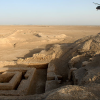
Neglect eats away Historical City of Uruk
Posted on 19 October 2015 .
By Adnan Abu Zeed for Al-Monitor. Any opinions expressed are those of the author, and do not necessarily reflect the views of Iraq Business News.
The current situation of archaeological sites in Iraq is saddening. These sites are neglected, abandoned, lack organized protection, and are covered by sand and exposed to tampering by modernists and thieves. Al-Monitor visited the city of Kish and the ancient city of Uruk where the situation was no different.
Uruk, known as Warka in the local Arabic dialect, lies in Muthanna governorate in southern Iraq, 270 kilometers (168 miles) south of Baghdad. This city was built in the fifth millennium B.C. and witnessed the emergence of the famous epic of Gilgamesh, its hero and king. Such a glorious past could make Uruk a great source of antiquities and research, yet its current situation is a story of neglect.
Since the discovery of the city in 1849 by British archaeologist William Loftus and the excavations by German missions in the 1970s, no archaeological expert has examined the site, which remains to date deprived of urbanization methods and services.
Al-Monitor visited the site in June and found that the ancient city of Uruk is nothing but soil structures, remains of building foundations and walls penetrated by the wind. It is a deserted area, with no administrative organization allowing its introduction to the public, and no water and electricity services.
Ahmed al-Zawalm, a local farmer, told Al-Monitor that he grew up in Uruk. He said, "I only came near this site once in the 1990s when some guests wanted to visit the place. There is no point in visiting this site that shelters forces of evil, harbors demons and witnesses every now and then supernatural phenomena."
Posted in Iraq Public Works News, Leisure and Tourism in Iraq Comments Off on Neglect eats away Historical City of Uruk

Former Minister Charged with Corruption
Posted on 16 October 2015 .
By John Lee.
Iraq's Commission of Integrity has reportedly issued an arrest warrant for a number of Iraqi government officials, including the former minister of electricity Karim Aftan al-Jumaili, on corruption charges.
Accoring to BasNews, former Member of Iraqi Parliament Odai Awad had previously accused al-Jumaili of 27 cases of corruption.
Jumaili was appointed as Minister for Electricity in 2011, following the resignation of his predecessor who had also been charged with corruption.
(Source: BasNews)
(Corruption image via Shutterstock)
Posted in Security 2 Comments
GE to Provide Turbines for Bismayah Plant
Posted on 10 October 2015 .
Further building on its partnerships to support Iraq’s power sector, GE (NYSE: GE) has received an order from Mass Global Investment Company to provide advanced gas turbines for a new 3-gigawatt (GW) power plant in Bismayah, only 30 kilometers away from Baghdad within a massive housing development project.
The Bismayah plant will support Baghdad and Bismayah and be able to generate the equivalent power needed to supply more than 5 million Iraqi households.
A landmark project that will add to the power generation capabilities of the country, Bismayah marks the first-of-its-kind independent power producer (IPP) deal between Iraq’s Ministry of Electricity and Mass Global Investment Company. It also is the first IPP project by Mass Global Investment Company outside Kurdistan, underlining the close collaborations among power sector stakeholders in Iraq to help meet the country’s growing needs for power.
According to the Iraq Energy Outlook by International Energy Agency, Iraq needs to boost its power generation capacity by nearly 70 percent to meet its needs, while over 70 GW of additional installed capacity is needed by 2035, with a focus on moving away from the traditional oil-fired power mix to more efficient gas-fired generation.
The gas-fired Bismayah plant helps meets the larger development goals of the country with GE to supply eight units of its advanced 9F.03 gas turbines. The project will be developed in two phases, each consisting of two blocks of 1,500 megawatts each. Mass Global Investment Company has signed the EPC contract for the project with ENKA and is currently finalizing the plans for the second phase.
Adel Hamid, Minister’s Deputy for Projects Department, Iraqi Ministry of Electricity, said:
“The Bismayah plant marks our continued focus to strengthen the power infrastructure through IPP partnerships that will help meet the needs of the people.
"Through our partnership with Mass Global Investment Company, which has proven expertise in power generation, we are also bringing advanced technologies in power generation through global companies such as GE for greater operational efficiency. We are committed to developing the power project that will support Bismayah, the largest city development in the country which will energize the economy.”
Posted in Construction & Engineering In Iraq, Iraq Public Works News 4 Comments