


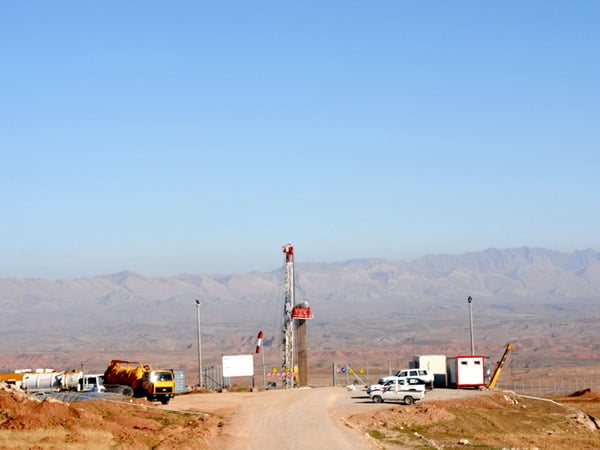
So instead, they’re going for damage control and trying to prevent the Kurds from entering into international deals in those disputed territories. And they have good reason. Because while Baghdad tries to wring concessions out of the Kurdish with arguments about PSCs being illegal, the Kurdish themselves are teasing Baghdad by granting licenses for oil work on the very borders of the disputed territories, including in some blocks where borders are not as clear or overlapping.
Although the Kurdish regional government has explicitly said that it won’t grant any licenses in disputed territories, there are still question marks over several exploration blocks – including two that major international Exxon Mobil is contracted for.
Last November Exxon Mobil dropped a bombshell on Baghdad, announcing they had signed contracts with the Kurdish for six exploration blocks. Exxon Mobil already operates in southern Iraq and despite numerous warnings from Baghdad, the multinational went ahead and signed anyway. After complaints from the Iraqi government Exxon Mobil then apparently sent two letters to Baghdad promising to freeze its Kurdish activities. However evidence on the ground suggests otherwise.
Basically Baghdad has been mostly powerless – the most they have been able to do has been to exclude Exxon Mobil from bidding for oil contracts this May, a fourth bidding round that it appears Exxon Mobil was not much interested in anyway.
And while the Kurdish won’t budge on the topic, they will happily continue to take their 17 percent share of the federal budget. Most of Iraq’s national income is generated by oil revenues and currently, most of Iraq’s oil is produced in southern Iraq, in places like Basra. Many Iraqi politicians have already argued that the Kurdish are getting an unfairly large share of the country’s income even while they’re not contributing, having stopped their own oil exports in early April.
Comments are closed.