


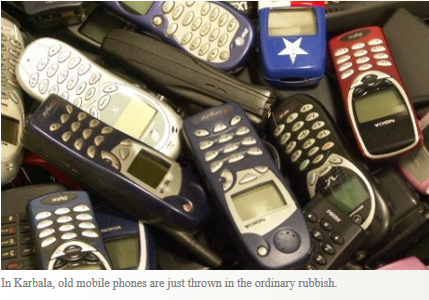
Electronic waste, or e-waste, as it is more commonly known, is a serious and growing problem around the world. As the United Nations’ International Labour Organization said in a 2009 report: “Today, e-waste is the fastest growing waste stream (about 4 per cent growth a year). About 40 million tonnes of e-waste is created each year … [it] comprises electrical appliances such as fridges, air conditioners, washing machines, microwave ovens, and fluorescent light bulbs; and electronic products such as computers and accessories, mobile phones, television sets and stereo equipment.”
The materials used in the manufacture of electronics products are often either hard to recycle or else may be toxic to humans; sometimes these components may leach into the ground or be spread in the atmosphere. The BBC wrote about a recent report on the subject that showed a large number of people were at risk from e-waste, saying that “toxic waste [is in a similar league to public health threats such as malaria and tuberculosis”.
And while Iraq is not quite the dumping ground for dead electronic products that some countries – such as India – are, what happens to things like old mobile phones and televisions in a place like Karbala indicates that Iraq also has a growing problem. Computers, car batteries and other equipment are continuously being thrown out with ordinary garbage.
In one television repair shop in western Karbala, about 20 old TV sets are simply piled up in a corner – that is despite the fact that this is one of Karbala’s less affluent areas. In wealthier areas, repair shops have even bigger piles of old televisions.
Stores specialising in computer repairs receive dozens of damaged computers. When the computers cannot be repaired, the store owners remove the parts that might be of use to them and throw the rest of the machine away.
Comments are closed.