


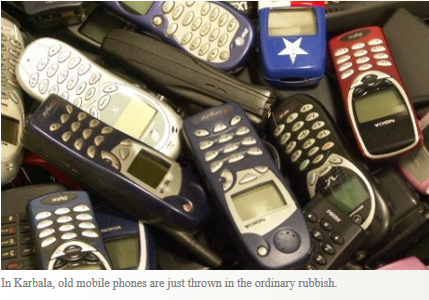
Once thrown into the regular garbage, the electronic parts are then taken to dumps on the outskirts of Karbala. Last year the Karbala authorities commissioned the building of a US$48 million recycling plant on the outskirts of the city – an Iranian firm was commissioned to build it – but as yet, the plant remains unfinished. It would mostly be recycling glass, wood and fertilizers anyway.
One local doctor, Ikhlas al-Obeidi, told NIQASH that she believes most of the people of Karbala are unaware of the toxicity and danger of e-waste. “These kinds of materials could be the cause of the kinds of diseases that seem to be becoming more common in Iraq now, such as nervous and respiratory problems and even diabetes,” she suggests.
A review of all the work on possible health problems caused by e-waste in British medical journal, The Lancet, confirms that e-waste is suspected of causing everything from lung cancer and genetic defects to cardiovascular disease to impaired cognitive function and decreased intelligence in children.
Al-Obeidi believes that there needs to be a nationwide educational campaign started so that locals are more aware of what they are doing when they throw their old mobile phone into the rubbish. As happens in Europe, she also believes that manufacturers of the devices should work together with the owners of the devices to somehow recycle the items.
Of course, many manufacturers already put warnings on their devices saying that the batteries and other components need to be disposed of responsibly because they can pose a risk to health. However in Karbala, as in the rest of Iraq, there really isn’t any option for responsible disposal. The only option open to almost everyone, whether senior politician or student, is to throw them in the garbage.
Comments are closed.