


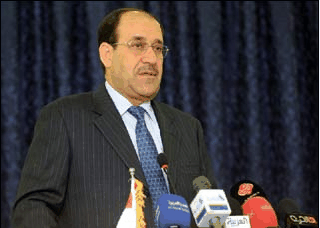
Abdul-Mahdi said that despite the superiority of Maliki’s electoral coalition, the competing Shiite forces, the Kurds and the Sunnis, are together able to form a comfortable majority to prevent Maliki from remaining in office.
It seems that the various Shiite groups at this stage are trying to absorb the “shock” of the results and take the pulse of the other parties. Each party thinks that its interest is not to dismantle the Shiite alliance, at least during the early stages of negotiation.
Maliki thinks he can get a mandate to stay on as prime minister via the Shiite alliance, where he has a majority. Perhaps he can also benefit, as happened after the 2010 elections, from the Iranian pressure on the other Shiite groups to accept a third term for him.
Also, the rest of the Shiite parties think that staying in the National Alliance strengthens their bargaining position with non-Shiite forces helps minimize the concessions they would have to give to other parties, while pleasing the Iranians who favor the maintaining of the Shiite alliance.
Maliki likely fears that if he rushes to do business with parties outside the Shiite alliance, his Shiite rivals would do the same and that they may have a better chance to win over the Kurdish and Sunni forces, because there is a general consensus among them to not keep Maliki in power.
At the same time, the rest of the Shiite groups fear that this consensus is not solid enough to withstand discussing the details, and that going alone to the Kurdish and Sunni forces may put them in a weak bargaining position and make them appear responsible for breaking Shiite unity.
An important factor here are the choices that the Sunni and Kurdish forces will make. If the Sunnis and Kurds rush to form ethnic and sectarian alliances, then the Shiite alliance may do the same.
Some are proposing scenarios such as replacing Maliki with another figure from the State of Law Coalition as a compromise to ensure the continuation of the Shiite alliance. Yet, such a solution may come at a later stage, after the favored options by most parties have been exhausted.
What is certain now is that a harsh negotiating season will begin as the conflict moves from its electoral aspect into the closed negotiating rooms and deals among the elite.
Comments are closed.