


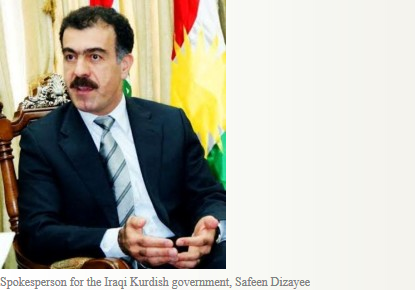
Of course, some problems – like Article 140 and issues around oil and gas and the Iraqi Kurdish military – cannot be solved within three months. But what is important to us is that the government shows it has good intentions and initiates some steps toward resolution.
NIQASH: It is true that the conflict around oil and gas remains a big issue for Baghdad. They accuse you of selling oil and drilling rights illegally. But Iraqi Kurdistan believes it should be allowed to do what it wants with its own resources, especially in the absence of a national oil and gas law. Can you tell us how much oil Iraqi Kurdistan is currently selling per day and how much you’re earning from that?
Dizayee: Currently we are exporting 200,000 barrels per day through the Ceyhan oil pipeline, to Turkey. We’ve been paid for three to four oil shipments and each of these bring in between US$90 to 100 million. This money was used to pay the salaries of government employees in the region – even though they didn’t quite cover everything.
NIQASH: Is Iraqi Kurdistan selling oil to Iran as well?
Dizayee: The export of oil through the pipeline is more practical. We are not exporting any oil to Iran currently. However there are negotiations with Iran going on about moving oil through their territory.
NIQASH: Will Erbil ever accept the idea of selling its own oil through the Iraqi national company, the State Oil Marketing Organization, or SOMO?
Dizayee: The Iraqi Constitution actually gives Iraqi Kurdistan – as a semi-autonomous region – the right to work its own resources and to export them too. But the authorities here believe that the wealth of Iraq belongs to all Iraqis and that, therefore, oil revenues should be evenly distributed.
A delegation from Iraqi Kurdistan – headed by Nechirvan Barzani – has been to Bagdad four times to discuss this with the former Prime Minister, Nouri al-Maliki.
There was some good progress made but unfortunately Baghdad insisted that all oil had to be under its control. Whereas Iraqi Kurdistan thinks we should be partners – in the sense that SOMO can take part in oil extraction, export marketing and the distribution of revenues and that this should all be done fairly and with transparency. Everything would happen on the condition that we’re partners and we work together.
Our main fear is that Baghdad would take our oil, do with it as it wishes and then have complete control over Iraqi Kurdistan and its revenue sources.
We were always afraid that Baghdad might use the issue of our share of the national budget against us. And now we’re living this. Baghdad has imposed a financial blockade upon us and has not released the Iraqi Kurdish share of the budget to us for nine months.
NIQASH: Apparently part of a recent proposal said that Iraqi Kurdistan would export 100,000 barrels of oil per day through SOMO and in return Baghdad would pay the region its budget. If the region extracted more oil, it could do what it wished with that. Is that deal still on the table?
Dizayee: This proposal has existed since April 2014. Its purpose was to show the goodwill of Iraqi Kurdistan so that negotiations would proceed in a positive way. Unfortunately Baghdad then told us the necessary pipeline was not operating properly due to terrorism. So the deal went nowhere. However it is now back on the table and the Iraqi Kurdish authorities are placing emphasis on it.
NIQASH: So how are the negotiations with Baghdad going at the moment? Do you feel there may be some positive news soon?
Dizayee: Our participation in the current Iraqi government indicates that we support a solution through dialogue. We are going to carry on like this because we don’t want to be accused of being the problem or of being the root cause of the failure of the political process in Iraq. At the same time though, we do have to consider the interests of the Iraqi Kurdish people whom we represent and we will not compromise their interests.
Comments are closed.