


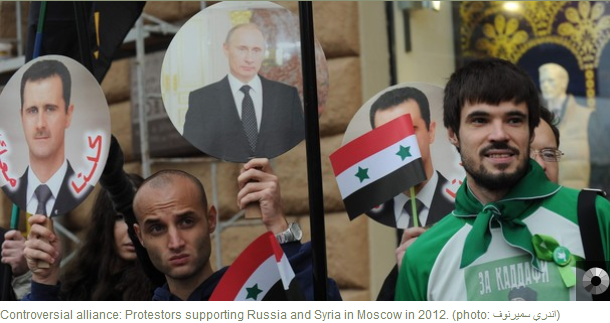
Shiite Muslim political parties also came around to welcoming the Russian intervention. The US-led coalition has been unable to defeat the IS group, they say. So there is a need for new alliances, as Prime Minister Haider al-Abadi said in a press conference on October 4. However he also said that any Russian moves should be made in cooperation with the US-led coalition.
Most Sunni Muslim Iraqis and their political representatives are opposed to the new alliance. And this is mainly because they despise one of the members in particular: They see Iran as bent on supporting Shiite Muslim militias that target Sunnis simply because of their religious sect. They also dislike Iran for its support of Syrian President, Bashar al-Assad, who, lest everyone forgets, was actually a secular nationalist before he was painted green (the Shiite militia's colours) and became a pawn in the regional Shiite-Sunni conflict.
Iraq's Sunnis tend to trust the support they get from the US and want that support increased. They see the Shiite Muslim militias as hindering the training that the US is giving Sunni tribal fighters, so that they can combat the IS group themselves rather than depend on the Shiite Muslim militias to free them. They believe the Shiite Muslim politicians are preventing the formation of a National Guard in Iraq on purpose – they don't want to see Sunni Muslim militias become as strong as they are currently.
For example there are certain tribes in the Anbar province, who have fighting the IS group for months, that have been asking for weapons and help. This includes the al-Bu Nimr, al-Bu Fahd, Risheh, al-Bu Ulwan and al-Bu Thiyab tribes. But they have not received any.
Politically the Sunni Muslim alliance in Iraq's Parliament issued a statement saying they rejected the Iran, Iraq, Syria, Russia alliance. “It was formed in secret and without consultation with any of Iraq's different political blocs,” the statement said. “There are forces in this alliance that are hostile to the Sunni provinces, which are suffering under the Islamic State.”
Prime Minister al-Abadi argued against that statement at that same press conference on October 4. “Some people are acting as if [US President Barack] Obama was one of their relatives,” he complained. “I welcome this new alliance in the fight against the Islamic State because we need large alliances.”
DTN Iraq: Why The Russians Won’t Win Against Extremists in Iraq: This article was originally published by Niqa... http://t.co/IXJVIwEPmJ
Why The Russians Won’t Win Against Extremists in Iraq: This article was originally published by Niqash. ... http://t.co/Z1HZZpx4iz #Iraq
#IraqEconomy: Why The Russians Won’t Win Against Extremists in Iraq http://t.co/2QrAsLNR0s
Why The Russians Won’t Win Against Extremists in Iraq: This article was originally published by Niqash. Any op... http://t.co/IMDJEcxPUD