


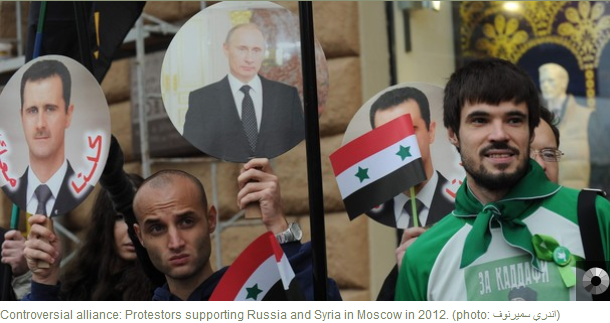
On an individual level, many Sunni Iraqis were open about their dislike for the Russian President; they consider him an enemy of Sunnis in the Middle East because of his support for the Syrian leader, who is clearly an ally of Iran.
The question that an impartial observer in Iraq must ask is this: How effective can this new alliance be against the IS group in Iraq? What can it really achieve?
The first impact of the new alliance is already obvious. At a time when Iraq hardly needs any more problems – the country is already facing serious security, financial and political crises – the alliance has caused further splits between the people of Iraq. It's a difficult and ongoing process but there have certainly been recent efforts in Iraqi politics to overcome sectarian and ethnic divides – this new alliance pressures those already-existing social and cultural fault lines once again.
One doesn't even need to read political headlines to understand this. Listening to the conversations in local coffee shops, or a taking a quick look at Iraqis on social media makes this obvious.
In fact, so far it looks like the only winner in this newly defined fight is Syrian President Bashar al-Assad. Despite the Syrian people's opposition, there is more and more talk of his being part of a negotiated solution to the Syrian civil war.
But away from the intense sectarian and political debates, the real question is whether the Russians could help defeat the IS group in Iraq and whether they can achieve what the US has not been able to, after more than a year of trying.
The answer to that question is: It is unlikely. In the first place the fight against the IS group is about information and intelligence. The organization is based inside Sunni-majority areas, mingling with local residents in Iraq and Syria. It's members move freely on special roads that connect the two countries through an area that the IS group has renamed the state of Furat – it is so named because they believe they have removed the Iraqi-Syrian border.
In Iraq air attacks by the international alliance depend on information given to military by locals who live among the IS group. The US has a big advantage in this because of relationships it has built with the Sunni community in Iraq over years. This relationship began around 2006 when the US created Sunni Muslim militias known as the Awakening, or Sahwa, forces to fight the IS group's forerunner, Al Qaeda in Iraq. And there are extended tribal links between the Anbar province and Syria – so the international alliance can also get intelligence about Syria, through Sunni tribes in Iraq.
The US has a distinct advantage here because Russia doesn't have any such relationships inside Iraq and Iran only fosters relationships with Shiite communities inside Iraq. Syria lost the support of the country's Sunni communities a long time ago.
DTN Iraq: Why The Russians Won’t Win Against Extremists in Iraq: This article was originally published by Niqa... http://t.co/IXJVIwEPmJ
Why The Russians Won’t Win Against Extremists in Iraq: This article was originally published by Niqash. ... http://t.co/Z1HZZpx4iz #Iraq
#IraqEconomy: Why The Russians Won’t Win Against Extremists in Iraq http://t.co/2QrAsLNR0s
Why The Russians Won’t Win Against Extremists in Iraq: This article was originally published by Niqash. Any op... http://t.co/IMDJEcxPUD