


By Guest Blogger. Any opinions expressed are those of the author(s), and do not necessarily reflect the views of Iraq Business News.
Ali al-Zaidi in Washington: What His Trip Actually Means for the Dinar
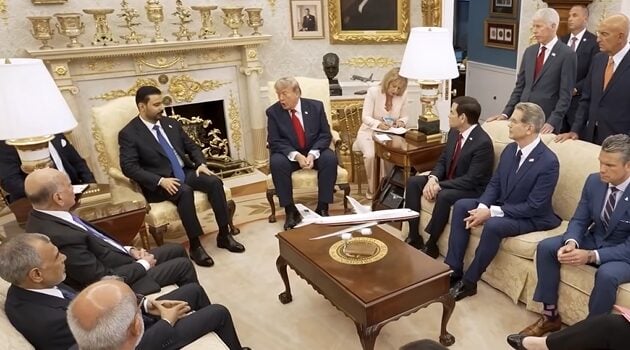
The forums have been buzzing. Iraq's prime minister is in Washington. He met Trump in the Oval Office. There were handshakes, warm words, and promises of deals. For the segment of dinar holders who treat every piece of Iraqi news as a potential trigger for the long-awaited revaluation, this week's visit looked like exactly the kind of high-level momentum they have been waiting for.
So let's look at what actually happened, what it means, and what it doesn't.
What al-Zaidi Was There to Discuss
Trump and al-Zaidi met at the White House on Tuesday, with both leaders pledging to deepen economic ties and boost Iraq's oil output. The visit was al-Zaidi's first international trip since taking office in May, and the agenda was clear well before the handshakes. Oil and gas agreements were expected to be signed, with US companies set to boost Iraq's production capacity and reduce reliance on the Strait of Hormuz.
Al-Zaidi was expected to sign several agreements, including a deal to establish a fund into which Iraq will deposit half a million barrels of oil per day in exchange for the US helping to boost the country's electricity supply. In a show of support for al-Zaidi's administration, the US also resumed cash shipments for Iraq's oil revenue, which have been handled by the Federal Reserve Bank of New York since 2003.
Trump's framing was characteristically direct. He said "massive" new oil deals with Iraq would be announced soon, adding: "Iraq has tremendous potential because of their oil and because of other things. We're going to create a lot of jobs for both countries, and we're going to be taking out a lot of oil. A lot of oil is coming out, and the American companies are doing it."
Al-Zaidi, for his part, described a shift in the relationship's character. He said: "On the 30th of September, the US forces will be out of Iraq, while these companies will be inside Iraq. The social relations is about like economy, it's not about like military relations."
The Security Dimension
The visit was not only about oil. The disarming of pro-Iran Iraqi armed factions and restricting weapons under state authority, as well as Baghdad's relationship with Tehran, were expected to be among the issues the US side would raise. Al-Zaidi has set a September 30, 2026 deadline for all armed factions to disarm, which aligns with the withdrawal of the international coalition's military troops.
That deadline is significant, and not only for security reasons. Washington's willingness to resume dollar shipments to Iraq, and to deepen the oil investment relationship, is directly connected to Baghdad's progress on militia disarmament. The Trump administration has issued sanctions on Iran-backed militias, including Kata'ib Hizballah and Asa'ib Ahl Al-Haqq. The economic partnership being discussed this week is inseparable from the political conditions the US expects Baghdad to meet.
Shortly before al-Zaidi's departure, the Islamic Resistance in Iraq, an umbrella group of Iran-backed armed groups, rejected the prime minister's visit and its outcomes. That rejection is a reminder that the September disarmament deadline is an aspiration, not a settled outcome.
What the Dinar Forums Are Saying - and Why They're Wrong
Predictably, parts of the dinar speculation community have interpreted this week's visit as a bullish signal. A US-backed prime minister, Oval Office optics, Trump talking about "massive deals" - for those primed to read every development as a precursor to revaluation, the ingredients are all there.
They are not.
Nothing discussed in Washington this week has any bearing on the exchange rate of the Iraqi dinar. The agenda was oil production, electricity infrastructure, militia disarmament, and the withdrawal of US troops. The Central Bank of Iraq sets exchange rate policy, not the prime minister, and not the White House. As noted in our November 2025 coverage, the CBI issued a formal statement confirming there is "no intention whatsoever to amend the exchange rate of the Iraqi dinar," explicitly calling revaluation rumours "speculation aimed at disrupting the market and undermining economic stability." That statement has not been withdrawn or updated. No CBI official was in Washington this week.
The resumption of dollar cash shipments to Iraq, which some forum commentators have flagged as significant, is also being misread. The US resumed those shipments as a signal of support for al-Zaidi's administration - a diplomatic tool, not a monetary one. The dollar pipeline from the Federal Reserve Bank of New York exists to allow Iraq to pay for imports and manage its oil revenues. It is not a mechanism for dinar revaluation, and its resumption says nothing about where the IQD/USD exchange rate is headed.
What the Visit Actually Represents
Taken on its own terms, the Washington trip was a genuine diplomatic achievement for al-Zaidi. His administration has prioritised anti-corruption investigations, including "Operation Dawn," which resulted in 67 arrests and the seizure of 375 kilograms of gold. That kind of concrete action gave him something real to show Washington, and the warmth of the reception reflected it.
Al-Zaidi has said he wants to move the relationship "beyond crisis management to opportunity creation, particularly opportunities that have a measurable economic impact." That framing is credible in the context of what was actually discussed: US companies entering Iraq's oil and gas sector, electricity infrastructure investment, and a structured path toward ending the US military presence.
These are meaningful developments for Iraq's long-term economic trajectory. A more stable fiscal position, deeper US investment, and a functioning relationship with Washington are all positive for the country. None of them, individually or together, creates a mechanism by which foreign holders of physical Iraqi banknotes profit.
The Bottom Line
Al-Zaidi's Washington visit was about oil, security, and the future shape of the US-Iraq relationship. It was a successful first international trip by a prime minister who needed to demonstrate credibility in Washington, and by most accounts he achieved that. The deals being discussed - energy agreements, electricity investment, alternative export routes - are the substance of a serious bilateral relationship.
For holders of physical Iraqi dinars waiting for a life-changing revaluation, however, the calculus is unchanged. The Central Bank has not altered its position. The exchange rate was not on the agenda at the White House. Trump's enthusiasm for Iraqi oil is enthusiasm for American companies extracting and profiting from that oil - not a signal that the dinar is about to multiply in value.
The forums will find reasons to be excited. They always do. But the question worth asking, before the next intel call tells you that the Oval Office handshake was a coded signal, is a simpler one: was the word "revaluation" spoken anywhere in Washington this week?
It wasn't.
This article does not constitute financial or investment advice. If you are holding Iraqi dinars and considering your options, consult a licensed, regulated financial advisor - not an online forum.
For more information on the Iraqi dinar, check out IBN's Dinar Page.

Both Countries will benefit on the re-evaluation of the Dinar. The USA Government and private holders are also greatly invested in the dinar and this will stimulate even more business between the two countries!
This sounds like Iraq is willing and capable to develop healthy relationships for both the people of Iraq and America. This is amazing since there were so many barriers blocking all of us including Iraq to even have a hand shake. I pray for a great relationship with Iraq since a lot of my friends are from Iraq and I can see the hunger they have for wanting to travel back home to see family relatives and my relationship with them feels like I am a member of their own family. This is a good feeling.