


New Iranian Ambassador signals 'Changed Approach to Iraq'
Posted on 14 April 2022 .
From Amwaj Media. Any opinions expressed are those of the author(s), and do not necessarily reflect the views of Iraq Business News.
New Iranian ambassador signals 'changed approach to Iraq'
Iran has appointed Mohammad Kazem Aal-e Sadeq as its new ambassador to Baghdad, ending the 5-year tenure of Iraj Masjedi.
Speaking on condition of anonymity, a senior Iranian source has told Amwaj.media that the change is not only routine but bureaucratically overdue, revealing that Masjedi's tenure was meant to finish last year.
He added that Tehran had firmly stood behind Masjedi amid pressure for a shift following a series of controversies involving the envoy.
However, informed sources in Baghdad have contested this narrative of events, indicating to Amwaj.media that the change is meant to signal "a changed approach to Iraq."
Posted in Iraq Industry & Trade News, Politics, Security Comments Off on New Iranian Ambassador signals 'Changed Approach to Iraq'

Iran names New Ambassador to Iraq
Posted on 12 April 2022 .
By John Lee.
Iran has reportedly named its new Ambassador to Iraq.
According to both Tehran Times and Mehr News, Mohammad Kazem Al Sadeq will soon replace Iraj Masjedi as Iran's top diplomat in Baghdad.
On Twitter, Fereshteh Sadeghi (@fresh_sadegh), says that Al Sadeq is from a family of clerics, is fluent in Arabic, and has previously served as Deputy Ambassador in Baghdad.
Al Sadeq takes over from Iraj Masjedi, who was sanctioned by the United States for acting on behalf of Iran's Islamic Revolutionary Guard Corps-Qods Force (IRGC-QF).
(Sources: Tehran Times, Mehr News, Fereshteh Sadeghi)
Posted in Iraq Industry & Trade News, Politics, Security Comments Off on Iran names New Ambassador to Iraq

Iraq and Iran ease Visa Requirements
Posted on 27 October 2021 .
By John Lee.
Visa requirements have reportedly been eased between Iraq and Iran.
Iran's Ambassador to Baghdad, Iraj Masjedi, is quoted as saying that visas are now not required by Iranians arriving in Iraq through Baghdad and Najaf airports, or by Iraqis travelling to Iran.
Iranians can stay in Iraq for up to one month, which the possibility of an extension.
(Sources: IFP, Shafaq)
Posted in Iraq Transportation News Comments Off on Iraq and Iran ease Visa Requirements

US Sanctions Iranian Ambassador to Iraq
Posted on 24 October 2020 .
From US Dept of the Treasury:
The U.S. Department of the Treasury's Office of Foreign Assets Control (OFAC) is designating Iraj Masjedi (pictured), a general in Iran's Islamic Revolutionary Guard Corps-Qods Force (IRGC-QF) and Iran's Ambassador to Iraq, for acting for or on behalf of the IRGC-QF.
A close adviser to former IRGC-QF Commander Qassem Soleimani, Masjedi played a formative role in the IRGC-QF's Iraq policy. In his decades of service with the group, Masjedi has overseen a program of training and support to Iraqi militia groups, and he has directed or supported groups that are responsible for attacks that have killed and wounded U.S. and coalition forces in Iraq. In his current capacity, Masjedi has exploited his position as the Iranian regime's ambassador in Iraq to obfuscate financial transfers conducted for the benefit of the IRGC-QF.
"The Iranian regime threatens Iraq's security and sovereignty by appointing IRGC-QF officials as ambassadors in the region to carry out their destabilizing foreign agenda," said Secretary Steven T. Mnuchin. "The United States will continue to employ the tools and authorities at its disposal to target the Iranian regime and IRGC-QF officials that attempt to meddle in the affairs of sovereign nations, including any attempts to influence U.S. elections."
Masjedi is being designated pursuant to the counterterrorism authority Executive Order (E.O.) 13224, as amended, for acting or purporting to act for or on behalf of, directly or indirectly, the IRGC-QF. The IRGC-QF was designated pursuant to E.O. 13224 in 2007 for support to numerous terrorist groups. The IRGC, including its external arm, the IRGC-QF, was designated as a Foreign Terrorist Organization on April 8, 2019.
A Long-Running Threat to Iraqi Security
Iran's ambassador to Iraq since 2017, Masjedi has publicly admitted the IRGC-QF's role in special operations and the training of militia groups in Iraq, Syria, and beyond. He claims credit for organizing and supporting regional militias to advance Iran's interests throughout the Middle East an enterprise that has spawned untold destruction and corruption, robbing Iraq of a stable, prosperous future.
Masjedi has facilitated financial transfers for the benefit of the IRGC-QF in coordination with IRGC-QF financial facilitator Hushang Allahdad, acting at the direction of former IRGC-QF Commander Soleimani and his successor, Esma'il Ghani. Soleimani was designated pursuant to multiple authorities, including E.O. 13224, in 2011, while Allahdad and Ghani were designated pursuant to E.O. 13224 in 2010 and 2012, respectively. Since 2018, Masjedi has helped the IRGC-QF obtain foreign currency in Iraq, in return for equivalent sums that the IRGC-QF in Iran has transferred to relevant entities. Most recently, Masjedi has provided direct assistance in obtaining tens of billions of dinars on behalf of the IRGC-QF in Iraq.
In the decades prior to his ambassadorial appointment, Masjedi was a senior figure overseeing IRGC-QF activities in Iraq, which included attacks targeting U.S. and coalition personnel, as well as kidnappings and the assassination of Iraqi provincial officials who sought to curb Iranian influence in Iraq. The IRGC-QF provided training for Iraqi recruits, often inside Iran. The Iraqi recruits hailed from groups loyal to, and supported by, the IRGC-QF, which help maintain Iranian influence in Iraqi politics and security. The IRGC-QF also manufactured and distributed weapons, including explosively formed penetrators, that killed and wounded hundreds during Operation Iraqi Freedom.
Masjedi is being designated pursuant to E.O. 13224, as amended, for acting or purporting to act for or on behalf of, directly or indirectly, the IRGC-QF.
SANCTIONS IMPLICATIONS
All property and interests in property of the individual designated today, subject to U.S. jurisdiction, are blocked, and U.S persons are generally prohibited from engaging in transactions with him or the blocked property. In addition, foreign financial institutions that knowingly facilitate significant transactions for, or persons that provide material or certain other support to, the individual designated today risk exposure to sanctions that could sever their access to the U.S. financial system or block their property and interests in property under U.S. jurisdiction.
(Source: US Dept of the Treasury)
(Picture credit: Tasnim, under Creative Commons licence)
Posted in Politics, Security Comments Off on US Sanctions Iranian Ambassador to Iraq
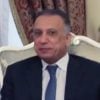
Iran welcomes Iraq's New Prime Minister
Posted on 15 April 2020 .
By Al Monitor staff. Any opinions expressed here are those of the author(s) and do not necessarily reflect the views of Iraq Business News.
Iran welcomes Iraq's new prime minister
Iranian officials have welcomed the appointment of Mustafa al-Kadhimi as the new prime minister-designate of Iraq.
Abbas Mousavi, spokesman for Iran's Foreign Ministry, said the Islamic Republic of Iran "welcomes the agreement between all of Iraq's political parties to introduce Khadhimi as the prime minister and sees it as the correct path and step."
Iran's ambassador to Iraq, Iraj Masjedi, tweeted a similar sentiment, saying that Iran will support whoever is selected by Iraq's parliament.
Posted in Politics, Security Comments Off on Iran welcomes Iraq's New Prime Minister
Iran to Lift Visa Restrictions for Iraqis
Posted on 16 October 2019 .
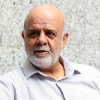
Iran’s Ambassador to Iraq Iraj Masjedi (pictured) praised the Baghdad government’s move to remove visa restrictions for Iranian pilgrims visiting the Arab country during the Arbaeen season and said the Islamic Republic will do the same for the Iraqi nationals in the near future.
Speaking at a meeting of the Arbaeen Headquarters of the western province of Ilam on Tuesday, Masjedi hailed the recent reopening of the Khosravi border crossing and the removal of visa restrictions for Iranians during the Arbaeen season, which marks the 40th day of the martyrdom anniversary of Imam Hussein (AS), the third Shiite Imam.
He further said Iraqi nationals will soon be allowed to enter Iran without visas for 65 days.
To reciprocate Iraq’s move regarding visa-free travels for Iranian pilgrims, Iran plans to allow Iraqi nationals to enter the country without visas for 65 days as of October 24, he added.
Speaking on Monday, Hossein Zolfaqari, Iran’s deputy interior minister for security affairs, said three million pilgrims had crossed the country’s four borders with Iraq for Arbaeen pilgrimage by then.
This year, the four borders of Khosravi, Mehran, Chazzabeh, and Shalamcheh are open to the Arbaeen pilgrims.
Arbaeen, one of the largest religious gatherings in the world, comes 40 days after Ashura, the martyrdom anniversary of the third Shiite Imam.
Each year, a huge crowd of Shiites flock to the Iraqi city of Karbala, where the holy shrine of Imam Hussein (AS) is located, to perform mourning rites.
In August, Iran and Iraq signed an agreement in Tehran to reopen the Khosravi border crossing and remove visa restrictions for Iranian Arbaeen pilgrims.
Iran and Iraq also agreed to raise the level of services and facilities for the pilgrims and enhance border security during the Arbaeen season, which will culminate in a large gathering in Karbala on October 19.
(Source: Tasnim, under Creative Commons licence)
Posted in Iraq Transportation News, Leisure and Tourism in Iraq, Security Comments Off on Iran to Lift Visa Restrictions for Iraqis
"Invaluable Steps" to Cement Ties with Iraq
Posted on 07 June 2019 .
Iran Has Taken Invaluable Steps to Cement Ties with Iraq: Envoy
Iran’s Ambassador to Iraq Iraj Masjedi highlighted the importance of bilateral relations between the two neighboring countries and said Tehran has taken major strides to strengthen ties with Baghdad.
“We are trying to boost our relations with Iraq in all areas,” Masjedi said, addressing an appreciation ceremony for the outgoing Iranian consuls in the Iraqi cities of Sulaymaniyah and Karbala.
“The embassy of the Islamic Republic of Iran in Baghdad, as well as the affiliated organizations and consulates and other governmental agencies of Iran in Iraq, have taken invaluable strides and actions at various political, economic and security levels to strengthen relations between the two countries in recent years,” the diplomat noted.
Masjedi further pointed to historical, cultural and ideological commonalities of the two countries and said closer ties in all fields are in line with the interests of both Iran and Iraq.
Iran and Iraq enjoy cordial political, security and cultural ties but due to some internal and regional problems including Daesh (also known as ISIS or ISIL) terrorism in Iraq, they have not been able to increase their trade volume.
Heading a high-ranking delegation, Iranian Foreign Minister Mohammad Javad Zarif recently paid an official visit to Iraq to boost ties with the Arab country in the sanctions era.
US President Donald Trump’s administration announced plans in March to extend a 90-day waiver for the second time to let Iraq continue energy imports from Iran.
(Source: Tasnim, under Creative Commons licence)
Posted in Investment, Iraq Industry & Trade News, Iraq Oil & Gas News, Politics, Security Comments Off on "Invaluable Steps" to Cement Ties with Iraq
Iraqi Dinar may replace US Dollar in Iran-Iraq Trade
Posted on 19 November 2018 .
Iranian ambassador to Baghdad said Iran and Iraq are weighing plans to eliminate US dollar in trade transactions and also lift visa requirements for citizens of the two countries.
Speaking at a TV program on Saturday night, Iraj Masjedi said Tehran and Baghdad are considering plans to use Iraqi dinar for trade transactions or develop barter trade considering the banking problems caused by the US sanctions on Iran.
He also voiced Iran’s willingness to remove visa restrictions for travels between the two countries, saying the idea of lifting visa requirements for merchants and business people was discussed during Iraqi President Barham Salih’s Saturday visit to Tehran.
Masjedi highlighted the ample opportunities available for the Iranian business sector available in the Iraqi market, saying the Baghdad government welcomes foreign investments.
“The government of Iraq is seeking foreign investment in the economic field, and has now offered 1,200 projects worth $100 billion,” the ambassador added.
He assured Iranian investors of improving security in Iraq, saying the security conditions in the Arab country’s inland and border regions have been getting better since the defeat of the Daesh (ISIL) terrorist group.
The Iraqi president visited Tehran on Saturday with a ranking delegation for a series of political and economic talks.
After high-profile talks between the Iranian and Iraqi delegations, Iranian President Hassan Rouhani said the two neighbors can increase their annual trade from the current $12 billion to $20 billion.
Rouhani also noted that the two sides discussed ways for cooperation in the energy, power and oil industry, including the extraction of petroleum, and a plan to connect the two countries’ railroad networks.
(Source: Tasnim, under Creative Commons licence)
Posted in Iraq Banking & Finance News, Iraq Industry & Trade News 1 Comment

Can Sadr swing Nonsectarian Government?
Posted on 24 May 2018 .
By Ali Mamouri for Al-Monitor. Any opinions expressed are those of the author, and do not necessarily reflect the views of Iraq Business News.
After the Sairoon (On the Move) Alliance emerged victorious in the May 12 Iraqi elections, its leader, Muqtada al-Sadr, has been seeking meetings with the leaders of the other top-vote-getting alliances to discuss the possibility of forming the largest bloc in the new parliament and ultimately form the new Cabinet.
At a May 19 joint press conference after talks with Sadr, Prime Minister Haider al-Abadi, whose Al-Nasr (Victory) Alliance came in third, said, “During our meeting, we agreed to work together and with other parties to expedite the process of forming a new Iraqi government.”
A few days later, on May 22, Al-Nasr spokesman Hussein al-Adeli said Abadi had reached an agreement with Sadr on a map for forming a new government. Abadi himself, in his weekly press conference the same day, said his coalition was close to reaching an understanding with the Sairoon Alliance “to form a strong technocratic government.”
In a May 20 meeting with Hadi al-Amiri, leader of the second-place Fatah Alliance, consisting of the political wings of the pro-Iran militias of the Popular Mobilization Units, Sadr had said, “The process of government formation must be a national decision, and importantly, must include the participation of all the winning blocs along a national path.”
Sadr appeared to select the phrasing “national decision” and “national path” especially for Amiri, who had days earlier met in Baghdad with Qasem Soleimani, commander of Iran's Quds Force, in an attempt to form a pro-Iranian parliamentary bloc.
Sadr also held talks with Ammar al-Hakim, leader of the Hikma Alliance, on May 21 and spoke of the importance of forming the upcoming government in a way that ensures “fixing the path of the political process to suit the aspirations of the Iraqi people who reject sectarianism and corruption.”
Sadr also met May 21 with Iyad al-Allawi, leader of the predominantly Sunni Al-Wataniyah Alliance, and two days earlier had received a letter from Kosrat Rasoul Ali, first deputy for the secretary-general of the Patriotic Union of Kurdistan, in line with discussions on potential alliances requiring Sunni and Kurdish participation alongside the Shiite majority to form a government.
After failing to assemble a parliamentary bloc under Iranian auspices consisting of the four largest Shiite lists — the State of Law Coalition and the Al-Nasr, Hikma and Fatah Alliances — Iranian Ambassador to Iraq Iraj Masjedi attempted to lure Sadr to his side to prevent the formation of an anti-Iran government. Masjedi told Iran's Al-Alam TV May 21, “Iran has constructive relations with all parties, blocs and coalitions that won the majority of parliamentary seats in the fourth elections.”
Masjedi also denied rumors of a dispute between the Iranian leadership and Sadr, saying, “Iran’s relations with Sadr are historical and deep-seated. The country had close relations with the martyrs Mohammed Baqr and Mohammed Sadeq al-Sadr [Muqtada's uncle and father, respectively].” Masjedi added, “Iranian officials’ relations with Sadr are friendly and brotherly, and many of them, including Soleimani, appreciate Sadr greatly.”
In fact, Sadr’s father and Iranian officials were not friendly at all. His representative in Iran, Jaafar al-Sadr, son of Mohammad Baqr, was arrested and his office shuttered in Qom in 1998. In addition, everything indicates that relations between Muqtada and Iran have gone downhill as well in recent years.
Sadr had made several statements critical of Iranian interference in Iraqi decision-making, and his alliance competed against the pro-Iran lists — Al-Fatah and the State of Law Coalition — in the elections. In the preceding years, Sadr’s supporters chanted slogans against Iran at protests calling for reform. Sadr, unlike his rivals Maliki and Amiri, has not met with Soleimani in recent years.
Sadr greeted a group of ambassadors from neighboring countries May 19 after his list's victory was confirmed. In attendance were the ambassadors of Saudi Arabia, Jordan, Kuwait, Turkey and Syria. Official Iranian websites, including Al-Alam's, criticized Sadr’s relations with Saudi Arabia and charged that Riyadh had been behind Iran's exclusion from the meeting.
Sadr insists that the largest parliamentary bloc include all Iraqi components, which would be unprecedented if successful. The largest parliamentary bloc has always consisted solely of Shiite parties, which then negotiated with Kurdish and Sunni blocs over forming the government.
On May 21, Sadr tweeted, “I am Muqtada. I am Shiite, Sunni, Christian, Saebean, Yazidi, Islamist, civil, Arab, Kurdish, Assyrian, Turkmen, Chaldean and Shabak. I am Iraqi. Do not expect me to side with any sect against the other to renew enmities and lead to our demise. We are headed toward a comprehensive Iraqi alliance.”
Al-Hayat newspaper on May 21 cited Iraqi sources close to Sadr discussing efforts to bring together Abadi, Allawi, Kurdistan Democratic Party leader Massoud Barzani and Sunni Al-Qarar Alliance leader Khamis al-Khanjar to explore forming the leading parliamentary bloc with all their parties’ participation. If Sadr succeeds, Iraq might overcome sectarian quotas in forming a government, and Iranian influence would dwindle with its political allies, Al-Fatah and the State of Law Coalition, excluded from the bloc.
Posted in Politics Comments Off on Can Sadr swing Nonsectarian Government?
PM Barzani meets Iran’s New Ambassador
Posted on 18 July 2017 .
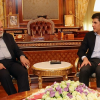
The Prime Minister of Iraqi Kurdistan, Nechirvan Barzani, has received Iran’s new ambassador to Iraq, Mr. Iraj Masjedi, accompanied by Iran’s Consul General in Erbil.
Recalling old relations between Kurdistan Region and the Islamic Republic of Iran, Ambassador Masjedi expressed his wish to further develop the ties between Erbil and Tehran.
He expressed his readiness to exert all the efforts to help settle the outstanding issues between Erbil and Baghdad through dialogue.
He also reiterated his country’s support for the friendship between the Kurdistan Region and the Islamic Republic of Iran.
Prime Minister Barzani thanked the Islamic Republic of Iran for its support to the people of Kurdistan during difficult times and valued the attempts by Mr. Masjedi in the past and now to help developing the relations between the Kurdistan Region and the Islamic Republic of Iran.
Prime Minister Barzani stressed that resolving the outstanding issues between Erbil and Baghdad needs serious dialogue, and that the Islamic Republic of Iran can play a positive role in this regard.
The fight against the Islamic State terrorist organization, ISIS, and regional developments, were also discussed in the meeting.
(Source: KRG)
Posted in Iraq Industry & Trade News, Politics, Security Comments Off on PM Barzani meets Iran’s New Ambassador