


100 Days of Trump: What it means for Iraq
Posted on 30 April 2025 .
By Padraig O'Hannelly.
As Donald Trump completes his first 100 days in as US President, what effect have his policies had on the Iraqi economy?
Firstly, it's worth noting that the main implications of Trump's policies for Iraq have been the indirect results of decisions not directly targeted at Iraq. Increased tariffs and the resultant drop in oil prices, the slashing of foreign aid across the board, and Trump's 'maximum pressure' policy towards Iran have been the three biggest consequences for Iraq since the change of regime in Washington on 20th January.
Tariffs and Oil Prices
While the United States applied an additional duty rate of 39 percent to imports from Iraq from 5th April, as part of its wider 'reciprocal tariffs' (sic) policy, the new rate does not apply to US imports of oil, which account for almost all of Iraq's exports to the US.
However, Trump's approach to tariffs in general, combined with his unpredictable nature, has led to fears of a significant slow-down in international trade, and undermined the confidence of investors and consumers worldwide. As a result, the price of Brent crude has fallen from around $75 at the start of the month to $65 today; in mid-2024 it was as high as $85.
These drops imply reduced oil revenue for Iraq. Iraq's National Development Plan 2024-2028, launched last summer, but withheld from the public until late December, assumes a price of $74 this year, for example.
 (Source: National Development Plan 2024-2028)
But as our Expert Blogger Ahmed Tabaqchali notes, Iraq has the capacity to support its spending plans by selling government debt, and this in turn can help develop the country's bond market, contributing to the evolution of the capital markets in Iraq. So while reduced oil revenue is a negative for Iraq, many expect short-to-medium-term development to continue as planned.
Foreign Aid
By some estimates, more than half of the humanitarian plans in Iraq were funded by the United States, so it should be no surprise that Trump's freezing of foreign aid and shutting down of the United States Agency for International Development (USAID) would have a major impact on a wide range of valuable initiatives throughout the country.
According to the Washington-based Enabling Peace in Iraq Center (EPIC), "in fiscal year 2023, U.S. assistance to Iraq amounted to $592.7 million." It says the halt in funding and the stop-work order for USAID has already disrupted lifesaving programs in Iraq.
Our Tenders page on Iraq Business News has seen only a small drop in activity, as many international NGOs have been able to continue with their work, but many programs have been cancelled or scaled back.
Sanctions on Iran
The removal of Iraq's waiver from US sanctions on Iranian energy imports has created immediate economic strain, but it has also accelerated efforts to reduce dependence on Iran. The sudden change of policy risks widespread blackouts, particularly during the extremely hot summer months, but it should also be noted that Iran was already expected to have difficulty supplying Iraq this summer, as it struggles to meet domestic energy demand.
To mitigate the effects of this decision, Iraq has prioritised alternative supply projects, including a gas deal with Turkmenistan, increased electricity imports from Turkiye, and the creation of a floating platform for LNG imports. Iraq also plans to have completely stopped the flaring of associated gas by early-2028.
While the cancellation of the waiver will undoubtedly cause hardship over the coming months, the import of gas and electricity from Iran was always regarded as a temporary solution, and pulling forward projects to replace Iranian supply could be considered a worthwhile investment.
Trump withdrew the US from the Joint Comprehensive Plan of Action (JCPOA) in 2018. Discussions continue regarding a possible new deal between US and Iran, and the final shape of any such deal will have implications for Iraq's economy and politics.
Iraqi dinar
Finally, for the benefit of those who've bought Iraqi dinars (IQD) in the hope of stratospheric upward revaluations, it should be mentioned that has, of course, not happened.
There has been a noticeable increase in interest in this "dinar RV" theory since Trump was elected in November, but not a shred of evidence to support the idea, and no indication from the President that he has any interest in the topic.
In an entirely unscientific online survey we ran in January, more than half of respondents said they expected the Iraqi dinar to revalue by at least 1,000x in the first 100 days of Trump's term, as if this was something that the President could magically bring about, even if he wanted to.
Doubtless the adherents to this theory will find a way to explain why it has not happened as they hoped, consider it a 'delay', and focus on some future timeframe when their faith will be rewarded.
© Iraq Business News
Posted in Investment, Iraq Industry & Trade News, Politics 1 Comment

Developing Tourism Enterprises in Kurdistan Region of Iraq
Posted on 20 January 2025 .
From the United Nations Development Programme (UNDP):
Developing Tourism Enterprises in Kurdistan Region of Iraq
The United Nations Development Programme (UNDP) in Iraq, with funding from the United States Agency for International Development (USAID), in collaboration with the Ministry of Municipality and Tourism - Board of Tourism of the Kurdistan Regional Government (KRG), proudly announces the successful completion of the Tourism Enterprise Development Program for women and youth aimed at developing the Tourism sector and empowering women and youth across the Kurdistan Region of Iraq (KRI).
H.E. Mr. Qubad Talabani, Kurdistan Regional Government's Deputy Prime Minister, said:
"The tourism sector holds immense potential for economic growth and sustainable development in the Kurdistan Region. Through our partnership with UNDP and USAID, we have taken a significant step towards harnessing this potential by empowering our youth and equipping them with the necessary skills to thrive in this sector."
The training program, conducted across 9 locations in KRI including Erbil, Sulaymaniyah, Dohuk, Halabja, Garmian, Soran, Rapareen, Zakho, and Akre, helped 170 female and youth participants access learning opportunities to improve their livelihoods. Sessions focused on enabling women and youth to create tourism handicraft products reflecting on Kurdistan culture and heritage.
Auke Lootsma, the resident representative of UNDP Iraq, said:
"This collaboration exemplifies our commitment to supporting inclusive and sustainable development in Iraq. By investing in the capacity building of women and youth, we are not only fostering economic empowerment, but also contributing to the overall advancement of the tourism sector in the KRI. This wouldn't have been possible without the generous contribution of our steadfast partner, USAID."
Ms. Erin Mone-Marquez, Mission Director, USAID Iraq, said:
"The successful completion of these trainings underscores the importance of partnerships in driving positive change. By working together, we can create opportunities for women and youth to play a transformative role in the tourism sector, ultimately contributing to job creation and economic diversification and prosperity in the KRI."
The program's emphasis on producing diverse tourism handicraft products, tailored to local market demands, reflects a holistic approach to strengthening the tourism product of KRI. Participants were trained on creating different tourism handicrafts made of Kurdish textiles, ceramic and pyrography art.
Through these trainings, the KRG, UNDP, and USAID aim to enable women and youth to not only enter the tourism industry but also to establish their own micro-enterprises, thereby fostering sustainable livelihoods and contributing to the region's economic growth.
(Source: UNDP)
Posted in Iraq Industry & Trade News, Leisure and Tourism in Iraq Comments Off on Developing Tourism Enterprises in Kurdistan Region of Iraq
Finally, Iraq Launches National Development Plan (NDP) 2024-2028
Posted on 31 December 2024 .
By John Lee.
Iraq's National Development Plan (NDP) 2024-2028 has finally been released.
The plan was a collaboration between the United Nations Development Programme (UNDP) and Iraq's Ministry of Planning with the support of the United States Agency for International Development (USAID).
Launched (sic) to great fanfare back in August, the plan has been kept under wraps until recent days. UNDP Iraq initially told Iraq Business News that it would be released in Arabic within days, and in English by late August; when these dates passed, UNDP did not respond to subsequent inquiries. Iraq's Ministry of Planning did not reply to questions.
With just days left in 2024, UNDP published the 2024-2028 plan on its website on Monday 30th December, while it went live on the Ministry of Planning website just before Christmas.
According to a UNDP statement:
"This comprehensive document outlines our ambitious goals to strengthen economic resilience, enhance social inclusivity, and promote sustainable development across all regions of Iraq.
"The NDP 2024-2028 aims to accelerate development through focused initiatives on improving public services, bolstering infrastructure, and ensuring environmental sustainability."
The plans can now be downloaded here:
From UNDP:
From Ministry of Planning:
To browse our comprehensive library of reports on Iraq, click here.
(Sources: UNDP; Ministry of Planning)
Posted in Construction & Engineering In Iraq, Investment, Iraq Industry & Trade News, Politics Comments Off on Finally, Iraq Launches National Development Plan (NDP) 2024-2028
Oman and Iraq Strengthen Bilateral Ties
Posted on 24 December 2024 .
By John Lee.
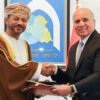
The ninth session of the Omani-Iraqi Joint Committee has taken place in Baghdad, chaired by Oman's Foreign Minister Sayyid Badr Albusaidi and Iraq's Deputy Prime Minister and Foreign Minister, Dr. Fuad Hussein.
Two Memoranda of Understanding (MoUs) were signed during the session to solidify bilateral cooperation:
- Political Consultations: An agreement between the foreign ministries of Oman and Iraq to enhance political dialogue.
- Diplomatic Collaboration: An MoU between Oman's Diplomatic Academy and Iraq's Institute of Foreign Service, focusing on joint training and diplomatic studies.
Both nations expressed their eagerness to implement the signed agreements and boost institutional coordination to achieve sustainable development.
Full statement from the Foreign Ministry of the Sultanate of Oman:
The ninth session of the Omani Iraqi Joint Committee was held in the Iraqi capital, Baghdad. The session was chaired by Oman's Foreign Minister Sayyid Badr Albusaidi and Dr Fuad Hussein, Deputy Prime Minister and Foreign Minister of Iraq.
Speaking at the meeting, Sayyid Badr described relations between Oman and Iraq as "historic and deeply rooted." He noted that these ties are built on shared visions and approaches aimed at achieving prosperity and well-being for the two brotherly peoples and the region as a whole.
He reaffirmed Oman's commitment to advancing joint cooperation in the economic, trade, cultural, tourism, and scientific fields to serve the interests of both countries.
Sayyid Badr also praised Iraq's active role in addressing Arab and regional issues, particularly the Palestinian cause, emphasising the importance of fostering security and stability in the region through joint cooperation and constructive dialogue.
Dr Hussein commended Oman's positive role in supporting Arab and regional causes and its continuous efforts to achieve regional security and stability. He stressed Iraq's keenness to strengthen cooperation with Oman, expressing his aspiration to enhance coordination and joint action to serve the shared interests of the two countries and support the region's stability and prosperity.
At the conclusion of the meeting, the Oman and Iraq signed two Memoranda of Understanding (MoUs) aimed at strengthening political and diplomatic cooperation.
These included one MoU between the foreign ministries of Oman and Iraq on political consultations and another between Oman's Diplomatic Academy and Iraq's Institute of Foreign Service to enhance collaboration in diplomatic studies and training.
The two delegations expressed their aspiration to implement the terms of the signed MoUs and to boost coordination between institutions in both countries to achieve sustainable development and strengthen the bonds of brotherhood and partnership.
The meeting concluded with an emphasis on building on these steps to fulfil the aspirations of the two brotherly peoples. A number of officials from both countries attended the session.
(Source: Foreign Ministry of the Sultanate of Oman)
Posted in Iraq Industry & Trade News, Politics Comments Off on Oman and Iraq Strengthen Bilateral Ties
The Turning Point: Iraq's Leap into the Digital Economy
Posted on 04 December 2024 .
From the United Nations Development Programme (UNDP):
The Turning Point: Iraq's Leap into the Digital Economy
In a world increasingly defined by digital finance, Iraq has taken a transformative step with the Digital Payment Regulation No.2 of 2024.
This landmark policy marks more than just regulatory progress; it signifies a realignment of Iraq's financial infrastructure with global standards.
Aimed at reducing the country's overreliance on cash, this move fosters greater financial inclusion and economic transparency, hinting at a future of resilience and innovation within Iraq's financial sector.
Beyond Compliance: A Shift Towards Better Financial Inclusion
The Central Bank of Iraq (CBI) has set a clear direction: digital payments are now an essential part of Iraq's economic future. With funding from the United States Agency for International Development (USAID) in Iraq, and support from the United Nations Development Programme (UNDP) Iraq, this regulation is a catalyst for ensuring that digital transactions are accessible not only to urban business hubs but also across diverse sectors, bridging public and private financial landscapes.
Iraq's transition to digital payments will unlock a range of economic benefits, including streamlined operations, enhanced data visibility, and improved financial security.
"The collected amount from the digital payment reaches (7.6 Trillion Iraqi Dinars), after it was (2.6 Trillion Iraqi Dinar) in January, 2023"- Mohammed Shia' Al-Sudani, Prime Minister of Iraq
Currently, Iraq's cash-dependent economy presents significant challenges for financial circulation and transparency. The new Digital Payment Regulation disrupts this status quo, incentivizing businesses to adopt tools like POS systems, e-wallets, and online gateways. As the nation embraces this evolution, UNDP Iraq continues to support the government in developing a legal framework aligned with Sustainable Development Goals (SDGs) and international best practices.
"Iraq now possesses advanced infrastructure capable of accommodating electronic payment tools and financial services. We will soon transition to digital banks, where smartphones will drive various banking operations. This shift will facilitate financial accessibility of services for citizens, reduce opportunities for corruption and fraud, and provide crucial data at the national level regarding the nature of transactions, their content, oversight, and compliance achieved through this comprehensive system." Ali Al-Alaq, Governor of Central Bank of Iraq
UNDP's Strategic Role in Laying the Foundation
UNDP's contribution extends beyond technical support to a strategic partnership designed to foster Iraq's digital financial ecosystem. By working closely with the CBI, UNDP provided the technical expertise needed to craft policies that enable the shift to a digitally driven economy while safeguarding inclusivity and sustainability. This partnership highlights how collaborative, forward-thinking strategies can drive lasting structural change in emerging markets.
"This regulation is more than a technical leap forward; it is a foundational shift towards economic resilience, inclusion, and transparency in Iraq. By modernizing the financial system, we are opening pathways for every Iraqi to engage fully in the economy and contribute to a stable and innovative future." Auke Lootsma, UNDP Iraq Resident Representative.
"USAID is proud to support Iraq's journey towards digital finance as part of our commitment to fostering sustainable development and economic opportunity. This regulation reflects Iraq's determination to build an economy that's inclusive, resilient, and aligned with the needs of its people. We are honored to be a part of this transformative chapter in Iraq's financial history," said Erin Mone-Marquez, USAID/Iraq's Acting Mission Director.
A Glimpse into the Future: Implications for Iraq's Economy
The impact of this regulation reaches far beyond mere compliance:
- Strengthened Financial Governance: Reducing cash dependency minimizes risks of money laundering and corruption, creating a transparent transaction trail and fostering accountability across public and private sectors.
- Increased Economic Resilience and Investment Potential: By modernizing its financial system, Iraq becomes a more attractive market for foreign investors and opens doors for collaboration with global FinTech firms.
- Support for SMEs and Innovation Hubs: Cashless systems reduce operational barriers for startups and small businesses, empowering entrepreneurship and enabling Iraq's talent to flourish.
More than a Policy Shift: A Cultural Transformation
Moving towards digital payments represents a profound cultural shift in Iraq, where cash-based transactions have long been the norm. Similar transitions in countries like India have underscored that this change is not just technical; it requires a transformation in public behavior and trust. Iraq's journey towards digital adoption will depend on clear vision from its leaders and cohesive efforts from regulators, businesses, and consumers alike.
This regulation is a pivotal milestone in Iraq's journey towards building a financially inclusive, transparent, and resilient economy. With the Central Bank leading, UNDP's technical advisory, and USAID's support, Iraq is positioned to create a robust digital economy. The path forward will require the collective commitment of all stakeholders to drive adoption and overcome challenges. If Iraq fully embraces this opportunity, it could emerge as a model for how thoughtful policy and collaboration can fast-track a nation into the digital age, unlocking vast potential for years to come.
(Source: UNDP)
Posted in Iraq Banking & Finance News, Iraq Industry & Trade News, Politics Comments Off on The Turning Point: Iraq's Leap into the Digital Economy

USAID Pledges $20m for Water and Sanitation in Iraq
Posted on 26 November 2024 .
By John Lee.
The US Agency for International Development (USAID) has announced a $20 million investment over four years to enhance water and sanitation services in Iraq, benefiting 2.5 million people across five governorates: Maysan [Missan], Diwaniyah, Ninewa, Baghdad, and Erbil.
Implemented by the United Nations Children's Fund (UNICEF) under the Government of Iraq's leadership, the initiative aligns with Iraq's national three-year cost plan.
Deputy Minister of Construction, Housing, and Municipalities, Ali Hussein Abdul Amir, emphasized the importance of the partnership, stating it supports the goal of inclusive and sustainable services. The funding will strengthen local governance, modernize service delivery, and boost private sector and community engagement, with a focus on empowering youth, who represent 60% of Iraq's population.
UNICEF's Sandra Lattouf highlighted the program's role in achieving Sustainable Development Goals (SCGs), driving climate action, and promoting sustainable community practices.
Erin Mone-Marquez, Acting Mission Director for USAID/Iraq, praised the collaboration as a step toward a healthier, more sustainable future for Iraqis.
(Source: ReliefWeb)
Posted in Construction & Engineering In Iraq, Iraq Public Works News Comments Off on USAID Pledges $20m for Water and Sanitation in Iraq

US Firm updates Iraq Development Management System (IDMS)
Posted on 19 November 2024 .
By John Lee.
The Iraqi Ministry of Planning organized a workshop to discuss updates and enhancements to the Iraq Development Management System (IDMS).
Sief Falah Hassan, head of the Office Monitoring and Project Management Department, highlighted that the system integrates various components, including international cooperation, proposed and approved projects, a comprehensive project bank, national development plans, field visit reports, and post-project evaluations.
The initiative aims to align national development plans with investment projects and gather input from relevant departments for the system's improvement. Experts from US-based Synergy International Systems and representatives from key planning and investment departments participated in the workshop.
The Ministry describes the IDMS as a comprehensive online application that oversees the full cycle of government and donor-funded development projects in Iraq, encompassing social, economic, and environmental initiatives.
It continues:
"The system is designed to be a reliable, invaluable resource for distributing development projects across sectors, provinces, and implementing entities.
"The Iraqi Development Management System was developed to align with and support the National Development Plan for the years 2010-2018, which includes approximately 3,000 projects with a total value of $186 billion to be implemented over five years. This system was designed through the collaboration of expert teams from the Ministry of Planning, the U.S. Agency for International Development (USAID) - Development Project, the United Nations Development Programme (UNDP), and Synergy International Systems.
"The Iraqi Development Management System aims to enhance accountability and transparency in managing development resources in Iraq."
According to Synergy International:
"The Iraq Development Management System (IDMS) is the Iraqi government's web-based system for managing the entire cycle of government- and donor-funded development projects.
"The government, led by the Ministry of Planning, will use IDMS to manage its $25 billion public investment budget for the coming year. The system is available in Arabic and English, and it is also publicly accessible. IDMS was developed in partnership with UNDP, USAID, the EU, and UNOPS."
(Source: Ministry of Planning)
Posted in Construction & Engineering In Iraq Comments Off on US Firm updates Iraq Development Management System (IDMS)
New Report on Small, and Medium-Enterprises (MSMEs) in Iraq
Posted on 13 October 2024 .
By John Lee.
In 2021 the Ministry of Planning's Central Statistical Organization (CSO) in partnership with the United Nations Development Programme (UNDP) and with funding from the United States Agency for International Development (USAID) has conducted a study on Micro, Small, and Medium-Enterprises (MSMEs) in Iraq.
The Survey covered the three governorates of Baghdad, Basra, and Nineveh. The study provides an evidence base to inform policies and strategies aimed at creating sustainable livelihoods, including through MSMEs' development. It is designed to build a comprehensive analysis on the MSMEs structures, trends, business dynamics, challenges and opportunities through up-to-date, reliable, relevant market information and analysis.
In 2023, based on the data obtained in collaboration with the Ministry of Planning, UNDP formulated an action plan and guidelines for the relevant authorities to help them formulate policies and practical plans to support MSMEs and entrepreneurs and enhance their participation in the national economy.
This Focus group study contributed to the continuation of the mentioned survey, by conducting a qualitative study represented by Focus Groups in the Governorates of Kirkuk in the north, Babil in the center and Dhi Qar in the south to identify factors that will help align and prioritize the recommendations resulting from the MSME survey based on the critical needs of the remaining governorates.
Click here to download the report in English
Click here to download the report in Arabic
To browse our comprehensive library of reports on Iraq, click here.
(Source: UNDP)
Posted in Iraq Industry & Trade News Comments Off on New Report on Small, and Medium-Enterprises (MSMEs) in Iraq
Iraq Launches National Environmental Strategy
Posted on 21 September 2024 .
By John Lee.
The United Nations Development Programme (UNDP) and the United States Agency for International Development (USAID), in collaboration with the Ministry of Environment, have announced the launch of the National Strategy for the Protection and Improvement of the Environment in Iraq (2024-2030).
This strategy marks a critical milestone in Iraq's efforts to tackle environmental challenges and aligns with its national development goals.
In summary:
- National Strategy for Environmental Protection: The document outlines Iraq's national strategy for protecting and improving the environment, serving as the primary tool for addressing environmental issues within the framework of national development policies.
- Legislative Frameworks: The Ministry of Environment has developed laws and regulations for environmental protection and climate change to address current and future challenges.
- Assessment of Environmental Conditions: The strategy is based on an assessment of Iraq's current environmental state, using scientific reports and published data from various sectors.
- Environmental Challenges in Iraq: Iraq faces significant environmental pressures, including population growth, unsustainable resource use, water resource depletion (due to dam construction and waterway diversion by neighboring countries), and neglect of environmental considerations during development projects. Other challenges include land degradation, deforestation, overgrazing, poaching, and desertification.
- Strategy to Mitigate Pressures: Iraq aims to develop environmental protection capabilities by implementing comprehensive measures that reduce social, developmental, and environmental pressures, incorporating gender aspects where relevant.
- Participatory Approach: The strategy was developed through a participatory process involving multiple institutions and experts, led by the Ministry of Environment, which is responsible for coordinating national efforts related to environmental policies, legislation, and protection measures.
- Strategic Framework and Programs: The strategy includes a vision, mission, core values, and five strategic programs that cover technical, environmental, and governance aspects of environmental activities in Iraq. These programs ensure the integration of environmental protection measures across relevant sectors.
Full statement from UN Development Programme (UNDP):
The United Nations Development Programme (UNDP) and the United States Agency for International Development (USAID), in collaboration with the Ministry of Environment, proudly announce the launch of the National Strategy for the Protection and Improvement of the Environment in Iraq (2024-2030). This strategy marks a critical milestone in Iraq's efforts to tackle environmental challenges and aligns with its national development goals.
Developed through comprehensive assessments of Iraq's current environmental conditions, the strategy provides a roadmap to address pressing issues such as population growth, unsustainable resource use, and regional water management challenges. These factors have contributed to significant environmental degradation, including desertification, loss of biodiversity, and water resource depletion. The new strategy aims to mitigate these pressures and support vulnerable populations to enhance Iraq's social, developmental, and environmental resilience.
"This strategy has been devised in a way that reflects the high level of commitment of the Republic of Iraq and the official, civil, and local organizations it represents to the global agenda for sustainable development by working effectively within international fora and global agreements to achieve the required level of environmental protection, conservation of its components, and integration into development plans within the system of sustainable solutions." stated Engineer Nizar Amidi, Minister of Environment. "I extend my gratitude to UNDP and USAID for their financial, organizational, and technical support for preparing the strategy." added Eng. Amidi.
The strategy's development involved a collaborative process with national institutions, environmental experts, and civil society, under the leadership of the Ministry of Environment. Iraq is dedicated to strengthening its environmental protection capabilities by integrating sustainable practices across all sectors.
"UNDP Iraq is committed to supporting Iraq's climate and environment agenda, partnering closely with the Ministry of Environment to advance our shared goals. We are dedicated to ensuring Iraq's pathway towards sustainable and resilient environmental outcomes, and we are grateful for the crucial support from USAID in this endeavor. Their contribution is pivotal in helping Iraq achieve its climate change adaptation and mitigation targets," said Auke Lootsma, UNDP Iraq Resident Representative.
"USAID commends Iraq's advancement of environmental protection through this comprehensive strategy. It is an important milestone in addressing the environmental challenges that impact the health, livelihoods, and future of the Iraqi people. We are proud of our continued collaboration with the Government of Iraq and partnership with UNDP to foster sustainable development, conserve natural resources, and enhance the quality of life across the country," said Erin Mone-Marquez, Acting Mission Director of USAID Iraq.
The strategy will guide Iraq's environmental protection efforts over the next six years, ensuring that sustainability is prioritized in policy-making, legislation, and the implementation of key initiatives.
Click here to download the full document in English.
Click here to download the full document in Arabic.
To browse our comprehensive library of reports on Iraq, click here.
(Source: UNDP)
Posted in Agriculture, Iraq Industry & Trade News, Politics Comments Off on Iraq Launches National Environmental Strategy
Iraq Launches National Development Plan (NDP) 2024-2028
Posted on 05 August 2024 .
By John Lee.
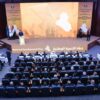
Iraqi Prime Minister Mohammed Shia Al-Sudani has launched the country's National Development Plan (NDP) 2024-2028.
In what the United Nations Development Programme (UNDP) describes as "a significant step toward advancing Iraq's development agenda," the plan was a collaboration between the UNDP and Iraq's Ministry of Planning with the support of the United States Agency for International Development (USAID).
The UNDP statement continued:
"This landmark initiative underscores USAID and UNDP's commitment to supporting Iraq's sustainable development goals, setting a strategic direction for Iraq's growth over the coming years. The plan aims to boost the economy, improve infrastructure, and enhance social services. It also advances environmental conservation and sustainable resource management ...
"The partnership between the Ministry of Planning, UNDP, and USAID demonstrates a unified commitment not only to drive immediate progress, but also to lay the foundation for long-term prosperity and stability in Iraq."
Dr. Muhammad Ali Tamim, Deputy Prime Minister and Minister of Planning, said:
"Today, the National Development Plan 2024-2028 comes to establish a developmental path based on a different vision that relies on utilizing the available capabilities of the state and the private sector, acquiring knowledge in its technical and scientific development, and building a social market economy system while adopting permanent reform policies and enhancing international cooperation paths.
"We extend our sincere gratitude to our international partners for their unlimited support, especially the United Nations Development Program and the United States Agency for International Development, as well as representatives of civil society organizations and the private sector."
Auke Lootsma, UNDP Iraq Resident Representative, said:
"The launch of the National Development Plan is a testament to the collaborative spirit of our partnership with the Ministry of Planning and USAID. This plan will serve as a blueprint for Iraq's future, and we are committed to supporting the Iraqi government in achieving these ambitious goals and ensuring a better future for all Iraqis."
Erin Mone-Marquez USAID/Iraq's Acting Mission Director, said:
"USAID is proud to support the development and implementation of Iraq's National Development Plan. Our partnership with the Ministry of Planning and UNDP is vital in driving these efforts forward to ensure that the benefits reach every corner of Iraq."
(Sources: UNDP; Office of the Prime Minister)
Posted in Construction & Engineering In Iraq, Investment, Iraq Industry & Trade News, Politics Comments Off on Iraq Launches National Development Plan (NDP) 2024-2028