

$46bn-Worth of Projects Boosts Kurdistan Region
Posted on 11 April 2014 .
MEED’s Kurdistan Projects conference 2014 shows why the region, long seen as a platform for doing business elsewhere in Iraq, has now become a hotspot for investments.
The Kurdistan Region of Iraq has long been considered as a business friendly environment for foreign companies and a gateway for doing business elsewhere in the country. But recent developments have seen an upsurge in business activity making it one of the fastest growing economies on earth.
The region’s projects market reflects the growing demand for all types of goods and services. There are approximately $46bn-worth of projects currently planned or under way in the energy, construction, tourism and basic infrastructure sectors that make the Kurdistan Region one of the most dynamic projects markets in the world.
MEED’s Kurdistan Projects conference scheduled to take place on 8-10 June at The Rotana, Erbil, will provide a comprehensive overview of the projects market by sector and outline where the main opportunities lie for investors, financiers, contractors, and suppliers.
“We are delighted to work with the Kurdistan Regional Government and major private sector investors on this ground breaking conference set to reveal opportunities across key sectors including: oil & gas, power, real estate, industry, hospitality & tourism, water & agriculture and banking & finance,” said Edmund O’ Sullivan, Chairman, MEED Events. “Being the only event catering to all major areas of the region’s economy and attracting all the region’s leading stakeholders, this is a must attend event for any organisation looking to expand existing business in the Kurdistan Region or enter this booming market to explore new business opportunities”.
Other healthy signs indicating Kurdistan’s steady march to progress has been the growing inflow of Foreign Direct Investment (FDI). Kurdistan is open for business and the National Investment Law of 2006 has attracted more than $20bn to the region already with the government actively encouraging further investment most notably in the Water, Agriculture, Industry, Tourism and Power sectors. As of June 2013 there are now in excess of 2,300 foreign companies registered in addition to the 15,000 local companies.
“It has been especially successful in opening up the power sector, with 75 per cent of electricity in Kurdistan currently coming from independent power projects. With ample opportunities in oil and gas, and demand continuing to grow for power and water, there will be increased opportunities for FDI in these sectors and across the board,” said Leo Koot, President, TAQA Iraq.
The cornerstone of the region’s economy is the untapped natural resources proving highly attractive for oil companies. The region is moving rapidly from exploration to production, and with political stability and security unrivalled elsewhere in Iraq, there are numerous openings throughout the hydrocarbons value chain.
Erbil has also been called “the next Dubai”, thanks to the huge construction boom currently under way. Its build-it-and-they-will-come attitude is now maturing as the Kurdistan region develops, with the Prime Minister releasing details on a plan to improve the quality of future property developments including the implementation of building regulations and an active building control department.
Tourism is likely to receive a major boost as Tourism Erbil has been named the Arab Tourism Capital 2014 by the Arab Council of Tourism. “Hotels are springing up in the city and further afield, and Kurdistan is taking advantage of its safe reputation to develop attractions and leisure projects that will attract more visitors,” continued O’ Sullivan.
MEED’s Kurdistan Projects conference 2014 is supported by the Kurdistan Regional Government and Department of Foreign Relations, UKTI, Taqa as Strategic Event Partner, as well as U.S.-Kurdistan Business Council (USKBC) and Kurdish Europe Dutch Business Community (KDBC). Drake and Scull has signed up as the event’s Conference Sponsor and Parsons is on board as the Networking Programme Sponsor. With massive interest in Kurdistan’s further development growing, organisers are encouraging early registration at www.kurdistanprojects.com.
About MEED’s Kurdistan Projects conference 2014
Kurdistan Projects 2014 is a ground breaking event detailing exclusive project opportunities across the Kurdistan Region, taking place in the heart of Erbil. This year’s edition includes n
Rebecca Cousins
Marketing Executive, Kurdistan Projects 2014
T +971 (0) 48180281
For media-related inquiries and assistance, please contact:
Anthon Garcia
PR Consultant, Kurdistan Projects 2014
M +971 50 139 8661
Posted in Construction & Engineering In Iraq Comments Off on $46bn-Worth of Projects Boosts Kurdistan Region
UNAMI Warns of Divisive Election
Posted on 02 April 2014 .
By John Lee.
In an interview with Agence France-Presse, United Nations envoy to Iraq Nickolay Mladenov has been sharply critical of Iraqi politicians and their campaigning platforms.
Mladenov has remarked that not enough Iraqi politicians are campaigning on issues of public concern, such as the supply of clean drinking water, a reliable electricity supply and reducing corruption. Recent years have seen protests in Iraq concerning all of these issues.
Instead Mladenov paints a disturbing picture which suggests Iraq's elections may end up as divisive as those which occurred in 2005, when Sunnis boycotted the elections and many parties coalesced around sectarian identity:
"Campaigning will be highly divisive. Everyone is ratcheting it up to the maximum, and you could see this even before officially the campaign started. I would hope that it would be more about issues, and how the country deals with its challenges, but at this point, it's a lot about personality attacks.The efforts to reach across the sectarian divide are very weak."
Mladenov also criticised the delay on the budget, saying how this could hurt investor confidence, delay projects and become increasingly politicised as the dispute continues.
This Iraq Business News writer feels that if elections are delayed in the Sunni majority provinces of Al-Anbar, Ninewa and Diyala it will hurt any attempt by Maliki to appease Sunni anger. Maliki's recent attempts to win support in Anbar have involved increasing the federal budget for the province and an effort to revive the anti-extremist Sahwa movement.
But it could be justifiably argued that prominent Iraqi politicians have made statements calling for national unity and arguing against purely military solutions to the security crisis.
Unfortunately these politicians (notably Ammar al-Hakim) are seen by many in Al-Anbar as being close to Iran in a regional sectarian conflict. Regardless of their ultimate loyalty, perception may be more important than reality. Mladenov's job would be made easier if the anti-sectarian voices could grow stronger, something he is rightly calling for.
(Source: AFP)
Posted in Politics Comments Off on UNAMI Warns of Divisive Election
Excess Electricity in Iraq?
Posted on 17 March 2014 .
By John Lee.
Iraq's Ministry of Electricity has announced that some power plants will be shut down due to a surplus of electricity generation, Azzaman reports.
The plants will undergo maintenance before coming on line to meet summer demand.
This may come as a surprise to some residents of major towns such as Baghdad or Basra, and in particular Nasiriyah which suffers frequent rolling blackouts.
The ministry claimed Iraq is now generating 16,000 megawatts on a good day, but that about 6500 MW is lost due to problems with the grid, attacks on infrastructure and other challenges.
In the past, the ministry has blamed other ministries such as the Ministry of Planning for delaying the laying of new power cables, and has even announced that Iraq's electricity problems have been solved.
So why does Iraq still suffer blackouts, and in some cases just 6 hours of electricity a day? The problems are many and much of the existing transmission and distribution system needs to be replaced.
Additionally, rises in family income mean more homes have electrical appliances such as air conditioning units. Demand has surged.
Some reports suggest up to a third of power is lost before reaching consumers, while newly built gas fueled power stations sometimes lack enough natural gas, and a dependence on heavy oil can cause excessive maintenance problems because it wears out equipment. Lower levels in the Tigris and Euphrates have also affected hydro-electric power generation.
Therefore, an increase in megawatts "on paper" does not always mean more homes with power in reality.
Iraq has allocated approximately $13 bn to repair its national grid and aims to generate 22,000 MW by 2015.
(Source: Azzaman)
Posted in Iraq Public Works News 4 Comments

Japan, UN Accelerate Economic Recovery in Iraq
Posted on 16 March 2014 .
JICA (Japan) and UNDP Partnership Reinforcement Agreement to Accelerate Economic Recovery in Iraq
Japan International Cooperation Agency (JICA) and UNDP announced a reinforcement agreement to strengthen their partnership and accelerate the implementation of infrastructure and economic development projects in Iraq to improve the economic recovery and living condition of Iraqi people in key sectors such as electricity, water and sanitation, oil, irrigation, transportation, industry, health and communication.
On 16th February 2014, JICA and the Government of Iraq signed a new loan agreement to recover the functions of the Iraqi port system by rehabilitation works in Khor Al-Zubayr Port following the support to Um Qasr Port. With this, 20 projects under Japanese ODA Loan with a total value of US$ 4.4 billion are implemented by Iraqi ministries. Most of the on-going 19 projects are now in their implementation phase and have started to deliver improved public service to the Iraqi people.
Under this partnership, UNDP has been working alongside JICA and the Government of Iraq (GoI) on project monitoring and capacity development. UNDP identifies bottlenecks, providing analyses and recommendations for action on cross-cutting issues to the Monitoring Committees in order to accelerate the projects’ implementation in an accountable, transparent, and efficient matter.
The data collected over the last four years show significant improvements in the management skills of implementing ministries in line with international business standards whereby the duration of some procurement process is shortened by 60%.
“Since 2009, JICA has been literally in close partnership with UNDP in Iraq. With extensive networks of UNDP National Staff members and their day-to-day monitoring of the project implementation, we have been able to grasp the field realities of the projects and jointly tackle emerging issues” said Mr. Shohei HARA, Chief Representative of JICA in Iraq. “JICA is aiming to support the GoI through our lending programmes, not only to develop tangible infrastructural projects that will have national impacts but also to develop the capacities of officials in Iraq and the GoI itself on project management.
Posted in Construction & Engineering In Iraq, Iraq Industry & Trade News 5 Comments
$4.7bn for Electricity Sector in 2014
Posted on 03 March 2014 .
By John Lee.
The Iraqi government has allocated $4.7 billion to build power plants and finance existing electricity projects this year.
Electricity ministry spokesperson Masaab Al-Mudarris told Zawya:
"As part of its 2014 plan, the Ministry of Electricity requested a budget of $12 billion to complete existing projects and to sign new contracts to compensate for the fluctuating shortage (of power), but the government only approved $4.7 billion."
Production capacity is currently 12,100 MW, with demand at 16,500 MW.
The Ministry of Electricity aims to produce an additional 7,500 MW by the end of 2014 and another 7,500 MW by the end of 2015.
According to Zawya, four new power plants were completed last year, but they are not yet operational due to gas shortages. The stations are:
- Rumaila, Basra (1,460 MW);
- Mansuriya, Diyala (730 MW);
- Akkaz, Anbar (250 MW); and,
- Alekiarp, Nineveh (750 MW).
(Source: Zawya)
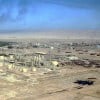
(Picture: Power plant in Bayji)
Posted in Construction & Engineering In Iraq, Iraq Oil & Gas News, Iraq Public Works News 6 Comments

Iraq Leads Region with $519bn in Planned Projects
Posted on 25 February 2014 .
By John Lee.
Iraq is now among the biggest spenders in the Middle East when it comes to planned or under-way infrastructure projects, rivalling the expenditure of Saudi Arabia and the UAE, according to the MEED's Gulf Project's Index.
Iraq's southern neighbours are spending $1.o5 trillion and $713bn respectively,but Iraq's rising expenditure on energy projects will be the subject of the forthcoming "Iraq Energy Projects 2014" conference hosted by MEED Events on the 25th of February in Dubai.
Among the many delegates speaking at the event, Iraq's Minister of Electricity, Karim Aftan al-Jumaili and the UAE's Energy Minister Suhail Mohammed al Mazrouei will discuss Iraq-UAE collaboration on infrastructure projects.
Posted in Iraq Oil & Gas News 6 Comments
Iraq Buys Small Arms and Ammunition from Iran
Posted on 24 February 2014 .
By John Lee.
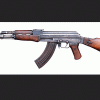
An investigation by Reuters has found that Iraq has purchased $195 million worth of small arms, ammunition and infantry kit from Iran, in addition to artillery ammunition.
The move will likely unnerve some observers in the US, but analysts are still divided over the extent of Iranian influence in Iraq.
Touted by an unnamed State Department spokesperson as a violation of the UN arms embargo against the Iraq's eastern neighbour, the purchase has not surprised some observers of improved ties between the two countries.
For some time now, Iran has been supplying adjacent Iraqi provinces with gas and electricity, and Iranian companies have won a number of contracts in Iraq from the energy sector to construction.
Iraq has not denied the validity of the claims however, and argues it is a necessary measure due to delays in US arms exports. Iraq continues to fight a robust and revived insurgency in the north and west of the country, and officials have claimed the purchase is an essential security measure.
The scale of the deal is likely to be more of political significance as much as tactical necessity. Iraq's recent arms purchases from the US and Russia have totalled billions of dollars. In 2013, Iraq signed a $1.1 billion deal with South Korea to buy FA-50 light fighter jets, following a similar $1 billion dollar deal with Czechoslovakia.
(Source: Reuters)
Posted in Politics, Security 4 Comments
Siemens Wins Service Contract for Baiji Power
Posted on 12 February 2014 .
Siemens Energy has been awarded an agreement to perform service and maintenance at the 600 megawatt (MW) Baiji [Bayji] gas power plant, located in the Salah al-Din governorate in Iraq.
Under terms of the contract signed with Iraq's Ministry of Electricity, Siemens will supply and deliver spare parts for the Baiji power plant's four SGT5-2000E gas turbines as well as perform significant upgrades, remote monitoring and diagnostic services, and field service for an initial period of four years.
The upgrades include the major overhauls of the SGT5-2000E turbines with state-of-the-art Siemens' 3-dimensional blades and vanes (Si3D). The integration of the Siemens Si3D blades and vanes provides the plant with optimal technical and economic benefits.
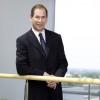
Randy Zwirn (pictured), CEO of Siemens Energy Service Division, said:
"As Iraq continues on its path to restore and improve the country's long-term, reliable energy production, ensuring its energy producing assets are performing reliably and at optimum levels is extremely important.
"We look forward to applying our proven service products portfolio, our technical expertise and our commitment to customer-focused service to help the Ministry of Electricity meet the energy needs of Iraq."
(Source: Siemens Energy)
Posted in Construction & Engineering In Iraq Comments Off on Siemens Wins Service Contract for Baiji Power
Poverty Rates on the Rise
Posted on 12 February 2014 .
By Amal Sakr for Al-Monitor. Any opinions expressed are those of the author, and do not necessarily reflect the views of Iraq Business News.
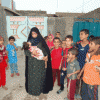
Iraq has been struggling with an increase in poverty rates for many years. While the Iraqi Ministry of Planning notes that the rate of poverty has recently decreased, reaching 11%, statistics released by the World Bank show that 28% of Iraqi families live below the poverty line.
In the event that the country may face any kind of crisis, this rate could increase by 70%. This is currently happening because of the spike in violent acts and tense political situation.
The head of the Model Iraqi Women Organization, Athraa Hassani, provided Al-Monitor with this information, quoting World Bank officials who discussed these statistics during a meeting in Turkey with a number of members of civil society organizations seeking to find a solution to the poverty crisis in Iraq.
Hassani questions the accuracy of the poverty rates announced by the Iraqi government, affirming that these rates are continuously increasing because of a rise in daily violence and spike in unemployment rates in addition to a weakening of the Iraqi economy.
Based on the World Bank’s figures, this would mean that out of Iraq’s 34.7 million citizens, more than 9.5 million individuals are living below the poverty line.
Governor of Baghdad Ali al-Tamimi told Al-Monitor that the Iraqi government is not able to provide genuine solutions to deal with the poverty crisis in the country. Its role is limited to doling out a monthly salary for the poor, ranging between $40 and $100 depending on the number of family members.
This amount is disbursed every three months; however, it does not even meet the daily needs of families. Tamimi affirmed that poverty rates are very high, and that whoever says otherwise knows nothing about the situation of Iraqi society. Tamimi, like Hassani, objects to the attempt of some governmental sources to deceive the public regarding poverty rates in Iraq and the resulting risks.
Posted in Iraq Industry & Trade News, Politics 3 Comments
Statement from Iraq-US JCC on Energy
Posted on 07 February 2014 .
The Governments of the Republic of Iraq and the United States of America reaffirmed their commitment to joint cooperation in the areas of oil production and export, natural gas, electricity resiliency and reliability, clean energy, and critical energy infrastructure protection during the second meeting of the Joint Coordination Committee (JCC) on Energy, held February 5, 2014 in Baghdad.
Iraqi Deputy Prime Minister for Energy Dr. Hussain Al Shahristani chaired the meeting with U.S. co-Chairs Deputy Secretary of Energy Daniel Poneman and Special Envoy and Coordinator for International Energy Affairs at the State Department Carlos Pascual.
During today’s meeting, both sides reiterated the significance of Iraq’s future energy sector development and its contribution to greater economic prosperity, as well as the valuable role that Iraq plays in providing a steady flow of petroleum resources to global markets. Both sides lauded Iraq’s offshore installation of the central metering manifold platform for the new single point moorings (SPMs) and recognized Iraq’s bold plans to increase further its oil production and exports.
The delegations discussed Iraq’s Integrated National Energy Strategy; opportunities to strengthen production and export infrastructure in order to meet Iraq’s mid- and long-range export goals; Iraqi and U.S. lessons learned in the field of natural gas capture and distribution; and best practices from the United States and the region.
The two sides discussed the importance of improving the protection of critical energy infrastructure for oil, natural gas, and electricity installations. To this end, Iraq and the United States are embarking on a significant new area of cooperation by having experts from the U.S. Departments of Energy and State work with Iraq to develop approaches to protect Iraq’s energy infrastructure from terrorist attack or natural disaster.
Posted in Iraq Oil & Gas News 2 Comments