



Iraq Leads Region with $519bn in Planned Projects
Posted on 25 February 2014 .
By John Lee.
Iraq is now among the biggest spenders in the Middle East when it comes to planned or under-way infrastructure projects, rivalling the expenditure of Saudi Arabia and the UAE, according to the MEED's Gulf Project's Index.
Iraq's southern neighbours are spending $1.o5 trillion and $713bn respectively,but Iraq's rising expenditure on energy projects will be the subject of the forthcoming "Iraq Energy Projects 2014" conference hosted by MEED Events on the 25th of February in Dubai.
Among the many delegates speaking at the event, Iraq's Minister of Electricity, Karim Aftan al-Jumaili and the UAE's Energy Minister Suhail Mohammed al Mazrouei will discuss Iraq-UAE collaboration on infrastructure projects.
Posted in Iraq Oil & Gas News 6 Comments
Iraq Buys Small Arms and Ammunition from Iran
Posted on 24 February 2014 .
By John Lee.
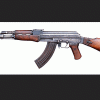
An investigation by Reuters has found that Iraq has purchased $195 million worth of small arms, ammunition and infantry kit from Iran, in addition to artillery ammunition.
The move will likely unnerve some observers in the US, but analysts are still divided over the extent of Iranian influence in Iraq.
Touted by an unnamed State Department spokesperson as a violation of the UN arms embargo against the Iraq's eastern neighbour, the purchase has not surprised some observers of improved ties between the two countries.
For some time now, Iran has been supplying adjacent Iraqi provinces with gas and electricity, and Iranian companies have won a number of contracts in Iraq from the energy sector to construction.
Iraq has not denied the validity of the claims however, and argues it is a necessary measure due to delays in US arms exports. Iraq continues to fight a robust and revived insurgency in the north and west of the country, and officials have claimed the purchase is an essential security measure.
The scale of the deal is likely to be more of political significance as much as tactical necessity. Iraq's recent arms purchases from the US and Russia have totalled billions of dollars. In 2013, Iraq signed a $1.1 billion deal with South Korea to buy FA-50 light fighter jets, following a similar $1 billion dollar deal with Czechoslovakia.
(Source: Reuters)
Posted in Politics, Security 4 Comments
Siemens Wins Service Contract for Baiji Power
Posted on 12 February 2014 .
Siemens Energy has been awarded an agreement to perform service and maintenance at the 600 megawatt (MW) Baiji [Bayji] gas power plant, located in the Salah al-Din governorate in Iraq.
Under terms of the contract signed with Iraq's Ministry of Electricity, Siemens will supply and deliver spare parts for the Baiji power plant's four SGT5-2000E gas turbines as well as perform significant upgrades, remote monitoring and diagnostic services, and field service for an initial period of four years.
The upgrades include the major overhauls of the SGT5-2000E turbines with state-of-the-art Siemens' 3-dimensional blades and vanes (Si3D). The integration of the Siemens Si3D blades and vanes provides the plant with optimal technical and economic benefits.
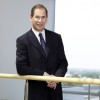
Randy Zwirn (pictured), CEO of Siemens Energy Service Division, said:
"As Iraq continues on its path to restore and improve the country's long-term, reliable energy production, ensuring its energy producing assets are performing reliably and at optimum levels is extremely important.
"We look forward to applying our proven service products portfolio, our technical expertise and our commitment to customer-focused service to help the Ministry of Electricity meet the energy needs of Iraq."
(Source: Siemens Energy)
Posted in Construction & Engineering In Iraq Comments Off on Siemens Wins Service Contract for Baiji Power
Poverty Rates on the Rise
Posted on 12 February 2014 .
By Amal Sakr for Al-Monitor. Any opinions expressed are those of the author, and do not necessarily reflect the views of Iraq Business News.
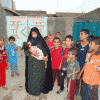
Iraq has been struggling with an increase in poverty rates for many years. While the Iraqi Ministry of Planning notes that the rate of poverty has recently decreased, reaching 11%, statistics released by the World Bank show that 28% of Iraqi families live below the poverty line.
In the event that the country may face any kind of crisis, this rate could increase by 70%. This is currently happening because of the spike in violent acts and tense political situation.
The head of the Model Iraqi Women Organization, Athraa Hassani, provided Al-Monitor with this information, quoting World Bank officials who discussed these statistics during a meeting in Turkey with a number of members of civil society organizations seeking to find a solution to the poverty crisis in Iraq.
Hassani questions the accuracy of the poverty rates announced by the Iraqi government, affirming that these rates are continuously increasing because of a rise in daily violence and spike in unemployment rates in addition to a weakening of the Iraqi economy.
Based on the World Bank’s figures, this would mean that out of Iraq’s 34.7 million citizens, more than 9.5 million individuals are living below the poverty line.
Governor of Baghdad Ali al-Tamimi told Al-Monitor that the Iraqi government is not able to provide genuine solutions to deal with the poverty crisis in the country. Its role is limited to doling out a monthly salary for the poor, ranging between $40 and $100 depending on the number of family members.
This amount is disbursed every three months; however, it does not even meet the daily needs of families. Tamimi affirmed that poverty rates are very high, and that whoever says otherwise knows nothing about the situation of Iraqi society. Tamimi, like Hassani, objects to the attempt of some governmental sources to deceive the public regarding poverty rates in Iraq and the resulting risks.
Posted in Iraq Industry & Trade News, Politics 3 Comments

Statement from Iraq-US JCC on Energy
Posted on 07 February 2014 .
The Governments of the Republic of Iraq and the United States of America reaffirmed their commitment to joint cooperation in the areas of oil production and export, natural gas, electricity resiliency and reliability, clean energy, and critical energy infrastructure protection during the second meeting of the Joint Coordination Committee (JCC) on Energy, held February 5, 2014 in Baghdad.
Iraqi Deputy Prime Minister for Energy Dr. Hussain Al Shahristani chaired the meeting with U.S. co-Chairs Deputy Secretary of Energy Daniel Poneman and Special Envoy and Coordinator for International Energy Affairs at the State Department Carlos Pascual.
During today’s meeting, both sides reiterated the significance of Iraq’s future energy sector development and its contribution to greater economic prosperity, as well as the valuable role that Iraq plays in providing a steady flow of petroleum resources to global markets. Both sides lauded Iraq’s offshore installation of the central metering manifold platform for the new single point moorings (SPMs) and recognized Iraq’s bold plans to increase further its oil production and exports.
The delegations discussed Iraq’s Integrated National Energy Strategy; opportunities to strengthen production and export infrastructure in order to meet Iraq’s mid- and long-range export goals; Iraqi and U.S. lessons learned in the field of natural gas capture and distribution; and best practices from the United States and the region.
The two sides discussed the importance of improving the protection of critical energy infrastructure for oil, natural gas, and electricity installations. To this end, Iraq and the United States are embarking on a significant new area of cooperation by having experts from the U.S. Departments of Energy and State work with Iraq to develop approaches to protect Iraq’s energy infrastructure from terrorist attack or natural disaster.
Posted in Iraq Oil & Gas News 2 Comments

Veolia wins $115m Desalination Contract
Posted on 30 January 2014 .
The Iraqi Ministry for Municipalities and Public Works has chosen Veolia to build and operate for five years a desalination plant in Basra, Iraq. For Veolia, this contract represents cumulated sales of $115 million.
Limited water resources and conflict over its use have made water a crucial resource for Iraq's development, especially in the country's south. Water in this part of Iraq is mainly sourced from the Euphrates, which has a high salt content, and water from the Persian Gulf.
Under this new contract, won in partnership with Japanese conglomerate Hitachi and Egyptian engineering firm ArabCo, Veolia will build and operate a desalination plant with an ultrafiltration unit and reverse osmosis membranes.
It will produce 200,000 cubic meters of drinking water a day. The technology used will reduce the salt content in the drinking water producedfor Basra's population of 2.3 million people. Additionally, in a country with a chronic shortage of electricity, this desalination plant will be completely autonomous as it will have its own electricity generators to guarantee continuous service.
Construction work on the plant is due to commence in the first quarter of 2014 and should be completed within 30 months. This contract will also create 300 jobs for the construction of the desalination units, provided by ArabCo, and 50 jobs for the facility's operation for five years.
Antoine Frérot, Chairman and CEO of Veolia Environnement, said:
"This new contract that we have won in Iraq is further proof of Veolia's ability to deliver concrete and reliable solutions to the scarcity of water resources and the challenges facing large cities, especially in countries where water is crucial to economic development ... I am delighted that Veolia has been chosen by the Iraqi authorities to support the modernization of Basra, and that the company is able to provide a solution to the challenges confronted by this city, a leading center for the oil and gas industry."
As part of its reconstruction, Iraq has launched several national plans aimed at modernizing basic services, such as water, wastewater, waste treatment and energy, in order to support its economic growth. With the country's sole access to the sea, Basra is the subject of special attention from the Iraqi government, which is modernizing this port city to speed up its economic growth.
Jean-Michel Herrewyn, Director, Global Enterprises, Veolia Environnement, explained:
"This plant is part of a comprehensive plan to rehabilitate and extend the city's water treatment plants. The innovative technology and solutions we are providing Basra will enable it to improve its citizens' access to quality drinking water while protecting its resources."
(Source: Veolia)
(Picture: Veolia Water, at Basra Oil and Gas exhibition)
Posted in Construction & Engineering In Iraq, Iraq Public Works News 2 Comments

Basra’s Next Battle: Defeating Corruption and Bureaucracy
Posted on 07 January 2014 .
By Robert Tollast.
Robert Tollast is a consultant at Noorbridge, a Helsinki based consultancy with staff in London and Nasiriyah, Iraq. He has written extensively on security, politics and economic issues in Iraq for various publications, and is currently researching a modern history of Iraq with support from The Middle East Forum. email: [email protected] twitter: @roberttollast
As Iraqi troops continue to fight the Islamic State of Iraq and the Levant in Fallujah and Ramadi, a different kind of battle is brewing 350 miles to the southeast, one that could prove just as decisive for Iraq’s future. In Basra this year, the province has more cause for more hope than in previous years. Here’s why.
The dawn of strategy
At the end of 2012, Colin Freeman reported a story in The Telegraph that made for depressing reading: Britain was closing its consulate in Basra, just as the province was experiencing a surge in foreign investment from all over the world.
Last month I spoke to a former British diplomat and asked him why this was, and he remarked that security costs- around £6m per year, were the equivalent to several embassies. But that wasn’t the only thing keeping the British away.
Another factor that has often deterred foreign investors is of course bureaucracy and the difficulty of getting your business on the ground because of Iraq’s fondness for red tape. Discouraging contractual terms offered to investors have put a stop to many potential ventures, as someone with years of experience in the country recently told me, “Iraq is good at killing the goose before it lays the golden eggs.”
But things might be about to change. Last week, Freeman published another story in The Telegraph reporting that Basra governor Nasrawi had hired the British firm Aegis Defence Services to institutionalise the latest counter-terrorism practices for the province.
Governor Nasrawi (from the Islamic Supreme Council of Iraq) seems to understand what counter-terrorism involves, remarking in a recent al-Monitor interview that CT was not primarily a conventional military task. The fact that he has invited a British general who was involved in the invasion is certainly an interesting story.
But Nasrawi (elected last April) is also keen to make progress in other areas. He recently hired American firm Hill International on a long term contract to oversee strategic planning and contracts with foreign companies. As he asserted in the al-Monitor interview, Nasrawi appeared determined that Basra was going to beat corruption, short termism and develop a strategy. Out with four year plans, and in with long term goals.
Posted in Construction & Engineering In Iraq, Robert Tollast 14 Comments
New Report from Extractive Ind. Transparency Initiative
Posted on 06 January 2014 .
By John Lee.
The Iraqi-Extractive Industries Transparency Initiative (IEITI) report for year 2011 has been published by an independent and international reconciler firm Ernst & Young.
The report considers for the first time the quantities of crude oil used for local consumption and the paid revenues by the Extractive Oil Companies (National & International).
It concludes that the total revenues from selling crude oil for year 2011 amounts to US$ 83 billion, plus the total paid amounts of US$ 4.5 billion to the International Extractive Companies involved in developing oil fields, and US$ 4.5 billion to the National Extractive Companies in exchange for their participation in the extractive operation of the oil fields in Basra, Umara, Nasiriyah, Kirkuk and others
The International Reconciler concluded that there was a total difference of US$ 1.175 billion between the data reported by the Oil companies compared to those of the Ministry of Oil (MoO),the difference was in favor of MoO; furthermore, a difference of US$ 720 million was also reported in respect to other costs in favor of MoO.
The report clarified that all discrepancies are explained and justified and were due to the difference in the calculation mechanism used by MoO compared to thatused by the Oil Companies. The report summarized the results of the reconciliation process between the Companies and the Iraqi Government (excluding Kurdistan Region) as being 100% comparable, based on adopting a Materiality figure of 1%.
Other challenges faced by the reconciliation process were the inability to reconcile the data information of oil production in Kurdistan Region with the information of data of crude oil consumption by the Electricity Power Generation due to the absence of supplying data by neither the Kurdistan Regional Government nor the Ministry of Electricity.
The full report can be downloaded here, while our Expert Blogger Ahmed Mousa Jiyad gives his initial assessment here.
Posted in Iraq Commodities & Mining News, Iraq Oil & Gas News 4 Comments

Iraq Fails to Attract Domestic Capital
Posted on 31 December 2013 .
By Ayser Jabbar for Al-Monitor. Any opinions expressed are those of the author, and do not necessarily reflect the views of Iraq Business News.
Iraq is not attracting domestic capital belonging to its citizens. Inadequate economic and investment policies in addition to widespread corruption have contributed to a new migration of Iraqi capital. This time, capital is going to Georgia, which provides much assistance for those who want to invest in the country.
The head of the Federation of Iraqi Chambers of Commerce, Jaafar al-Hamdani, a businessman and investor, told Al-Monitor that Iraqi capital — valued at billions of dollars — has began moving toward other countries such as states of the [former] Soviet Union, including Georgia, which is now attracting a lot of capital from Iraq.
This shift of capital, according to Hamdani, can be attributed to investment and banking facilities that owners of Iraqi capital find in Georgia; such facilities are not available in Iraq.
For its part, the government admits that the capital found inside Iraq is "weak" compared to the capital that has left the country, in light of the security situation, the decline in the labor market and decreased investment opportunities.
In a telephone conversation with Al-Monitor, Abdul Hussein al-Anbaki, adviser to the prime minister for economic affairs, explained, "The migration of Iraqi capital did not start after US troops entered the country in 2003. Rather, it began in the 1980s, when the former regime split profits with the private sector."
Anbaki pointed out, "The migration of Iraqi capital that occurred after 2003 was due to the deteriorating security situation in the country and the lack of employment opportunities as well as the absence of a legislative or physical environment, or even infrastructure."
Posted in Investment 2 Comments

Tomato Farmers v. Iraq’s Biggest Airport
Posted on 29 December 2013 .
This article was originally published by Niqash. Any opinions expressed are those of the author, and do not necessarily reflect the views of Iraq Business News.
Clash in the Desert: Karbala’s Tomato Farmers Versus Iraq’s Biggest Airport.
The authorities in the religious boom town of Karbala plan to build the country’s biggest airport on the city’s outskirts. But to do so, they will have to confiscate land from hundreds of farmers, who live a basic lifestyle but provide the city with its food. After protests and threats of eviction, the question remains: which is more important - vegetables or planes?
They are poetically known as the “farms of the desert” and there are hundreds of them on the outskirts of Karbala, in southern Iraq. They stretch from the outskirts of Karbala to the outskirts of the nearby city of Najaf and most of the farmers living and working on them have fairly basic lifestyles.
An estimated 300 families, many of them refugees from Iraq’s decimated southern marshes, work on this 60 kilometre by 12 kilometre stretch and they are proud of what they eke out of the desert. They are also proud of their own self reliance in an area where there are barely any paved roads, schools or even electricity in the houses.
“We produce this food all by ourselves,” says one of the farmers, Ammar, who is 40. “We do not receive government support or subsidies in any form, neither seeds, nor fuel nor infrastructure. We live a fairly primitive life out here but we are not complaining. We are happy with our lives. We don’t want salaries or government jobs or public services. We just want to government not to be hostile towards us.”
Unfortunately Ammar is unlikely to have that wish granted. In 2009 the local government and the federal Ministry of Transport laid a foundation stone nearby that was to be the start of a new airport for Karbala. The Imam Hussein airport – named after the Muslim icon that draws many visitors and pilgrims to his Karbala shrine – will cost an estimated US$2.5 billion to build and should serve around 20 million passengers a year. Plans have been drawn up and the Iraqi government has invited contractors to tender for the construction work.
Posted in Agriculture Comments Off on Tomato Farmers v. Iraq’s Biggest Airport