


Soleimani's Successor visits Iraq
Posted on 04 April 2020 .
By Bryant Harris for Al Monitor. Any opinions expressed here are those of the author and do not necessarily reflect the views of Iraq Business News.
Soleimani's successor visits Iraq, then Trump tweets warning to Iran
President Donald Trump took to Twitter on Wednesday to warn Iran against further attacks on US forces in Iraq - the same day that Iraqi officials told the Associated Press that the new head of the Quds Force had recently visited Baghdad.
"Upon information and belief, Iran or its proxies are planning a sneak attack on U.S. troops and/or assets in Iraq," Trump tweeted. "If this happens, Iran will pay a very heavy price, indeed!"
Iranian Foreign Minister Mohammad Javad Zarif did not directly deny an Iranian plot in Iraq in his tweeted rebuttal.
Instead he characterized Iranian proxies as "friends" and obliquely referenced Trump's January strike on former Quds Force commander Qasem Soleimani in Baghdad.
Posted in Politics, Security Comments Off on Soleimani's Successor visits Iraq

Between a Rock and a Hard Place: Budget Realties, Protestor Demands
Posted on 12 March 2020 .
By Ahmed Tabaqchali, CIO of Asia Frontier Capital (AFC) Iraq Fund. This article was originally published by the LSE Middle East Centre.
Any opinions expressed are those of the author, and do not necessarily reflect the views of Iraq Business News.
Between a Rock and a Hard Place: Iraq's Political Class' Dilemma between Budget Realties and Protestor Demands
The twin shocks of the effect of coronavirus on the world economy and the current oil price war will stress Iraq's budget to the limit, and lead to an economic crisis if it continues for an extended period.
While as extraordinary shocks they were unforeseeable, the Iraqi budget's structural imbalance would have inevitably led to such an economic crisis - the only question being when and not if.
A low oil price environment exposes the structural faultiness of the budget with projected revenues not covering current spending, which is mostly composed of salaries, pensions and welfare spending. These have increased from 50% of current expenditures in 2004 to an estimated 81% in 2019, and likely to more than 85% in 2020.[1] As such the default choice for the government would be to cancel all investment spending, especially non-oil investment spending, and resort to borrowing.
Such measures have allowed the government to continue functioning, but these come at a huge cost to the economy as Table 2 below shows. Global debt markets are not as accommodating as they were in 2014-17 given Iraq's estranged relationship with the US and the change in the IMF's stance toward Iraq. As such the government would have to resort to domestic sources, which ultimately means indirect monetary operations by the CBI at the expense of the its foreign reserves as happened in 2014-16.
Moreover, these measures would only postpone and not resolve the crises, needing much higher oil prices to contain or mask it like in 2017-19. Medium-term oil prices would probably (for Brent prices) settle within a range of $50-60/bbl, which should partially relieve the stress on the budget, but not the need to address its imbalance.
Iraq's 2019 budget, initially proposed by the prior government, submitted with minor changes by the current government and approved by the current parliament, perpetuated the same deficiencies and weaknessess of all Iraq's budgets since 2003. Crucially, it deepened the structural imbalance between the budget's current and investment expenditures, in which public sector wages consumed an ever-increasing share of government revenues.
Moreover, it undermined and reversed most of the small, but essential, fiscal reforms agreed with the IMF in the 2016 Stand-By Agreement (SBA) to address this structural imbalance; and which needed considerable follow-up reforms over the years to put the country on a sustainable path to growth and reduce the economy's vulnerabilities to the volatile oil market. The extent of these vulnerabilities came to the fore during the collapse in oil prices in 2014, and coupled with the cost of the ISIS conflict, this led to a sharp contraction to the non-oil economy in 2014-17.

Undeterred by these memories, the budget's planners, buoyed by the bounty of higher oil revenues, from late 2017 embarked on an expansionary budget that magnified these very vulnerabilities. This was achieved by simultaneously reversing the growth of non-oil revenues and by increasing current spending. Non-oil revenues decreased in both absolute terms and as a percentage of total revenues: -18% and -29% respectively in 2019 and 2018.
Additionally, 25% of these non-oil revenues were in fact oil-related in the form of taxes on foreign oil companies and the budget's share from profits from the state's oil companies. Current spending increased by 15% with the salary and pensions component growing by 7.5% instead of decreasing continuously.
The budget's trumpeted increase of 29% in investment spending hides the fact that only 43% of this total spending for 2019 was earmarked for non-oil investment, which would nevertheless increase by 43% in 2019. However, historically this spending is on paper only, with an execution rate of under 65%. The performance in 2019 was much worse than normal with non-oil investment spending at about IQD 3.3 trn as of November 2019 from a planned budget of IQD 14.0 trn, or about a 24% execution rate.
The budget planners' aims for 2020 were for a continuation of the expansionary budget of 2019, which dismayed the IMF enough for it to issue a critical country report (19/248) - the first since 2004. Adding to the dismay was the fact that the government's plan for fiscal probity was based on expectations of continued high oil prices, as well as sticking to its historic under-execution of the budget. Essential budget reforms to address the structural imbalance were delegated to an expression of interest for inclusion in medium term fiscal strategy planning.
The IMF then modelled for a 2020 budget with revenues estimated at IQD 113.1 trn based on oil price assumptions of $55.8/bbl. Expenditures were estimated at IQD 123.2 trn, made up of current expenditures at IQD 99.1 trn, while oil investment spending was estimated at IQD 15.5 trn and non-oil investment spending at IQD 8.6 trn. This would have needed debt financing of IQD 10.0 trn to balance the budget. Since it's almost impossible to cut the bulk of current spending, the government must have been anticipating a better budgetary situation through Iraqi oil prices higher than $55.8/bbl and from under-executing much needed non-oil investment spending and reconstruction.
By October, plans for budget expenditure ballooned by 31% to IQD 162.0 trn, necessitating debt financing of IQD 48.9 trn. While there are no details apart from spending and deficit figures, the political paralysis following the failure of the prime minister-designate to form a government in early March has put a halt to these runaway expenditure plans.
As long as the political class' existential fear from the five-month long youth-led countrywide demonstrations continues to ebb and flow, this political paralysis is likely to continue. However, the main economic consequences would be the same whether a new government forms under a new prime minister-designate, or if the current caretaker government continues to limp on. The outcome either way will be that no new budget will be passed, with the government continuing to implement the executed parts of 2019's budget throughout 2020 according to the '1/12th rule'.
Essentially, this means the government will continue to spend (per month) 1/12th of the actual spend in 2019 - effectively extending the current spending component for 2019 in addition to the increased spending of IQD 10.5 trn as a result of government measures to appease the demonstrators in October 2019. The government will likewise continue with the investment projects initiated in 2019.
Estimating the effects of the current events on the Iraqi budget is fraught with uncertainty. Current predictions on the extent of the decline in oil prices mirror those made following the 2014 oil price war, which then assumed a continuation of the decline into the future. This in time proved to be overly pessimistic, as will the current 'worst-case' prognoses. Moreover, though the effects of the new coronavirus on the world economy will be profound in Q1/2020, the extent and the continuation of these effects for the rest of the year remains uncertain.
However, these negative effects would be compounded for oil prices by a sharply increased supply in an environment of weakened demand. The upshot would be an extended period of lower oil prices. The table below looks at the budget for 2015-19 and estimates for 2020 based on different realised oil prices for 2020 as whole (please see footnote 2 for notes and assumptions used).
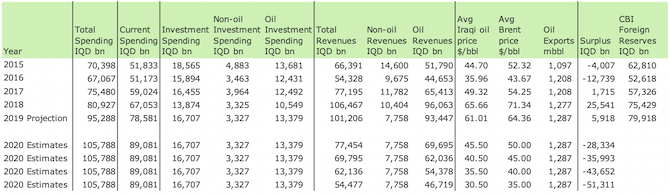
Past policies of spending oil revenues on expanding the public payroll and welfare spending, in the process depleting the country's wealth without building its infrastructure, has resulted in an economy dependent on imports of goods and services, a stunted private sector and a labour market skewed towards public employment. This development has been at the root cause of successive countrywide demonstrations. The need to urgently restructure the budget's structural imbalances will require painful reforms and a long adjustment period, and thus would need a buy-in by the population at large.
This, given the extent of the current anti-political elite protest movement and the scale of the repression of this movement, is unlikely without significant political reform.
[1] The percentage figures are made up of salaries, pensions and transfers. Transfers are mostly composed of welfare spending and transfers to State-Owned Enterprises (SOEs) which in turn are primarily for salary payments and support to SOEs. Source: IMF Iraq country reports 2004-19.
[2] Revenues and expenditures for 2015-19 sourced from Ministry of Finance (MoF). These figures constitute revenues and expenditures actually received/made at the time and not booked. As such they differ, sometimes significantly, from those provided by the IMF. The crucial difference being that they resemble an actual cash flow statement and not an income statement. This can be seen from the difference between the Ministry of Oil's (MoO) revenue data which show sales made and the MoF's data which how funds received which can lag actual sales.
Iraqi oil sales and average Iraqi oil price are taken from MoO website, while average Brent prices can be found here. CBI foreign reserves are as of end of 2019 and are found here. 2019 budget numbers are as of November 2019 and projected to continue into end of 2019. Oil revenues are based on MoO data which are available as of the end of December 2019. The 2020 budget numbers assume a continuation of the budget spent for 2019. It is assumed that Iraq would maintain market share through aggressive pricing and thus that the discount to Brent would increase from $3.35 for 2019 to $4.50.
Disclaimer: Ahmed Tabaqchali's comments, opinions and analyses are personal views and are intended to be for informational purposes and general interest only and should not be construed as individual investment advice or a recommendation or solicitation to buy, sell or hold any fund or security or to adopt any investment strategy. It does not constitute legal or tax or investment advice. The information provided in this material is compiled from sources that are believed to be reliable, but no guarantee is made of its correctness, is rendered as at publication date and may change without notice and it is not intended as a complete analysis of every material fact regarding Iraq, the region, market or investment.
Posted in Ahmed Tabaqchali, Iraq Oil & Gas News Comments Off on Between a Rock and a Hard Place: Budget Realties, Protestor Demands

Fears Mount as US Guts USAID's Iraq Presence
Posted on 11 March 2020 .
By Robbie Gramer, for Foreign Policy. Any opinions expressed here are those of the author and do not necessarily reflect the views of Iraq Business News.
Fears Mount as Trump Administration Guts USAID's Iraq Presence
The United States' top aid agency is dismantling its presence in Iraq, leaving a skeleton crew ill-equipped to oversee over $1 billion in aid programs aimed in part at staving off the return of terrorist organizations such as the Islamic State, officials and lawmakers say.
An internal U.S. Agency for International Development (USAID) document obtained by Foreign Policy confirms that major cuts in staffing were made late last year and highlights the stark difference between the agency's footprint in Iraq and other countries that receive foreign aid funding: In fiscal 2019, Egypt received roughly one-fifth the amount of U.S. foreign aid as Iraq, but it has more than seven times the number of staff to oversee it.
Posted in Iraq Industry & Trade News Comments Off on Fears Mount as US Guts USAID's Iraq Presence
Tabaqchali: US Sanctions and the Illusion of Power
Posted on 30 January 2020 .
By Ahmed Tabaqchali, CIO of Asia Frontier Capital (AFC) Iraq Fund. This article was originally published by the LSE Middle East Centre.
Any opinions expressed are those of the author, and do not necessarily reflect the views of Iraq Business News.
Demands for the expulsion of US troops following the killing of Iranian general Qassem Soleimani, have scaled down considerably since the initial strident calls. What started as high theatrics in parliament demanding an end to US presence, ended with a typical Iraqi fudge in that parliament passed a resolution requiring the government to cancel the request for global coalition support made in 2014, and for it to work towards ending the presence of all foreign troops.
These were further rolled back as reports emerged that the government’s vision of implementing the withdrawal of foreign forces was for the withdrawal of combat forces only and did not include those conducting training and logistical support. Threats of US sanctions have undoubtedly played a role in deflating the illusions of power, especially by those in the axis of resistance, and contributed to this climbdown.
Iraq’s economy is not only vulnerable to US sanctions, but to any disengagement from the US dollar-based global financial and economic system. In fact, the US could affect far worse damage to Iraq than it did to Iran without the need to implement sanctions, let alone sanctions that would ‘make Iranian sanctions seem somewhat tame’. This vulnerability stems from the failures of successive Iraqi administrations from 2003 to reconstruct the country following decades of conflict, or to create the foundations for a diversified economy driven by the private sector, and not by the state.
Instead, successive administrations have deepened the country’s dependence on oil, pursued policies that fostered a structural imbalance between the government’s current and investment expenditures, in which the public sector consumed an ever-increasing share of government revenues. The sole dependence on oil income for these revenues, and the dreadful twins of a dominant public sector and stunted private sector, are the primary reasons why the country is vulnerable to external shocks.[1]
The extent of the damage to the Iraqi economy would depend on the three broad categories of a US response to a hostile Iraq. The first category would be the imposition of primary US sanctions, and secondary sanctions on non-US entities that conduct commercial or financial dealings with Iraq. Their effects would be along the lines to those suffered by Iran due to the imposition in 2018 of similar US sanctions.
For Iran, these included a major drop in oil exports, a severe economic contraction, a significant drop in the value of the currency, a substantial rise in inflation, a lowering of living standards, and a rise in unemployment especially among the youth and the most vulnerable segments of society.
However, the consequences for Iraq would be on a much worse scale than those suffered by Iran. Firstly, because oil exports constitute the bulk of the Iraqi budget’s revenues (about 90 percent of the 2019 budget) unlike those for Iran’s budget (about 30 percent of its fiscal 2019–20 budget). The loss of this income for Iraq would severely restrict the government’s ability to pay for salaries and pensions, social security, goods and services, in addition to reducing any funds available for the reconstruction of the country, the development of its oil sector or the development of its power generation.
Secondly, Iraq depends almost completely on imports for its consumption of goods and services, unlike Iran which has a well-diversified economy, and a more developed industrial, agricultural and financial sectors. Iraq’s small industrial and agricultural sectors cannot meet even a small percentage of its domestic demand, while its under-developed financial sector cannot provide the financing for the development of these two sectors.
Thirdly, Iraq’s cash-reliant economy depends on access to physical USD notes for it to function. Such a disruption in the supply of USD notes would raise the price of the USD against the IQD, and with it a rise in the value of imported goods. In 2015 the country felt some of these effects due to a restriction in the supply of USD notes from the US Federal Reserve as a result of the US Treasury’s concerns that sanctioned entities (Iran & Daesh) had access to these notes. Any effects of a sizeable loss of access to USD notes would be significantly worse than in 2015. Making things worse is that Iraq cannot access USD notes from a third country, unlike Iran, whose need for notes is met through Iraq.
The second category of US responses would be the loss of waivers for the purchase of Iranian gas, which presents Iraq with a Sophie’s choice. Continue with the purchase of Iranian gas and suffer the consequences of US secondary sanctions, which would be only marginally less painful than any possible imposition of full sanctions, discussed earlier. Or, discontinue buying Iranian gas, lose about a third of Iraq’s domestic power supply and enrage a population that is already incensed over a chronic inadequate supply of power.
A less discussed point is that these waivers were granted on the conditions that Iraq develops a credible plan to reduce its dependence on Iranian gas, and in the long term end those imports. The US could still grant these waivers, but impose more stringent conditions on plans to reduce dependence and a tougher monitoring regime with associated penalties for failures in making progress.
The third category, and the most likely US reaction, would be to gradually end its treatment of Iraq as a close ally and therefore subject to increased US treasury scrutiny its financial system, which would negatively affect the functioning of the Iraqi Central Bank and the banking system. The most obvious result would be a disruption of Iraq’s cash-heavy economy, which relies on the access of physical USD notes for the conduct of commercial and financial transactions as discussed earlier.
Unlike the fictional Duchy of Grand Fenwick, in Leonard Wibberley’s satirical cold war novel The Mouse That Roared, Iraq cannot expect any sort of victory from a conflict or strained relationship with the US.
[1] An upcoming piece by the author examines the structural imbalances in the economy as a inevitable consequence of successive post-2003 political system, i.e, the “Muhasasa Ta’ifia”. This imbalance was first explored in: https://auis.edu.krd/iris/latest-iris-publications/iraqs-investment-spending-deficit-analysis-chronic-failures and subsequently in a series of tweets: https://twitter.com/AMTabaqchali/status/1181559159453564928?s=20 and https://twitter.com/AMTabaqchali/status/1182253543144771584?s=20
Posted in Investment, Iraq Banking & Finance News, Iraq Industry & Trade News, Politics Comments Off on Tabaqchali: US Sanctions and the Illusion of Power
US "Builds New Bases" in Iraq, near Iran
Posted on 29 January 2020 .
From Breaking Defense.
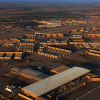
Contrary to declarations made by President Donald Trump, the U.S is not withdrawing forces from Iraq, but is building at least three semi-permanent new bases very close to the Iranian border in northern Iraq, Israeli sources tell Breaking Defense.
Click here to read the full story.
(Picture: Balad Air Base, September 2011)
Posted in Politics, Security Comments Off on US "Builds New Bases" in Iraq, near Iran

Protests: Is a Political Solution on the Horizon?
Posted on 29 January 2020 .
By Ali Mamouri for Al-Monitor. Any opinions expressed are those of the author, and do not necessarily reflect the views of Iraq Business News.
As Iraq's protests continue, is political solution on the horizon?
Iraq's current situation has come to resemble a tangled ball of yarn, with new complications and complexities arising daily.
While the protesters fire up the political scene, political parties are unable to calm the tension and send the protesters home. Meanwhile, the tensions between Iran and the United States are intensifying.
Posted in Politics, Security Comments Off on Protests: Is a Political Solution on the Horizon?

Trump "Would Support" Siemens in Iraq
Posted on 27 January 2020 .
By John Lee.
The CEO of Germany's Siemens has said that US President Donald Trump would support his company's role in reconstruction projects in countries like Iraq.
Joe Kaeser (pictured) made the comment to CNBC at the World Economic Forum (WEF) in Davos, Switzerland.
Following a hotly-contested competition in 2018, it was agreed that Siemens and rival GE would share the work to upgrade Iraq's electricity system, with GE supplying 14 gigawatts (GW), and Siemens 11 GW.
Siemens employs around 60,000 workers in the US.
(Source: CNBC)
Posted in Construction & Engineering In Iraq, Iraq Industry & Trade News Comments Off on Trump "Would Support" Siemens in Iraq
Trump "Reiterates Support for Iraq"
Posted on 23 January 2020 .
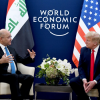
As a part of his meetings with a number of leaders and heads of State, President Salih held in-depth talks with US President Donald Trump on Wednesday, on the sidelines of the World Economic Forum (WEF) in Davos.
The President stressed the need to intensify international efforts to establish international and regional security and stability, noting that their consolidation and strengthening is the only way to ensure comprehensive and lasting peace in the region.
His Excellency added that Iraq is eager to establish balanced relationships with all friends and allies to strengthen its sovereignty, respect its independent decision, achieve the interests of Iraqis, continue the economic development and reconstruction. In addition to Iraq must not be turned into a battleground to settle scores, he stated.
The US President, in turn, reiterated his country's support for Iraq, showed his desire to have a closer relation, expand the scope of cooperation and raise the trade volume between Iraq and US to serve both peoples. Iraq's pivotal role in the region, he appreciated.
Discussions covered the presence of foreign forces, the reduction in troops strength in the country as well as the importance of respecting Iraqis people's demands in maintaining national sovereignty and ensuring security and stability.
(Source: Office of the Iraqi President)
Posted in Politics Comments Off on Trump "Reiterates Support for Iraq"
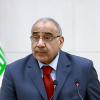
PM urges Kurds to Help Rid Iraq of US Troops
Posted on 20 January 2020 .
By Dana Taib Menmy for Al-Monitor. Any opinions expressed are those of the author, and do not necessarily reflect the views of Iraq Business News.
Abdul Mahdi urges Kurds to help rid Iraq of US troops
Iraqi caretaker Prime Minister Adel Abdul Mahdi arrived Jan. 11 in Erbil — his first official visit to the Kurdistan region since taking office — to discuss the country’s stability and the need for Kurdistan to cooperate with a push to expel US forces.
Iranian President Hassan Rouhani tweeted Jan. 8 that Iran will "kick all US forces out of the region" in response to the Jan. 3 killing by US forces of Qasem Soleimani, chief commander of the Quds Force in Iran's Islamic Revolutionary Guard Corps, and Abu Mahdi al-Muhandis, deputy head of Iraq's Popular Mobilization Units.
Posted in Security Comments Off on PM urges Kurds to Help Rid Iraq of US Troops
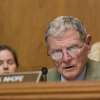
Senate Armed Services Chair endorses Iraq Sanctions
Posted on 15 January 2020 .
By Bryant Harris for Al Monitor. Any opinions expressed here are those of the author and do not necessarily reflect the views of Iraq Business News.
Senate Armed Services Chairman Inhofe endorses Iraq sanctions
The Donald Trump administration is doubling down on its Iraq pressure campaign, threatening to impose devastating sanctions on the fragile country should Baghdad move forward with its threats to expel US forces.
And the policy has buy-in from key Republican lawmakers, who are in no hurry to push back against the president’s sanctions threats.
Posted in Iraq Industry & Trade News, Politics Comments Off on Senate Armed Services Chair endorses Iraq Sanctions