



US: Iraq Risks Losing Access to Key Bank Account
Posted on 13 January 2020 .
By John Lee.
The Trump administration has reportedly threatened to block Iraq’s access to its funds in the Federal Reserve Bank of New York if Iraq expels US troops from the country.
The Wall Street Journal quoted unnamed Iraqi officials as saying that the US State Department warning came after the Iraqi parliament voted in favour of a resolution demanding the removal of American forces from Iraq.
Iraq uses the account to deposit its oil sale revenues and pay government salaries and contracts.
According to the most recent financial statement from the Central Bank of Iraq (CBI), the Federal Reserve held about $3 billion in overnight deposits at the end of 2018.
(Source: Wall Street Journal)
Posted in Iraq Banking & Finance News, Politics, Security 1 Comment
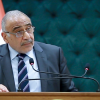
PM quietly working to keep US Troops in Country
Posted on 13 January 2020 .
By Jack Detsch for Al-Monitor. Any opinions expressed are those of the author, and do not necessarily reflect the views of Iraq Business News.
Iraq’s caretaker prime minister privately does not want US troops to withdraw, several sources familiar with the situation told Al-Monitor, though Adel Abdul Mahdi publicly backed a recent parliamentary vote that urged the Donald Trump administration to exit the war-torn country.
Despite calling on Secretary of State Mike Pompeo to send an American delegation to Iraq to negotiate the withdrawal of US troops in a readout of a Friday call, Abdul Mahdi is trying to find a way to keep an American presence in the country while attempting to placate Iran-backed militia leaders who want to force 5,200 US troops out, a source familiar with the situation on the ground said.
Posted in Politics, Security Comments Off on PM quietly working to keep US Troops in Country

Trump and Khamenei "Want the Same Thing"
Posted on 13 January 2020 .
By Aaron David Miller, for the Carnegie Endowment for International Peace. Any opinions expressed here are those of the author and do not necessarily reflect the views of Iraq Business News.
Trump and Khamenei Want the Same Thing
Both President Donald Trump and Iranian Supreme Leader Ayatollah Ali Khamenei have something in common: they both want to hang on to power and a major war between Iran and the United States is not good politics for either one.
Posted in Politics, Security Comments Off on Trump and Khamenei "Want the Same Thing"
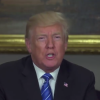
How Donald Trump thinks about Iran
Posted on 10 January 2020 .
By Thomas Wright, for Brookings Institution. The opinions expressed are those of the author, and do not necessarily reflect the views of Iraq Business News.
On October 6, 1980 Donald Trump was interviewed by Rona Barrett, one of America’s most famous gossip columnists, on NBC.
It was several weeks before Ronald Reagan defeated Jimmy Carter in the presidential election and near the end of the Iran hostage crisis in which the Iranian regime took 52 American diplomats and citizens prisoner after the embassy was stormed and then held them for 444 days.
It was a long and meandering interview about Trump’s story to date (he was then 34).
About half way though, Barrett asked Trump if he could make America perfect how would he do it.
Posted in Politics, Security Comments Off on How Donald Trump thinks about Iran
Iraq: From Brink of Reform to Brink of War
Posted on 09 January 2020 .
By Christine McCaffray van den Toorn and Raad Alkadiri for Al-Monitor. Any opinions expressed are those of the author, and do not necessarily reflect the views of Iraq Business News.
US-Iran tensions shift Iraq from brink of reform to brink of war
Rising US-Iranian tensions over the past week have seemingly brought the two sides closer to outright confrontation than at any time in the past four decades.
Tehran’s vow to take revenge for the US drone strike Jan. 3 that killed the commander of the Islamic Revolutionary Guard Corps (IRGC) Quds Force, Qasem Soleimani, along with Abu Mahdi al-Muhandis, deputy head of the Popular Mobilization Units (PMU), or Hashid Shaabi, last week in Baghdad has been met with equally bellicose statements by US President Donald Trump, who sent 3,500 additional troops to the Middle East after the assassination and promised that any Iranian action would be met with a massive US military response.
Posted in Politics, Security Comments Off on Iraq: From Brink of Reform to Brink of War
There is "Nothing Left for Americans to Do in Iraq"
Posted on 08 January 2020 .
By Steven A. Cook, for Foreign Policy. Any opinions expressed here are those of the author and do not necessarily reflect the views of Iraq Business News.
There Is Nothing Left for Americans to Do in Iraq
Qassem Suleimani and Tehran have won the battle for Baghdad.
U.S. policymakers should understand that—and leave.
Posted in Politics, Security Comments Off on There is "Nothing Left for Americans to Do in Iraq"
Video: Trump Threatens Iraq with Sanctions
Posted on 07 January 2020 .
From Al Jazeera. Any opinions expressed are those of the authors, and do not necessarily reflect the views of Iraq Business News.
US President Donald Trump ratcheted up his rhetoric with Iran and Iraq late on Sunday, warning of a "major retaliation" if Iran strikes back to avenge the US assassination of one of its top military commanders and threatening sanctions on Iraq after its parliament called on American troops to leave the country.
Asked on Air Force One about potential retaliation by Iran, Trump said: "If it happens, it happens. If they do anything, there will be major retaliation."
Al Jazeera's Gabriel Elizondo reports live from Washington, DC:
Posted in Iraq Industry & Trade News, Politics, Security Comments Off on Video: Trump Threatens Iraq with Sanctions
US Strikes Iran-backed Militia in Iraq
Posted on 31 December 2019 .
Press Briefing by Secretary of State Mike Pompeo And Secretary of Defense Mark Esper
SECRETARY POMPEO:
Good evening. Myself, with Secretary Esper, Chairman of the Joint Chiefs of Staff Milley, came here to Florida today to brief the President on the activities that have taken place in the Middle East over the course of the last 72 hours.
I will leave to Secretary Esper to talk about the military activity, but I want to put it in the context of our policy with respect to the Islamic Republic of Iran. The attacks that took place against an Iraqi facility threatened American forces. This has been going on now for weeks and weeks and weeks. This wasn’t the first set of attacks against this particular Iraqi facility and others where there were American lives at risk.
And today, what we did was take a decisive response that makes clear what President Trump has said for months and months and months, which is that we will not stand for the Islamic Republic of Iran to take actions that put American men and women in jeopardy.
We will — we will always honor that commitment to take decisive action when that takes place, and we continue to demand that the Islamic Republic of Iran act in a way that is consistent with what I laid out, back in May of 2018, for what it is that we expect Iran to do so that it can rejoin the community of nations.And with that, I’ll turn it over to the Secretary of Defense.
SECRETARY ESPER:
Thank you. As we reported earlier today, the Department of Defense took offensive actions in defense of our personnel and interests in Iraq by launching F-15 Strike Eagles against five targets associated with Kata’ib Hezbollah, which is an Iranian-sponsored Shiite militia group. The targets we attacked included three targets in Western Iraq and two targets in Eastern Syria that were either command and control facilities or weapons caches for Kata’ib Hezbollah.
The strikes were successful. The pilots and aircraft returned back to base safely. I would add that, in our discussion today with the President, we discussed with him other options that are available. And I would note also that we will take additional actions as necessary to ensure that we act in our own self-defense and we deter further bad behavior from militia groups or from Iran. Thank you.
(Source: US State Dept)
Posted in Security Comments Off on US Strikes Iran-backed Militia in Iraq

Dramatic Scale-Down of US Presence in Iraq
Posted on 18 December 2019 .
By Robbie Gramer, for Foreign Policy. Any opinions expressed here are those of the author and do not necessarily reflect the views of Iraq Business News.
The U.S. State Department sent Congress this month detailed plans to dramatically and permanently reduce the number of U.S. diplomats in Iraq, a measure that critics say runs directly against the Trump administration’s stated goals of countering Iranian influence in the country and undercuts Washington’s efforts to stabilize the Iraqi government.
Documents sent from the State Department to the Senate Foreign Relations Committee and obtained by Foreign Policy shed new light on the department’s decision earlier this year to draw down the number of diplomats and other U.S. personnel in Iraq.
Posted in Politics, Security Comments Off on Dramatic Scale-Down of US Presence in Iraq

An Iraq for All Iraqis
Posted on 17 December 2019 .
By Yassir Khudayri, for Open Society Foundations (OSF).
In early October 2019, in Baghdad’s Tahrir Square and in many of Iraq’s other major cities, young Iraqis took the streets, chanting slogans such as “with life and blood we defend you, Iraq.” To those unfamiliar with the specifics of political and social life in the Middle East, where sectarian divisions often trump national identities, this may not have seemed like a big deal.
It may have seemed, in fact, like just one more of the countless mass protests that have engulfed the region over the past decade.
In both respects, however, these observers would be wrong. The chants were a big deal. And the protests, while not entirely unprecedented, were nevertheless a sharp break from the norm. Because, for the first time in recent memory, Iraqis weren’t demanding their rights under the banner of any specific religious or ethnic group, but their rights as Iraqi citizens.
And they weren’t demanding privileges—they were demanding the fall of a system that has worked to keep them apart, and that has been feeding into the pockets of corrupt elites to the detriment of ordinary citizens.
To understand why this embrace of nationality is so important, however, a look into the recent past is necessary. Under Iraq’s current model of ethno-sectarian balancing [paywall], established after the United States-led invasion of 2003, coalition governments hand out ministerial positions and budgets according to the proportion of the country’s sectarian populations—Shiite or Sunni Muslim Arabs, and Kurds.
This has led to staggering corruption in which the elite’s control over government ministries, major enterprises, and media has actively worked to maintain the status quo. Spawned in the aftermath foreign occupation, this form of governance has benefitted few and served as little more than a failed attempt for perpetual ceasefire, rather than a sustainable system of government meeting the needs of the Iraqi people.
Corruption and sectarian favoritism in the public sector have played a major role in entrenching sectarian division among Iraqis and have led to rampant unemployment and lack of access to basic services. Transparency International ranks Iraq as the 18th most corrupt country in the world; according to official figures cited in a report from the Telegraph, since 2004, a remarkable $450 billion in public funds have been unaccounted for. Meanwhile, about a quarter of the country’s young population is unemployed, while access to clean water and electricity is unreliable at best.
This wave of protests—which encompasses multiple sectors of the population—illustrates the rise of a pan-Iraqi movement. Just as importantly, this remains an essentially grassroots-run and leaderless movement. In the same streets that recently staged over a decade of inter-sectarian fighting, Iraqis are now refusing to be torn apart, demanding a universal government for all its citizens, and are willing to face the rain of bullets and tear gas to see it happen. This is unique and its importance should not be understated. It is a rare moment that could build a new bedrock for a country that has been through so much, by the hands of its people.
The international community must acknowledge the magnitude of this movement and rise to its responsibility in ensuring protesters’ rights to call for a better life, and support them in their legitimate demands—but it must tread carefully. States and international groups should learn from past mistakes and refrain from throwing money at the problem or call for new elections in hopes that the country will miraculously jump to its feet and prosper. This has proven to be counterproductive or even disastrous in the past, especially in the Middle East.
What can the international community do, then? As a start, it should use its leverage with the Iraqi government to ensure an immediate halt to the slaughter of peaceful protesters. Since the movement began in October, about 400 protesters have been killed and thousands injured by government forces, and all efforts should prioritize an immediate halt to the onslaught. Further, it should pressure the government to address protesters demands and provide any support in doing so in a way that is consistent with their human rights.
This applies regardless of the resignation of Prime Minister Abdul Mahdi, since this systemic problem transcends who heads the government. The UN Secretary General has uttered harsh words at the Iraqi government’s brutality against its people, while the Arab League’s chief called for “restraint.”
Any systemic change should not be held hostage to constitutional rupture or the loss of any more lives. Change must start now in support of a transition to a new form of governance, which can then build on its own progress. The demands of protesters should be met now, and the international community has a duty to acknowledge them and support the sitting Iraqi government in adopting structural changes for a new system, regardless of who sits in in Baghdad now or in the future.
What is outlined above is necessary, but it will not sufficiently address the matter. There are too many dimensions to resolving this issue than I could possibly explain or understand. But one thing is for certain: The rage that initially drew people to Tahrir Square rapidly turned into a passionate display of popular unity that was once thought impossible, and it does not appear to be slowing down. A generation born into war and ripped apart by tragedy is now rising—and demanding recognition of their common identity.
(Source: The Intercept, under a Creative Commons licence)
Posted in Politics Comments Off on An Iraq for All Iraqis