


Iraq: The Parliament That Barely Meets
Posted on 14 April 2013 .
By Ali Abel Sadah for Al-Monitor. Any opinions expressed are those of the author, and do not necessarily reflect the views of Iraq Business News.
Throughout March, the Iraqi parliament held only three sessions, passed five laws and did not discuss a single decision concerning public affairs. Al-Monitor has examined parliament’s activity for this month and noted that it did not discuss any laws. Even the laws that were passed in March had been discussed earlier in February and January.
A report issued by the Iraqi Parliament Monitor shows that the total number of the parliament’s working hours in 2012 was 302.6 hours for the total of all sessions, equivalent to 12.6 whole days, or 43.25 seven-hour days.
According to the calculations of this independent monitor — a civil, legal organization based in Baghdad — each MP, whose salary amounts to $34,000 per month, has worked 44 days, which equals $9,000 for every working day.
The majority of Iraqis believe that the parliament does absolutely nothing. They jestingly mock the MPs for getting paid to foment political crises.
The parliament, for 30 days, did not question or summon any official, while corruption and precarious security situations in Baghdad do not afford a permissive parliamentary supervision.
The last time the Iraqi parliament interrogated governmental officials was in 2011. MP Sherwan al-Waili, a Shiite opposed to Iraqi Prime Minister Nouri al-Maliki, had interrogated the Baghdad secretary — who is responsible for municipality services in the capital — over allegations of wasting public funds on overpriced bridges and road projects. Before that, the pro-Maliki Shiite MP Hanan al-Fatlawi had presented a request to question Faraj al-Haidari, the then Kurdish head of the Independent High Electoral Commission.

The Prize for the Best Promise of the Week
Posted on 11 April 2013 .
By Padraig O'Hannelly.
In 1987, management guru and writer Tom Peters wrote that the formula for success was to under-promise and over-deliver -- in other words, to manage expectations.
We can only hope that this maxim was in the mind of Iraq's Minister of Electricity, Abdulkarim Aftan [Karrem Aftan al-Jumali]., when he spoke this week about his plans for power generation in the country.
In a bold and confident speech in Basra, the Minister urged the owners of private generators to sell them to scrap yards, as there will be no more need for them.
"Iraq will hit the final nail into the coffin of darkness which has descended on the country for so many years," he said. "The issue of electricity will be solved once for all by the end of October."
That won't be in time to power all the air-conditioners needed in the searing heat of the coming summer, but the promise will be remembered and will be put to the test in due course.
If the Minister can deliver on his promise, then we will not be forced to recall the words of another famous writer, Mark Twain, who a hundred years earlier wrote that you can always tell that a politician is lying if his lips are moving.
Posted in Blog, Iraq Public Works News 2 Comments
Electricity Ministry "Stops Dealings with Siemens"
Posted on 10 April 2013 .
Iraqi press sources claim that the Ministry of Electricity has ceased dealings with the German company Siemens and all its subsidiaries, due to the company not fulfilling its contracts.
The spokesperson of the Ministry of Electricity, Musab al-Mudaris, reportedly said that Minister Kareem Aftan gave the instruction during a meeting with the South Korean company Hyundai at the Rumaila gas-fired power station.
The power station contains five generators made by Siemens, according to a contract signed at the end of 2008, with a capacity of 292 megawatts each.
Just last week, we reported that Siemens Turkey won a new contract to supply equipment for Iraqi transformer stations.
(Sources: Aswat Al Iraq, AIN)
Posted in Construction & Engineering In Iraq 1 Comment
Promises of Reliable Electricity Offer Little Reassurance
Posted on 10 April 2013 .
By Omar al-Shaher for Al-Monitor. Any opinions expressed are those of the author, and do not necessarily reflect the views of Iraq Business News.
As the hot weather sets in, promises to provide round-the-clock electricity are making headlines in Iraqi news programs and newspapers. This comes after the hardships Iraqis have undergone in recent years as a result of inadequacies in the electricity grid.
During the summer, when temperatures can reach 50 degrees celsius (122 degrees Fahrenheit), the electricity supply is on for less than two hours per day.
Iraq is facing a pronounced shortage in electricity due to outdated and worn-out infrastructure. The electricity sector has been depleted by wars, the economic blockade of the 1990s and heinous violence in the aftermath of Saddam Hussein’s fall, in addition to corruption that has infected the majority of governmental institutions.
During a visit to southern Basra, Minister of Electricity Karim al-Jumaili said that the electricity crisis would come to an end in October of this year. He promised that “citizens will be provided with electricity 24 hours per day.”
Jumaili pledged that the upcoming summer would be much better than the last, as new power-generating units come online.
He said, “In 2013, Iraq will generate 15,000 megawatts of power and will become energy self-sufficient. In 2015, the production will be 20,000 megawatts and will allow Iraq to export power to other countries.”
Several days ago, Jumaili affirmed that the ministry has been working on power transmission and distribution by setting up transmission stations in all provinces.
At the beginning of the month, Prime Minister Nouri al-Maliki vowed to guarantee the supply of electricity “round the clock” this year.
Posted in Iraq Public Works News Comments Off on Promises of Reliable Electricity Offer Little Reassurance

Siemens, Toyota Tsusho Collaborate on Iraqi Electricity
Posted on 05 April 2013 .
Siemens Turkey and Japan’s Toyota Tsusho are to build 24 electricity distribution centres in Iraq, in a deal worth $81 million.
Hurriyet Daily News reported that the two companies signed a deal to join forces in the transformer station project, which have a total capacity of 31.5 megawatts.
Siemens will manufacture the products in both Turkey and Europe; Toyota Tsusho won the government tender for this project, which will be operated by Siemens.
Ralf Christian (pictured), an executive of Siemens, said:
"These centers will help to make energy supply in Iraq more safe and reliable. Improving the energy infrastructure will support Iraq’s economic and social development."
(Source: Hurriyet Daily News, ExecutiveBiz)
Posted in Construction & Engineering In Iraq, Iraq Public Works News Comments Off on Siemens, Toyota Tsusho Collaborate on Iraqi Electricity
Iraq's Big Plans for Renewable Energy
Posted on 27 March 2013 .
Iraq has plans to generate 400MW of its electricity from renewable energy sources by 2016, according to a report from MEED.
Speaking at MEED’s Iraq Energy Projects Conference in Dubai, Rafah Mohammed, from the energy production office at the Ministry of Electricity, said this would be about 2 per cent of the country’s total power capacity (which implies total electricity generation of 20,000 MW).
Iraq is initially looking at developing solar and wind plants with capacities of 1-10MW in remote off-grid areas, with biomass to follow.
The first stage will provide 50MW of electricity in total through 15 projects. Five of the proposed plants will be solely solar plants, while the rest will utilise a mixture of solar and wind technologies; bids are currently under evaluation.
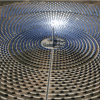
The second stage will involve building on-grid, 10-40MW solar plants, using photovoltaic (PV) technology, while the third stage will involve building concentrated solar project (CSP) schemes with capacities of 10-30MW.
(Source: MEED)
(Picture: Concentrated solar power plant in Spain)
Posted in Iraq Oil & Gas News, Iraq Public Works News 1 Comment
Baghdad's Palestine Hotel gets Makeover
Posted on 22 March 2013 .
By John Lee.
Baghdad's Palestine Hotel, famous for housing foreign journalists during the US-led invasion of Iraq, has since undergone a makeover.
Hotel manager Fadhel Salman Hassan told AFP:
"We are a five-star establishment ... We have 405 rooms, three bars [and] by order of the minister of electricity, the power never cuts."
The hotel is majority-owned by the government.
"This is not a hotel", added Hassan "it is a tourist complex."
Rates start at $200 a night, and visitors can also enjoy cocktails at the panoramic 18th-floor bar, where most drinks cost $15 or more, but the occupancy rate is only 35 percent.
The hotel was built in 1982 and was managed by the Le Meridien group, which pulled out after sanctions were imposed on Iraq following the 1990 invasion of Kuwait.
(Source: AFP)
Posted in Construction & Engineering In Iraq Comments Off on Baghdad's Palestine Hotel gets Makeover
Dana/Crescent Invest $1bn in Kurdistan
Posted on 19 March 2013 .
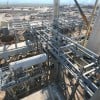
Dana Gas PJSC, the Middle East’s leading private-sector natural gas company, and Crescent Petroleum, the Middle East’s oldest private oil and gas company, in their capacity as joint operators, have announced that the total investment on behalf of the partners in gas operations in the Kurdistan Region of Iraq has exceeded US$1 billion.
Total cumulative petroleum production from inception to date has now reached 79 million barrels of oil equivalent from continuous production from the Kor Mor field for the past four and a half years, making it the largest investment and highest level of cumulative production achieved by private companies in Iraq's oil and gas sector.
Daily production reached a peak rate of 88,000 barrels oil equivalent per day (boepd), averaging 80,000 boepd, which includes 340 million cubic feet of gas per day and 15,000 barrels per day of condensate liquids.
Total investment by the partners until end of February 2013 stood at $1,004 million, since entering into agreements with the Kurdistan Regional Government for the Kor Mor and Chemchemal blocks in April 2007, and there are plans for further expansion in investment and production levels, under discussion with the Ministry of Natural Resources.
In total, more than 375 billion cubic feet of gas and 16.5 million barrels of condensate and liquids have been produced by the companies since the start of production in October 2008, with the gas supply to local power stations enabling 1,750 MW of new electricity generation for the Kurdistan Region.
This has ensured almost continuous power supply for 4 million people in the Kurdistan Region, in contrast to the electricity crisis in other parts of Iraq, and provided $9.1bn of savings in fuel costs for the government, with annual savings of $3.3bn going forward and major environmental benefits in cutting greenhouse gas emissions while transforming and energizing the economic and social development of the entire region at the same time.
Mr. Majid Jafar, CEO of Crescent Petroleum and Member of the Board of Dana Gas, said:
"As regional companies who pride ourselves on moving quickly to address local needs, Dana Gas and Crescent Petroleum are proud to have delivered these important results, which are also a testament to the policies of encouraging private investment and local development that have been applied in the Kurdistan Region of Iraq. In addition we are receiving more regular payments for our products, and are working with the KRG to resolve the outstanding receivables as soon as possible."
Marking the important investment milestone, Mr. Rashid Al-Jarwan, Executive Director and Acting CEO of Dana Gas, said:
"We thank the KRG for their cooperation and support in achieving this milestone, as well as our partners, contractors and all of our staff. We are working with the KRG Ministry of Natural Resources on the next phase of development and expansion, and look forward to growing our operations and investment to enable further progress and prosperity for the local community.”
During the project’s construction phase, work opportunities were provided for over 2,000 Iraqi workers from all ethnic groups and sects, supported by expatriate workers from over 20 nationalities in the region and worldwide. Currently employing 460 full-time employees in the Kurdistan Region, the companies have successfully implemented a nationalization programme, already achieving over 80% local staff ratio in their operations while implementing a major training programme.
The many notable technical achievements of the project include: achieving first gas in a record time of only 15 months, the installation of a 180km gas pipeline across challenging mountainous terrain that required the clearing of minefields; installation of new gas processing plantdrilling successfully to tertiary reservoir formations at depths of 2,300 meters, importing and installing over 64,000 tonnes of equipment in over 3,500 truck-loads, with pipe material supplied from China and Thailand, and the state-of-the-art gas processing plant imported from the USA.
Crescent Petroleum and Dana Gas have also implemented a corporate social responsibility programme to support the local communities, including providing school supplies, drinking water treatment, generators and fuel enabling 24 hour electricity for the local villages, mobile medical units, and youth sports facilities. These initiatives are assisting the local communities in improving their standard of living, health, well-being, security and stability and the development of human capital in the Kurdistan Region.
(Source: Dana Gas)
Posted in Iraq Oil & Gas News Comments Off on Dana/Crescent Invest $1bn in Kurdistan

Three Years Down, One Year To Go
Posted on 07 March 2013 .
By Padraig O'Hannelly.
What were you doing on this day three years ago? If you're Iraqi and were in the country at the time, the chances are that you were casting your vote in the general election, in which more than 6,500 candidates, representing 86 parties, competed for the 325 seats in parliament.
It was to be another nine months before a cabinet was formed, and that cabinet has just another year to complete its work.
So what are we to make of Nouri al-Maliki's second term in office? On one hand, sectarian tensions are increasing, relations between Baghdad and Erbil continue to be strained, and the parliament has still not passed the hydrocarbon law; on the other hand, oil production is booming, electricity supply has improved in many areas, and houses are being built in vast numbers.
What is your assessment of the part three years, and with one year to go before the next election, assuming the parliament runs its course, what should be the priorities for the cabinet and parliament over that time? Please let us know your thoughts in the comments section below.
Posted in Blog, Politics 6 Comments
Iraqi Kurdistan 'Will to Achieve' Key to Success
Posted on 23 February 2013 .
By Mustafa al-Kadhimi for Al-Monitor. Any opinions expressed are those of the author, and do not necessarily reflect the views of Iraq Business News.
There is no secret behind the success of the Iraqi Kurdistan Region on the economic and service levels. The region endured, until 2003, extremely tough security and political circumstances that affected its infrastructure and left these cities far behind other Iraqi cities. However, since 2003, the region has made a huge leap forward on all levels and has wisely invested money in the right places. Meanwhile, money has been terribly squandered in all of Iraq’s other regions.
Today, there is no comparison between the cities of the Kurdistan region and other Iraqi cities. Kurds have managed to traverse the economic-transition process by way of a budget amounting to 17% of the federal Iraqi budget, while the remaining 83% of the Iraqi budget was misplaced.
It is no coincidence that the Iraqi Kurdistan Region can provide electricity to its three cities (Erbil, Sulaymaniyah and Dohuk) with only $1 billion in investments and can even import power to cities like Kirkuk and Mosul, while the remaining Iraqi cities cannot budge the slightest bit in the power sector, even with their $44 billion in investments.
When you ask Kurdistan Prime Minister Nechirvan Barzani — a calm Kurdish man in charge of the energy and oil-management file in the region — for the reason, he answers that the will to achieve was stronger than bureaucratic complications.
Posted in Iraq Industry & Trade News 2 Comments