

Switzerland’s ABB wins $120m Power Station Contract
Posted on 04 July 2012 .
ABB, the leading power and automation technology group, has won orders worth around $120 million from KAR Construction and Engineering Company Ltd. to design and build a power plant and construct two 400/132 kilovolts (kV) high-voltage substations that will supply power to the Kurdistan region of Northern Iraq.
The 640 megawatt (MW) open cycle power plant will use natural gas from the Khormala oil field and light fuel oil (LFO) as backup to generate electricity from gas turbines. Two 400/132 kV high-voltage substations will help feed the power into Iraq`s regional and national grid, and also supply electricity to the Khormala oil field.
There are plans to convert it into a combined cycle power plant in the future, increasing its capacity to 1,000 MW. This power plant will be the first in the region to feed power into the 400 kV national grid through the new Erbil Center 400/132 kV air-insulated switchgear (AIS) substation.
Since 2007, ABB has designed and built three power plants with a total capacity of 2,000 MW to supply electrical power to the regional grid in the Kurdistan region.
ABB will design, engineer, supply and commission the projects on a turnkey basis. ABB will provide the electrical balance of plant (EBoP) including the connection between the generator and the 400/132 kV substation. Key product supplies will include generator step-up and other transformers, high-voltage equipment such as a 420 kV disconnecting circuit breaker (DCB), medium- and low-voltage switchgear, plant automation control and protection systems. The project is scheduled for completion by the end of 2013.
“These solutions will help build critical power infrastructure in the country to serve electricity needs and strengthen grid reliability in the region,” said Brice Koch, head of the Power Systems division. “The breadth of our technology portfolio and extensive project management experience will enable us to deliver an optimized customer solution.”
Substations are key installations in the power grid that facilitate the efficient transmission and distribution of electricity. They include equipment that protects and controls the flow of electrical power. ABB is the world’s leading supplier of air- and gas-insulated substations covering a range of voltage levels up to 1,100 kV.
(Source: ABB)
Posted in Construction & Engineering In Iraq, Iraq Public Works News Comments Off on Switzerland’s ABB wins $120m Power Station Contract
200MW Power Station Opened in Missan
Posted on 29 June 2012 .
Iraq's Minister for Electricity, Kareem Aftan al-Jumaili, has opened a new 200MW power station in Missan province, according to a report from AKnews.
The new diesel-fueled station, to the north of Amara, was built by the South Korean company STX at a reported cost of $220 million (260 billion Iraqi dinars).
According to a spokesperson for the ministry, the Iraqi government will pay the costs in installments of 50% a year after the start of operations, and will then pay the rest over two years.
STX will also be responsible for the maintenance of the station for two years.
Iraq currently produces only 7,000 MW of electricity while the demand is more than 15,000 MW.
(Sources: AKnews, AIN)
Posted in Iraq Public Works News Comments Off on 200MW Power Station Opened in Missan

ABB wins $75m Order to Reinforce Transmission Grid in Iraq
Posted on 27 June 2012 .
ABB, the leading power and automation technology group, has won an order worth around $75 million from the Ministry of Electricity of Iraq to extend an existing transmission substation in the Southern part of the country.
The 400/132 kV (kilovolt) Amara substation will connect a new 500 megawatt (MW) gas based power plant as well as smaller power stations, presently under construction, to the grid.
“The substation extension will enable the integration of additional power generation sources and boost power supply to the region,” said Brice Koch, head of ABB’s Power Systems division. “It will also help to improve grid reliability and power quality.”
As part of the turnkey contract, ABB is responsible for the project management, design, engineering, supply, installation and commissioning of the substation, including civil works. The project is scheduled for completion by 2013.
Key product supplies include air-insulated switchgear, transformers, shunt reactors and cables. ABB will also supply control and protection systems compliant with the IEC 61850 open communications standard and associated telecommunication equipment.
ABB is the world’s leading supplier of turnkey air-insulated, gas-insulated and hybrid substations with voltage levels up to 1,100 kV. These substations facilitate the efficient and reliable transmission and distribution of electricity with minimum environmental impact, serving utility, industry and commercial customers as well as sectors like railways, urban transportation and renewables.
ABB is a leader in power and automation technologies that enable utility and industry customers to improve their performance while lowering environmental impact. The ABB Group of companies operates in around 100 countries and employs about 145,000 people.
(Source: ABB)
Posted in Construction & Engineering In Iraq Comments Off on ABB wins $75m Order to Reinforce Transmission Grid in Iraq
Kurdistan Announces 5 New Power Plants
Posted on 27 June 2012 .
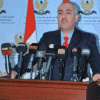
The KRG's minister of electricity, Yassen Shekh Abubakir Mawati [Yasin Sheikh Abu Bakir Muhammad Mawati] (pictured), has announced the creation of five hydro-electric and gas power plants in the region:
- Three hydro-electric power plants at Deraluk-Rashawa Dam, Mandawa-Kopala and Taqtaq;
- Two gas power plants with 200-megawatt capacity each in Qaladze and Harir.
(Source: AKnews)
Posted in Construction & Engineering In Iraq, Iraq Public Works News Comments Off on Kurdistan Announces 5 New Power Plants
Weekly Security Update for 27th June 2012
Posted on 27 June 2012 .
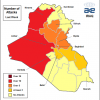
Levels of violence fell in Iraq last week, but the overall number of attacks was still above average. At least 69 people were killed and 179 injured in nationwide incidents. A total of 48 bombings left 42 people dead and over 160 injured. A rise in small arms attacks left 27 people dead and 11 injured.
North
Mosul experienced a significant proportion of last week’s violence. The security forces remain by far the most common target, but ethnic and religious minorities are also a common victim of violence. Militants also attacked electricity pylons and oil infrastructure in Ta’mim and Diyala provinces. Vulnerable assets such as lengthy pipelines and unmanned towers far from urban populations appear to have been deliberately singled out and organisations managing such assets are advised to review their security measures accordingly.

Weekly Attacks in Iraq - the last 6 months
Centre
Most of last week’s violence in Iraq was concentrated along a belt of settlements in the central provinces, stretching from Hadithah in Anbar province, through Ramadi, Fallujah, Baghdad then on to Ba’qubah and Sa’adiyah in Diyala province. There was also a spike in activity in the holy city of Samarra (Salah ad-Din province) as Sunni radical groups appear to be stirring up sectarian tensions.
Three suicide bombings (including one which was foiled in Fallujah) left 18 people dead and 43 injured in the region last week. The use of suicide bombers indicates the enduring, and indeed rising activity of radical Islamists, including those affiliated with al-Qaeda. Given the latest rise in attacks in the region it would appear that the group is attempting to implement a co-ordinated and sustained campaign of violence aimed at discrediting the security forces and driving a wedge between the Sunni and Shi’ah communities. This in turn could lead to a worsening in conditions and put a major strain on the security forces.
At least six people were also kidnapped in what appears to have been a mini-spike in abductions in Anbar province last week. AKE will be issuing its next quarterly kidnap report in July. If you would like to purchase a copy in advance please contact [email protected].
South
The south of Iraq was relatively quiet last week, although there was a handful of non-fatal but nonetheless concerning attacks in Maysan and Dhi Qar provinces. Militia groups appear to be increasing their attacks against rivals organisations and their supporters, with a number of bombs detonated outside the homes of politically-connected individuals over recent weeks. However, casualties from these attacks remain minimal, while most economic interests (including the energy and construction sectors) are not being affected.
John Drake is a senior risk consultant with AKE, a British risk mitigation company working in Iraq since 2003. You can access AKE’s intelligence website Global Intake here, and you can obtain a free trial of AKE’s Iraq intelligence reports here.

Posted in Weekly Security Update Comments Off on Weekly Security Update for 27th June 2012
Army Corps of Engineers Continues Construction in Iraq
Posted on 25 June 2012 .
By Joan Kibler, U.S. Army Corps of Engineers, Middle East District.
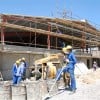
Though its construction program is a fraction of what it once was in Iraq, the U.S. Army Corps of Engineers continues to manage $350 million in projects there to help build facilities for the sovereign nation.
In seven years starting in 2004, the U.S. Army Corps of Engineers, or USACE, completed more than 5,000 projects in Iraq with a value of $8.8 billion. The construction program was part of the efforts to secure a new and reliable government for Iraq.
Today, Iraq's government and the U.S. enjoy bilateral relations based on mutual goals.
The arrangement, known as the Strategic Framework Agreement for a Relationship of Friendship and Cooperation between the United States and the Republic of Iraq, was designed to help the Iraqi people stand on their own while protecting U.S. interests, according to the U.S. Embassy-Iraq.
USACE officials said they remain committed to delivering projects that support the nation's sovereignty through the Middle East District's Iraq Area Office.
"Our role is to deliver infrastructure that contributes to stability and security," said Lt. Col. Anthony Mitchell, officer in charge, Iraq Area Office. The primary customers are the Office of Security Cooperation-Iraq, or OSC-I, and the Iraq Strategic Partnership Office; both are part of the U.S. Embassy-Iraq.
"All of our projects, whether providing equipment for the Basrah Children's Hospital to benefit Iraqi people or constructing C-130 aircraft facilities to reinforce Iraq's national security, contribute to Iraq being a sovereign nation and a strategic partner for the United States," Mitchell said.
Posted in 'Your Country' - United States, Construction & Engineering In Iraq, Security Comments Off on Army Corps of Engineers Continues Construction in Iraq

Iraq to Export Electricity Next Year?
Posted on 19 June 2012 .
Iraq's electricity problem could be solved by the end of the 2013, according to Iraq's deputy prime-minister with responsibility for energy.
Husain al-Shahristani (pictured) told local reporters, “this year power output will reach 9,000 megawatts and skyrocket to 20,000 megawatts in 2013”.
AKnews reports that he made the remarks as he inaugurated a new 400MW power station in Diwaniya. According to AIN, the project consists of two 200MW units installed by South Korea's STX.
Shahristani said Iraq had 20 major power construction contracts with foreign firms and these are to be completed before 2013.
If all goes according to plan, he said, Iraq might have surplus electricity for exports in 2013.
(Source: AKnews)
Posted in Iraq Public Works News 2 Comments
New KRG Representation Opens in Vienna
Posted on 18 June 2012 .
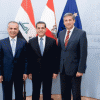
The Kurdistan Regional Government's Head of Foreign Relations officially opened a new Representation Office in Vienna on Saturday, making it the 13th KRG representation office abroad. At the same time, Austria's Vice Chancellor and Foreign Minister announced that Austria also plans to open a representation office in Erbil as well.
Minister Falah Mustafa opened the Kurdistan Regional Government (KRG) representation in Vienna along with Iraq's Ambassador to Austria, Dr Surood Najib, and the Head of the Middle East Section with the Austrian Ministry of Foreign Affairs, Ambassador Dr Friedrich Stift.
In his speech Minister Mustafa congratulated Dr Mustafa Ramazan, the new KRG Representative to Austria, on his assignment to his post. “This new KRG Representation Office, with its Head, Dr Mustafa Ramazan, will provide a direct point of contact for businesses, government, institutions and individuals from each of our respective sides, and we will use every resource at our disposal to further develop and support the relationships that this connection makes possible.”
Dr Ramazan said, “We open this office in line with the Constitution of the Republic of Iraq. It is within this framework that the KRG Representation in Austria will work vigorously to further deepen the existing relations between the Kurdistan Region of Iraq and Austria.”
Minister Mustafa and Dr Ramazan recalled the historical relationship between the peoples of Kurdistan and Austria. Minister Mustafa said, “The government of the Republic of Austria was responsible for transporting and receiving the first 100 Kurdish refugees from refugee camps in Iran in the 1976 crisis. They ensured that these 100 individuals received an equal share of the opportunities afforded to all Austrian citizens, including housing and education. Many of these people have now become prominent members of the Austrian and Kurdish societies...The people of Kurdistan are, and will remain, tremendously grateful for this and for other significant assistance that you provided for us at a number of critical moments in our history during the 1970s, 80s and 90s.”
Minister Mustafa met Vice Chancellor and Foreign Minister Michael Spindelegger at the Austrian Foreign Ministry, accompanied by the KRG Representative and the Iraqi ambassador. At a press briefing after the meeting, Minister Spindelegger announced his country’s plans for a representation office in Erbil early next year. He said, “This is a great step forward. It will be a special trade office, where we can handle all the different issues of getting enterprises involved in more cooperation but at the same time to handle visa issues.”
Minister Mustafa also gave a keynote address at the Diplomatic Academy of Vienna. He highlighted the history of the Kurds and their struggles for universal rights: “We will continue to utilize every political tool at our disposal to achieve a federal government of true partnership that is based on the federal constitution. However, we will not become a part of a return to the old Iraqi traditions of centralized power and authoritarianism. We in the Kurdistan Region have come too far, and suffered for too long to allow this to happen.
The speech was followed by a panel discussion between Minister Mustafa, Ms Maria Fantappie, a visiting scholar at the Carnegie Middle East Center in Beirut, political analyst Mr Joost Hiltermann of the International Crises Group. It was moderated chaired Dr Cengiz Günay, a scientific researcher with the Austrian Institute for International Affairs (OIIP).
Minister Mustafa highlighted the tremendous growth that Kurdistan has seen in recent years, saying: “Since the formation of our regional government, and especially since the fall of the dictatorship, we have seen progress in all aspects of our daily life. Health care, education, electricity, agriculture, roads, housing, shopping centers, and general infrastructure have been dramatically improved, and continue to be developed.”
This was the KRG Austria Representation’s first official event and was coordinated with the think tank the Austrian Institute for International Affairs, and with the Diplomatic Academy of Vienna. Commenting on the discussion, Dr Ramazan said, “Hosting events such as this panel discussion are important for facilitating dialogue and cross-cultural understanding that is essential for gaining an appreciation of the realities that the Kurds face. I believe we were able to achieve that here today with our international panelists and look forward to continuing the ongoing dialogue between our peoples.”
During his three-day visit Minister Mustafa also attended the 5th OPEC International Seminar in Vienna and a reception hosted by Iraq's Oil Minister Abdul-Kareem al-Luaibi, who holds the rotating presidency of the organisation.
Posted in Iraq Industry & Trade News Comments Off on New KRG Representation Opens in Vienna

Iranian Firm Wins $48m Recycling Project in Karbala
Posted on 14 June 2012 .
The director of Karbala Investment Commission, Taef Abdul Hussein, has announced that an Iranian company will shortly build a waste recycling plant 10 km south of Karbala city.
According to the report from Aswat al-iraq, the $48 million plant will process glass, wood and fertilizers, and will produce electricity.
As a result of religious tourism, the city generates large volumes of waste.
(Source: Aswat Al Iraq)
Posted in Iraq Industry & Trade News, Iraq Public Works News Comments Off on Iranian Firm Wins $48m Recycling Project in Karbala
Iran Starts Electricity Exports to Iraq
Posted on 12 June 2012 .
Aswat al-Iraq has reported that a new Iranian electricity supply line has started operations, carrying 100 MW of electricity from Iran.
The new line is aimed at meeting the 550 MW of power required by Wasit province. The province currently only receives less than 150 MW from Iraq’s national grid, and consequently suffers from regular electricity blackouts.
Abdolhamid Farzam, the Energy Ministry official in charge of foreign exchanges, stated that new power lines and installations have become operational for exporting electricity to Iraq, raising Iran’s electricity exports to its western neighbor to 1,200 MW.
(Sources: Tehran Times, AME Info, Aswat al-Iraq)
Posted in Iraq Industry & Trade News Comments Off on Iran Starts Electricity Exports to Iraq