



Expert Blog: Seeds of Life
Posted on 18 April 2018 .
By Elena Kornienko.
Any opinions expressed are those of the author, and do not necessarily reflect the views of Iraq Business News.
Once upon a time, there lived a widow woman and her son, Jack, on their small farm in the country. Every day, Jack would help his mother with the chores -- chopping the wood, weeding the garden and milking the cow.
But despite all their hard work, Jack and his mother were very poor with barely enough money to keep themselves fed. And one day he was told by his mother to go and sell their cow and use the money to buy seeds to plant a good crop. On his way to the market he met a man who offered to buy the cow for three magic beans.
The boy did this deal, however his mother got very upset that he brought home only three beans…. Long story short, the magic happened and this family started making money and had a decent living. Fairy tale, right? We have been raised by so many stories like that, but did we relate any of them to our adult lives? Just last week I felt like this boy planting the magic seeds. The seeds of knowledge. The seeds to grow the expertise of local Iraqi companies which work with international oil companies (IOCs).
It’s no secret that upon completion of any tender exercise, most of the bidders do not get any feedback from Procurement team on what made them lose that contract. And in most of the cases it is not price, but the technical proposal itself. Even having all capabilities to perform services, most of the contractors struggle to understand how to put their proposals in the best way.
And Iraq, unfortunately, is not unique in that. It is a common situation that Procurement departments are detached from their bidders and contractors. Some of IOCs run workshops on understanding their specific requirements in tenders and systems, however what is still missing in the industry is a good education system for local contractors on requirements to tenders from IOCs.
Last week, 10th April 2018, the first training in Iraq on tendering skills for oil and gas contractors took place in Basra, which was run independently from IOCs. It was specifically dedicated to local Iraqi companies and all participants got to benefit from learning what exactly is happening in Procurement teams of IOCs operating in Iraq and what makes bids win the contracts.
It was the biggest surprise to all participants that 70 percent of bids do not even make through the technical evaluation, and Procurement teams do not even get to see their prices! And while this training was a matter of planting the seeds, the watering is still to happen.
 From the left to the right: Majid A. Abdullah from Basra Chamber of Industry, Sabeeh H. Al-Hashemi, Iraqi Businessmen Union Basra, Elena Kornienko, InfoCORE Consultancy, Najih Shinawa Ahmad Alqanas, Basra Chamber of Commerce
After the training, the meeting with Basra Chamber of Commerce, Basra Chamber of Industry and Iraqi Businessmen Union took place to discuss the future opportunities for local companies. Whenever it comes to education and training, it is about the future vision.
It might seem that these three beans are too small for the exchange of a milking cow, but the magic of those beans should not be underestimated. All these organizations have a great understanding of the importance of the development of local Iraqi companies, and agreed to provide support in conducting future training sessions for local companies in Basra.
What was unique and magic about that meeting is the understanding that all participants are on the same level of grasping the needs of local companies development. It was planting those magic beans and start watering them to grow the capabilities of local Iraqi contractors to make the economy of Iraq more sustainable.
Elena Kornienko has more than 15 years of professional experience in contracts, procurement and tendering in various roles from demand-identification to contract close-out. She has worked on major international oil and gas projects, including the Sakhalin-1 and Sakhalin-2 fields in Russia, and Iraq's West Qurna-2. Now based in Dubai, she provides consultancy services to the oil and gas industry. Elena is a fluent English and Russian speaker, and a graduate of the Moscow State University of Commerce, holding a degree in Economics. She also graduated with distinction from the School of Business Administration at Portland State University and holds a CIPS diploma.
Posted in Elena Kornienko, Iraq Industry & Trade News, Iraq Oil & Gas News 1 Comment

Expert Blog: How Procurement Influences Production
Posted on 04 April 2018 .
By Elena Kornienko.
In the previous blog post we have talked about Procurement’s role within organization and today I will share with you one more story when Procurement could’ve done a job of SuperMan but end up with selecting a wrong subcontractor and that choice made a tremendous impact on production.
At the beginning of 2018 Tesla’s share price fall 20% from last year’s all-time high. What is the story behind it and how we – people involved with Oil and Gas in Iraq – can related to it? In 2017 Tesla forecasted the production of 5,000 Model 3 sedans and in the last quarter it announced that it had made 2,500. It was a “production hell” and one of the factors to it was Procurement’s fault for choosing a sub-contractor which did not perform. As a result, billions of dollars in stock value was lost.
What can we, procurement professionals in the oil and gas industry, learn from this story?
First of all, no matter how big or small a purchase order, it should be assessed against criticality for oil production. It might be a relatively small and standard valve, however if that is to be installed on a critical part of a pipeline, it could impact the operation of the whole line. This is where I see Procurement and Production/Operation teams working together as one team which is still unfortunately a rare case.
Another important question is the pre-qualification of contractors and suppliers. Not all IOC’s in Iraq perform pre-qualification as it should be done based on best industry practises. Some IOCs have a simple registration process which is based on data collection only, some IOCs run a bit more sophisticated process which is still have a room for improvement.
What is still not understood and appreciated in pre-qualification process is that based on selecting qualified bidders in a first place would improve the quality of tender submissions as well as create healthy price competition between companies which are of the same expertise level.
It is wrongly assumed that having more bidders in one tender would increase the chances of having more competitive offers. In reality un-qualified or even not capable bidders participate in tenders barely passing technical evaluation, getting a contract and trying to execute it, while qualified top performers were not even invited to bid.
Selection of technically capable contractors is another challenge which directly impact Production. It is related not only to pre-qualification process, but also to setting right technical evaluation criteria during tender exercise. In my years of experience in Procurement I have seen it in extreme angles – from being very formal to criteria set to being flexible in evaluation. Both approaches can bring harm in contactor selection if not used correctly and balanced.
One of the extreme examples which I witnessed myself just recently: all bidders were requested to provide a list of at least 3 projects of a similar nature performed in 2014-2017 and the Operator did not accept a list of projects from one bidders which were performed in 2012-2016, while that bidder still demonstrated their capabilities and expertise in this area.
These areas are just a top of an iceberg in Procurement world and we will be covering more of them in the blog posts. In a mean time I have two questions: Firstly, what if Tesla selected technically capable contractor and delivered on projected number of vehicles? The answer is straightforward – no loss in the value of shares. And what if IOCs in Iraq would always use the best international practises on contractor selection? The answer is also straightforward – more competitive costs of contracts and no delay or loss of oil production, which has a direct impact of Iraq’s budget.
Elena Kornienko has more than 15 years of professional experience in contracts, procurement and tendering in various roles from demand-identification to contract close-out. She has worked on major international oil and gas projects, including the Sakhalin-1 and Sakhalin-2 fields in Russia, and Iraq's West Qurna-2. Now based in Dubai, she provides consultancy services to the oil and gas industry. Elena is a fluent English and Russian speaker, and a graduate of the Moscow State University of Commerce, holding a degree in Economics. She also graduated with distinction from the School of Business Administration at Portland State University and holds a CIPS diploma.
Posted in Elena Kornienko, Iraq Oil & Gas News, Tenders Comments Off on Expert Blog: How Procurement Influences Production

GKP appoints new Non-Exec Chairman
Posted on 29 March 2018 .
Gulf Keystone Petroleum (GKP) has announced the appointment of Jacobus ("Jaap") Huijskes as Non-Executive Chairman effective as of 11 April 2018, immediately following the announcement of the Company's 2017 Full Year Results.
Jaap Huijskes, who replaces Keith Lough as Chairman, joined the Board of Gulf Keystone in November 2017 as a Non-Executive Director. Today's news follows the January 2018 announcement of Mr Lough's intention to step down from the Board. Mr Huijskes selection was the result of a process undertaken by the Nominations Committee and was unanimously supported by the Board.
Jaap Huijskes has had a distinguished career in the oil and gas sector, including relevant experience in the Kurdistan region of Iraq. He was most recently a Director at OMV (AG:OMV), the largest listed Austrian oil and gas company, where he was responsible for Exploration and Production (E&P) and oversaw the Company's expansion into new territories. He also played a key role in OMV's operations in the Kurdistan region of Iraq.
Prior to this, Mr Huijskes held a number of senior positions at Shell, including Executive Vice President of Upstream Major Projects and Project Director at the Sakhalin Energy Investment Company, which was set up to develop the Sakhalin-II oil and gas project in Russia. He holds a Masters in Mechanical Engineering from Delft University of Technology in The Netherlands.
In addition to serving on the Board of Gulf Keystone, Mr Huijskes is currently Non-Executive Chairman of the Dutch state-owned integrated oil and gas company, Energie Beheer Nederland. He was a member of OMV's Executive Board for E&P between 2010 and 2016.
Commenting on today's announcement, Jaap Huijskes, said:
"I am delighted to have been selected to take on the Non-Executive Chairman role. Gulf Keystone has a strong investment case, underpinned by a great asset and management team.
"With recent positive progress, including the signing of the important Shaikan Crude Oil Sales Agreement, we are looking forward to recommencing investment into the field and generating value for our investors, as well as the Kurdistan Region of Iraq. I look forward to leading the Board and supporting the Company at this exciting time.
"On behalf of the Board and everyone at GKP, I would like to thank Keith Lough for his leadership and significant contribution to the business over the past two years. It was a challenging period for the Company and we are grateful for his hard work and wise counsel. We wish him the very best for the future."
(Source: GKP)
Posted in Iraq Oil & Gas News Comments Off on GKP appoints new Non-Exec Chairman

Lukoil reports Less Compensation Oil from West Qurna-2
Posted on 23 March 2018 .
By John Lee.
Russian oil company Lukoil has said that lower volumes of compensation crude oil from the West Qurna-2 project in Iraq had "a negative impact on EBITDA dynamics".
In its audited consolidated financial statements for the full year of 2017, it added that net of this project, EBITDA increased in 2017 by 17.8 percent year-on-year.
(Source: Lukoil)
Posted in Iraq Oil & Gas News Comments Off on Lukoil reports Less Compensation Oil from West Qurna-2
IBN Welcomes New Expert Blogger
Posted on 22 March 2018 .
By Padraig O’Hannelly.
This week at Iraq Business News, we are delighted to welcome a new Expert Blogger to our ranks:
Elena Kornienko (pictured), has more than 15 years of professional experience in contracts, procurement and tendering in various roles from demand-identification to contract close-out.
She has worked on major international oil and gas projects, including the Sakhalin-1 and Sakhalin-2 fields in Russia, and Iraq's West Qurna-2. Now based in Dubai, she provides consultancy services to the oil and gas industry.
Elena is a fluent English and Russian speaker, and a graduate of the Moscow State University of Commerce, holding a degree in Economics. She also graduated with distinction from the School of Business Administration at Portland State University and holds a CIPS diploma.
You can read her first blog here, and we look forward to reading more of her perspectives on procurement and tendering in Iraq over the coming weeks and months.
Posted in Blog, Elena Kornienko, Iraq Oil & Gas News, Tenders Comments Off on IBN Welcomes New Expert Blogger

Procurement in Iraq: Cinderella or Superman?
Posted on 22 March 2018 .
By Elena Kornienko.
Little did I know back in 1999 when I got my first job in procurement on the Sakhalin-2 project which became one of the mega projects in oil and gas industry not only in Russia but also worldwide.
I was young, ambitious and also very naive about what years later became my biggest passion. Procurement, Purchasing, Supply Chain – various organizations use different names for this function, but the truth about it is very simple – we do impact the production of our companies as a Superman hero, and also are treated internally as a Cinderella.
My first boss worked very hard – we could see him already in the office when we arrived. He was the last one to leave and always spent at least one weekend day at his desk catching up with all the requisitions, purchase orders and expediting reports. It was the first offshore platform in Russia, with nternational standards and a limited presence of contractors and suppliers who could help us, the Procurement team, to deliver goods and services to our internal client, the Production team.
I started working with a strong believe that no matter how hard you work, how many hours you spend in the office, how many phone calls and emails you do every day, there will be always someone to blame Procurement for a delay. Our cruel “stepmother” and jealous “stepsisters” from the Production and Drilling teams constantly mistreated us by giving more and more unrealistic requisitions. Perhaps it was not that bad, but it felt like we are given impossible tasks.
Years later I realized that this was not bad treatment of the Procurement team, but rather a challenge for us to rise and shine. This challenge was accepted by us as we knew that there would not be a Fairy Godmother to make a change. The change has to come first from understanding that tne Procurement function brings the value for all levels of the organization.
Today’s focus is on sustainability as well as ethical and environmental factors, and the supply chain organization needs to ask itself “why” questions before any action. Why procurement makes this decision and why it is important to the organization. Why its sourcing strategy is like that and not anything else. Why the company spends that money on procuring goods or services. Why, why, why…. I will be answering these and so many other questions related to procurement in the blog articles here at Iraq Business News.
However, lets get back to the question “Is Procurement a Cinderella or a Superman?”. It is no secret that Iraq’s economy is dominated by the oil sector and most of the oil exploration and production is done by International Oil Companies (IOCs). It is estimated that on average between 70% and 80% of a company’s spend is related to procurement activities for purchasing of goods or services. That is quite impressive, right? And of course, the procurement process is regulated by the internal procedures.
It is questioned wherever regulations governing public procurement in Iraq apply to procurement procedures of the IOCs in relation to their subcontracts or not. And while it is debatable if procurement regulations and instructions are applicable to subcontracts or not, IOCs follow their internal procedures to govern the procurement process. What not everyone realizes is that procurement procedures always have room for improvement.
Very often the whole procurement process – from demand identification up to contract award – is quite lengthy and not always transparent to potential contractors. In the articles to come we will be reviewing all processes related to procurement and how they are applicable to IOCs operating in Iraq.
Elena Kornienko has more than 15 years of professional experience in contracts, procurement and tendering in various roles from demand-identification to contract close-out. She has worked on major international oil and gas projects, including the Sakhalin-1 and Sakhalin-2 fields in Russia, and Iraq's West Qurna-2. Now based in Dubai, she provides consultancy services to the oil and gas industry. Elena is a fluent English and Russian speaker, and a graduate of the Moscow State University of Commerce, holding a degree in Economics. She also graduated with distinction from the School of Business Administration at Portland State University and holds a CIPS diploma.
Posted in Iraq Oil & Gas News 6 Comments

Russia to supply more T-90S Tanks to Iraq
Posted on 13 March 2018 .
By John Lee.
Russia will continue to supply Iraq with T-90S main battle tanks (MBTs), according to a report from Army Recognition.
Vladimir Kozhin, Russian presidential aide for military and technical cooperation, told Rossiya 24 TV:
"Iraq is our traditional partner and it has been boosting its potential by ordering our equipment. Today we are equipping there an entire armored brigade, our equipment is supplied there."
Iraq confirmed receiving the first batch of 36 T-90S in February, and by late April it is expected to receive another batch of 37.
The T-90S MBT is made by the Uralvagonzavod (UVZ), a subsidiary of Russian Technologies (Rostec).
(Source: Army Recognition)
(Picture Credit: Aleksey Kitaev)
Posted in Security Comments Off on Russia to supply more T-90S Tanks to Iraq

Mueller witness "Helped Broker" $4.2bn Iraq-Russia Arms Deal
Posted on 11 March 2018 .
By Laura Rozen for Al-Monitor. Any opinions expressed are those of the author, and do not necessarily reflect the views of Iraq Business News.
The dealmaker: Mueller witness helped broker $4.2 billion Iraq-Russia arms deal
A Lebanese-American businessman reported to be cooperating with Special Counsel Robert Mueller’s Russia probe helped broker a controversial 2012 Iraq-Russia arms deal valued at $4.2 billion, Iraqi sources tell Al-Monitor.
The Russia arms deal
George Nader, 58, traveled to Moscow in 2012, telling Russian interlocutors that he represented Iraqi Prime Minister Nouri al-Maliki and the deal should be negotiated through him, according to two Iraqi sources. Nader’s role in the deal was controversial to Iraqi officials because Iraq’s minister of defense was in Russia to conduct the negotiations, and they were unaware that Maliki was working with Nader to bypass official channels.
One of the Iraqi sources, a former Iraqi official who spoke to Al-Monitor on condition that he not be named, personally witnessed Nader’s interactions with Maliki in their Moscow hotel when he accompanied Maliki to Moscow in October 2012 to sign the arms deal with Russian President Vladimir Putin.
Nader’s career as a deal broker in Iraq ran from the mid-2000s until Maliki left office in 2014, the Iraqi sources said. Nader then became an adviser to the powerful Abu Dhabi Crown Prince Mohammed bin Zayed Al Nahyan. It is in that capacity that Nader’s meetings with members of the incoming Donald Trump administration in 2016-2017 — including Trump's son-in-law Jared Kushner, former national security adviser Michael Flynn and former chief strategist Steve Bannon — brought Nader to Mueller’s attention.
The New York Times reported Tuesday that Nader was arrested and questioned by the FBI when he landed at Washington Dulles International Airport on Jan. 17 en route to celebrate Trump’s first year in office at Mar-a-Lago in Florida. He was questioned by Mueller’s grand jury March 2 and is reported to now be cooperating with Mueller’s probe.
One line of inquiry Mueller is reported to be questioning Nader about is whether the United Arab Emirates (UAE) might have funneled money to members of the incoming Trump administration in an effort to curry influence with them, including in their dispute with Qatar.
From journalist to deal-maker
Nader’s recent career as a Middle East deal broker is both an outgrowth and departure from his past. As an editor of Middle East Insight magazine in Washington in the 1980s and 1990s, Nader interviewed President Bill Clinton and Iranian Supreme Leader Ayatollah Ruhollah Khomeini.
During this time, Nader also served as a frequent go-between in informal Syrian-Israeli talks encouraged by the Clinton administration before abruptly disappearing from the Washington scene around 2000.
“He was a reliable go-between, a facilitator,” Martin Indyk, who knew Nader when Indyk served as Clinton’s assistant secretary of state for Near East affairs and ambassador to Israel in the 1990s, told Al-Monitor. “He was not a con man.”
Nader was connected to the Hafez al-Assad regime through then-Syrian Foreign Minister Farouk al-Sharaa and then-Syrian Ambassador to the US and current Foreign Minister Walid Moallem, Indyk said. “He was going to Israel from time to time. He set up an interview of [Syrian Foreign Minister al-Sharaa] with Israeli journalist Ehud Yaari as a confidence-building measure. George is the one that made that happen. … Then he hooked up with [Ron] Lauder. He traveled with Lauder 16 times to Damascus in 1998” in efforts to advance an Israeli-Syrian peace agreement.
“And then when the Clinton administration was gone, George was gone,” Indyk, now executive vice president of the Brookings Institution, said.
“Last time I heard from [Nader] was after the US invasion of Iraq,” journalist Hisham Melham told Al-Monitor. “He called me from Kurdistan. But why would MBZ [the crown prince] need him when he has [UAE Ambassador] Yousef Al Otaiba?”
From dabbling in Syria-Israel peace talks to Iraq postwar dealmaker
Nader appeared in Iraq in the mid-2000s, looking to translate his Rolodex of connections from his Middle East Insight days into work advising various Iraqi political clients, including some of Iraq’s new Shiite political leaders, as well as Kurdish officials.
According to Iraqi sources, Nader helped arrange meetings for the 2005 visit to Washington of leading members of an Iraqi Shiite political party with close ties to Iran, the Supreme Council for the Islamic Revolution in Iraq. In 2010, Nader similarly arranged meetings for then-Iraqi Kurdistan Regional Government (KRG) Prime Minister Nechirvan Barzani with high-level UAE officials, including the crown prince, a second Iraqi source now living in exile told Al-Monitor. But Nader failed to win over the KRG leader, the second Iraqi source said.
“Nader got Nechirvan Barzani meetings with MBZ and [Lebanese Prime Minister] Saad Hariri,” the second Iraqi source said, adding that he advised Iraqi Kurdish interlocutors at the time to be wary of Nader.
Nader had a “knack for claiming that he had unique access to 'mysterious' persons,” the second Iraqi source said. “This way he would be able to latch on from one new confidant to another.”
By 2012, Nader had forged close ties with the Iraqi prime minister and Maliki’s son and deputy chief of staff, Ahmed Maliki, Iraqi sources said. Nader had worked with the younger Maliki on power generation projects, the former Iraqi official said. The relationship that Nader forged with Maliki’s son apparently brought Nader into the father’s inner circle when the huge Russian arms deal was being negotiated.
In August 2012, Iraq’s Minister of Defense Saadoun al-Dulaimi spent 24 days in Moscow to finalize negotiations for the $4.2 billion Russian arms deal. But during the negotiations, the former Iraqi official told Al-Monitor that he received a message from former Russian Energy Minister Yuri Shafranik warning him that there were other people in Moscow claiming that they, and not the defense minister, were representing Maliki, and that the deal should go through them.
Eventually, on Oct. 3, 2012, Shafranik went to Baghdad to try to clarify the situation with Maliki, the former Iraqi official said. Shafranik even offered Maliki a direct communication line with Russian President Vladimir Putin to avoid confusion and leaks.
“The third of October, Yuri [Shafranik] came to Baghdad, met the prime minister and told him clearly that ‘Mr. Putin is suggesting direct relations between you and him to avoid any leakage and … cut any unhealthy things,’” the former Iraqi official said. “The prime minister welcomed that.”
Maliki assured the officials that he welcomed the suggestion to streamline their contacts and signaled that the confusion over who represented Baghdad in the arms deal would be resolved.
So the former Iraqi official was astonished when he accompanied Maliki to Moscow in October 2012 to sign the Russian arms deal to see Nader enter their hotel and take the elevator to Maliki’s suite.
“We were in a Radisson hotel in Moscow,” the former Iraqi official said. “And all of a sudden, George Nader came, walking very fast, entered the elevator, went up and, I saw from the screen over the elevator, went to the level where the prime minister was staying.
“When the minister of defense came down to the ground floor, I asked, did you notice George Nader? And he said yes; he saw him entering the prime minister’s suite,” the former Iraqi official said. “By that time I realized the issue is in-house. The corrupted party, which went to Moscow to represent Maliki, they are not … strange people. They are in the circle with Maliki.”
The former Iraqi official continued, “Also, while we were there we discovered new facts. I myself did not know that those people who traveled to Moscow at the end of August, that they are connected to Maliki and his son. But George Nader I knew very well. I was shocked. Then it immediately came to me — Nader’s relations with the son of Maliki.”
Over the course of the trip to Moscow, “we came to know that one of the three people who had been in Moscow presenting themselves as [Maliki’s] representative was George Nader,” the former Iraqi official said.
A call Wednesday by Al-Monitor to an attorney who represented Nader in an earlier case was not returned. A spokesman for the Iraqi Embassy said it did not have information on the matter.
The Iraqi-Russian arms deal was controversial in Iraq and long suspected to have involved corruption. In November 2012, just a month after it was signed, Iraq’s then-acting Defense Minister Dulaimi announced that the deal was canceled, “citing possible corruption in the contract,” Reuters reported.
But Maliki’s then-media adviser Ali al-Moussawi was cited by Reuters as saying that the deals would be renegotiated and any suspension of the contract was “a precautionary measure because of suspected corruption."
From Iraq to the UAE
After the end of Maliki’s run as Iraq's prime minister in 2014, Nader made his way to become an adviser to the Abu Dhabi crown prince. Until Trump’s election, however, he had maintained such a low profile that even several Washington consultants who have advised the Emirates said they were entirely unaware of his role.
It may now be left to Mueller to help deepen understanding of Nader’s mysterious activities and what role they may have played in influencing the Trump administration’s policies toward the Middle East.
Posted in Politics, Security Comments Off on Mueller witness "Helped Broker" $4.2bn Iraq-Russia Arms Deal
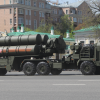
Iraq Denies Deal to buy Russian S-400 Missiles
Posted on 28 February 2018 .
The Iraqi government has denied concluding any deal with Russia to supply Baghdad with S-400 anti-aircraft missiles, but confirming Iraq’s right to import weaponry from any country in the world.
“So far, Iraq has not concluded any deal with Russia to import the S-400 air defence system" government spokesman Saad al-Hadithi stated on February 26.
"Talk about this deal is only in the media. This matter is not subject to political, but rather purely military and technical considerations" al-Hadithi said.
"The Iraqi Ministry of Defence is the only authority competent to supply [the army] with weapons and other military equipment needed by the armed forces. It is the only body that determines the nature, type, form and source of weapons Iraq needs”.
(Source: GardaWorld)
(Picture credit: Соколрус)
Posted in Security Comments Off on Iraq Denies Deal to buy Russian S-400 Missiles

Iran to process Russian Wheat for Iraqi Flour Market
Posted on 22 February 2018 .
By John Lee.
Iran is said to be negotiating a deal to import around 100,000 tonnes of wheat per month from Russia, enabling private millers it to increase flour exports to Iraq.
Iraq imports about 3 million tons of flour a year, almost half of its demand of 6.9 million tons a year.
According to a report from Reuters, private millers in Iran are not allowed to use domestic wheat for flour exports.
Meanwhile, Bloomberg reports that Iranian flour millers are operating at 50 percent of capacity.
(Sources: Bloomberg, Reuters)
Posted in Agriculture Comments Off on Iran to process Russian Wheat for Iraqi Flour Market