


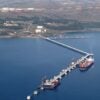
War of Words Continues re KRG Oil Exports
Posted on 26 March 2024 .
By John Lee.
The Iraqi Oil Ministry has responded to criticism from the trade body representing international oil companies (IOCs) operating in Iraqi Kurdistan, as they mark the one-year anniversary of the closure of the Iraq-Turkey Pipeline (ITP) connecting northern Iraq with the Mediterranean port of Ceyhan.
Highlighting the economic cost of the pipeline closure, the Association of the Petroleum Industry of Kurdistan (APIKUR) accused Baghdad of, "economic strangling of the KRI ... through blocking oil exports and non-implementation of budget transfers."
It added that there has been "no real progress" to reopen the line, and that debts of over $1 billion from the KRG to APIKUR member companies remain unpaid.
In response, Baghdad's Ministry of Oil said that it is the federal government that is the most affected by the cessation of exports, and blamed Turkiye for the closure of the pipeline.
The Ministry also pointed to the Supreme Court ruling that says those oil contracts are not valid, and that the Ministry of Oil in Baghdad is responsible for oil exports.
Full statement from APIKUR:
Key Points:
-
-
The Iraq-Türkiye pipeline (ITP) has now been closed for one year
-
The ITP closure impacts International Oil Companies (IOCs) in the Kurdistan Region of Iraq (KRI), blocking 450,000 barrels per day of crude oil exports
-
Continued closure costs the Government of Iraq (GoI), Kurdistan Regional Government (KRG), IOCs, and the people of Iraq billions of dollars
-
As the 1-year mark for the halt of oil exports through ITP approaches, the Association of the Petroleum Industry of Kurdistan (APIKUR) provides an update on the reported status of the discussions around reopening the ITP, its efforts to restore full production and exports from Kurdistan, and the financial impacts on the Iraqi people and International Oil Companies (IOCs).
On March 25, 2023, oil exports through ITP were halted.
To date, neither APIKUR nor its members have seen any proposal from the GoI or KRG that would lead to a resumption of exports.
All eight APIKUR member companies remain committed to their contracts with the KRG and have been repeatedly assured by the KRG that the KRG, for its part, is fully committed to these contracts as well.
APIKUR continues to seek to engage with all relevant stakeholders to reach an agreement to resume exports via ITP.
"APIKUR remains focused on working with all stakeholders to restore full oil production and exports through the Iraq-Türkiye Pipeline," said Myles B. Caggins III, spokesman for APIKUR. "Each day the pipeline is closed, losses continue to mount and the people, economy, and investment reputation of Iraq suffers."
APIKUR's Assessment:
The GoI has not taken the required actions to reopen the ITP and enable oil exports from the Kurdistan Region of Iraq, despite Türkiye's announcement in October 2023 that the pipeline is operational and ready to export oil.
APIKUR notes that meetings were held in Baghdad on January 7-9, 2024, between representatives of the GoI, KRG, and IOCs - including representatives of several APIKUR member companies. Despite those meetings and the subsequent press on positive discussions between GoI and KRG, there has been no real progress to reopen the ITP.
APIKUR's efforts to resolve the impasse:
-
-
Holding multiple meetings with the KRG and GoI officials in Baghdad, Erbil, and Dubai
-
Consistently and openly communicating APIKUR members' conditions for restoring export production:
-
Any addendums must be agreed between the GoI, KRG, and APIKUR member companies
-
There must be payment surety for past and future oil exports
-
Prospective oil sale payments to APIKUR member companies must be remitted directly to those companies
-
The APIKUR member companies' current commercial terms and economic model must be maintained
-
-
Launching a public awareness campaign across Arabic, Kurdish, and Western media outlets
-
Independent of APIKUR, several individual IOCs have proposed solutions to the GoI and KRG
-
In addition, APIKUR has engaged home governments of member companies-with a particular focus on the United States government (USG)-due to its unique bilateral relationships with the GoI and KRG, including the $300 million direct investment by USG in the Kurdistan Region's energy sector.
APIKUR has conveyed to senior members of President Biden's administration and members of the U.S. Congress that the White House should not proceed with the planned visit of Iraqi Prime Minister Mohammad Shia Al-Sudani, on April 15, 2024, to Washington, DC unless:
-
-
ITP is reopened and allows oil produced in the KRI to be exported to international markets
-
IOCs (including APIKUR members) get surety of payment for past and future oil exports
-
The GoI fully implements the Iraqi federal budget for the KRG
-
APIKUR summary of the ongoing impact of the ITP closure:
Financial Impact:
-
-
Estimated revenue loss to Iraq of more than $11 billion, approximately $1 billion each month
-
APIKUR understands that while ITP remains unused, Iraq accrues more than $800,000 in daily penalties for failure to meet contractual throughput quotas in the ITP agreement
-
Debts of over $1 billion from the KRG to APIKUR member companies for oil produced between September 2022 and March 2023 remain unpaid
-
More than $400 million in annual investments paused by APIKUR members
-
IOC annual revenues reduced by nearly 60% as local sales have replaced exports to international markets
-
Economic strangling of the KRI by GoI through blocking oil exports and non-implementation of budget transfers
-
Impact on Global Oil and Energy Markets:
-
-
The halt of ITP exports puts pressure on a precariously balanced global energy market currently affected by Russian sanctions and shipping disruptions through the Red Sea
-
Iraq continues to receive sanctions waivers to import electricity from Iran, instead of funding its own energy infrastructure through additional oil exports
-
Since ITP closed, the U.S. has imported upwards of 250,000 bpd of oil and products from Southern Iraq, while the GoI prevents oil produced by U.S. companies in Kurdistan Region from being exported
-
Impact on Employment in Iraq's Kurdistan Region:
-
-
APIKUR member companies have laid off hundreds of directly-hired personnel, including both expats and locally-hired staff
-
The collapse in IOC investment has caused even greater staff reductions in oilfield-related service and products industries, including lodging and catering, maintenance, security, transportation, and construction companies
-
The lack of oil revenue and budget transfers from the GoI to KRG has led to severe delays in payment of civil servant salaries, including teachers and health service workers
-
Reputational Impact:
-
-
Placing the respect for contract sanctity in question risks a significant downturn in the desire for the global business community to invest in Iraq
-
Budget law and oil export impasse has exposed intra-Iraq political rifts
-
Full statement from the Ministry of Oil (translated):
The Federal Ministry of Oil has reviewed a statement issued by an entity calling itself the "Association of the Petroleum Industry of Kurdistan (APIKUR)" dated March 23, 2024, which contained distortions of facts and several inaccuracies. In this regard, the ministry would like to clarify the following points:
1. The halt of oil exports through the Iraqi-Turkish pipeline in March 2023 was due to a Turkish decision following an international arbitration ruling by the Paris Chamber of Commerce in favor of Iraq. The export did not stop - not even for a day - due to a federal Iraqi decision. After more than six months and significant negotiations led by this ministry with the Turkish side, the parties agreed to reopen the pipeline and address the technical issues resulting from its closure in the shortest possible time. The federal government is the biggest loser from the export halt for reasons related to sovereign oil policy and others.
2. One of the main reasons for the current export halt is the refusal of foreign companies operating in the Kurdistan Region of Iraq to officially hand over their production to the regional government for export in accordance with the effective federal budget law. This includes companies affiliated with the mentioned association. Export can be resumed shortly if these companies deliver the produced oil from the fields located in the region in accordance with the law.
3. The federal government and this ministry have made diligent efforts to overcome all obstacles to resume exports, as evidenced by the content of numerous official letters, meetings, and relevant decisions over the past year. The latest of these efforts was our letter numbered (480) dated March 18, 2024, which emphasized the necessity of delivering the produced oil in the region for export purposes. This ministry continues to insist on resuming exports through the Iraqi-Turkish pipeline as soon as possible, while adhering to the provisions of the constitution and the law.
4. Official correspondences issued by this ministry, including our aforementioned letter, referred to reports from OPEC and internationally recognized secondary sources confirming oil production in the region ranging from 200,000 to 225,000 barrels per day, without the knowledge or approval of this ministry. Non-compliance with the adopted federal oil policy puts Iraq's reputation and international obligations at risk, and the responsible parties for violations will face all legal consequences.
5. Contracts purportedly concluded between oil companies operating in the region and the Ministry of Natural Resources in the region have not been approved by the federal government or the federal Ministry of Oil at all, as they lack a sound constitutional and legal basis. This has been the stance of successive federal governments and the Ministry of Oil for over a decade, consistent with the Supreme Federal Court decision numbered (59/federal/2012 and its unified decision 110/federal/2019) dated February 15, 2022. There is no room for debate after the Supreme Federal Court issued its definitive and binding decision, except to comply with it.
6. This ministry has previously requested the Kurdistan Regional Government and the oil companies operating therein to provide full copies of all the mentioned contracts for the purpose of studying them and reaching new contracts in line with the constitution, the law, and the best practices followed by this ministry with major international companies. However, these contracts have not been submitted so far. Therefore, it is unreasonable for this ministry to demand compliance with contracts it has not seen or recognized, which is fundamentally inconsistent with binding judicial decisions.
7. The Federal General Budget Law No. 13 of 2023, which came into effect on January 1, 2023, included in Article 12/Second/B a provision to calculate production and transportation costs at a rate equal to what this ministry pays in its contracts, with the production cost averaging $6.9 per barrel. However, the companies operating in the region demand three times this amount (excluding transportation fees) as one of the conditions for resuming oil delivery. The parliament's call to adopt the Ministry of Oil's rate was due to the lack of access by the parliament and other federal authorities to the contracts, as mentioned earlier. Moreover, the costs demanded by the companies include what they call payment of previous debts worth billions of dollars, amounts that are unknown to the federal government and do not align with borrowing frameworks under the constitution and the prevailing laws.
8. It has been clarified repeatedly that this ministry cannot violate the General Budget Law and other applicable laws, in addition to highlighting a significant exaggeration in the mentioned costs in the previous paragraph. This ministry has officially reiterated its commitment to immediately resume exports in accordance with the law through the Iraqi-Turkish pipeline, while negotiating in parallel to reach a comprehensive and mutually acceptable settlement that serves the public interest. However, the companies continue to refrain from complying unless their illegal conditions are met, which is unacceptable under any circumstances.
9. The Iraqi government has received representatives of the oil companies operating in the region at the highest levels as a goodwill gesture to find acceptable legal solutions. This ministry has previously invited these companies to negotiation meetings to find fair solutions and has taken continuous legal actions against the mentioned companies to allow room for amicable settlements. However, the companies' stance remains inflexible and unchanged.
10. The mentioned association's statement included blatant interference in Iraq's internal and external sovereign affairs, which have no relation to the companies' operations. This constitutes an additional violation by the mentioned association and the represented companies and does not align with the principles of goodwill and the fundamentals of foreign investment.
11. The federal Ministry of Oil, under the government's directives, is committed to making every possible effort to resolve the disputes and resume exports through the Iraqi-Turkish pipeline in line with the constitution and the law. Foreign companies wishing to operate in Iraq must respect the country's sovereignty, laws
(Sources: APIKUR; Ministry of Oil)
Posted in Iraq Oil & Gas News, Politics Comments Off on War of Words Continues re KRG Oil Exports
US Extends Waiver allowing Iraq to pay Iran for Electricity
Posted on 18 March 2024 .
By John Lee.
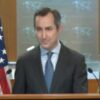
At a press briefing on Thursday, US State Department spokesperson Matthew Miller (pictured) said the United States has issued another 120-day waiver to allow Iraq to continue importing electricity from Iran.
Addressing a question from the floor, Miller said:
"... these are waivers that have been regularly issued to Iraq going back to 2018 under a previous administration. This is now the 21st time that this particular waiver has been issued. And it's important to realize how this money has been used.
"Number one, that no money is permitted to enter Iran under the terms of this waiver. All of these funds are held in restricted accounts and they can only be used for transactions for the purchase of food, medicine, medical devices, agricultural products, and other non-sanctionable transactions. And that it is part of our broader goal to wean Iraq off of dependence on Iran for the provision of electricity, because that's what these waivers - as I know you know - what these waivers relate to, which is that Iraq continues to have to get its electricity from Iran.
"Iraq has been making real progress on its path towards energy sufficiency since 2020. It has cut its imports of Iranian energy by more than half. Over the last decade, it has doubled its own electricity generation. And we will continue to work with them and support them as they try to become energy independent."
He further clarified:
"Iraq has been importing electricity from Iran. It doesn't pay it - Iran - directly for that electricity. It deposits money into these restricted accounts, and then we issue these waivers. It allows the money in that - those accounts to be used for humanitarian and other non-sanctionable purposes, but the money itself doesn't actually move from Iraq to Iran."
(Source: US State Dept)
Posted in Iraq Industry & Trade News, Politics, Security Comments Off on US Extends Waiver allowing Iraq to pay Iran for Electricity

US Renews Iran-Iraq Energy Waiver
Posted on 16 November 2023 .
By John Lee.
The United States has reportedly issued a new waiver allowing Iraq to pay Iran for electricity.
According to Reuters, the waiver lasts for 120 days.
While not directly confirming the waiver, US State Department spokesperson Matthew Miller told a press briefing on Tuesday:
"So I don't have a comment to give on the expiration of the waiver at this time. But I would remind you of a few things with respect to these waivers in general, and that is that, number one, there are 20 waivers that have been issued for the payment from Iraq for Iranian electricity imports. They go back to 2018; they started during the Trump administration.
"All - in each of these waivers, it has been the case that none of this money goes to Iran. It is held in accounts that are restricted where they can only be used to pay for food, medicine, humanitarian purposes, and other non-sanctionable activities. And it has been consistent with several policies that we have - one, to try to reduce Iran's leverage over Iraq, and two, to try to wean Iraq from Iranian energy independence. We've had a number of policies we've worked with to try to ensure their energy independence, but in the meantime, they continue to buy Iranian electricity. And so we have in the past, as has the Trump administration, issued waivers to allow these funds to move to restricted accounts, or as I said, that can be used for humanitarian and other non-sanctionable purposes."
(Sources: US State Dept, Reuters)
Posted in Iraq Industry & Trade News, Politics, Security Comments Off on US Renews Iran-Iraq Energy Waiver
Oil Production Restarts at Atrush
Posted on 09 November 2023 .
By John Lee.
Canadian oil development and exploration company ShaMaran Petroleum has announced that it restarted operations at its Atrush field in Iraqi Kurdistan this week, selling oil to a local refinery via pipeline.
In its statement for the nine months nine months ended 30th September, the company said it remains focused on cost control and cash preservation.
Full statement from ShaMaran Petroleum:
ShaMaran Petroleum Corp. ("ShaMaran" or the "Company") (TSXV: SNM) (Nasdaq First North: SNM) today released its financial and operating results and related management's discussion and analysis (MD&A) for the three and nine months ended September 30, 2023. View PDF
Garrett Soden, President and CEO of ShaMaran, commented: "The Iraq-Turkey pipeline has been closed for more than seven months, and it is still unclear if and when exports will resume. We are actively seeking commercial solutions for crude exports and payments. Due to the challenging situation in Kurdistan and the wider region, ShaMaran remains focused on cost control and cash preservation. We are working with our operating partners to increase local oil sales, which include timely payments and resulted in improved cash generation for Q3. We expect higher revenues and cash flow in Q4 with Sarsang production increasing and Atrush production recently restarted."
Corporate Highlights:
- The closure of the Iraq-Turkey pipeline ("ITP") since March 25, 2023, continues to have a material impact on ShaMaran's operations and financial results. The Company is actively engaged in discussions with the relevant parties to re-open the ITP export route for Kurdistan crude;
- ShaMaran generated $13.1 million in operating cash flow during the quarter due to the strength of local sales from Sarsang and proactive cost-cutting at both the corporate and operating asset levels;
- Sarsang oil production increased in Q3 relative to Q2 but is still below full capacity with sales to local refineries via trucking on an ad hoc weekly basis. Sarsang local sales vary in price and volume from week to week and are expected to continue until ITP exports resume; and
- Atrush remained shut-in during Q3 due to a lack of oil storage and trucking facilities. The Atrush operator restarted production on November 7, 2023, with sales to a local refinery via pipeline.
Financial Highlights:
| Three months ended September 30 | Nine months ended September 30 | |||
| USD Thousands | 2023 | 2022 | 2023 | 2022 |
| Revenue | 12,644 | 39,812 | 62,566 | 123,492 |
| Gross margin on oil sales | 1,595 | 28,860 | 19,494 | 90,747 |
| Net result | (8,202) | 66,428 | (25,802) | 102,678 |
| Cash flow from operations | 13,126 | 28,250 | 30,658 | 92,732 |
| EBITDAX | 5,834 | 32,626 | 31,185 | 100,436 |
- Q3 2023 Sarsang oil sales went to the Kurdistan local market via trucking at an average net back price of $39.41/bbl and generated net revenues and cash payments to the Company of $12.6 million;
- On July 26, 2023, the Company announced that it had requested and received bondholder approval for a waiver to release cash from the 2025 Bond Debt Service Retention Account ("DSRA"). The waiver allowed the Company to use restricted cash in the DSRA to pay the bond interest and amortization obligations on July 30, 2023;
- At September 30, 2023, $5.4 million of payables are claimed overdue by the Atrush operator. ShaMaran is reviewing Atrush joint venture cash calls as part of the Company's efforts to preserve liquidity while encouraging the operator to accelerate local sales;
- At September 30, 2023, the Company had cash of $63.6 million (including restricted cash of $20.3 million), receivables from past oil sales of $94.9 million (before any provision for credit risk on overdue invoices) and gross debt of $293.1 million (including the $277.5 million bond and $15.6 million related party loan). Net debt was $201.1 million (including $28.4 million in ShaMaran 2025 bonds held by the Company); and
- At November 8, 2023, the Company had cash of $66.8 million (including restricted cash of $20.3 million), receivables from past oil sales of $94.9 million (before any provision for credit risk on overdue invoices) and gross debt of $293.1 million (including the $277.5 million bond and $15.6 million related party loan). Net debt was $197.9 million (including $28.4 million in ShaMaran 2025 bonds held by the Company).
Operational Highlights:
- Sarsang average gross production was 27.7 Mbopd during Q3 2023 (compared to 18.0 Mbopd in Q2 2023). During Q3, Atrush remained shut-in due to a lack of oil storage and trucking facilities. The Atrush operator restarted production on November 7, 2023, with sales to a local refinery through existing pipeline infrastructure;
- The 2023 capital programs associated with further drilling activity and processing capacity expansion at both the Sarsang and Atrush blocks have been reduced and/or deferred completely; and
- Due to the reduced activity levels following the ITP closure, ShaMaran has suspended guidance for 2023. The Company is working with the Kurdistan Regional Government and our operating partners to address the challenges in Kurdistan.
Subsequent Events:
- On October 3, 2023, Turkish officials stated that the ITP was ready to resume operations as of October 4, 2023. The readiness and willingness of the Iraqi side to supply oil into the pipeline remains unclear, and both parties continue discussions. As noted in press statements by the Association of the Petroleum Industry of Kurdistan ("APIKUR"), international oil companies need a clear payment framework for future production and outstanding accounts receivables before pipeline exports can resume from Kurdistan. The Company continues to actively engage with the relevant parties to enable oil exports via the ITP; and
- The Atrush operator restarted production on November 7, 2023, with sales to a local refinery through existing pipeline infrastructure.
Corporate Update:
- Nick Walker is resigning as a Director of the Company effective today due to his recent appointment as Chief Executive Officer of Vår Energi. We would like to thank Nick for his valuable contribution to ShaMaran during his tenure and wish him the best in his new role. The Board will not appoint a replacement for Nick at this time.
ShaMaran plans to publish its financial statements for the year ending December 31, 2023, on March 6, 2024. Except as otherwise indicated, all currency amounts indicated as "$" in this news release are expressed in United States dollars.
(Source: Shamaran Petroleum)
Posted in Iraq Oil & Gas News Comments Off on Oil Production Restarts at Atrush
ShaMaran Petroleum Suspends 2023 Guidance
Posted on 12 August 2023 .
By John Lee.
Canadian oil development and exploration company ShaMaran Petroleum has suspended its 2023 guidance due to uncertainties resulting from the closure of the Iraq-Turkey Pipeline (ITP) to Ceyhan, and other challenges in Iraqi Kurdistan.
Full statement from ShaMaran Petroleum:
ShaMaran Petroleum Corp. ("ShaMaran" or the "Company") (TSXV: SNM) and (Nasdaq First North Growth Market: SNM) today released its financial and operating results and related management's discussion and analysis (MD&A) for the three and six months ended June 30, 2023. PDF Version
Garrett Soden, President and CEO of ShaMaran, commented:
"The continued closure of the Iraq-Turkey pipeline and delayed payments for past oil sales materially impacted all Kurdistan oil producers during the second quarter of 2023. Discussions are ongoing between Ankara, Baghdad and Erbil to find a political solution. We believe the various governments should be aligned to reopen the pipeline and to resolve the outstanding payment issues with international oil companies.
"In the meantime, ShaMaran is focused on cost reduction and cash preservation, as well as encouraging our operating partners to increase oil sales to local refineries to improve liquidity. With our cash on hand, recent bond waiver, accounts receivable and own bonds held in treasury, we have significant flexibility while we seek a resolution to the production, export and payment situation."
Corporate Highlights:
- The closure of the Iraq-Turkey pipeline ("ITP") on March 25, 2023, had a material impact on ShaMaran's operations and financial results. The Company is actively engaging in discussions with the relevant parties for re-opening the ITP to Kurdistan oil exports;
- While Atrush is shut-in due to a lack of storage and trucking facilities, Sarsang oil production has continued at a reduced rate since late April 2023 with additional oil storage capacity secured offsite and sales to local refineries on an ad hoc weekly basis. Sarsang local sales vary in price and volume from week to week but are expected to continue on an ad hoc basis until the ITP exports resume and payment issues are resolved;
- Excluding non-recurring General and Administrative costs ("G&A"), ShaMaran achieved a cash-neutral quarter from an operating cash flow perspective due to local sales revenues and proactive cost-cutting at both the asset and corporate level; and
- The recent passage of the Iraq federal budget for 2023-2025, including a production commitment from the Kurdistan Regional Government ("KRG"), should enable regular monthly budget transfers from Iraq to the KRG, as well as normalization of relations between the region and the Federal Government of Iraq.
Financial Highlights:
|
Three months ended June 30 |
Six months ended June 30 |
|||
|
USD Thousands |
2023 |
2022 |
2023 |
2022 |
|
Revenue |
6,542 |
44,844 |
49,922 |
83,680 |
|
Gross margin on oil sales |
(4,199) |
34,208 |
17,899 |
61,887 |
|
Net result |
(27,199) |
21,170 |
(17,600) |
36,250 |
|
Cash flow from operations |
(734) |
40,720 |
17,532 |
64,482 |
|
EBITDAX |
(4,876) |
37,339 |
25,351 |
67,810 |
- Q2 2023 Sarsang oil sales went to the Kurdistan local market at an average net back price of $41.47/bbl and generated net revenues and cash payments to the Company of $6.5 million;
- Since the ITP shutdown, ShaMaran and its operating partners have cut costs (both operating and capital expenditures) at the asset level. This resulted in reduced cash calls to ShaMaran in Q2 2023 versus the original budget. The Company is actively pursuing further cost-reduction initiatives and encouraging our operating partners to pursue additional local sales to improve liquidity;
- ShaMaran has also revised its Corporate G&A spend and implemented cost-reduction initiatives in order to preserve cash. If non-recurring costs of approximately $1.1 million were excluded from the quarter's G&A costs, Q2 2023 results would have shown positive cash flow from operations. This adjusted G&A better reflects the expected run-rate going forward;
- The Company continues to engage with the KRG regarding the $96.7 million of overdue receivables for oil sales from October 2022 to March 2023 (on the basis of the KBT pricing mechanism). Since payment timing is uncertain, ShaMaran has reassessed the credit loss provision in Q2 2023, resulting in an increase to the provision by $11.6 million in the quarter; and
- At June 30, 2023, the Company had cash of $92.5 million (including restricted cash of $59.3 million), receivables from past oil sales of $96.7 million (before any provision for credit risk on overdue invoices) and gross debt of $315.6 million (including the $300 million bond and $15.6 million related party loan). Net debt was $192.4 million (including $30.7 million in ShaMaran bonds held by the Company).
Operational Highlights:
- Since the ITP shutdown, Atrush has been shut-in due to a lack of storage and trucking facilities. Sarsang production has been limited by storage capacity and the local sales market in Kurdistan, but production has continued at an average gross rate of 18 Mbopd during Q2 2023. As reported by HKN Energy Ltd. ("HKN"), Sarsang local sales during Q2 2023 averaged 13.7 Mbopd;
- HKN completed one water disposal well (ST-AW1) on the Sarsang Block, and Taqa Atrush B.V. completed one production well (CK-20) on the Atrush Block during Q2 2023. Both wells are expected to be in operation after the resumption of pipeline exports, field operations and regular payments for oil sales;
- The 2023 capital programs associated with further drilling activity and processing capacity expansion at both the Sarsang and Atrush blocks have been reduced and/or deferred completely; and
- Due to the reduced activity levels following the ITP closure, ShaMaran has suspended guidance for 2023. The Company is working with the KRG and our operating partners to address the challenges in Kurdistan and will update the market as appropriate.
Subsequent Events:
- On July 26, 2023, the Company announced that it had requested and received bondholder approval for a waiver to release cash from the 2025 Bond Debt Service Retention Account ("DSRA"). The waiver allowed the Company to use restricted cash in the DSRA to pay the bond interest and amortization obligations due on July 30, 2023; and
- At July 31, 2023, the Company had cash of $56.9 million (including restricted cash of $19.8 million), receivables from past oil sales of $96.7 million and gross debt of $293.1 million (including the $277.5 million bond and $15.6 million related party loan). Net debt was $207.8 million (including $28.4 million in ShaMaran bonds held by the Company).
- ShaMaran plans to publish its financial statements for the nine months ending September 30, 2023, on November 8, 2023. Except as otherwise indicated, all currency amounts indicated as "$" in this news release are expressed in United States dollars.
(Source: Shamaran)
Posted in Iraq Oil & Gas News Comments Off on ShaMaran Petroleum Suspends 2023 Guidance

Iraqi Passport again Ranks 2nd Last in World
Posted on 23 July 2023 .
From Henley & Partners. Any opinions expressed are those of the author(s), and do not necessarily reflect the views of Iraq Business News.
Japan has been knocked off the top spot on the Henley Passport Index for the first time in five years and bumped into 3rd place, according to the latest ranking, which is based on exclusive and official data from the International Air Transport Association (IATA).
Singapore is now officially the most powerful passport in the world, with its citizens able to visit 192 travel destinations out of 227 around the world visa-free. Germany, Italy, and Spain all move up into 2nd place with visa-free access to 190 destinations, and Japanese passport holders join those of six other nations - Austria, Finland, France, Luxembourg, South Korea, and Sweden - in 3rd place with access to189 destinations without a prior visa.
The UK appears to have finally turned the corner after a six-year decline, jumping up two places on the latest ranking to 4th place - a position it last held in 2017. The US, on the other hand, continues its now decade-long slide down the index, plummeting a further two places to 8th spot with access to just 184 destinations visa-free. Both the UK and the US jointly held 1st place on the index nearly 10 years ago in 2014 but have been on a downward trajectory ever since. Afghanistan remains entrenched at the bottom of the Henley Passport Index, with a visa-free access score of just 27, followed by Iraq (score of 29), and Syria (score of 30) - the three weakest passports in the world.
The general trend over the history of the 18-year-old ranking has been towards greater travel freedom, with the average number of destinations travelers are able to access visa-free nearly doubling from 58 in 2006 to 109 in 2023. However, the global mobility gap between those at the top and bottom of the index is now wider than it has ever been, with top-ranked Singapore able to access 165 more destinations visa-free than Afghanistan.
Dr. Christian H. Kaelin, Chairman of Henley & Partners and the inventor of the passport index concept, says only eight countries worldwide have less visa-free access today than they did a decade ago while others have been more successful in securing greater travel freedom for their citizens. "The UAE has added an impressive 107 destinations to its visa-free score since 2013, resulting in a massive leap of 44 places in the ranking over the past 10 years from 56th to 12th position. This is almost double the next biggest climber, Colombia, which has enjoyed a jump of 28 places in the ranking to sit in 37th spot. Ukraine and China are also among the Top 10 countries with the most improved rankings over the past decade. Far more than just a travel document that defines our freedom of movement, a strong passport also provides significant financial freedoms in terms of international investment and business opportunities. Global connectivity and access have become indispensable features of wealth creation and preservation, and its value will only grow as geopolitical volatility and regional instability increase."
America's diminishing passport power
Of the countries sitting in the Top 10, the US has seen the smallest increase in its score on the Henley Passport Index over the past decade, securing visa-free access to just 12 additional destinations between 2013 and 2023. Singapore, by comparison, has increased its score by 25, pushing it five places up the ranking over the past 10 years to number one spot.
Commenting in the Henley Global Mobility Report 2023 Q3, released today alongside the latest index, Greg Lindsay, leading global strategist and urban tech fellow at Cornell Tech's Jacobs Institute, says that from a purely mechanical perspective, "the story is a simple one - by more or less standing still, the US has fallen behind. While its absolute score has in fact risen over the last decade, the US has been steadily overtaken by rivals such as South Korea, Japan, and Singapore. America's relentless slide down the rankings - and unlikelihood of reclaiming the highest position any time soon - is a warning to its neighbor Canada and the rest of the Anglosphere as well."
Former career diplomat with the U.S. Department of State and a senior non-resident associate at the Center for Strategic and International Studies, Annie Pforzheimer, points out that US's static state of affairs is likely to remain "due to the lack of a demand from inside the US for a change in policy, the extreme political risk for any group or politician who unwittingly facilitates travel by a terrorist, and the fact that tourism has surged post-pandemic anyway, even with a restrictive visa waiver program. Unfortunately, that status quo, over time, may well contribute to a decline in US soft power if businesses struggle to invite partners to trade shows and meetings, tourists encounter needless application delays and look elsewhere, and open xenophobia erodes the public reputation of the US as a world leader."
Exploring the links between visa-free access and openness
Henley & Partners has conducted exclusive new research into the relationship between a country's openness to foreigners - how many nations it allows to cross its borders visa-free - and its own citizens' travel freedom, gauged using the Henley Passport Index. The new Henley Openness Index ranks all 199 countries worldwide according to the number of nationalities they permit entry to without a prior visa.
The Top 20 'most open' countries are all small island nations or African states, except for Cambodia. There are 12 completely open countries that offer visa-free or visa-on-arrival entry to all 198 passports in the world (not counting their own), namely: Burundi, Comoro Islands, Djibouti, Guinea-Bissau, Maldives, Micronesia, Mozambique, Rwanda, Samoa, Seychelles, Timor-Leste, and Tuvalu. At the bottom of the Henley Openness Index, four countries score zero, permitting no visa-free access for any passport: namely, Afghanistan, North Korea, Papua New Guinea, and Turkmenistan. They are followed by five countries that provide visa-free access to fewer than five other nationalities: namely, Libya, Bhutan, Eritrea, Equatorial Guinea, and India.
Leading sociologist at Tel Aviv University, Prof. Dr. Yossi Harpaz, says the data clearly shows that the relationship between travel freedom (Henley Passport Index score) and openness (Henley Openness Index score) is not straightforward but manifests in a complex, non-linear manner. "Nations' diplomatic and socio-economic realities and strategic goals significantly impact these factors, resulting in a complex web of interrelations. As the global landscape continues to change, so will these patterns, reflecting the dynamic nature of global mobility."
Lindsay goes on to explain that while the correlation between a high openness score and high visa-free access score is less evident in the data, "it is notable that Singapore and South Korea - high climbers on the Henley Passport Index over last decade, moving up from 6th and 7th respectively in 2013 to 1st and 3rd today - boast relatively high degrees of openness, while the US and Canada have slid down the Top 10 rankings as their openness stagnates."
Unwelcoming developed economies
While American passport holders can access 184 (out of 227) destinations visa-free, the US itself only allows 44 other nationalities to pass through its borders visa-free, putting it way down the Henley Openness Index in 78th place (compared to 8th place on the Henley Passport Index). When comparing the two rankings, the USA's disparity in access versus its openness is the second biggest, narrowly trailing only Australia (and barely outpacing Canada). New Zealand and Japan also make it into the Top 5 countries with the biggest difference between the travel freedom they enjoy versus the visa-free access they provide to other nationalities. It is interesting to note that these five nations have all either dropped down the Henley Passport Index rankings or remained in the same place over the last ten years.
Commenting in the Henley Global Mobility Report 2023 Q3, Prof. Peter J. Spiro, who holds the Charles Weiner Chair in international law at Temple University, says America's extension of visa-free access is low, even by the standard of developed economies. "EU states grant visa-free privileges to more than twice the number of states than does the US, for example. For those not enjoying visa exemptions, there are qualitative aspects of the visa system that are impacting US competitiveness in the global system. Processing delays, high refusal rates, and a reputation for disagreeable customer service are tarnishing the attractiveness of the US as a destination for those for whom visas are required. For example, prospective international students are increasingly drawn to competitor institutions in Canada, the UK, and the EU over their US counterparts. Add to that the growing reputation of the US as ridden with gun violence and one can project a long-term trajectory in which US global standing further erodes."
The Top 5 countries with the biggest (negative) difference between their own visa-free access and their openness to other nations are Somalia, Sri Lanka, Djibouti, Burundi, and Nepal, and the Top 5 with the smallest discrepancy between their access and their openness are Singapore, South Korea, Malaysia, Hong Kong (SAR China), and Barbados.
Gulf Cooperation Council (GCC) countries have generally displayed higher-than-average shifts towards increased openness, in particular, the UAE's openness score increased from 58 to 80 since 2018 (22 points) and Oman's leapt from 71 to 106 (35 points) over the same period. But as Dr. Robert Mogielnicki, a Senior Resident Scholar at the Arab Gulf States Institute in Washington, points out, only the UAE has enjoyed a significant increase in its own travel freedom. "Regional governments can impact the supply-side of the development equation by adjusting visa schemes, enacting reforms, and launching new initiatives. However, a greater supply of such offerings does not necessarily guarantee reciprocity or an immediate boost in global demand from individuals and firms. A Schengen-style visa to facilitate smoother travel between GCC countries is reportedly in the works. Such a step would require greater harmonization of region-wide visa regulations, potentially boosting the openness rankings of several GCC countries and placing the entire region more firmly in the global spotlight."
A business case for improving passport power
Dr. Juerg Steffen, CEO of Henley & Partners, points out in the Henley Global Mobility Report 2023 Q3 that countries with welcoming, open-door visa policies can help forge links with other nations to secure, and in turn grant valuable visa-waivers. "Visa-policy is a significant lever that governments can use to positively impact and improve their passport's power, making it even more attractive for foreign investors seeking citizenship or residence by investment opportunities. For entrepreneurs and businesspeople, improving their economic mobility through visa-free access to more stable economies and key markets that represent a higher proportion of the world's GDP, provides them with a pathway to lucrative jurisdictions, helps mitigate country- or regional-specific risks, and enables them to build valuable partnerships with industry leaders, and expand their own network of innovators and investors."
Posted in Iraq Transportation News, Politics, Security Comments Off on Iraqi Passport again Ranks 2nd Last in World

New US Waiver letting Iraq pay Iran for Electricity
Posted on 20 July 2023 .
From Middle East Monitor, under a Creative Commons licence. Any opinions expressed are those of the author(s) and do not necessarily reflect the views of Iraq Business News.
US Secretary of State, Antony Blinken, on Tuesday signed a new national security waiver letting Iraq pay Iran for electricity that, for the first time, allows such payments to go to accounts at non-Iraqi banks, a US official told Reuters.
The official, who spoke on condition of anonymity, said the US hoped the 120-day national security waiver would help stop Iran pressuring Iraq for access to the money, which previously could only be deposited into restricted accounts in Iraq.
Tehran has pushed Baghdad to secure US permission to release the funds by cutting Iranian natural gas exports to Iraq, limiting Iraq's ability to generate power and forcing unpopular electricity cuts during Iraq's sweltering summer.
Under US sanctions, Iraqi payments for Iranian electricity can only be released from the restricted accounts in Iraq - with US permission - for Iran to buy humanitarian goods.
The new waiver will allow Iraq to deposit its payments for Iranian electricity into restricted accounts at banks outside Iraq. For Iran to access those funds still requires US permission and they can only be spent for humanitarian purposes.
The US official said Washington hoped the new waiver would ease Iranian pressure on Iraq to access the money, in effect by transferring this pressure from Iraqi authorities to the nations where the third-party banks are located.
"We have to help the Iraqis with this perennial pressure from the Iranians to access the money," said the US official, saying Washington had expanded the waiver at Baghdad's request.
Posted in Iraq Industry & Trade News, Politics Comments Off on New US Waiver letting Iraq pay Iran for Electricity

All $10bn of Iran's Frozen Assets Released by Iraq: Official
Posted on 04 July 2023 .
From Tasnim, under Creative Commons licence. Any opinions expressed are those of the author(s), and do not necessarily reflect the views of Iraq Business News.
An Iranian official confirmed that the Iraqi government has released all of Tehran's frozen assets, amounting to $10 billion worth of energy debts.
The funds have been deposited into an account at the Trade Bank of Iraq (TBI) and will be utilized for the purchase of goods that are not subject to US sanctions, Chairman of Iran-Iraq Joint Chamber of Commerce Yahya Al-e Es'haq announced on Monday.
Consequently, Iraq is no longer hindered in settling its debt arrears or conducting financial transactions with Iran, he noted.
The outstanding $10 billion debt owed by the Iraqi government was primarily for imports of natural gas and electricity, Al-e Es'haq explained.
The funds had been blocked as a result of US banking sanctions on Iran. Washington has previously issued several waivers to Baghdad, enabling it to release the funds.
Highlighting Iran's significant regional standing, Al-e Es'haq affirmed Tehran's commitment to capitalizing on trade opportunities with neighboring Iraq.
He said Iran and Iraq have the potential to double their trade volume to $20 billion in the coming years, up from its current level of just over $10 billion.
Furthermore, the chairman emphasized the pivotal role that the private sector could play in achieving $10-$11 billion in bilateral trade with Iraq, covering various fields other than gas exports, electricity, and technical-engineering services.
Posted in Iraq Banking & Finance News, Iraq Industry & Trade News Comments Off on All $10bn of Iran's Frozen Assets Released by Iraq: Official
Iraq Payment to Iran not in breach of US Sanctions
Posted on 28 June 2023 .
By John Lee.
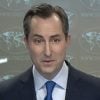
US State Department spokesperson Matthew Miller (pictured) has explained the background to Iraq's payment of its debt to Iran, despite the sanctions that are in place with regard to Iran.
At a press briefing, he was asked:
"Iraqi electricity ministry, they told the state media that Iraq has paid off all the debts for gas imports from Iran, which - about 11 trillion Iraqi dinar. How do you give Iraq a green light to pay all of this money to Iran? And were there any negotiation or a mini-deal between the U.S. and Iran to this matter?"
Mr Miller responded:
"I will just say there has been no change in our policy towards Iran or Iraq. The Biden Administration continues to implement all U.S. sanctions on Iran. Since 2018 the Department of State has provided a number of waivers - you've heard me speak to these in the past - in consultation with Congress that allow Iraq to pay for electricity imports from Iran, by transferring funds into a restricted account in Iraq.
"Consistent with U.S. sanctions, these funds can only be accessed for humanitarian and other non-sanctionable transactions. The money only goes to approved third parties. They are not transferred to Iran directly, and we the United States continue to approve transactions for the use of funds on a case-by-case basis."
(Source: US State Department)
Posted in Iraq Banking & Finance News, Iraq Industry & Trade News, Iraq Oil & Gas News, Politics Comments Off on Iraq Payment to Iran not in breach of US Sanctions

Iraq and Russia sign Visa Waiver Agreement
Posted on 04 April 2023 .
By John Lee.
The Iraqi and Russian governments have signed a draft agreement exempting diplomatic, service, and private passport holders from entry visas.
Dr. Abdul Rahman Al-Husseini, the Undersecretary for Administrative and Technical Affairs, signed on behalf of Iraq, and Russian Ambassador Elbrus Kutrashev on behalf of Russia.
According to a statement from Iraq's Ministry of Foreign Affairs, the agreement is aimed at enhancing the status of the Iraqi passport and facilitating seamless travel between the two nations.
(Source: Ministry of Foreign Affairs)
Posted in Iraq Transportation News, Politics Comments Off on Iraq and Russia sign Visa Waiver Agreement