


Iraq Agrees to reduce signature bonuses on oilfields ..... but
Posted on 15 April 2010 .
Iraq's Oil Ministry has agreed to slash signature bonuses on two oilfield development deals secured by oil companies but is turning them into unrecoverable payments rather than soft loans, an official said on Wednesday.
The signature bonus for the 8.7-billion-barrel West Qurna Phase One oilfield to be paid by Exxon Mobil and Royal Dutch Shell will be cut to $100 million from $400 million, said Sabah Abdul Kadhim, head of the legal section of the ministry's petroleum contracts and licensing directorate.
The bonus for the 4-billion-barrel Zubair oilfield won by Italy's Eni (ENI.MI) and its partners Occidental Petroleum Corp and South Korea's KOGAS will be $100 million also, compared to $300 million previously, he said.
The deals are among a series signed this year and last year that have the potential to catapult Iraq into third place from 11th among global oil producers, with its capacity possibly rivalling top producer Saudi Arabia's.
Potential capacity of 12 million barrels per day compared with 2.5 million bpd now would give Iraq the billions of dollars it needs to rebuild after years of war and economic decline.
Posted in Iraq Oil & Gas News Comments Off on Iraq Agrees to reduce signature bonuses on oilfields ..... but
Did Big Oil Win the War in Iraq?
Posted on 12 April 2010 .
12 April 2010 - AlertNet
Posted on November 14, 2009
Last week, ExxonMobil became the first U.S. oil company in 35 years to sign an oil-production contract with the government of Iraq.
Do these contracts represent a "victory" for Big Oil in Iraq? Yes, but not one as big as the companies had hoped for (at least, not yet).
Before the United States and Britain invaded Iraq in March 2003, their oil companies were shut out of oil-production contracts being negotiated by the government of Saddam Hussein. Today, more than six years of war later, Saddam is gone, and the U.S. and British oil companies are not only in on the oil contracts, they have managed to sweeten the terms.
However, organized resistance by Iraqis and people around the world has thus far succeeded in denying Big Oil its Big Prize: passage of the Iraq Oil Law, alternatively called Iraq Hydrocarbons Law, which would grant far greater control over Iraqi oil to foreign companies on terms much less favorable to Iraq than the current contracts provide.
If the negotiations proceed on their current path, foreign companies will produce the vast majority of Iraq’s oil. How much control they will exert, and who will reap the greatest benefits (and endure the steepest costs) is yet to be determined.
Before the Invasion
In January 2000, 10 days into President George W. Bush’s first term, representatives of the largest oil and energy companies joined the new administration to form the Cheney Energy Task Force. As part of its deliberations, the task force reviewed a series of lists titled "Foreign Suitors for Iraqi Oilfield Contracts" naming more than 60 companies from some 30 countries with contracts in various stages of negotiation.
None of contracts were with American nor major British companies, and none could take effect while the U.N. Security Council sanctions against Iraq remained in place. Three countries held the largest contracts: China, Russia and France -- all members of the Security Council and all in a position to advocate for the end of sanctions.
Were Saddam to remain in power and the sanctions to be removed, these contracts would take effect, and the U.S. and its closest ally would be shut out of Iraq’s great oil bonanza.
After the Invasion
The invasion of Iraq dealt handily with the problem of U.S. and British exclusion. ExxonMobil, Chevron, BP, ConocoPhillips and other major oil companies met with the Iraqi government on countless occasions, and the Iraqis tried to make deals.
But the oil companies, backed aggressively by the Bush administration, steadfastly insisted that contracts would only be signed after the Iraq Oil Law was passed. They nearly prevailed on several occasions, but organized resistance in and outside of Iraq has continually stymied the law’s passage.
Several forces have conspired to bring the oil companies to the negotiating table today.
Most recently and significantly, Iraq’s Parliament has refused to even consider the law until after the January 2010 elections. It is quite likely that a new government hostile to the interests of foreign (particularly U.S. and British) oil companies could come to power in those elections, making passage of the law much less likely. The deals being offered today would be the best the companies would be likely to get.
President Barack Obama and his administration have been vocal and active proponents of the law’s passage. However, this administration’s allegiance to the oil industry is not as steadfast as that of its predecessor.
The Obama administration’s push for passage of the law comes at the same time that it pursues withdrawal of all but a residual U.S. troop presence. It is hard to underestimate the added negotiating weight brought by 150,000 members of the U.S. (and until very recently British) military. Bush announced his most public declaration for passage of the Iraq Oil Law at the same time that he announced the surge of an additional 20,000 U.S. troops into Iraq. The pending loss of its most potent negotiating stick has clearly made the oil companies’ more willing to deal.
Secretary of State Hillary Rodham Clinton may have best put forward the administration’s position at the U.S.-Iraq Business and Investment Conference on Oct. 20, explaining: "A comprehensive hydrocarbon law is vital for regulating the [Iraq] oil sector. Parliament has delayed this vote until after January, but steps can be taken in the interim; for example, by holding transparent, credible auctions on oil and gas fields as we are seeing ..."
In other words, 'we know you want the law, but Parliament isn’t biting, and we’re not keeping 150,000 U.S. soldiers in Iraq indefinitely for you to get it. So, sign the d*** contracts.'
And finally, under immense pressure, the Iraqi Oil Ministry also has steadily been sweetening the deals.
The New Oil Contracts
The Iraq Oil Ministry began a bidding round in June for eight currently producing oil fields, which are among the largest in the world. Only one consortium -- BP and the Chinese National Petroleum Corp. -- agreed to the terms. The rest of the companies balked, saying the terms just simply were not generous enough. The terms have since been sweetened (and applied retroactively to BP and CNPC's deal), and the companies are now jumping on board.
Because the U.S. and British companies have, to a large degree, squeezed into pre-existing negotiations, some strange bedfellows have emerged to sign these new contracts, and more odd pairings are expected soon.
- BP and CNPC finalized the first new oil contract issued by Baghdad for the largest oil field in the country, the 17 billion barrel Rumaila field.
- ExxonMobil, with junior partner Royal Dutch Shell, won a bidding war against Russia’s Lukoil and junior partner ConocoPhillips for the 8.7 billion barrel West Qurna Phase 1 project.
- Italy's Eni SpA, with California’s Occidental Petroleum and the Korea Gas Corp., was awarded Iraq's Zubair oil field with estimated reserves of 4.4 billion barrels.
- Japan's Nippon Corp., leading a consortium of Japanese companies including Inpex Corp. and JGC Corp., is at an advanced stage in talks to win the Nassiriyah oil field.
- Shell, with partners CNPC and the Turkish Petroleum Corp., is also in discussions for the giant Kirkuk oil field, although negotiations have been delayed until after Iraq’s January elections.
The Terms
These contracts are complex and unique, representing a hybrid of existing models. They are not the best that the oil companies hoped for, which would have been production sharing agreements (PSAs). Nor are they the worst the companies might have feared; Iraq is not maintaining its nationalized system, closed to foreign oil company production participation (U.S. and other foreign oil companies sell Iraqi oil now and have done so for decades).
They are also not technical service contracts (TSCs), although this is what the Iraqi Oil Ministry has named them (likely in an attempt to thwart opposition to the contracts for offering too much to foreign oil companies). Greg Muttitt, an Iraq oil expert with Platform, told me, "TSCs generally last just a few years, they're generally for a specific job (e.g. installing pumps) rather than managing a field, and they go to service companies like Baker Hughes and Halliburton."
On the positive side for the companies, where the development production contracts (DPC) that Iraq was signing prior to the 2003 invasion offered 12-year contracts, today’s run for 20 to 25 years. And while as recently as a year ago the Iraqis offered the foreign companies a 50 percent ownership stake, today’s contracts offer them a 75 percent stake (25 percent for the Iraqi government).
On the other hand, where the PSAs sought under the Iraq Oil Law would give the companies an equity stake and the ability to book the oil in the fields as their own, these contracts provide reimbursement fees for capital and operational expenses and a fixed fee per barrel of oil produced and deny the companies the ability to book reserves.
It remains unclear whether the foreign companies or the Iraqi government ultimately has production decision-making authority. And some of the benefits included in the contracts would be annulled if the Iraq Oil Law were passed, including requirements to hire and train Iraqi workers and the transfer of needed technology.
Finally, the Iraqis apparently sweetened the deals further in the last few weeks by reducing the amount the foreign companies pay in taxes and allowing them to use private security forces to protect their facilities.
The Next Bidding Round
On Dec. 11 and 12, the second, much larger, bidding round will be launched in Baghdad. Forty-four international companies have been prequalified to bid on run for 11 groups of oil and gas fields in already producing and undiscovered fields. Negotiations will include the super giant Majnoon field, which Chevron and France’s Total have teamed up to bid for.
The contracts for these fields are expected to mirror those described above, but no "model contract" has been made publicly available.
Sunlight
The Iraq Oil Law has remained an elusive goal of the world’s most powerful industry and governments because a massive organized global resistance movement has been shining a bright spotlight on its content, its backers, and on the consequences of its passage.
We must continue to shine this spotlight on the new contract negotiations to help ensure that 1) the military occupation of Iraq will be able to conclude, and 2) that the Iraqis are not freed from a foreign military occupation only to be brought under foreign economic control.
Posted in Iraq Oil & Gas News Comments Off on Did Big Oil Win the War in Iraq?

Former Minister Urges New Iraqi Government to Review Oil Contracts
Posted on 06 April 2010 .
Iraq's next government should review billions of dollars' worth of contracts that have been acquired by foreign companies to develop the country's oil fields, a former Iraqi oil minister said Monday.
'I think signing this many contracts, in so short a time, at the end of the government's term, leaves any future government stuck with long-term contracts that last for 25 years,' former Iraqi oil minister Ibrahim Bahr al-Ulum told the independent daily al-Bayana al-Jadida. 'There is a need to review these contracts.'
Iraq has signed 10 contracts with 15 foreign companies, such as Shell, Exxon Mobil, France's Total and Malaysia's Petronas, to develop 10 oil fields.
The deals are part of the country's bid to breathe life into its struggling economy and energy sector.
Bahr al-Ulum said the new government and the country's financial and legal institutions should review the contracts, taking into account all objections, and then decide what is best for the country.
'There is no doubt that some of them are useful, while others should be placed within a timeframe,' he told the daily.
Current Iraqi Oil Minister Hussein al-Shahristani has said the contracts will boost Iraq's oil output to 12 million barrels per day (bpd) within six years.
Iraq relies on its current 2.5 million bpd in production for more than 90 per cent of its government revenue and about 60 per cent of its gross national product.
Posted in Iraq Oil & Gas News Comments Off on Former Minister Urges New Iraqi Government to Review Oil Contracts
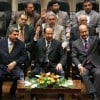
Future of Iraq's Oil Deals Uncertain
Posted on 06 April 2010 .
Now that the votes have been counted, the first big test facing Iraq’s fragile democracy is whether it can make the transition from one administration to the next without too much bloodshed or violence.
If this weekend's horrific sectarian slaughter and suicide bombings are any harbinger, things aren't looking good. But there will also come another test: whether the lucrative oil deals negotiated by the previous administration can survive the transition.
After a spectacularly successful auction of drilling rights last December, Prime Minister Nouri al-Maliki’s government spent the first few months of this year putting the finishing touches on 10 separate deals that, if implemented successfully, could see Iraq challenging Saudi Arabia as the world’s leading producer within the decade.
By any measure, these deals were the singular accomplishment of Maliki’s tenure. Oil Minister Hussain al-Shahristani earned the respect of the international oil community for driving a very hard bargain and delivering a deal that should quickly put his nation on the path to prosperity.
But in Iraq’s fevered political climate, no deal makes everyone happy, and the oil contracts could easily become a casualty as Iyad Allawi, the declared winner in last month’s election, begins the messy process of stitching together a governing coalition.
“The Maliki government did everything in their power to make sure those contracts would survive. They fast-forwarded the effective date of many of the contracts ... [and] they also had the contracts ratified by the Council of Ministers very quickly. Whether these actions are enough will be the main question,” said Thomas Donovan, an attorney with the Iraq Law Alliance, who has followed the process closely.
“My sense is that they will survive the challenge, and that they will last throughout the next transitional government and any government thereafter,” he said.
That is what some of the world’s largest oil companies — Exxon Mobil, BP, Royal Dutch Shell, Russia’s Lukoil and others — are banking on as they bet billions on Iraq’s ability to provide a politically stable and physically secure environment for them to go about their business.
And it is a gamble, says Giacomo Luciani, an oil industry scholar at the Gulf Research Center in Geneva.
“At the moment, we don’t know what’s going to happen. But we do know that the oil contracts are the main source of power, the main source of money, the main source of everything in Iraq,” Luciani said.
“We have to see what kind of coalition emerges and whether it finds it tactically convenient to raise objections to the oil deals,” he said.
Iraq nationalized oil production in 1961, and thereafter the notion of keeping Iraq’s oil under Iraqi control has played well for nationalist politicians from Saddam Hussein to today’s crop of Sunni and Shiite rivals. The reality, however, is that the dilapidation of Iraq’s oil fields that resulted from years of war and sanctions can only be repaired by a massive influx of capital and technology from international oil companies.
And Shahristani, the oil minister, can hardly be accused of giving away the store when he auctioned off the rights to develop some of Iraq’s prize oil patches. The successful bidders signed 20-year service contracts that will pay them a relatively modest per-barrel fee for each barrel they produce above an agreed minimum.
“He [Shahristani] obtained a very good deal for Iraq, but that doesn’t mean the deal will be confirmed. You are assuming that everyone is pursuing Iraq’s national interest, and that might not be the case,” said Luciani.
“In principle, I don’t think there’s a prejudice against foreign companies’ involvement. But one can see how it becomes part of someone’s political agenda,” he said.
Another major worry is security. With the U.S. planning to reduce the number of troops in Iraq to 50,000 by the end of August, and to effect a complete withdrawal by the end of 2011, providing security for the oil companies will fall to the Iraqis.
The worry was highlighted two weeks ago when authorities in oil-rich Basra province found a small weapons cache and a note threatening foreign oil companies. The incident appeared to be more theater than threat, but security experts admit it is hard to gauge the level of grassroots mistrust of foreign oil companies and how this might be exploited by those wishing to destabilize the government.
Much will depend on the new government and its choice of oil minister, said Ben Lando, editor of the influential Iraq Oil Report.
Although Allawi, a former interim prime minister, has been declared the winner in the March 7 election, it is not clear if he will be able to pull together enough allies to form a governing coalition. Even less certain is who will get the job as oil minister.
Shahristani, a former nuclear scientist who spent time in Saddam’s prisons, is widely respected in oil circles and could be asked to stay on, no matter who leads the next government.
“Shahristani is definitely not out of contention, though any coalition with the Kurds involved drastically reduces his chances to the point of elimination.” said Lando.
That’s because of the ongoing dispute over control of reserves in the semi-autonomous Kurdish region. Shahristani has antagonized the Kurds by refusing to recognize the contracts signed by nearly two dozen foreign oil companies with the Kurdistan Regional Government.
Others who might be considered for the oil post include Thamir Ghadhban and Ibrahim Bahr al-Uloom. Both held the job previously and are known in the oil community.
Even the wily Ahmad Chalabi’s name has been mentioned. Chalalbi, famous for providing the Bush administration with dubious intelligence about Saddam’s weapons of mass destruction, served as interim oil minister for a few weeks in 2005. He is also Allawi’s cousin, although in their case blood does not appear to be thicker than oil.
Posted in Iraq Oil & Gas News Comments Off on Future of Iraq's Oil Deals Uncertain
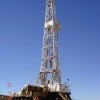
BP Awards $500mn Oil Services Contracts in Iraq
Posted on 30 March 2010 .
BP and partner CNPC have awarded $500 million in drilling contracts to raise production from the giant Rumaila oil field, the largest in Iraq and the first to be handed to international oil companies in the recent licensing rounds. This is a first step in Iraq’s partnership with IOC’s to revive the country's energy industry. If successful, the effort at Rumaila and other fields within 50 miles of Basra could be the largest expansions of crude-oil production ever achieved anywhere. Increased Iraq production would also have significant impacts globally on poverty, food security and economic stability. Chinese demand alone will raise the oil price to triple figures without it. (Current oil prices are $82/83 barrel.)
"It makes commercial sense for us to increase production as quickly as we can," said Toby Odone, a BP spokesman. Abdul Mahdy al-Ameedi, a senior official in the oil ministry announced that BP and the South Oil Co. had contracted three players in the already burgeoning Iraq international oil services market to drill 49 wells. China's Daqing Oil Field Company, Weatherford who have maintained a low profile presence in Iraq, and the state Iraq Drilling Co (IDC) with Schlumberger. BP plans to increase production at Rumaila from 1.07 million barrels a day to 1.23 million barrels within 12 months.
The contracts are the first and signal what is expected to be a significant flow of oil-field-services related work let by BP, Exxon, Eni, Lukoil OAO, Shell and China National Petroleum Company.
Some energy analysts estimate that production rises of the scale mooted would imply over $100bn of work being let. Without an infrastructure and services base though, Iraq will struggle unless a significant wave of international oilfield services sector companies quickly participate. The development of so many enormous projects requires water, power, pipes and pump suppliers, NDT testing, logistics companies and a huge range of related corporate establish a presence in Basra region. The local labour market will struggle to respond, and general construction needs are likely to far outpace anything seen in the middle east in recent years – as ports, roads, secure storage depots, camps, water desalination and waste water, oil and gas export facilities, are all needed.
Adrian Green, Partner at Upper Quartile, investment and economic development specialists said “Most of this business is clustered within 50 miles of Basra. Being proactive in entering this market now will reap rewards as the Iraqi’s and IOC’s look for credible partners who can demonstrate their grasp of the market. Some of those already in Basra are lining up significant contracts.”
"It could change the map of oil," says Paolo Scaroni, chief executive of Italy's Eni SpA, which is preparing to begin work on the giant Zubair field. (Quoted in the Wall Street Journal).
Upper Quartile and partners G4S are planning a trade mission to Basra next month, and a further mission in June.
Posted in Iraq Oil & Gas News 2 Comments
Oil cartel fears losing control over supply as Iraqi output hits 20-year high
Posted on 22 March 2010 .
OPEC fears that its grip on the global supply of oil is being threatened by the rising output of Iraq's oilfields and the prospect of billions of dollars of multinational investment in the world's leading untapped oil resource.
Iraqi oil exports in February were at their highest in 20 years, at an average of 2.08 million barrels per day, and the country plans to lift that to 2.15mbpd for the rest of the year.
According to the International Energy Agency, oil output from the country’s ageing infrastructure rose by 115,000bpd to 2.54m - the biggest single contributor last month to world oil-supply growth.
Moreover, Iraq is starting to worry OPEC, whose members meet on Wednesday in Vienna to review production quotas.
The relatively peaceful conduct of the Iraqi election and the signing of a clutch of contracts with foreign multinational companies, including BP, Shell and ExxonMobil, raises the prospect of a surge in Iraqi oil output over the next few years.
OPEC is expected to agree to maintain its official output at existing levels, but behind the scenes there is concern. Iraq has been suspended from the operation of OPEC quotas since 2003 amid war and civil and political chaos, but the cartel now needs to bring its wayward child back into the fold.
“There is only one issue, but it’s a tsunami: Iraq,” Leo Drollas, of the Centre for Global Energy Studies, said. With enough investment, the country has the potential to double or even triple its production. “If (Iraq) enjoys a period of stability, it could have a major destabilising effect on OPEC and the oil price.”
A continuing rise in Iraqi output, just when the IEA is predicting nil growth in demand from Western oil consumers, would not be welcomed by OPEC members.
The cartel believes that high oil prices are here to stay and many members, including the hawkish nations of Iran and Venezuela, need the present price of $US70 to $US80 per barrel to bolster flagging economies and social-support systems.
Posted in Iraq Oil & Gas News Comments Off on Oil cartel fears losing control over supply as Iraqi output hits 20-year high
Turkey Says Pipeline Agreement Will Be Renewed
Posted on 17 March 2010 .
Turkey's energy and natural resources minister said that the crude oil pipeline agreement would be renewed with Iraq.
Speaking at the 9th International Oil and Gas Conference at Ankara's Sheraton Hotel, Taner Yıldız said, "there are big and significant natural gas and oil reserves in east of Turkey. Turkey shapes its energy policies and diplomacy by taking into consideration them. Projects for transportation of resources from the eastern countries to the western countries such as Nabucco and Turkey-Greece-Italy Natural Gas Pipeline have an important impact on our energy policies."
"The agreement about Kirkuk-Yumurtalik raw oil pipeline expired in March. We will sign a 15-20 year agreement with Iraq soon to renew the deal," he said.
Yıldız said that USA's Exxon Mobil Corp. and Brazil's Petrobras had joined a consortium with Turkish Petroleum Corporation (TPAO) to find oil in the Black Sea. "We attach great importance to this project," he said.
Posted in Iraq Oil & Gas News Comments Off on Turkey Says Pipeline Agreement Will Be Renewed
Petrofac Targets Iraq Oil after Asfari Quadruples Share Value
Posted on 14 March 2010 .
Bloomberg - 12 March
Ayman Asfari, the chief executive officer whose oil and gas engineering skills guided a fourfold increase in the value of Petrofac Plc within five years, is now preparing to tap Iraq’s energy boom.
Iraq, with estimated reserves of 115 billion barrels of oil, the world’s third-largest, is set to ramp up production as companies including BP Plc, Royal Dutch Shell Plc and Exxon Mobil Corp. spend as much as $100 billion to develop fields awarded in contracts last year. A good chunk of that will go to contractors including Petrofac and larger U.S. rivals Baker Hughes Inc. and Halliburton Co.
“He’s passionate about his business model, which is about being a low-cost provider of quality engineering;” said Barclays Capital analyst Mick Pickup, who worked with Asfari on Petrofac’s initial public offering as a consultant at Lehman Brothers Holdings Inc. “Iraq is the billion dollar question. Ultimately, there will be the whole infrastructure to build there. It will be big.”
“We see Iraq as a growth market,” Asfari, 51, said in an interview from the company’s London headquarters. “This is a natural place for our expansion. We’re working in Kuwait, Saudi Arabia and Syria, and it’s very easy for us to step out across the border.”
The largest U.K. oil and gas services company reached a record in London this week after it announced the spinoff of North Sea fields it owns into a new company. The shares may outperform peers because the company has kept costs under control and is positioned to win work in Iraq, investors and analysts said.
Posted in Iraq Oil & Gas News 1 Comment
ExxonMobil Plans 4% Spending Boost
Posted on 12 March 2010 .
US super major ExxonMobil will increase its capital spending by nearly 4% this year to $28 billion as it evaluates new fields around the world, but it cautioned that the global economy remained unsteady.
ExxonMobil, the world's largest publicly traded oil company, also said it had completed initial tests at Iraq's West Qurna field, where it won a 60% stake in the field that is estimated to have 8.7 billion barrels of reserves. It gave no additional details.
The oil giant, who is expected to close on a planned purchase of US natural gas producer XTO Energy later this year, stuck to its range of capital spending between $25 billion and $30 billion through 2014, reported Reuters.
"Our capital spending plans have largely been unaffected by the global recession," chief executive Rex Tillerson told analysts at a presentation at the New York Stock Exchange.
"We plan and execute on the basis that ours is truly a long-term business."
ExxonMobil's shares rose 0.3% to $67.39 in early trading on the New York Stock Exchange
(Upstreamonline.com)
Posted in Iraq Oil & Gas News Comments Off on ExxonMobil Plans 4% Spending Boost
DNO Seeks Growth outside Iraq
Posted on 23 February 2010 .
DNO International ASA, the first foreign company to pump oil in Iraq since the 1970s, may invest outside the war-torn country as the regional Kurdish authority and Baghdad officials argue over export payments.
“It’s important for us to look for opportunities in other areas, to have a more diversified portfolio,” Chief Executive Officer Helge Eide said in an interview in Oslo. “We’re looking at eastern Africa, northern Africa and the Middle East onshore. That’s where we have been focusing our new venture activity, with Tunisia being the first opportunity.”
The company last week reported a larger-than-expected loss in the fourth quarter, ending a second year of losses, and revised sales figures after an estimated $133 million in Iraqi revenue failed to materialize. It has spent at least $350 million developing Iraqi assets after signing a production sharing agreement with the Kurdish Regional Government, or KRG, in 2004.
Oman, Egypt
Difficulties in the Kurdish region coincide with efforts from the Baghdad government to develop the world’s third-largest oil reserves and raise capacity fivefold to 12 million barrels a day in the next six years. Companies such as Exxon Mobil Corp., BP Plc and Royal Dutch Shell Plc have signed contracts after two licensing rounds last year.
DNO entered the Middle East in 1998 in Yemen before moving into Iraq after the U.S-led invasion to topple Saddam Hussein. It last year signed a preliminary agreement for a 50 percent interest in an exploration permit in Tunisia with Audax Resources Ltd. The company is also looking at Oman and Egypt, Eide said.
Production was 7,600 barrels a day of oil in Yemen in the fourth quarter, and about 5,900 barrels a day for the local market in Iraq. Before exports were suspended, it produced 31,000 barrels a day for exports from Iraq in the third quarter.
The company plans to invest a total of 360 million kroner ($61 million) this year, which doesn’t include expected payments for Iraq exports. Should exports resume and the payment issue be solved, it will consider making acquisitions outside Iraq, Eide said. We’d “accelerate some of our planned projects and be more active with regards to new ventures in terms of finding new assets in other countries, to be more diversified,” he said.
‘Bumpy Ride’
DNO has “had a bumpy ride” in Iraq, Eide said. It waited two years to get an export permit after starting output. Its operations were temporarily shut by the KRG three months later after the Oslo Stock Exchange forced the disclosure of the authority’s role in arranging a sale of treasury shares in 2008 when DNO needed money. DNO is also fending off a $144 million compensation claim from undisclosed parties that held stakes in its assets at the London Court of International Arbitration.
“If the court rules in favor of the claimants it leaves DNO with very, very, very little cash,” said Trond Omdal, an analyst at Arctic Securities in Oslo, who has a “buy” rating.
DNO and companies such as Addax Petroleum Corp. signed agreements with the Kurdish authorities, which are disputed by the Baghdad government. Revenue was passed to the State Oil Marketing Organization and deposited at the central treasury.
‘Very Soon’
The KRG proposed in January that it allocate part of the sales or that Baghdad compensate the companies directly. Iraq Oil Minister Hussain al-Shahristani said on Feb. 9 that a Kurdish proposal was accepted, without providing details. KRG Prime Minister Barham Saleh said Feb. 15 that exports would start “very soon.”
DNO hasn’t received notification on exports or what payment system will be introduced, Eide said. The company operates three licenses in the area, including the producing Tawke field.
“We hope to retain the terms of the revised contracts signed in 2008,” he said. “We will in the first stage receive 60 percent of revenues from Tawke until we’ve reached a certain level of cost recovery and then we go into standard” terms for both local sales and exports, he said.
Getting payments is crucial for DNO’s expansion to improve its finances. At the end of 2009 it had about 300 million kroner in cash and 478 million kroner in financial assets for sale, including a 12 percent stake in Det Norske Oljeselskap ASA. Eide said they “are continuously monitoring” the bond market where they last raised money in 2007.
Few Bets
“It seems relatively sensible of them to make a few bets in areas that are geologically similar to Yemen, like Tunisia, given that they have the financial capacity to do so,” said Omdal. “There’s a limit to how much further they can go in Iraq, unless they consolidate with some of the other actors.”
The company has also become a target along with other explorers operating in the Kurdish area. China Petrochemical Corp., China’s second-largest oil company, agreed to buy Addax for $7.9 billion in August. A combination between Heritage Oil Ltd. and Genel Energy International Ltd. fell through because of the payment dispute.
Interest in the region has waned since the initial surge in June at the start of crude exports, Eide said.
RAK Petroleum, a closely held oil explorer from the United Arab Emirates, raised its stake in DNO to 10 percent in December. DNO last year rebuffed a RAK offer for its treasury shares. RAK, which is expanding in Oman, has operations and areas of focus that overlap with DNO, Finance Director Pierre Henri Boutry said in an interview last week.
“We’ve only considered them a shareholder, at least until now,” Eide said. “But we are prepared to work with any companies, even if they are shareholders, if they have interesting assets.”
By Marianne Stigset
(Bloomberg)
Posted in Iraq Oil & Gas News Comments Off on DNO Seeks Growth outside Iraq