


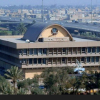
Iraq may Change Oil Pricing Benchmark for Asia
Posted on 24 August 2017 .
By John Lee.
Iraq is considering changing its price benchmark for Basra crude oil sales to Asia.
From January, the State Oil Marketing Organization (SOMO) proposes to price relative to Dubai Mercantile Exchange (DME) Oman futures, rather than the average of Platts’ Oman-Dubai quotes.
According to a report from Reuters, this would mark a significant change away from fellow OPEC members Saudi Arabia, Kuwait and Iran, which have been using S&P Global Platts as their benchmark for decades.
SOMO has asked customers to submit their opinions on the plan by the end of August.
(Source: Reuters)
Posted in Iraq Oil & Gas News Comments Off on Iraq may Change Oil Pricing Benchmark for Asia

Saudi Arabia to reopen Iraq Border after 27 years
Posted on 17 August 2017 .
By John Lee.
Saudi Arabia is reportedly planning to re-open the Arar [Ar'ar] border crossing with Iraq for the first time since 1990.
Sohaib al-Rawi, the governor of Anbar province, is quoted as saying that the Iraqi government had deployed troops to protect the desert route leading to Arar and called its opening a "significant move" to boost ties.
The border was closed after the two countries cut ties following Saddam Hussein's invasion of Kuwait.
(Sources: Al Jazeera, Reuters, Rudaw)
Posted in Iraq Industry & Trade News, Iraq Transportation News, Politics, Security Comments Off on Saudi Arabia to reopen Iraq Border after 27 years
Saudi Prince "asked for Iraq's Mediation for ties with Iran"
Posted on 16 August 2017 .
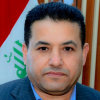
Iraqi Interior Minister Qasim al-Araji (pictured) has said that Saudi Prince Mohammad bin-Salman has "officially asked Iraq to act as a mediator between Tehran and Riyadh to reduce tensions."
According to a news agency report, Al-Araji made the remarks at a joint press conference with his Iranian counterpart Abdolreza Rahmani-Fazli in Tehran.
Referring to his recent visit to Saudi Arabia and meeting with the Saudi prince, Al-Araji said:
"Mohammad bin-Salman requested me officially for Iraq's mediation between Iran and Saudi Arabia to reduce tensions. Before, Malik Salman had made such a request too. I told them that they should treat Iranian pilgrims with respect and the best possible way and allow them to visit Al-Baqi' cemetery.
"The Saudi party gave some promises with this regard, and now Iranian pilgrims can visit the cemetery. We believe that relations between Iran and Saudi Arabia can held establishing security in the region".
(Source: GardaWorld)
(Picture credit: Mohsen Ahmed Alkhafaji)
Posted in Politics, Security Comments Off on Saudi Prince "asked for Iraq's Mediation for ties with Iran"

Call to Reopen Iraq-Saudi Pipeline
Posted on 12 August 2017 .
Reuters reports that a former Iraqi oil minister said it was necessary for Iraq to regain the Iraqi Pipeline in Saudi Arabia (IPSA), which has not carried Iraqi crude since Saddam Hussein invaded Kuwait in 1990, and which was confiscated by Saudi Arabia in 2001 as compensation for debts owed by Baghdad.
Bahr Al Olum, who is currently a member of parliament, said he has discussed the issue with Saudi side expected that Riyadh would have a more "positive response" given an improved political environment between the two countries.
(Source: Reuters)
(Picture: Haider Al-Abadi meets King of Saudi Arabia, Salman bin Abdulaziz Al Saud, 19th June 2017)
Posted in Iraq Oil & Gas News Comments Off on Call to Reopen Iraq-Saudi Pipeline
Why an Iraqi Town, in Middle of the Desert, has no Cafes
Posted on 12 August 2017 .
This article was originally published by Niqash. Any opinions expressed are those of the author, and do not necessarily reflect the views of Iraq Business News.
In the small desert area of Busaya, Iraqis of different sects have lived together peacefully for decades. Locals pride themselves on their hospitality and unity.
Up until recently not many outsiders really knew much about the southern Iraqi sub-district of Busaya.
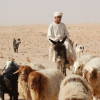
In the middle of the desert and close to the border of Saudi Arabia, the area tends to be Bedouin in nature, closer to the culture of the nomadic Arabs of the Gulf States than many other Iraqis. It recently came to public attention because a group of Qatari hunters in the area for sport, were abducted in 2015. The hunting party, which apparently included members of the Qatari royal family, was released in April 2017.
The area is well known as a stop for migrating birds from Europe and hunters commonly come here, to seek out birds and hares.
Most of the around 2,200 people here are either dependent on their own livestock or the Iraqi government for jobs. And around three-quarters of them are Sunni Muslims. Yet somehow, they still elected Shiite Muslims to their local government. Locals say that they don’t let what is going on elsewhere in Iraq affect local relationships.
Around another 5,000 locals, many of whom speak with an accent that sounds more Gulf States than Iraq, are nomadic. And the area is so well known for its hospitality that there are no cafes or restaurants here. Visitors to the district are always invited to eat at locals’ homes, another Bedouin tradition.
Posted in Security Comments Off on Why an Iraqi Town, in Middle of the Desert, has no Cafes

New UK Ambassador to Iraq
Posted on 27 July 2017 .
By John Lee.
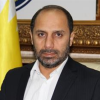
Mr Jon Wilks CMG (pictured) has been appointed Her Majesty’s Ambassador to the Republic of Iraq in succession to Mr Frank Baker OBE.
Mr Wilks, who currently serves as Her Majesty’s Ambassador to Muscat, will take up his appointment in November 2017.
He has previously served in diplomatic roles in Baghdad, in addition to Syria, Saudi Arabia and the United Arab Emirates (UAE).
(Source: UK FCO)
Posted in Investment, Iraq Banking & Finance News, Iraq Industry & Trade News, Politics, Security Comments Off on New UK Ambassador to Iraq
Kurdistan to Export Potatoes to Russia
Posted on 13 July 2017 .
By John Lee.
The Kurdistan Region of Iraq is to export potatoes to Russia.
According to a report from Basnews, production has exceeded demand, allowing 500 tons of the product will be exported to Russia this year.
Speaking at the opening of a factory to produce fried potato chips, the KRG's Minister for Agriculture, Abdulsattar Majid [Abdulstar Majeed], said some of the surplus has also been sold to Saudi Arabia and other neighbouring countries.
(Source: Basnews)
Posted in Agriculture Comments Off on Kurdistan to Export Potatoes to Russia

Kurdistan Referendum puts Iran at Crossroads
Posted on 11 July 2017 .
By Fazel Hawramy for Al-Monitor. Any opinions expressed are those of the author, and do not necessarily reflect the views of Iraq Business News.
As Iraqi Kurds try to iron out internal differences ahead of their referendum on independence in September, Turkey, Iraq and Iran have all announced their opposition, questioning the timing and fearing the implications of such a move at a time when regional rivalries are at their peak.
"The Islamic Republic of Iran opposes some murmurs about holding a referendum in order to separate one part of Iraq," said Iranian Supreme Leader Ayatollah Ali Khamenei in a meeting with visiting Iraqi Prime Minister Haider al-Abadi in June, adding that Iraq "should stay unified."
While Turkey and Iraq's opposition is understandable to an extent, Iran's long involvement as well as cultural and historical ties with Iraqi Kurds raises serious questions about the motives for its opposition to the upcoming referendum.
The political parties in Iraqi Kurdistan have all made it clear that their ultimate aim is an independent Kurdistan, but they differ on the approach, meaning that the issue of independence is a matter of “when” rather than “if.” The Iranians are perhaps more aware of this than any other actor.
There are over 13 million Kurds on both sides of the Iran-Iraq border. Whether under the shah or the Islamic Republic, Iran has been the only country that has had an overall cordial relationship with Iraqi Kurds, be it secular, Marxist or Islamic parties. The shah and the ayatollahs both adopted the strategy of engaging enemies outside Iran’s borders. In Iraq, this has entailed weakening successive Iraqi regimes by partly using the Kurds as a proxy force.
Indeed, repression from Baghdad combined with Tehran’s assistance to the Kurds greatly contributed to Iraq almost always being at war with a quarter of its population. For instance, the Kirkuk oilfields were attacked by peshmerga, both during the shah’s reign in the late 1960s and the ayatollahs in the 1980s. Nonetheless, ironically, while Iran has been wary of Kurdish aspirations for independence, its continuous support for the peshmerga in past decades has ensured that the desire for independence continued burning amongst Kurdish fighters — and their leadership.
Posted in Iraq Oil & Gas News, Politics, Security Comments Off on Kurdistan Referendum puts Iran at Crossroads
Iraq Britain Business Council welcomes 7 New Members
Posted on 06 July 2017 .
The Iraq Britain Business Council (IBBC) has announced that several new companies have joined the Iraq Britain Business Council in 2017, each of which are underpinned by strong reputations for innovation, reliability and a commitment to investing in Iraq.
Al Ratba’a Contracting Company, Al-Burhan Group, Iraq Star Group, Serco, Shamara Holding, Cresent and Rolls Royce join 52 other world- and region-leading companies that form IBBC’s Council of Members.
Al Ratba’a Contracting Company is based in Basra, Iraq, and provides high quality services with improved construction systems and processes, and innovation in accordance with the regulations and international standards to satisfy its customers. Al Ratba’a has 16 years of experience doing business in Iraq, with its headquarters based in Basrah and offices in Baghdad, employing over 800 international and Iraqi staff. Its network of clients and partners includes many international and national firms working across the country in numerous industrial sectors. Al Ratba’a has 12 years of experience working in the Oil & Gas sector, with base camps located in all major Oil fields in Southern Iraq. Its services span a wide range of associated activities across the Oil & Gas industry. For more information visit: http://intraq8.com/al-ratbaa-company/
Al-Burhan Group is a conglomerate based in Iraq and is actively involved in key projects across the country focusing on consultation, construction, equipment and machinery supply, milling, security assistance, hospitality services and transportation. Al Burhan Group is considered an “A” grade company making them one of the top companies in Iraq that is licensed and that has the ability to conduct large scale projects. Al Burhan Group has received numerous awards over the years, two of which being for Reliability and Quality of Service. For more information visit: www.alburhangroup.com
Cresent is Control of Work and Health and Safety specialists, with over 30 years’ experience working in hazardous industries around the world. Cresent’s scope extends across a wide range of facilities on and offshore. Since 2012 Cresent has been working with clients in Iraq, and has been helping make Iraq’s oil fields safer by producing numerous safety training packages in Arabic and English, delivering training to more than 80,000 people in Iraq, coaching 100 Iraqi Safety Trainers and providing work clothing, posters, booklets, campaigns and other information for people at the Rumaila and the West Qurna Oil Fields. For more information visit: www.cresent.co.uk
Iraq Star Group is a leading provider of armed security solutions for international clients across Iraq. The company is 100% Iraqi owned and based in the southern city of Basra. Iraq Star Group has decades of experience in the provision of complex security solutions and is an approved provider to the largest International Oil and Gas companies operating in Iraq. For more information visit: www.iraq-star137.com
Posted in Construction & Engineering In Iraq, Investment, Iraq Industry & Trade News, Iraq Oil & Gas News, Security Comments Off on Iraq Britain Business Council welcomes 7 New Members
Abadi: Qatari 'Ransom' Money with Us, not Armed Groups
Posted on 15 June 2017 .
From Al Jazeera. Any opinions expressed are those of the authors, and do not necessarily reflect the views of Iraq Business News.
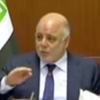
Iraq's prime minister has rejected Saudi and UAE media claims that a $500m ransom was paid by Qatar to Shia Muslim armed groups in Iraq to secure the release of 26 kidnapped Qatari hunters.
Haider al-Abadi said that money was received by the Iraqi government but the sum was still in the Iraqi central bank.
Al Jazeera's Alan Fisher reports:
Posted in Politics, Security Comments Off on Abadi: Qatari 'Ransom' Money with Us, not Armed Groups