Custom Search

20250915163707

IFC in Iraq announces $1bn in New Investments

IFC Marks 20 Years of Partnerships for Impact in Iraq, Announces $1bn in New Investments

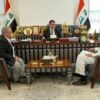
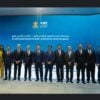
The International Finance Corporation (IFC), a member of the World Bank Group, held an IFC Partnerships Day in Baghdad on Saturday, under the patronage of His Excellency Mr. Mohammed Shia' al-Sudani, Prime Minister of Iraq, to mark two decades of impact in the country and announce $1 billion in new investments and engagements in energy, infrastructure, agribusiness, and finance, underscoring IFC's long-term commitment to the country's private sector.

 "We congratulate Iraq and the Iraqis for signing these important agreements today with IFC, one of the most important and prestigious institutions in the financial advisory and investment space. Iraq is ready to embrace Arab and foreign partnerships like these ones," said H.E. Mohammed Shia' al-Sudani, Prime Minister of the Republic of Iraq.

Since 2005, IFC has invested and mobilized more than $2.5 billion for projects in Iraq. These investments have created over 28,000 jobs-including 5,000 for women-by strengthening infrastructure, expanding access to finance, supporting manufacturing, and enhancing food security.

During the same period, IFC has backed Iraq's economic diversification through landmark transport and energy projects. IFC has also helped advance sustainable finance in partnership with the Central Bank of Iraq (CBI), the Iraq Stock Exchange, local banks, and finance institutions, supporting small and medium enterprises. In addition, IFC is currently serving as lead advisor on Iraq's first airport PPP, paving the way to the modernization of the nation's gateway.

The event, which was attended by H.E. Prime Minister Mohammed Shia' al-Sudani alongside senior government officials, private sector leaders, and development partners, included the launch of several new partnerships which will tap into the resilience of Iraq's private sector and foster sustainable growth.

"Iraq's private sector is agile, resilient, and capable of driving sustainable growth," said K. Aftab Ahmed, IFC Director for the Middie East, Pakistan and Afghanistan. "Over the past twenty years, IFC has stepped up to support the country, bringing not only its financing and global expertise but also mobilizing international capital to realize local priorities. Today, we mark a new chapter in our partnership, aiming to support strategic sectors that align with Iraq's Vision 2030."

IFC's new partnerships will aim to:

  • Enhance energy access and reduce emissions: IFC has been mandated by Basrah Gas Company (BGC) to lead, arrange, and syndicate a second loan of up to $500 million. Building on the first financing package led by IFC in 2021, this new investment, once committed, is expected to further advance one of the world's largest gas flaring reduction projects, capturing gas for energy use and significantly reducing emissions.
  • Strengthen infrastructure: IFC partnered with Aloreen Company for Investment with the aim to invest $120 million to support new equipment for container handling and expand yard capacity in Iraq's Umm Qasr Port. The project is being developed in collaboration with Terminal Investment Limited Holding, a subsidiary of Mediterranean Shipping Company (MSC), bringing international expertise to strengthen Iraq's trade gateway.
  • Promote manufacturing: IFC partnered with Nomu Holding, a subsidiary of Iraq's Al-Maysarah Group and Saudi-based Al Muhaidib Group, with the aim to invest $200 million to strengthen Iraq's construction materials industry. The project will help modernize industrial operations, promote decarbonization, and build local workforce skills.
  • Expand housing and retail: IFC partnered with Hiwa Rauf for Investment and Development with the aim to provide $65 million to support the establishment of Iraq's first certified sustainable mixed-use real estate project in Sulaymaniyah in the Kurdistan Region of Iraq. The initiative will help promote sustainable urban infrastructure, address residential supply gaps, attract private investment, and generate jobs in construction and services.
  • Bolster food security: IFC partnered with Tiryaki Agro to jointly conduct a feasibility study which will aim to reduce reliance on grain imports by building the capacity of local farmers in sustainable modern farming practices. The study will assess the viability of sustainable agricultural infrastructure, modern storage, and renewable energy integration, with an initial focus on wheat.
  • Advance healthcare infrastructure: IFC partnered with Ruban [Raban] Al Safina to jointly develop a feasibility study for a 200+ bed teaching hospital within the American University of Iraq in Baghdad (AUIB) with the aim to strengthen the country's healthcare system, develop human capital, and enhance access to high-quality clinical services.
  • Boost trade: IFC partnered with the Bank of Baghdad to extend a $10 million trade finance line through its Global Trade Finance Program (GTFP). This will allow the Bank of Baghdad to join a global network of banks to support cross-border trade and increase access to essential goods.
  • Increase access to finance for smaller businesses: IFC partnered with the First Finance Company (FFC) with the aim to unlock new opportunities for Iraq's Micro, Small, and Medium Enterprises (MSMEs) by better understanding the market and identifying strategic areas of focus.

(Source: IFC)

Posted in Construction & Engineering In Iraq, Investment, Iraq Banking & Finance News, Iraq Industry & Trade News Comments Off on IFC in Iraq announces $1bn in New Investments

20250826184327

Zain Expands Business Accelerator to Iraq

By John Lee.

Zain Group has announced the regional expansion of its flagship startup accelerator, Zain Great Idea (ZGI 2025), now open to innovators in Kuwait, Bahrain, Iraq, Jordan, Saudi Arabia, and UAE. The program is powered by Zain Ventures, the Group's venture capital arm, and ZainTECH, its digital solutions enterprise.

For the first time in ZGI's 15-year history, startups across the region can access mentorship, capital, and global exposure, including a two-week program in Silicon Valley. The initiative supports early-stage projects in sectors such as fintech, e-commerce, AI, edtech, and other emerging technologies.

Program Highlights:

  • Open registration for startups until 20 September 2025.
  • Intensive mentorship, workshops, and pitch training.
  • Selection of up to 15 startups to attend Silicon Valley's International Accelerator.
  • Continued mentorship post-Silicon Valley and technical support via ZainTECH.
  • Demo Day for startups to present growth and investment opportunities to regional venture capitalists.

According to a press release, ZGI has a proven legacy in Kuwait, up-skilling over 7,000 entrepreneurs, supporting 450 startups, and facilitating USD 135 million in funds raised from regional investors over the past five years. The 2025 expansion underscores Zain's commitment to fostering regional innovation, job creation, and a thriving entrepreneurial ecosystem.

Click here for more details.

(Source: Zain Group)

Posted in Iraq Industry & Trade News Comments Off on Zain Expands Business Accelerator to Iraq
20250821224259

SPARCO Engineering Explores Investment Opportunities in Iraq

By John Lee.

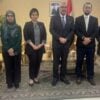
The Chargé d'Affaires a.i. of the Embassy of the Republic of Iraq in Kuala Lumpur, Counselor Ahmed Ghanim Abduljabbar, has met with the leadership of SPARCO Engineering SDN BHD at the Embassy's headquarters.

Executive Director Raja Ariff and Managing Director Sumasni Sulaiman expressed the company's intention to launch commercial and investment activities in Iraq, particularly in oil, gas, petrochemicals, and agricultural fertilizers. They cited Iraq's improving investment climate, with growing competition among international companies to establish operations. SPARCO already has a significant presence in Saudi Arabia and Indonesia in related sectors.

The Chargé d'Affaires confirmed the Embassy's readiness to facilitate cooperation with Malaysian institutions and companies, noting Iraq's economic growth under government development plans and the country's openness to foreign investment in infrastructure, energy, and public services. He also encouraged Malaysian participation in exhibitions and conferences across Iraq as a way to deepen economic ties.

The meeting concluded with an exchange of commemorative gifts and agreement to maintain regular engagement to advance bilateral cooperation.

(Source: Iraqi Ministry of Foreign Affairs)

Posted in Investment, Iraq Oil & Gas News Comments Off on SPARCO Engineering Explores Investment Opportunities in Iraq
20250820230800

Iraq, Ooredoo Discuss Submarine Cable Projects

By John Lee.

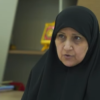
Iraq's Minister of Communications, Dr. Hiyam Al-Yasiri (pictured), has met with Ooredoo of Qatar to discuss joint projects aimed at strengthening Iraq's role as a regional and international data hub.

Talks focused on implementing bilateral agreements to route communications traffic via the FIG submarine cable landing station in Al-Faw, managed by Ooredoo, and through border crossings at Safwan (Kuwait) and Arar (Saudi Arabia), extending to Ibrahim Al-Khalil and Faysh Khabur (Turkey) and onwards to Europe.

The Minister and Ooredoo's technical delegation also discussed expanding transit capacity into Iraq and marketing it to local internet service providers (ISPs) through the infrastructure of the General Company for Communications and Informatics.

The move is expected to improve service quality, reduce prices, and leverage Iraq's strategic geographical position as a key link between Gulf states and global networks.

(Source: Ministry of Communications)

Posted in Iraqi Communications News Comments Off on Iraq, Ooredoo Discuss Submarine Cable Projects

20250808140039

Seismic Survey Contract Signed for Al-Qarnain Exploration Block

By John Lee.

Iraq's state-owned Oil Exploration Company and Al-Qarnain Petroleum, a subsidiary of China's ZhenHua Oil, have signed a contract for a two-dimensional seismic survey of the Al-Qarnain (Al-Quraynan) exploration block.

Minister of Oil, Hayan Abdul Ghani, described the block as a promising oil and gas prospect on Iraq's border with Saudi Arabia. According to a press release from the Ministry, ZhenHua secured the rights to develop it under Iraq's fifth supplementary licensing round and will drill four exploration wells; Iraq Business News understands that the rights were granted in the sixth licensing round.

The block falls under the remit of the Midland Oil Company, which has been tasked with following up on the contract's implementation.

Deputy Minister for Extraction Affairs, Bassem Mohammed Khudair, said the deal reflects the Ministry's strategy of supporting national companies, particularly the Oil Exploration Company, in conducting two- and three-dimensional surveys and preparing field studies.

Oil Exploration Company Director General, Osama Raouf, said the survey will cover 2,850 km and is expected to take 223 days. The Al-Qarnain block lies within Najaf Governorate, near the border with Saudi Arabia, and is considered prospective for both oil and gas.

(Source: Ministry of Oil)

Posted in Iraq Oil & Gas News Comments Off on Seismic Survey Contract Signed for Al-Qarnain Exploration Block

oil tankers (General Company for the Ports of Iraq, GCPI)

Iraq to Increase Oil Output Amid Healthy Market Conditions

By John Lee.

The eight OPEC+ countries, including Iraq, have agreed to the continuing of their phased rollback of 2.2 million bpd in voluntary cuts that began in April.

According to a statement from OPEC, the decision, taken during a virtual meeting on 3rd August, reflects confidence in current oil market fundamentals, including low inventory levels and a stable global economic outlook. The countries reiterated that the adjustment aligns with the 5th December 2024 agreement, which allows for a gradual and flexible return of production, with the ability to pause or reverse adjustments depending on market conditions.

The group also stressed the importance of compensating for any overproduction since January 2024 and confirmed their collective commitment to the Declaration of Cooperation, which is being monitored by the Joint Ministerial Monitoring Committee (JMMC).

Regular monthly reviews will continue, with the next meeting scheduled for 7th September 2025.

Full statement from OPEC:

Saudi Arabia, Russia, Iraq, UAE, Kuwait, Kazakhstan, Algeria, and Oman reaffirm commitment to market stability on current healthy oil market fundamentals and steady global economic outlook and adjust production

The eight OPEC+ countries, which previously announced additional voluntary adjustments in April and November 2023, namely Saudi Arabia, Russia, Iraq, UAE, Kuwait, Kazakhstan, Algeria, and Oman met virtually on 3 August 2025, to review global market conditions and outlook.

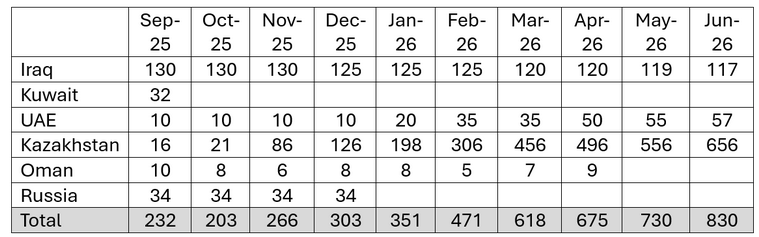
In view of a steady global economic outlook and current healthy market fundamentals, as reflected in the low oil inventories, and in accordance with the decision agreed upon on 5 December 2024 to start a gradual and flexible return of the 2.2 million barrels per day voluntary adjustments starting from 1 April 2025, the eight participating countries will implement a production adjustment of 547 thousand barrels per day in September 2025 from August 2025 required production level. This is equivalent to four monthly increments as detailed in the table below. The phase-out of the additional voluntary production adjustments may be paused or reversed subject to evolving market conditions. This flexibility will allow the group to continue to support oil market stability.

The eight OPEC+ countries also noted that this measure will provide an opportunity for the participating countries to accelerate their compensation. The eight countries reiterated their collective commitment to achieve full conformity with the Declaration of Cooperation, including the additional voluntary production adjustments that were agreed to be monitored by the JMMC during its 53rd meeting held on April 3rd 2024.

They also confirmed their intention to fully compensate for any overproduced volume since January 2024. The eight OPEC+ countries will hold monthly meetings to review market conditions, conformity, and compensation. The eight countries will meet on September 7, 2025.

(Source: OPEC Secretariat)

Posted in Iraq Oil & Gas News Comments Off on Iraq to Increase Oil Output Amid Healthy Market Conditions

20250730221936

Saudi Company discusses Petrochemical Partnership in Basra

By John Lee.

Iraq's Minister of Industry and Minerals, Khaled Battal Al-Najm, chaired a meeting at the Ministry's headquarters to explore a potential partnership agreement with Saudi company Ajyal for the establishment of a petrochemical complex in Basra.

The proposed complex would be built on the site of the State Company for Petrochemical Industries in Basra Province.

During the meeting, participants discussed the terms of the potential partnership and evaluated proposed mechanisms for supplying the project with natural gas, LPG, or alternative energy sources. Technical and legal considerations were also reviewed.

Minister Al-Najm emphasised the strategic importance of the project, describing it as one of the ministry's most promising initiatives to revive and develop Iraq's strategic industries and strengthen the national industrial base. He directed the continuation of negotiations and coordination with relevant parties to secure the necessary requirements to advance the project.

(Source: Ministry of Industry and Minerals)

Posted in Iraq Industry & Trade News, Iraq Oil & Gas News Comments Off on Saudi Company discusses Petrochemical Partnership in Basra

20250729161916

Iraq and Czech Republic discuss Investment Protection Agreement

By John Lee.

The National Investment Commission of Iraq has announced the start of the third round of discussions on the draft Agreement for the Encouragement and Protection of Investments between Iraq and the Czech Republic.

The meetings, held in Prague on 22-23 July, follow the recent visit by Prime Minister Mohammed Shia' Al-Sudani to the Czech Republic and are part of Iraq's efforts to strengthen economic ties and promote mutual investment. The discussions aim to foster a sustainable economic partnership, facilitate technology transfer, create jobs, and support economic development.

The Iraqi delegation was led by NIC Chairman Dr. Haider Muhammad Makiyya, accompanied by the Iraqi negotiation team. The Czech side was led by Martina Matušová, alongside the Czech negotiation team. Iraq's chargé d'affaires in Prague, Mr. Hussein Al-Safi, and his deputy Mr. Samer Jamal also attended.

In his remarks, Dr. Makiya highlighted legislative and procedural reforms that have transformed Iraq's investment environment in recent years, citing a significant rise in both local and foreign investment activity. He officially opened the round of talks, describing the agreement as a milestone in deepening bilateral economic cooperation.

Over two days, the parties engaged in in-depth discussions and advanced the drafting of key provisions. Further rounds of negotiation are planned, with the final version of the agreement to be submitted for formal approval under Iraqi law.

On the second day, Czech Deputy Finance Minister Tomáš welcomed the progress and expressed optimism for future talks. He praised Iraq's recent reforms and confirmed that the Czech Ministry of Finance, through its representative at the OECD, would support efforts to improve Iraq's international investment rating. Iraq's total investment volume has reportedly reached $99 billion.

Tomáš also acknowledged Iraq's recent investment agreements with Qatar, Saudi Arabia, and the UAE as encouraging signs of a stable and investor-friendly environment.

(Source: NIC)

Posted in Investment Comments Off on Iraq and Czech Republic discuss Investment Protection Agreement

20250725123426

Saudi Contractors Explore Investment Opportunities in Nineveh

By John Lee.

The Governor of Nineveh, Abdul Qader al-Dakhil, has received Mohammed bin Abdulaziz Al-Ajlan, Chairman of the Saudi Contractors Authority, along with a delegation of Saudi businessmen.

The meeting focused on enhancing cooperation between Iraq and Saudi Arabia in areas of mutual interest. Governor al-Dakhil described the visit as a significant step towards progress and prosperity for Nineveh, noting that the province offers major potential for investment.

He said all available opportunities across various sectors had been presented to the delegation, and pledged to facilitate the entry of Saudi companies and investors into the province.

The Saudi side expressed keen interest in contributing to the reconstruction and development of Mosul, underlining the strong historical and cultural ties between the two countries. They affirmed that Saudi Arabia remains committed to supporting Iraq's development and stability.

(Source: Governorate of Nineveh)

Posted in Investment, Iraq Industry & Trade News Comments Off on Saudi Contractors Explore Investment Opportunities in Nineveh

Ahmed Tabaqchali, AMT IRIS 2 resized

Tabaqchali: Ten-Year Anniversary & a First Visit to Iraq

By Ahmed Tabaqchali, Chief Strategist of AFC Iraq Fund.

Any opinions expressed are those of the author, and do not necessarily reflect the views of Iraq Business News.

"Ten-year Anniversary & a First Visit to Iraq"

The market, as measured by the Rabee Securities U.S. Dollar Equity Index (RSISX USD Index), was down 4.8% for the month and 1.1% for the year, following increases in 44.8% and 97.2% in 2024 and 2023 respectively.

Iraq, then and now

June marks the ten-year anniversary of the AFC Iraq Fund, launched June 26th, 2015, a year after it was conceived amidst the perfect storm of ISIS's take-over of the city of Mosul, threatening Iraq's breakup, and the crash in oil prices piling on the misery by adding its potential bankruptcy in the process. It seems almost fitting that, yet another perfect storm was marking its ten-year anniversary, in which the Israel-Iran war, brewing for over 18 months, risked igniting a much-feared wider regional war that could have engulfed Iraq. However, unlike then, the storm dissipated in 12 days, or at least for the time being, as both antagonists have sought ways to end it, that seems to have been found through a U.S. mediation made possible by an orchestrated and symbolic attack on an empty U.S. military base and sealed in a theatrical ceasefire announcement.

However, while the risks of the Israel-Iran war erupting once again are real, Iraq and its economy are very different from ten years ago, helping it to weather the war's worst consequences, and to continue with its economic transformation. As discussed here over the last few years, especially in the outlook for 2025 in "What Next After Two Gangbuster Years?" Iraq's economy is undergoing a long-term economic transformation brought on by two key dynamics, which are in the early stages of driving this transformation. The first of which is the cumulative positive effects of the relative stability that the country has enjoyed over the past few years, that provided a stable and predictable macroeconomic framework for businesses to operate in and to plan for capital investments on a scale not seen in the prior decades. While the second is the significant structural fundamental developments accelerating the adoption of banking and bringing about a transformation of the sector and its role in the economy.

Iraq's equity market's performance has mirrored the country's tribulations and its ongoing transformation, in which its pre-ISIS peak in January 2014, was followed by a brutal seven-year bear market with the RSISX USD Index down 25.4% in 2014, 22.7% in 2015, 17.4% in 2016%, 11.8% in 2017, 15.0% in 2018, 1.3% in 2019, and 5.4% in 2020 -for a cumulative decline of 66.6%; followed by a recovery of 21.4% in 2021, a decline of 3.8% in 2022, an increase of 97.2% in 2023, and a further increase of 44.8% in 2024. Underscoring the early stages of the market's recovery, is that the RSISX USD Index only surpassed its 2014 peak over a decade later in October 2024.

Rabee Securities U.S. Dollar Equity Index

(Source: Iraq Stock Exchange, Rabee Securities, AFC Research, monthly data as of June 30th)

Iraq, as seen through a visitor's eyes

My friend and colleague, Thomas Hugger, CEO of Asia Frontier Capital's (AFC), visited Iraq at the end of May, and with me, embarked on a tour of the country that included business visits to companies such as the Bank of Baghdad (BBOB), and Baghdad Soft Drinks (IBSD), the Iraq Stock Exchange (ISX); cultural tours starting with Baghdad's old districts (Mutanabbi Street, Mustansiriyya Madrasa, Al-Shawaka), and its modern districts; the ancient cities of Babylon, Ctesiphon, Ur; the Marshes; the meeting point of the Tigris and Euphrates rivers forming Shatt Al Arab at Al-Qurnah,; and Iraq's third largest city Basra. This month's report will review our visit to the ISX, the Bank of Baghdad, and focus on one of Iraq's best consumer companies, Baghdad Soft Drinks, and its state-of-the-art production plant, the largest of its kind in the Middle East. Other parts of the tour will feature in the upcoming market reports over the next few months.

This was Thomas' first visit to Iraq, 13 years after AFC started investing in the country. Arriving in Baghdad at 00:30 in the early morning, he was greeted by the driver of "Al-Mosafer Taxi", who took him to a hotel in the neighbourhood of Arasat Al Hindia, in Karada. For Thomas, having just concluded an investor tour in Uzbekistan, arriving on Turkish Airlines from Istanbul, the experience was no different than almost any country among AFC's investable universe that he has travelled to, in such a contrast to the usual Iraq travel advice warnings of the dangers, that are still reflecting Iraq's dark days of conflict that ended years ago. Thomas notes: "Airport immigration was relatively quick and simple: Most foreigners can now apply for an E-visa online and just before going to the immigration counter simply pick up their visa after the helpful staff at the E-visa counter take their mugshots. The airport is still tiny for such an economy, and I assume that a new passenger terminal will be added in the future. I was also impressed by the quality of the brand new three-lane highway leading from the airport to the city centre of Baghdad. Despite the late time of 01:30 am, there was still some traffic. Judging from the style of driving, I would not be surprised that a future Formula-1 driver will be coming soon from Iraq! The emotional and visual highlight though was the crossing of the Tigris River which splits Baghdad into its western part, Karkh, and its eastern part, Rusafa."

The next day, we visited the Iraq Stock Exchange (ISX), situated in the Alwiya area in Karada, in Rusafa, which fortunately happened to be the last trading day of the month, as it allowed us to watch the market's close on the floor of the exchange, after a meeting with the CEO of the Stock Exchange. With the advent of electronic trading in 2009, most investors migrated from watching and trading at the exchange to brokers' offices. However, old habits die hard, and a number of regulars still come to the exchange's floor to meet, gossip, and trade. We chatted with some of them and joined them like two old timers fixated on the trading screens.

At the Iraq Stock Exchange (ISX)

(Source: AFC Research)

May ended on a strong note with heavy activity in some of the leadings stocks such as Asiacell Communications (TASC), Baghdad Soft Drinks (IBSD), Bank of Baghdad (BBOB), Mansour Bank (BMNS), and the National Bank of Iraq (BNOI), in which the five accounted for over 90% of the trading value on the last day of the month -the day ended up among the highest turnover days of the year, at over one and a half times the year to date's average daily trading value. These five companies' market leadership stems from the high quality of their business models, quality of management, and multi-year earnings growth, especially over the last two years, as highlighted last month. All five companies are major constituents of the Rabee Securities U.S. Dollar Equity Index.

Afterwards, we left to visit the Bank of Baghdad, but not before visiting the beautiful Church of Our Lady of Salvation, which is located right across the street from the stock exchange. Our Lady of Salvation is an Assyrian Christian church that survived terrible attacks during Iraq's darkest years of civil war, particularly the attacks in 2004 and 2010. In 2010, there was a twin attack that started at the ISX and was followed by another at the Church with an attack at Sunday Mass. The attackers clearly aimed for maximum damage as Sunday is also the first day of the business week, and so the death toll was 52 worshippers at the church, and four guards at the ISX. In a spirit that is typical of Iraqis, the ISX family went to work the next day as if nothing had happened.

The Church of Our Lady of Salvation

Bank of Baghdad's head office

(Source: AFC Research)

We met Bank of Baghdad's outgoing CEO, who successfully managed the bank's turnaround from mid-2016, and its resumption of growth as highlighted in "Banks and the Predictability of Earnings". After discussing the banking scene in Iraq, he introduced us to the incoming CEO, who shared his strategic plans for the development of the bank in the near future. Afterwards, we had lunch at one of the best grill houses in Iraq, Zarzour on the National Theatre roundabout, and enjoyed a feast of kebab, tikka, liver, hearts and kidneys. Iraqi red meat grills are almost always made of domestic lamb, which are accompanied by high amounts of fat: kebabs have up to 20% of fat content; tikka, liver, hearts and kidneys come with cubes of fat; and for those who want more, restaurants serve skewers of fat cubes as a stand-alone item.  Local sheep breeds are mostly Awassi, followed by Arab and Hamdani sheep, which are broad-tailed breeds with fat tails -they are so prized that successive governments have prohibited their export.

Lunch at Zarour, the National Theatre Roundabout

(Source: AFC Research)

In the evening, we went on a walkabout on one of the liveliest streets in Baghdad, Yarmouk district's "Four Streets", in the Karkh side of Baghdad. Being a Thursday, which is the last of the Iraqi work week, it was full of people, of all walks of life, brimming with energy, movement and whose lively conversations filled the space. Not satisfied with just one grilled meat feast a few hours earlier, we enjoyed another tasty grilled dinner, repeating the same choices, in one of the many restaurants left and right of the buzzing street where entire families walked by or drove in their SUVs, most of which were brand new.

Four Streets, Yarmouk, Karada, Baghdad

(Source: AFC Research)

On Baghdad, Thomas notes: "I noticed that the western part of the city is seeing a lot of construction activity since I assume this part is newer and was therefore less developed a few years ago compared with the eastern part of the city which is very crowded and overbuilt with mostly two to three stories buildings and hosting the older residential and commercial aeras including the historical centre "Olds Rusafa" which is dating back over 1,000 years. I had the feeling that the construction boom and urbanisation of Baghdad were just starting. I was impressed by some huge mixed property developments (residential combined with retail space) -something which could be easily also found in any other place like in the U.A.E., Kuwait, or Qatar. The traffic early in the morning was easy, but later in the day became much more congested, leading to traffic jams into the evening hours (or early morning the next day). It was striking for me that most of the cars seem to be quite new (with the exception of the many yellow taxis) and also that the Dodge "Challenger" is used as a family car in Iraq and seems to be very popular with the local drivers. I was also surprised to learn that the gasoline price in Iraq is about USD 0.65 (850 IQD), which is certainly much cheaper than in Europe, but considerably higher compared with other oil-producing countries."

Construction activity in Baghdad

(Source: AFC Research)

The tour of Iraq's last day ended in Baghdad, with a visit to Baghdad Soft Drinks' (IBSD) head office and its world-class production plant in Al-Za'franiya on the outskirts of Baghdad, which is the largest and best of its kind in the Middle East. IBSD is Iraq's main PepsiCo franchise and has grown organically by expanding the Pepsi Cola line, and strategic acquisitions such as that of the Aquafina (mineral water) licence holder "Ynabee' Al Zawraa Company". As of 2024, IBSD has 15 Pepsi production lines, three Aquafina water production lines, and five juice production lines, with total production growing by about 14% year over year. Complimenting these, were milk products that were introduced in 2024, and a refrigerated hall for milk storage was completed, that while an insignificant part of IBSD's business, nevertheless, Rabee Securities notes that is "... a positive development supporting the expected growth in milk sales" -much like in the rest of the Middle East, fresh milk consumption is on the rise.

IBSD's consistent earnings and revenue growth since 2011, were negatively affected twice in these years. The first business decline was in 2014, following the fall of Mosul and the ensuing conflict, but growth soon resumed in 2015. The second was in 2021-22 when its profit margins took a hit from the significant price rises of commodities, in particular aluminium and sugar, as brought on by the double whammy of the disruptions to supply chains in the wake of the emergence from Covid-19's induced lockdowns, and of the invasion of Ukraine. These higher expenses, while negatively affecting profit margins, were temporary and one-off in nature,  the high year-over-year cost increases moderated significantly and eventually declined; while sales momentum continued to accelerate supported organically by its strong product line-up, as well as by the line-ups from is recent acquisitions -a point made in "Winter Flash Floods" when discussing IBSD, and other top companies following their sharp prices drops in late 2021. The consequences of the cumulative positive effects of the relative stability that the country enjoyed is evident in the acceleration in growth of the last two years. The company's confidence about its future was evident in its latest dividend declaration, at the end of June, in which it increased the cash payout from 0.29 to 0.36 IQD per share, or an increase of 24.2%, resulting in a dividend yield of 7.5%.

IBSD's revenues and earnings margins 2011-2024

(Source: Rabee Securities, company filings, AFC Research, annual data as of 2024)

What is noteworthy, and part of the attractiveness of the Iraq investment story, is that despite the market's strong performance over the last few years, valuation disparities continue to offer investment opportunities.  A case in point is IBSD's valuation disparity with emerging market PepsiCo, and Coca-Cola bottlers (table below) as an example of Iraq's value proposition, and a demonstration of AFC's investment thesis of arbitraging the delta between Iraq's real risk and perceived risk -while a disparity should exist given different market sizes, and other market dynamic differences, yet surely not on such a scale.

Table: Bottler comparisons

(Source: Bloomberg, data as of July 4th)

On the company, Thomas notes: "We were able to visit the impressive plant factory of Baghdad Soft Drinks in Al-Za'franiya on the outskirts of Baghdad. The plant manager showed us around various buildings where Pepsi, mineral water, and other soft drinks were produced and packaged. The bottling lines did not differ from any soft drink bottling plant in a developed country. Almost all of the machinery was from Germany and hardly any people were doing manual work (except for the forklift drivers moving around the huge piles of bottles or cans) since most of the jobs are computerised or done by robots. Needless to say, the factory was spotlessly clean. We also saw workers from Turkey installing the newest machinery from Germany for the new production lines".

IBSD Production Plant

(Source: AFC Research)

We were taken there by Wassim Al Jzrawy, the CEO of Karmal Brokerage, a colleague and a friend with whom the relationship goes back to 2013, when work first started on the Iraq investment thesis. The visit continued thereafter by touring through Ishtar Sheraton Hotel, sandwiched between the picturesque Tigris River, and "Firdos Square" which became world famous on April 9th, 2003, when the toppling of Saddam Hussein's statue at that time was shown live on CNN. The hotel is currently undergoing a major refurbishment to meet the strong demand for hotel rooms in Baghdad, as the country's stability, subsequent rebuilding and its booming economy are attracting foreigners, particularly regional businesses investors seeking economic opportunities -or "Go East, young person", a modern day version of "Go West, young man" in the U.S. in the 19th century, that embodied the massive economic opportunities during the westward expansion in the U.S. So much so, that planes arriving today in Baghdad from Amman, Istanbul, Dubai, or Doha, (some of which have multiple daily flights now), are normally full irrespective of the time of arrival. Increasingly, the inflow of tourists, with the potential economic implications to cater for them, is taking place, as will be covered in the travel reports of our tour of historic Iraq.

View from Ishtar Sheraton Hotel

(Source: AFC Research, left Ishtar Sheraton Hotel, top right Rusafa, bottom right Karkh -both as viewed from the roof of Ishtar Sheraton)

Firdos Square, Karada, Baghdad

(Source: AFC Research, as viewed from the roof of Ishtar Sheraton)

Please click here to download Ahmed Tabaqchali's full report in pdf format.

Mr Tabaqchali (@AMTabaqchali) is the Chief Strategist of the AFC Iraq Fund, and is an experienced capital markets professional with over 25 years' experience in US and MENA markets. He is a Visiting Fellow at the LSE Middle East Centre, Senior Fellow at the Institute of Regional and International Studies (IRIS), and a Senior Non-resident Fellow at the Atlantic Council.

His comments, opinions and analyses are personal views and are intended to be for informational purposes and general interest only and should not be construed as individual investment advice or a recommendation or solicitation to buy, sell or hold any fund or security or to adopt any investment strategy. It does not constitute legal or tax or investment advice. The information provided in this material is compiled from sources that are believed to be reliable, but no guarantee is made of its correctness, is rendered as at publication date and may change without notice and it is not intended as a complete analysis of every material fact regarding Iraq, the region, market or investment.

Posted in Ahmed Tabaqchali, Investment Comments Off on Tabaqchali: Ten-Year Anniversary & a First Visit to Iraq