



Exxon Out of Desalination Project
Posted on 21 June 2018 .
By John Lee.
Talks between ExxonMobil and Iraq on the multi-billion-dollar Common Seawater Supply Project (CSSP) have reportedly broken down.
According to Reuters, the director general of the Basra Oil Company (BOC) told reporters that the BOC will award the contract through a tender process, which it expects to complete at the end of July.
It adds that the BOC has already shortlisted three companies from an initial list of seven for the contract.
(Source: Reuters)
Posted in Iraq Oil & Gas News Comments Off on Exxon Out of Desalination Project

Exxon, Baghdad face Setback on Seawater Project
Posted on 20 April 2018 .
By John Lee.
Talks between ExxonMobil and Iraq on the multi-billion-dollar Common Seawater Supply Project (CSSP) have reportedly reached an impasse.
According to Reuters, two sides differ on contract terms and costs.
Ian Thom, principal analyst at consultancy Wood Mackenzie, told the news agency:
“The CSSP would be expensive and challenging but there’s opportunity here (for Exxon) ... to get access to resources on a very large scale and to achieve something and really make a difference to its own business.”
(Source: Reuters)
Posted in Iraq Oil & Gas News Comments Off on Exxon, Baghdad face Setback on Seawater Project
5 Firms Shortlisted for Major Water-Injection Project
Posted on 12 April 2018 .
By John Lee.
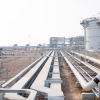
According to a report from Platts, Iraq has shortlisted five international engineering companies to bid for the first phase of the Common Seawater Supply Project (CSSP), a major water-injection project that will help the country boost long-term production from its southern oil fields.
The project would take in around 5 million barrels per day (bpd) of water from the Persian Gulf, process it for field injection, and deliver it by pipeline to a half dozen fields in Basra province.
It has been under discussion for nearly a decade, and wsa priced at $12 billion when capacity was to be 10 million bpd of water.
(Source: Platts)
Posted in Iraq Oil & Gas News Comments Off on 5 Firms Shortlisted for Major Water-Injection Project
Major Plans to Boost Iraq Oil-Exporting Capacity
Posted on 28 March 2018 .
By John Lee.
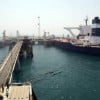
Iraq is reportedly ramping up efforts to expand capacity to pump and export oil.
Ihsan Abdul Jabbar, the director-general of state-run Basra Oil Company, told Bloomberg that Iraq is seeking bids from six companies for a $4-billion project to inject seawater into its southern oil fields, and the country has already received bids from five companies interested in building a processing facility to double output at the Majnoon field to 450,000 bpd.
He added that Iraq is also studying a proposal from a Dutch company to build a 10 million-barrel storage facility and an oil-exporting terminal with a capacity of 2 million barrels a day on an artificial island off the coast.
(Source: Bloomberg)
Posted in Construction & Engineering In Iraq, Iraq Oil & Gas News Comments Off on Major Plans to Boost Iraq Oil-Exporting Capacity
Int'l Firms Needed for Seawater Injection Project
Posted on 08 November 2016 .
By John Lee.
Iraqi oil minister Jabar Ali al-Luaibi [Allibi] has directed the South Oil Company (SOC) to invite international companies to execute the sea water desalination project in southern Iraq.
The Common Seawater Supply Facility (CSSF) is considered vital to maintain the production volumes at Iraq's oil fields.
It is to be implemented in two stages, with 2.5 million barrels per day (bpd) capacity at each stage.
(Source: Ministry of Oil)
Posted in Construction & Engineering In Iraq, Iraq Oil & Gas News Comments Off on Int'l Firms Needed for Seawater Injection Project

Jiyad: Min of Oil should Withdraw Plan to Offer 12 New Oilfields
Posted on 27 October 2016 .
By Ahmed Mousa Jiyad.
Any opinions expressed are those of the author, and do not necessarily reflect the views of Iraq Business News.
The Ministry of Oil should withdraw its plan to offer 12 new oilfields.
In a rather surprise move, the Ministry of Oil (MoO) announced its “intention” to offer 12 medium and small oilfields to IOCs for development and production.
The most alarming and absurd components of the announcement are the contractual modality and the process of awarding and contracting.
Considering the danger and implications of the announcement I call upon the Ministry of Oil to withdraw this announcement immediately and focus instead on properly manage and monitor what has been contracted already. Otherwise, the Iraqi upstream petroleum could suffer from devastating consequences at a time when the country is liberating its provinces, especially Mousil from Da’esh.
The offered fields are Sindebad, Um-Qaser, Rachi and Abu-Khema (in Basra Governorate); Kumait, Noor, Umara, Dema and Dujaila (in Missan Province); and Merjan, Kifl and West Kifl-all known as Mid-Euphrates (in Middle Iraq). MoO announcement provides further information which will be addressed in this commentary.
At the outset, this is not a new move at all. After completing the fourth bid rounds, the MoO has at least formally announced three times its intention for new offering. The first was during the former Minister Abdul Kareem Luaibi, who in March 2013 announced a fifth bid round comprising “10 oilfields”, then in October he postponed that round to “next year”.
The second was related to the well-known Nassiriya Integrated Project-NIP, which combines the development of Nassiriya oilfields with a 300kbd modern refinery. Though NIP attracted good number of reputable IOCs, the project was put on shelves and related bid round was postponed indefinitely in June 2014. Recently, MoO offered Nassiriya Refinery for private investors, thus NIP is dead!
The third is related to linking Ratawi and Bin-Umar oilfields (in Basra) to funding the water-injection Common Seawater Supply Project (CSSP) reportedly negotiated with ExxonMobil and PetroChina (CNPC). Since January this year no further information is publically available on earmarking the two oilfields to CSSP.
The current Minister of Oil made many pledges when he took office among them two of particular relevance to this topic: first, he emphasized the “national efforts” in upstream petroleum development and second, decision will be based on “solid and thorough studies and assessment”. The recent announcement by the Ministry is diametrically opposing to what the Minster has recently pledged.
By offering these 12 oilfields to IOCs “whether as independent (individual) company or as consortium of companies” in addition to what was contracted under the previous four bid rounds nothing meaningful is left for the “national efforts” role in this sub-sector. Moreover, where are these “solid and thorough studies and assessment” which the recent announcement was premised upon? None!
Please click here to download Ahmed Mousa Jiyad’s full report.
Mr Jiyad is an independent development consultant, scholar and Associate with the former Centre for Global Energy Studies (CGES), London. He was formerly a senior economist with the Iraq National Oil Company and Iraq’s Ministry of Oil, Chief Expert for the Council of Ministers, Director at the Ministry of Trade, and International Specialist with UN organizations in Uganda, Sudan and Jordan. He is now based in Norway (Email: mou-jiya(at)online.no, Skype ID: Ahmed Mousa Jiyad). Read more of Mr Jiyad’s biography here.
Posted in Ahmed Mousa Jiyad, Investment, Iraq Oil & Gas News 3 Comments
Iraq to pay $2bn in Arrears to Foreign Companies
Posted on 08 March 2016 .
By John Lee.
Shafaaq reports that Iraq will pay foreign oil companies about $2 billion in remaining arrears for 2015 in April.
The arrears were accumulated to international oil companies (IOCs) such as BP, Shell , ExxonMobil, Eni and Lukoil, which operate in under service contracts, whereby they are paid a fixed dollar fee for additional volumes produced.
Deputy Oil Minister Fayadh al-Nema, who is in charge of upstream operations, told Reuters that amended contracts could be in place by the middle of the year, which would ease the pressure on Iraqi finances.
He added that one way to reduce companies’ costs was to hand drilling operations over to the state-run Iraqi Drilling Company (IDC), while another was to replace foreign workers with locals.
Iraq’s output rise in 2016 will be “very modest,” Nema forecast, due to the shrinking investment budgets of foreign contractors, which are affected by the drop in oil prices.
Nema said a deal with PetroChina, ExxonMobil and other energy companies could be reached by the end of the year over investing in a project to boost output from its smaller southern oilfields.
The multi-billion dollar “Integrated South Project” consists of building oil pipelines, storage facilities and a seawater supply project to inject water from the Gulf to maintain pressure and enhance oil recovery.
Investing companies will help raise production from the Artawi and Nahr Bin Umar oilfields and build energy infrastructure. Revenues from rising output from the two oilfields will be used to repay investors, Nema said.
Nema also said Iraq was working with BP to upgrade an old water injection facility in Garmat Ali, north of Basra, to provide oilfields of Rumaila and Zubair with water needed to boost output.
(Source: Shafaaq)
Posted in Iraq Oil & Gas News Comments Off on Iraq to pay $2bn in Arrears to Foreign Companies

PetroChina, Exxon Approached to Boost Production
Posted on 04 January 2016 .
By John Lee.
Iraq has reportedly approached PetroChina and ExxonMobil about investing in a multi-billion dollar project to help boost output from a number of smaller southern fields.
The Deputy Chairman of the South Oil Company (SOC), Basim Abdul Kareem, told Reuters that the "Integrated South Project" consists of building oil pipelines, storage facilities and a seawater supply project to inject water from the Gulf to maintain pressure and enhance oil recovery.
The project targets the Luhais, Nassiriya, Tuba, Nahr Bin Umar and Artawi oilfields, which are currently producing about 240,000 bpd currently and SOC's initial plan calls for raising that to about 350,000 bpd in 2016.
Petrochina has shown more interest than ExxonMobil in the project, according to another SOC official who declined to be identified.
(Sources: Reuters)
Posted in Iraq Oil & Gas News 4 Comments
Iraq Still Seeking CSSF Contractor
Posted on 16 September 2015 .
By Simon Kent.
Iraq's Common Seawater Supply Facility, the project originally intended to supply 12 million barrels a day of treated sea water for injection to maintain pressure at oil wells, may be delayed until 2020.
Originally scheduled for 2013 after planning began in 2009, the project stalled when Exxon (who had the original contract to run it) had their work cancelled due to their involvement in the Kurdish region. Since Baghdad objected to what they considered unilateral deals between Erbil and IOCs, the project was terminated.
The project was then taken up by Iraq's South Oil Company, but has since slowed and may result in a reduction of 10% in output per year until it is finished, according to an analyst quoted in The Wall Street Journal.
Subsequently, the Iraqi govt. is seeking a new contractor to complete the project, and has offered the winning contractor access to the Ibn Omar oil field, a largely undeveloped field with an estimated 6.5 billion in reserves.
(Source: WSJ)
Posted in Iraq Oil & Gas News 7 Comments
How IS Uses Water as Weapon of War
Posted on 15 May 2015 .
By Walaa Hussein for Al-Monitor. Any opinions expressed are those of the author, and do not necessarily reflect the views of Iraq Business News.
The Middle East is facing a water crisis. As the region experiences conflicts over water and faces the continuous risk of war breaking out, experts on water predict that the Islamic State (IS) aims to exacerbate this water crisis, as evidenced by its efforts to seize rivers and dams in Syria and Iraq, starting in 2013.
The Arab League has worked since 2008 to establish a new Arab convention on water usage, which would establish parameters on how to deal with the water crisis. However, the final draft is still under review because of the reservations of some member states.
PricewaterhouseCoopers, an international consulting organization, has identified numerous regions where the water crisis threatens to transform into a global conflict. Turkey, Syria and Iraq are included on that list, due to the Turkish dams controlling the Tigris and Euphrates rivers. Iran and Iraq are also witnessing a competition over the confluence of the Tigris and Euphrates rivers, known as Shatt al-Arab.
Also included is Egypt, Sudan and Ethiopia, which are witnessing a conflict over the Nile. Egypt, Sudan, Libya, Chad and Niger are also experiencing a crisis in relation to an 800-meter (0.5-mile) deep underground water field and the Nubian sandstone aquifer. Libya wants to invest in this aquifer to extend an artificial river and supply its coastline with freshwater.
Mahmoud Abu Zeid, president of the Arab Water Council, told Al-Monitor that the Arab region is facing a crisis because of the lack of rain and available water resources. The Arab region accounts for less than 7% of the world's water reserves, according to Abu Zeid, and less than 1% of the flowing water, while rain does not exceed 2% of the global average.
“Arab water is facing a great danger, which portends the exacerbation of the water conflict given that freshwater resources are limited. However, there is a food gap that increases with the growing population, which threatens a famine by 2025 in the absence of concerted efforts,” Abu Zeid said.
Abu Zeid also warned against IS using water as a weapon. “IS’ expansion has become concentrated in water resource regions in Syria and Iraq, and it is very clear that IS is seeking to acquire parts of Arab water sources," he said. "Given that water represents life, seizing such resources in Arab countries would be very serious and would constitute an inhumane means of pressure.”
IS fighters control most of the upper areas of the Tigris and Euphrates rivers, which flow from Turkey in the north to the Gulf in the south. All of Iraq and a large part of Syria rely on these rivers for food, water and industry. Abu Zeid predicted that IS’ attempts to control Arab water resources would lead to a water crisis that would overshadow the ongoing oil conflict, since water is a matter of life or death.
Abu Zeid said the Arab Water Council is preparing a report on the tense water situation in IS-controlled areas. The council’s experts have monitored a series of serious moves by IS that aim to gain control of Arab water sources as a means to exert pressure, such as the seizing of an Iraqi dam and controlling water resources in Syria. “We will work on raising this problem at the international level because it is a sign of a humanitarian disaster, given the number of countries [IS] is stationed in,” he said.
According to a September 2014 report from the Beirut Center for Middle East Studies, IS considers controlling rivers and dams to be a weapon more important than oil.
IS’ attempts to control water resources are in line with the group's announcement to extend its so-called caliphate from the Levant to Egypt, Ethiopia and the Maghreb, according to the group's caliphate map published in July 2014 on social media. This caliphate would extend into the headwaters of the Nile. The allegiance sworn by Boko Haram in March 2015 to IS emir Abu Bakr al-Baghdadi was probably aimed at supporting the IS conspiracy to control the headwaters of the Nile.
Asked about the Arab Water Council's strategy to confront the water crisis, Abu Zeid said, “We are currently working on maximizing water resources in the Arab region, especially since the Arab water conflict includes Arab-Arab conflicts due to the presence of common rivers between a number of Arab countries, as well as Arab conflicts with other countries, especially since the water quantity that comes from outside the Arab world accounts for more than 60% of the water used in Arab countries.
“This is the threat that prompted us to resort to non-traditional water, especially treated agricultural water and wastewater,” he said. “We are currently working on the direct exploitation of brackish water, which is abundantly found in the subsoil Arab aquifers, in agriculture. We are also seeking to mix this non-fresh water with pure water. We recently issued a manual outlining their uses. Add to this the desalination techniques of seawater that were adopted by several Arab countries, such as Saudi Arabia and the UAE, to face water scarcity.”
The water war is a ghost threatening the Middle East.
Though the poor populations of this region are the only ones paying for the price of the oil conflict, the water wars will not spare anyone.
(Picture: Mosul Dam)
Posted in Agriculture, Security 2 Comments