



Make Iraq Great Again: Trump's New Slogan for Iraq
Posted on 27 October 2025 .
From Kurdistan24. Any opinions expressed are those of the author(s), and do not necessarily reflect the views of Iraq Business News.
"I Want to Make Iraq Great Again": Trump's New Slogan for Iraq and What It Means
Savaya's "Make Iraq Great Again" echoes Trump's signature slogan, signaling a bold U.S. push to reshape Iraq's political landscape, curb Iranian influence, and strengthen ties with Kurdistan.
Posted in Investment, Iraq Banking & Finance News, Iraq Industry & Trade News, Politics, Security Comments Off on Make Iraq Great Again: Trump's New Slogan for Iraq
Why Washington's anti-PMF Moves are Testing the Iraq Partnership
Posted on 26 October 2025 .
By Mohammed A. Salih for the Atlantic Council. Any opinions expressed here are those of the author(s) and do not necessarily reflect the views of Iraq Business News.
Why Washington's anti-PMF moves are testing the Iraq partnership
Recent measures from the Trump administration against Iraq's Popular Mobilization Forces (PMF) -- a 240,000-strong force with an annual budget of roughly $3.5 billion -- portend a more difficult US-Iraq relationship, with growing implications across the security, political, and economic realms.
Click here to read the full report.
To browse our comprehensive library of reports on Iraq, click here.
Posted in Iraq Industry & Trade News, Politics, Security Comments Off on Why Washington's anti-PMF Moves are Testing the Iraq Partnership
Trump Appoints Special Envoy to Iraq
Posted on 22 October 2025 .
By John Lee.
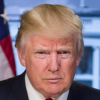
US resident Donald Trump has announced that Mark Savaya will serve as Special Envoy to the Republic of Iraq.
Trump said that Savaya's deep understanding of the Iraq-U.S. relationship, and his connections in the region, will help advance the interests of the American people.
Savaya was a key player in Trump's campaign in Michigan, where he and others helped secure a record vote among Muslim Americans.
According to media reports, Savaya is not Muslim but comes from Iraq's Chaldean community. He is understood to have built up a business in legal marijuana retailing.
In a post on X, Savaya said: "I am committed to strengthening the U.S.-Iraq partnership under President Trump's leadership and guidance. Thank you, Mr. President. "
(Sources: Donald Trump via Truth Social / Fox News / New Arab)
Posted in Iraq Industry & Trade News, Politics, Security Comments Off on Trump Appoints Special Envoy to Iraq

Beyond Tariffs: Building a Mutually Beneficial Relationship between US and Iraq
Posted on 08 October 2025 .
By Ahmed Tabaqchali, for the Al-Bayan Center for Planning and Studies. Any opinions expressed are those of the author(s), and do not necessarily reflect the views of Iraq Business News.
Beyond Tariffs: Building a Mutually Beneficial Relationship between the United States and Iraq
The Trump administration imposed a 30 per cent tariff on Iraqi exports to the United States in 2019, citing a lack of reciprocity in bilateral trade, though oil exports were exempt from the measure.
While the tariffs do not directly alter the U.S. trade deficit with Iraq, they may indirectly affect revenues through lower oil prices amid weakening global demand.
The study calls for policies that strengthen the U.S.-Iraq Strategic Framework Agreement, shifting from tariff disputes towards a broader, mutually beneficial partnership across political, economic, cultural, and security domains.
Click here to read the full report [Arabic].
To browse our comprehensive library of reports on Iraq, click here.
Posted in Investment, Iraq Industry & Trade News, Politics, Security Comments Off on Beyond Tariffs: Building a Mutually Beneficial Relationship between US and Iraq
Top 10 Dinar Articles from September
Posted on 02 October 2025 .
The following were the ten most read dinar-related articles on Iraq Business News for the month of September:
- The Iraqi Dinar Revaluation Deception: 10 Persistent False Claims Exposed
- What the Future Holds for Dinar Investors
- Iraqi Dinar Prospects: Reality Check After Six Months of Trump
- Donald Trump and the "Great Iraqi Dinar Revaluation"
- Iraq "Capable of Defending Exchange Rate" - Central Bank
- CBI launches Inter-Wallet Money Transfers
- Iraqi Central Bank Reduces Supply of Dinars
- The Iraqi Dinar Revaluation Scam: False Hope, Financial Deception
- Iraqi Dinar Q&A: Dinar Revaluation (RV) and Israeli Airstrikes on Iran
- Dinars to Dollars: Official List of Approved Banks
For more information on the Iraqi dinar, check out IBN's Dinar Page here: https://www.iraq-businessnews.com/the-dinar-page/?swcfpc=1
Posted in Iraq Banking & Finance News 2 Comments

The Iraqi Dinar Revaluation Deception: 10 Persistent False Claims Exposed
Posted on 28 September 2025 .
By Guest Blogger. Any opinions expressed are those of the author(s), and do not necessarily reflect the views of Iraq Business News.
The Iraqi Dinar Revaluation Deception: 10 Persistent False Claims Exposed
For over two decades, fraudulent promoters and self-proclaimed "dinar gurus" have perpetuated an elaborate investment scam centered around the Iraqi dinar (IQD). Despite consistent warnings from financial experts, regulatory agencies, and the International Monetary Fund, these false claims continue to circulate through social media, online forums, and investment communities. Here are ten of the most persistent lies that have deceived countless investors.
1. "The Dinar Will Return to Its Pre-War Exchange Rate"
The Claim: Scammers frequently assert that the Iraqi dinar will return to its pre-2003 invasion exchange rate, when it allegedly traded at multiple U.S. dollars per dinar.
The Reality: This claim fundamentally misunderstands how currency devaluations work. Iraq's currency was artificially overvalued under Saddam Hussein's regime through strict government controls, not legitimate market forces. When these controls were removed, the currency naturally adjusted to its actual market value. Modern Iraq's economy, infrastructure, and political stability cannot support such exchange rates.
2. "Iraq Has the World's Largest Oil Reserves"
The Claim: Promoters argue that Iraq's supposed massive oil reserves guarantee a dramatic currency revaluation.
The Reality: While Iraq has significant oil reserves, it ranks fifth globally, not first. More importantly, oil reserves alone don't determine currency strength. Countries like Venezuela have enormous oil reserves but weak currencies due to economic mismanagement, political instability, and other factors that also affect Iraq.
3. "The Revaluation Will Happen by [Specific Date]"
The Claim: Gurus regularly provide specific dates for when the revaluation will occur, often tied to Iraqi holidays, government meetings, or international events.
The Reality: After more than two decades of rumours, not one prediction has come true. These date-specific predictions are classic hallmarks of investment fraud, designed to create urgency and prevent rational analysis.
4. "Banks Are Preparing for the RV with Special Rates"
The Claim: Scammers spread rumours that major banks are secretly preparing for the revaluation and will offer "special rates" to dinar holders.
The Reality: Not one "special rate" has been verified. Not one government or banking authority has backed the RV claims. Banks treat the Iraqi dinar like any other exotic currency with limited liquidity and high transaction costs.
5. "The IMF Will Force Iraq to Revalue"
The Claim: Fraudsters claim international organizations like the IMF will mandate a dramatic revaluation of the dinar.
The Reality: The International Monetary Fund (IMF) has warned repeatedly that dramatic revaluations like those promised by gurus are economically unfeasible. The IMF actually advocates for gradual, market-driven currency adjustments.
6. "One Dinar Will Be Worth Several U.S. Dollars"
The Claim: Some extreme predictions suggested that a single Dinar might one day be worth several U.S. dollars, representing a profit potential of several hundred thousand per cent for those who bought in early.
The Reality: Such massive appreciation would require Iraq's economy to grow exponentially overnight, which is economically impossible. No currency in modern history has experienced such artificial appreciation without severe economic consequences.
7. "Iraq Will 'Delete the Zeros' Through Revaluation"
The Claim: Scammers misinterpret Iraq's discussions about removing zeros from the currency as evidence of impending revaluation.
The Reality: Removing zeros (redenomination) is an administrative process that changes the face value of currency without changing its actual worth. If Iraq removed three zeros, 1,000 old dinars would become 1 new dinar, but the purchasing power remains identical.
8. "The Dinar is a 'Safe Haven' Investment"
The Claim: Promoters market the dinar as a secure investment alternative to stocks or bonds.
The Reality: Investors face numerous significant challenges, including extremely limited trading volume, high transaction fees that can reach up to 20%, and widespread scams within the currency exchange market. Iraq's ongoing political instability, security challenges, and economic struggles make the dinar one of the riskiest currency investments possible.
9. "Major World Events Will Trigger the RV"
The Claim: Gurus claim that global economic resets, new international monetary systems, or geopolitical events will force the dinar to revalue.
The Reality: Currency values are determined by fundamental economic factors like inflation, interest rates, political stability, and trade balances -- not by conspiracy theories about global financial resets.
10. "Wealthy Elites Are Secretly Buying Dinars"
The Claim: Scammers suggest that wealthy individuals, politicians, or institutions are quietly accumulating dinars before the revaluation.
The Reality: No credible evidence supports these claims. Legitimate institutional investors avoid exotic currencies with poor liquidity, high transaction costs, and significant political risks. Despite warnings from financial experts and regulatory agencies, many people still believe claims about the Iraqi dinar's sudden and massive increase in value.
The Warning Signs
Financial experts consistently identify several red flags in dinar revaluation schemes:
- Specific date predictions for when the revaluation will occur
- Guaranteed returns or promises of massive profits
- Pressure tactics creating artificial urgency
- Conspiracy theories about secret government or banking activities
- Testimonials from anonymous "experts" or "insiders"
Protecting Yourself
Be wary of gurus who make specific date predictions or guarantee high returns, as these are often red flags. If you're considering any currency investment:
- Consult licensed financial advisors, not online "gurus"
- Research the actual economic conditions of the country
- Understand that legitimate currency investments carry significant risks
- Be skeptical of any investment promising extraordinary returns
- Remember that it is not an investment but rather speculation on an extremely volatile and risky currency
Conclusion
The Iraqi dinar revaluation narrative has persisted for over twenty years without a single prediction coming true. Experts from across the financial world -- economists, currency analysts, and regulatory authorities -- have been clear: the Iraqi dinar RV story is a hoax.
While Iraq may eventually achieve greater economic stability and gradual currency appreciation, the dramatic overnight revaluation promoted by scammers is economically impossible. Those who have fallen for these schemes should seek legitimate financial advice and avoid throwing good money after bad by continuing to purchase dinars based on false promises.
The persistence of these claims despite decades of failed predictions demonstrates the power of hope over financial reality. However, sound investment decisions must be based on economic fundamentals, not wishful thinking or internet rumours.
The Reality Check
For those holding Iraqi dinars in expectation of massive revaluations, the first six months of Trump's presidency have delivered a harsh reality check. Professional market forecasts suggest, at best, modest movements in the exchange rate -- nothing approaching the transformative gains that speculators expect.
The economic fundamentals that determine currency values -- fiscal position, foreign reserves, trade balance, and political stability -- all point towards continued pressure on the dinar rather than the dramatic strengthening that revaluation theorists predict.
Iraq's path to currency stability lies not in presidential proclamations or speculative theories, but in the hard work of economic diversification, institutional reform, and fiscal discipline. Until these fundamentals improve, the dinar's prospects remain constrained by the same structural challenges that have defined Iraq's economy for decades.
The lesson from Trump's first six months is clear: currencies reflect economic realities, not political fantasies. The Iraqi dinar's future depends on Iraq's economic performance, not on the whims of foreign presidents or the hopes of speculative investors.
For more information on the Iraqi dinar, check out IBN's Dinar Page here: https://www.iraq-businessnews.com/the-dinar-page/?swcfpc=1
See also:
Iraqi Central Bank Reduces Supply of Dinars
Trump & Crypto: Will Bitcoin's Success Translate to the Iraqi Dinar?
Posted in Iraq Banking & Finance News 5 Comments
US piles Pressure on Iran's Iraqi Allies with 'Terrorist' Designations
Posted on 28 September 2025 .
From Amwaj Media. Any opinions expressed are those of the author(s), and do not necessarily reflect the views of Iraq Business News.
US piles pressure on Iran's Iraqi allies with 'terrorist' designations
Amid a growing US push to de-fang Iran's allies in Iraq, the Donald Trump administration has designated four major Shiite armed factions as Foreign Terrorist Organizations.
The move comes at a delicate time for Iraq as competing geopolitical pressures mount ahead of the parliamentary elections in November.
Viewed as an extension of Trump's pressure campaign against Tehran, the designations have set off both mockery and celebration in Iraqi media.
Posted in Politics, Security Comments Off on US piles Pressure on Iran's Iraqi Allies with 'Terrorist' Designations
What the Future Holds for Dinar Investors
Posted on 16 September 2025 .
From XTransfer. Any opinions expressed are those of the author(s), and do not necessarily reflect the views of Iraq Business News.
IQD Myths and Realities What the Future Holds for Dinar Investors
Many investors think the dinar is a way to get rich fast. But some people worry they might lose money. The iraqi currency market can be confusing. Facts are more important than rumors when you think about investing. People need to look at both the good and bad sides before buying iraqi dinar. Careful research helps people make better choices.
The full article can be viewed here.
Read also:
Iraqi Dinar Prospects: Reality Check After Six Months of Trump
Donald Trump and the "Great Iraqi Dinar Revaluation"
Posted in Investment, Iraq Banking & Finance News 2 Comments
Top 10 Dinar Articles from August
Posted on 04 September 2025 .
The following were the ten most read dinar-related articles on Iraq Business News for the month of August:
- Iraqi Central Bank Reduces Supply of Dinars
- Iraqi Dinar Prospects: Reality Check After Six Months of Trump
- Donald Trump and the "Great Iraqi Dinar Revaluation"
- Iraq Reduces Foreign Debt Liabilities
- Iraq's Central Bank Reports 55% Growth in Gold Reserves
- The Iraqi Dinar Revaluation Scam: False Hope, Financial Deception
- Iraqi Dinar Q&A: Dinar Revaluation (RV) and Israeli Airstrikes on Iran
- IMF Comments on Iraqi Dinar Exchange Rate
- IMF Explains Iraq's Exchange Rate Arrangement
- Counterfeit Iraqi Dinars: Central Bank Hosts Workshop
For more information on the Iraqi dinar, check out IBN's Dinar Page here: https://www.iraq-businessnews.com/the-dinar-page/?swcfpc=1
Posted in Iraq Banking & Finance News 1 Comment

Jiyad: Turkey Ends ITPA - Blackmail or Preservation of Iraqi Sovereign Rights
Posted on 11 August 2025 .
By Ahmed Mousa Jiyad. Any opinions expressed are those of the author, and do not necessarily reflect the views of Iraq Business News.
Turkey Ends ITPA- Submission to Blackmail or Preservation of Iraqi Sovereign Rights and National Interests
The Turkish government officially ended, on 21 July 2025, the Iraqi Turkish Oil Pipeline Agreement-ITOPA, effective on 27 July 2026.[1] A couple of days later, the Turkish Minister of Energy proposed amending and expanding- ITOPA.[2] Obviously, the Turkish formal position is inconsistent with ITOPA' "2010 Amendment".
So far, no formal position was announced by the Iraqi government on the Turkish move. [3]
The Turkish act was the topic of a debating event, in Arabic, that was convened by "Al-Mushtarac Platform" on 1 August 2025.* Below is a brief of my presentation, with minor updating.
My intervention at the debating event covers the following themes:
- 1. A brief background on ITOPA, focusing on its latest amendment in 2010, which expires in 2026.
- An analysis of the Turkish position in light of the agreement's legal frameworks on the one hand, and the very complex set of economic, geopolitical, and geostrategic considerations on the other.
- 3. The impact of the Turkish decision on Iraq: A critical analysis of what Iraq should have done since 2023, what Iraq have done, and the alternatives currently available for Iraq.
First: A brief background on ITOPA and its latest amendment
ITOPA was signed on August 27, 1973. The pipeline on the Turkish side consists of two parallel lines: a 40-inch line, which is the first expansion of the system that was completed in 1984, and a 46-inch line, which is the second expansion, completed in 1987. This brought total design pumping capacity to 1.6 Mbpd. ITOPA latest amendment was signed in 2010 and became effective in July 2011.
In November 2013, KRG completed the laying of an oil pipeline from Khormala to the metering station at Fishkhabur for the Kirkuk-Ceyhan pipeline, then connected it to the 40-inch pipeline on the Turkish side. In the same month, KRG and Turkey signed 50-year agreements regarding KRG oil export.
On 21 May 2014, the first shipment of KRG oil was loaded for export from the port of Ceyhan. That loading prompted the Ministry of Oil-MoO to invoking arbitration clause of ITOPA amendment before the Paris-based International Chamber of Commerce-ICC on 23 May 2014, and ICC award was delivered on 23 March 2023.
A formal document entitled, "Amendment to the Crude Oil Pipeline Agreement signed on August 27, 1973, and the following related agreements, protocols, minutes of meetings, and annexes between the Government of the Republic of Iraq and the Government of the Republic of Turkey," signed on September 19, 2010. The amendment entered into force in July 2011 and expires in July 2026.[4]
The "Amendment" document consists of 16 pages and includes 11 articles: 1- Definitions. 2- General Provisions. 3- Pumping Capacity and Minimum Obligated Pumping Capacity. 4- Transit Tariffs and Payments. 5- Recovered and Wasted Crude Oil. 6- Ownership of Crude Oil Filling Pipelines and Tank Flors. 7- Iraq Office in Ceyhan Port. 8- Other Issues. 9- Force Majeure. 10- Dispute Settlement. 11- Duration of the Amendment and Date of Entry Into Force.
According to Article 11, the duration/term of "Amendment" is 15 years effective from July 2011, with time-framed four options: 1- amendment, 2- new agreement, 3- automatic extension for five years and 4- end of the amendment term.
Second: Analysing Turkish' action and position
The following analysis is premised on the legal frameworks of ITOPA amendment on the one hand, and the very complex economic, geopolitical, and geostrategic considerations on the other.
From a legal perspective related to international bilateral agreements, Turkey's move does not violate Article 11 of the Amendment, Turkey chose the fourth option. But why?
Theoretically and analytically, Turkey could have waited another five years for ITOPA amendment to expire, and during that period, it could use the pipeline, which has become ready to be operational. However, Turkey may have found that the current overall circumstances-domestic and regional economic, geopolitical, and geostrategic- are conducive to making the decision to terminate the agreement. So, what are they?
The Turkish energy balance indicates the country is oil and gas import dependent. Petroleum consumption-production gap was 800 kbd, and 56% of its gas imports was from Russia and Iran (in 2022). [5]
This is a geopolitical vulnerability if the situation continues in 2025, considering Trump's threatening to energy imports from these two countries.
However, Turkey worked for years to becoming an important transit country and oil and gas pipelines hub from central Asia to Europe, in addition to pipelines from Iraq (including KRG).
Also, Turkey succeeded to making important discoveries offshore (in the Mediterranean and Black Sea) and onshore, especially Gabar oilfield in eastern mountainous area of the country, which was connected to the ITP. [6]
The Iraqi oil through the pipeline have been either very low or was outage for years. This makes Turkey accustomed to the absence of the Iraqi oil. But, on the other hand, Turkey benefits twice; by gaining the minimum-throughput transit fee, i.e., pump-or-pay (PoP) and by charging a much higher transit fee on KRG oil that is pumped through the 40 Inch pipeline of (ITP).
The political reconciliation and agreement with the Kurdish leader Abdullah Ocalan/PKK, have reduced the tremendous security burdens on the Turkish government, and thus discounts or minimise the Kurdish related political and security risk.
The political and geopolitical consequences of the military situation in the Middle East and the USA/Isreal attack on Iran have weakened Russia and Iran geopolitical standing and, consequently, enhanced Turkish regional strategic importance and positioning.
The Turkish President Erdogan is known for his pragmatism and real politic, and such political attitude is probably enhanced by the US President Trump views, policies and actions.
Turkey might find some encouragement by the recently expressed US views regarding the end of "Sykes-Picot Agreement of May 1916" Middle East boarders. Also, there seems to be an echoing sentiment in Turkey hinting to end 1923 Treaty of Lausanne.
In addition to the agreements signed between Turkey and KRG, the latter had offered, in 2016, the sale of many oilfield and exploration blocks to Turkey.[7]
Finally, ICC award might have been triggering the timing of the Turkish action. The award comprises many decisions, some in Iraq's favour while others in Turkish favour and others of operative nature relating to interest rates that both countries are directed to apply and calculate.
Decisions 2, 3 and 5 compel Turkey to pay ca. $1.998billion to Iraq. Decisions 6, 7, 8, 9, 11,12 and 13 award Turkey a total of ca. $5.266billion, mostly related to PoP provisions. Thus, Turkey should pay Iraq a net of $1.471billion.
Decisions 16, 17, 18 and 19 are related to the calculation of accrued interest rates that the countries should follow and apply, without stating the timeframe, how and who to finalise this matter.
While the award was a financial victory for Iraq, many in Turkey interpret it as only related to unauthorised KRG oil pumping to and loading in Ceyhan terminal; this could be avoided by different means in the future.
Third topic: How Could Iraq React to Turkish Decision
Upon the ICC award, I proposed for the MoO to: 1. Implement the award, especially what relates to interest rate issue. 2. Carefully examine the award and learn from its deliberations and consequences. 3. Evaluate Turkish potential future options and how to confront them to preserve Iraq's interests.[8] I have not received feedback or seen any action from the government, the ministry or any information regarding these recommendations. [9]
In my view and as mentioned above, the possibility of the pipeline agreement expiring in July 2026 is included in the amendment document, and therefore Iraq should have been planning since 2014 to confront such eventuality in 2026 or, in the best-case scenario, in 2031.
From my perspective, regarding the strategic importance and geopolitical risks of all Iraqi export outlets, the best alternative is to modernize and expand export capacities at the southern outlets, while simultaneously modernizing and expanding the "strategic pipeline" for transporting northern oil, including KRG oil, to the south. The matter becomes even more urgent after the signing of the Kirkuk field development agreement with BP and the Hamrin field development agreement with the US' HKN.
I am fully aware of the MoO's efforts on these two directions, but the actual facts and statistical data do not indicate at all that sufficient work has been done to complete these two strategic export essential projects. This failure has been the responsibility of the MoO since 2014.
Moreover, the North Oil Company-NOC announced, for a while, that the restoration of the Kirkuk-Feshkhabur pipeline has been completed and that three tests have been conducted, indicating that the pipeline is ready for pumping oil. If this is the case, why hasn't it been operational before July 21, 2025? And why hasn't Turkey taken this into consideration? What's even more surprising is that in recent months MoO has been busy contracting numerous mini projects it classifies as "strategic", in a manner that lacks proper planning and implementation priorities.
The worst and most damaging action Turkey could take and do after July 2026 includes any or all of the following alternatives/possibilities:
- Activating the secret agreements with the Kurdistan Regional Government (KRG), including those reported by wikileaks.org.
- Allocating a portion of the capacity of the Turkish section of the Kirkuk-Ceyhan pipeline to exporting KRG oil or laying a new pipeline exclusively for KRG oil, parallel to the existing two pipelines.
- Proposing and negotiating a new agreement with the Iraqi government aimed at achieving a range of Turkish interests at the expense of Iraqi national interests.
What can the Iraqi government do regarding these three possibilities above? Iraq has two alternatives: submitting to the blackmail or preserving sovereign rights and national interests.
I believe the Iraqi government should adopt the second option, and take the following actions:
- Regarding the two Turkish possibilities (1) and (2) above, it is preferable to resort to activating the tools of international law related to relations between states, the Vienna Convention, the bilateral agreements between Iraq and Turkey, especially the 1946 bilateral friendship treaty between the two countries, and numerous international law instruments.
- There should be a concerted move towards the relevant international bodies for this purpose. The responsibility for such move is entrusted to the Ministry of Foreign Affairs, with ongoing, serious follow-up by the Council of Ministers.
- I see no point in talking about or negotiating any new agreement, as discussed below, if the Turkish side insists on the two possibilities (1) and (2) mentioned above.
Turkey's latest proposals and comments
The Turkish Energy Minister reportedly said, on 29 July 2025, that his country is proposing:
(1) A framework for ongoing negotiations to expand the bilateral agreement in the energy sector.
(2) A "mechanism to ensure full utilization" of the Kirkuk-Ceyhan oil pipeline.
(3) Expanding the amendment to the pipeline agreement to include cooperation in the fields of gas, electricity, and petrochemicals, in addition to oil.
(4) The possibility of extending the pipeline to southern Iraq, as the path to full capacity necessarily begins from the south.
(5) Linking all this to the "Development Highway" project from Basra to the Turkish border and then to Europe.
My preliminary remarks on the reported proposals.
First: Turkey should have submitted these proposals in July 2024, in accordance with the provisions of Article 11 of ITOPA Amendment of 2010 referred to earlier, instead of giving note, in July 2025, ending the validity of the ITOPA.
Article 11 stipulates that either party has the right to propose amendment or a new agreement two years prior to the end of Amendment term/duration.
Therefore, by choosing one option while violating other options of Article 11, this actually reflects inconsistency, by intention or omission, of the Turkish authorities.
Second: Such proposals, whether general or multi-purpose, should be presented within the "Iraqi-Turkish Joint Committee for Economic and Technical Cooperation", which has been in operation for more than 50 years. This Turkish proposal could be a base for a "Frame Agreement," resulting from it, if needs be, a series of "specific agreements" for the topics mentioned in the Turkish minister proposal. It is worth mentioning that this Joint Committee has been one of the most active bilateral committees Iraq has with other countries.
Third: Regarding the crude oil pipeline, I suggest there should be a specific agreement for oil pipeline consisting of two parts: the first is relating to the Kirkuk-Ceyhan pipeline (i.e., the agreement that Turkey have suspended recently-ITOPA), and the second is relating to the proposed new Basra-Ceyhan pipeline, in the event of an agreement have been reached on the implementation, timing and funding of this pipeline and its integration with the Kirkuk-Ceyhan pipeline.[10]
Fourth: The integration of the Kurdistan Region's oil pipeline with the Kirkuk-Ceyhan/Basra-Ceyhan pipeline, with pumping, transporting, and loading of oil falling under SOMO mandate exclusively.
Final remarks
Until recently, the Oil Minister's statements indicated Turkish side's readiness to operate the pipeline. Furthermore, in her recent meeting with parliamentarians, the Minister of Finance did not mention anything related to the Turkish side as a reason for the delay in submitting the budget schedules thus far. Furthermore, the Director General of SOMO recently confirmed the current readiness to export oil through the pipeline, if KRG deliver the oil. Have the Iraqi authorities, the government, and the Ministry of Oil fallen into what can be described as a "trap of deceptive statements" by Turkey and their naive trust in these statements??
While the Turkish decision had actually prompted numerous reactions inside and outside Iraq, including my initiative to convene this event, the matter was not mentioned in the Cabinet meeting on July 29, and not in the regular meeting of the Council' follow-up on oil projects on July 31[11], and not in the seventh session of the Opinion Board held on Wednesday, July 30, at the Ministry of Oil.[12] Nothing relating to the Turkish decision was published on the websites of the Ministry of Oil, SOMO, and the North Oil Company (all of which are executing parties specifically mentioned in the Amendment document of 2010.( Do these Iraqi authorities have no official position on the Turkish move??
I believe that official bodies must stop adopting the policy and practice of "ignoring and turning a deaf ear."
A closing call or cry is due now: To strengthen Iraq's negotiating position, ensure economic security, and protect the national interest, I emphasize the need for the Iraqi government to give immediate and absolute priority to modernizing and expanding oil export capacities at the southern ports and expediting the implementation of the Basra-Haditha pipeline within the concept of a "strategic pipeline" to transport northern oil, including regional oil, to the south.
A dim light at the end of a tunnel still there; recent statements by the Iraqi side, namely by the Minister of Oil[13] and the DG of SOMO[14] indicating eminent resumption of ITP operation, conditional though, upon KRG and its contracted IOCs making enough oil for pumping!!
* The virtual event uses Zoom facility, and its full recording is accessible through the following link: https://youtu.be/RBBlIMjnlzI The Platform uses AI to transfer "sounds into text". Hence, the text of the recording is accessible through the following link: https://www.mushtarek.org/groups/679b938b7fd0bd55baff8b70/posts/post/6890ac39fad20450657e90b8 The Arabic text can be translated into English and other languages by clicking the Translate icon therein. The presentation comprises map, charts, tables and images; they are not included in this brief article. The PowerPoint slides are available upon request in MS or Pdf.
Norway
10 August 2025
Endnotes
[1] https://www.economy-news.net/content.php?id=57729
[2] https://www.economy-news.net/content.php?id=58058
[3] Except a brief statement by unnamed official from the Ministry of Oil to (INA), which was removed later, but till accessible through this link. https://arabic.rt.com/business/1694792
[4] I do possess scanned copies of the Agreement and related formal Iraqi documents, and they are the base of analyses.
[5] Based on data from, https://www.eia.gov/international/analysis/country/TUR
[6] My articles, "Once Again, Turkey Violates the Pipeline Agreement" https://www.iraq-businessnews.com/2024/06/25/jiyad-once-again-turkey-violate_the-pipeline-agreement/?swcfpc=1 and in Arabic,
https://www.sahat-altahreer.com/author/62/
[7] The secret documents were published by Wikileaks.org, but they are not available now. Luckily, I saved them in my database.
[8] My articles, ICC Awards, FSC Decisions and The Three-Years State Budget, https://www.iraq-businessnews.com/2023/05/29/icc-awards-fsc-decisions-and-the-three-years-state-budget/?wcfpc=1 

https://www.mushtarek.org/groups/6135da07aac957001377773e/posts/post/646d0f04d73eb199b4402e78 May 2023
[9] However, an IOR article dated 30 September 2023, "Iraq presses claim to enforce arbitration award against Turkey", provides information on an Iraqi filed case before a US court.
[10] Actually, such a pipeline was proposed in 2012, but the idea did not materialize since then, and I have referred to it in my previous writings many times.
[11] https://www.economy-news.net/content.php?id=58154
[12] https://www.oil.gov.iq/?article=2783
[13] Tareek Al-Shaab, 7 August 2025 and https://www.iraq-businessnews.com/2025/08/06/iraq-to-resume-oil-exports-via-turkiye-this-week/
Click here to read the full article in pdf format.
Mr Jiyad is an independent development consultant, scholar and Associate with the former Centre for Global Energy Studies (CGES), London. He was formerly a senior economist with the Iraq National Oil Company and Iraq's Ministry of Oil, Chief Expert for the Council of Ministers, Director at the Ministry of Trade, and International Specialist with UN organizations in Uganda, Sudan and Jordan. He is now based in Norway (Email: mou-jiya(at)online.no, Skype ID: Ahmed Mousa Jiyad). Read more of Mr Jiyad's biography here.
Posted in Ahmed Mousa Jiyad, Iraq Oil & Gas News Comments Off on Jiyad: Turkey Ends ITPA - Blackmail or Preservation of Iraqi Sovereign Rights