


Lukoil Expects 150,000 bpd from West Qurna-2
Posted on 25 April 2013 .
By John Lee.
Lukoil Chief Executive Officer Vagit Alekperov (pictured) has said that the Russian company expects to produce around 150,000 bpd of oil from the West Qurna-2 field by January:
"The program of developing the oilfield infrastructure is proceeding according to schedule and work is ongoing at all the sites ... From 1st January we will be ready to produce 150,000 barrels per day."
According to the report from UPI, the field is estimated to hold as much as 14 billion barrels of recoverable reserves, making it among the largest undeveloped fields in the world.
Lukoil has a 75 percent stake in the project, with Iraq’s South Oil Company (SOC) owning the remaining 25 percent.
(Source: UPI)
Posted in Iraq Oil & Gas News Comments Off on Lukoil Expects 150,000 bpd from West Qurna-2
Russian Firm in Talks on Power Station
Posted on 24 April 2013 .
A state-owned Russian company is said to be in talks with Iraqi officials on the resumption of work at the Yusifiya power station of southern Baghdad.
According to a report from AIN, a company identified as "Ross Tej" (sic) said:
"The talks included the cooperation in the electric power sector and the possibility of resuming the establishment of the second phase of Yusifiya electro-thermal station.
"The project also involves the installation of six electric generators of 210 megawatt each."
The first phase of the project has already been completed at cost of $ 550 million.
(Source: AIN)
Posted in Construction & Engineering In Iraq, Iraq Public Works News Comments Off on Russian Firm in Talks on Power Station

Weekly Security Update
Posted on 18 April 2013 .

By Tom Walker, Director, Assaye Risk
COUNTRY OVERVIEW
After a brief week-long hiatus the intensity and number of high impact attacks against political and sectarian targets increased with bombings countrywide as Iraqis prepare to go to the polls on Saturday to vote for members of provincial councils in a ballot that will be a measure of the political stability and Al-Maliki’s true political clout across the sectarian divides. This increase in attacks follows a predictable pattern of intense activity followed by re-supply and preparation, normally spanning 10-14 days. This week the number of combined ISF and civilian fatalities was higher at 158; bringing the total number of fatalities this year to approx. 1306.
On 12 Apr at least seven people were killed and 25 wounded when a bomb exploded in front of a Sunni Muslim mosque in Diyala province as worshippers were leaving after Friday prayers. This was followed by car bombs and blasts in cities across Iraq 15 Apr, including two explosions at a checkpoint outside Baghdad's international airport, which killed at least 33 people. The attacks were mostly car bombs, including two blasts that killed two passengers at a checkpoint as they were on their way into the Baghdad airport complex. Attacks on the heavily guarded airport and the fortified International Zone housing many embassies are rare.
Further afield attacks also took place in Kirkuk, Tuz Khurmato and other towns from north to south long the Tigris River Valley. The most deadly attack was in Tuz Khurmato, 170 km (105 miles) north of Baghdad, where four bombs targeting police patrols killed 5 people and wounded 67, officials said.
Later on 15 Apr, a further 10 people were killed by a bomb at a car market in the Baghdad Shi'ite district of Sadr City and a blast outside a cafe in Khalis, a Shi'ite district in Diyala province. As yet no one has claimed responsibility but the capability and sophistication of these multiple attacks points towards the ISI’s continuing campaign against Shi'ites and the government, however this series of attacks could also be in direct retaliation for the attack against a Sunni mosque on 15 Apr. The ISI is regaining ground, especially in the western desert near Syria's border, where it is benefitting from the flow of Sunni fighters opposing Syrian President Bashar al-Assad, especially now that the ISI have joined forces with the al-Nusra Front rebels fighting in Syria. The ISI will continue to tap into Sunni frustrations, with many Iraqi Sunnis feel with many security experts saying the ISI will seek to use the current situation and domestic political uncertainty as a recruiting tool among Sunnis who see themselves as victimized by GoI.
In line with previous weeks reporting the Syrian this week continued to seep into Iraq’s domestic fabric. This seepage was further confirmed by the news that Iraqi Shi'ite militias have begun openly acknowledging they are fighting in Syria in what they see as a worthy battle against rebels seeking to topple President Bashar al-Assad, especially his hardline Sunni opponents. By doing so Iraqi Shi'ite fighters may gain recruitment momentum to help Assad in a war that is continuously splitting the region along sectarian lines. In recent months, Iraqi Shi'ite militants have said volunteers are crossing into Syria to fight, often alongside Assad's troops, or to protect the Sayyida Zeinab shrine on the outskirts of Damascus, a particularly holy place for Shi'ites. Whilst it was widely accepted that Shiia militias were defending holy sites militia leaders, who have mostly been inactive since U.S. troops left Iraq, had been reluctant to openly acknowledge fighting in Syria, possibly because influential Shi'ite clergy opposed Iraqis joining the battle. Despite this initial reluctance it is likely that many Shiia militias now see a direct need to combat a growing Sunni insurgency and as such have ‘legitimised’ their actions in Syria. Syria's upheaval is a political nightmare for Iraq's Shi'ite leaders who believe a messy fall of Assad would fragment Syria along sectarian lines and bring to power a hostile, hardline Sunni Muslim regime that could stir up Iraq's own combustible Sunni-Shi'ite mix. This has lead many to speculate how genuine the GoI policy of non-interference in Syria really is, especially when one also considers that it refuses to endorse Western and Arab League demands for the removal of Iran's ally Assad.
Posted in Security, Weekly Security Update Comments Off on Weekly Security Update
Weekly Security Update 20 - 26 March 2013
Posted on 28 March 2013 .

By Tom Walker, Director, Assaye Risk
COUNTRY OVERVIEW
After the elevated levels of violence last week, especially high impact bombings, Iraq has this last week seen a hiatus in insurgent attacks and activity. Whilst the daily churn of violence remains omnipresent and suggest a continued strengthening of the Sunni insurgency, the country has been spared the same levels of violence seen last week, especially in Baghdad and surrounding areas, however it is expected that this continued trend of week on week off spikes in violence will continue, especially through the election season. By close of play 26 Mar the approx. number of countrywide fatalities was at 112 with estimates of wounded at 216; bringing the total ISF and civilian fatalities this year to approx. 913.
The PKK ceasefire, Iraqi elections, events in Syria and continued frictions in the sectarian domain have dominated the week’s events. As anticipated the PKK formally accepted a ceasefire with Turkey after the jailed PKK leader Abdullah Ocalan ordered an end to hostilities. Murat Karayilan, the PKK field commander, also accepted the decision. The declaration from Karayilan, who is based in the remote mountains of northern Iraq from where he directs the PKK insurgency against Turkey, had been expected but was still an important sign the outlawed PKK will abide by Ocalan's orders. Despite the positive nature of this ceasefire the implications for both Turkey and Iraq are serious. There are still dangers of division over the terms of a peace deal or between the figures negotiating it. The process could also be complicated by the ambitions of other Kurdish groups across the border in Syria Iran and Iraq. Prime Minister Tayyip Erdogan has taken a considerable political risk in allowing negotiations with Ocalan to unfold in such a public way. Previous efforts conducted behind closed doors over the decades to resolve the conflict have all failed yet the lure of the energy wealth in northern Iraq – at a time of increased energy dependence on Russia – may prove to be the right catalyst for these talks, however there remains a fine balance as Ocalan is reviled by many Turks for leading an insurgency that threatened to partition Turkey in its earlier days.
In Iraq the frictions of the Syrian conflict continue to boil over into the domestic domain. Despite the fact that the levels of cross border incidents has subsided the after effects continue to bubble over into domestic politics. Above all the Syrian conflict is directly undermining Iraq security as various groups posture and skirmish, taking advantage of the fluid situation. For example, the Free Syrian Army assault of last week that resulted in the seizure of Syria’s Yaarabiyah border crossing was reportedly led by Jassim al-Shammari’s Jazeera Freedom Brigade, an Iraqi group. As his surname indicates, the leader of the group belongs to the Shammars, a Sunni Arab tribe. Even though Shammars are also present also in Syria, the tribe is concentrated in and around Mosul. After a meeting in Mosul on March 3, the Shammar tribe urged the Iraqi government not to attack the elements of the FSA at Yaarabiyah, saying that those were people from their tribe. Given the current tensions between the protest movement and Baghdad any move by the ISF against the FSA will undoubtedly have repercussions across Iraq, especially in the Sunni dominated provinces and Baghdad. Moreover, the Peshmerga’s recent refusal to let the Iraqi military into Sinjar on March 5 represents another clear dynamic of confrontation, especially when one considers the overt support the KRG provides to Syrian Kurds opposed to the Assad regime, which is in in direct defiance of the GoI support for Assad.
Directly linked with this is the current situation regarding the postponement of provincial elections in Anbar and Nineveh, a situation that continues to stoke debate from all sides of the sectarian divide. The original reasons for this postponement were given as concerns surrounding the security situations in both provinces and that the elections would open the door for ‘terrorists’ to come to power. Both arguments have ensured fierce critique and opposition from Shia and Sunni politicians alike as they lack credibility and proof. Many see an overt and unsubtle attempt by Baghdad to marginalize the two provinces at the centre of the protest movement as part of the wider ‘muscle flexing’ actions of Baghdad as they try to wrest back control. Ironically, it has also been pointed out by politicians that the epicenter of violence these past few weeks has actually been Baghdad and that corresponding levels of violence in the two restive provinces have changed little.
Posted in Construction & Engineering In Iraq, Security, Weekly Security Update 1 Comment
Weekly Security Update
Posted on 21 March 2013 .
By Tom Walker, Director, Assaye Risk
COUNTRY OVERVIEW
This brief covers an extended reporting period from 11 – 20 March in order to coincide with the anniversary of the Iraqi invasion and a week which has seen heightened levels of violence, especially in Baghdad and surrounding provinces, but also notably in Basra. In line with this, and especially due to the intense levels of bombing in Baghdad, countrywide fatalities increased with a significant number of civilians being killed due to insurgent actions. By close of play 20 Mar the approx. figure of fatalities was at 213 with estimates of wounded ranging from 257 – 400. Unclear reporting and multiple simultaneous events have ensured that a ‘true’ figure may never be reached, however it is clear that the bombings and attacks in Baghdad, Mosul and Kirkuk point towards an emboldened and fortified Sunni insurgency.
The week’s events have been dominated by the anniversary of the Iraqi invasion, developments in the Turkey / PKK roadmap to peace and an increase in sectarian tensions following the attempted arrest of Rafe al-Essawi. In line with this there continues to be a marked increase in the numbers of political and sectarian motivated ‘silent’ attacks (those using silenced weapons and intimidatory tactics), particularly in Baghdad which has seen at least 13 assassinations alone, which is unsurprising given the proximity of the national elections, the fluid situation in Syria (particularly with the reported use of chemical weapons against Sunni rebel groups) and the swelling of the domestic Sunni protest movement aligned with Rafe al-Essawi.
Essawi was until recently the Iraqi Finance Minister and the highest-ranking Sunni politician. Given that he is now on the run from his own government in Al-Anbar province, alleging increased persecution of Sunnis, is the latest sign that persistent sectarian tensions are worsening and undermining any lingering hopes of political stability and national unity in the run up to the forthcoming national elections, thus setting perfect conditions for a advanced split political environment. Mr Essawi and, to a greater extent, Al Anbar continue to act as the fulcrum of an emboldened and rising Sunni resistance against Iraq’s Shiite controlled central government and the government in Syria, with potentially ruinous consequences.
Posted in Security, Weekly Security Update Comments Off on Weekly Security Update

Different Voices – Harnessing the Diaspora
Posted on 13 March 2013 .
By Madeleine White, educationalist, writer and Head of Strategic Partnerships, Whizz Education.
Last month saw the US Ambassador Fund offering grants from $200k to £2 million in order to find “creative and effective approaches to promote reconciliation and stability in Iraq and to improve the institutional capacity”. Other events include next month’s signing of a five year Education Strategy in Kurdistan and a newly stated desire by members of the Global Banking Alliance for Women to create sustainable finance initiatives in the region. The driving force behind these initiatives is both internal and external with powerful Iraqi voices leveraging global ideas and influence. With this in mind, I thought it would be worth examining the role of the diaspora, looking particularly how the creation of a ‘cyber’ environment, created by focused access to the internet, could create a shared forum which links the voice, skills and experience of Iraqi born global citizen into regional development needs.
Estimates vary, but there are probably between four and five million Iraqi-born emigrants living in a wide range of countries. Wissal Al Allaq, translator and currently living in the UAE is one of these. She translated my presentation at the Global Education Forum in Dubai last week and, because I had referenced Iraq in my presentation, wanted to respond:
“What you said hurt my heart, deep inside. You rightly point out the genocide in Kurdistan was terrible, but Kurdistan is not the only part of Iraq that experienced atrocities. I want you to hear this too. I am an Iraqi Arab who grew up with shared lives and friendships, both Sunni and Shia. Sadly, yesterday's friends are enemies now due to the sectarian divide, something we never experienced in the past. To me, what is happening between Sunnis and Shias is another form of genocide.
"I don’t have a home because home is where you feel a sense of belonging. I've been in the UAE for the last 15 years. The irony is that most people here will eventually head home, while I can't. I am still looking for that home of my heart and don’t know where to find it. I feel I'm stuck at a train station where I see people off and welcome new visitors – whilst never myself being able to board the train that will take me home."
Posted in Iraq Education and Training News, Madeleine White 3 Comments

Iraq Shortlists 7 for Nasiriya Integrated Project
Posted on 13 March 2013 .
By John Lee.
Iraq's Petroleum Contracts and Licensing Directorate (PCLD) has announced that seven international oil companies (IOCs) have been selected to bid for the development of its Nasiriya oilfield and refinery:
- Zarubezhneft, from Russia (Up and Downstream);
- CNPC, from China (Downstream);
- Brown Energy, from US (Downstream);
- Reliance Industries, from India (Up & Downstream);
- Lukoil, from Russia (Downstream);
- Total, from France (Downstream);
- JGC and Tonen General, from Japan (Up & Downstream).
Fourteen companies submitted their qualifications for the Nasiriya Integrated Project between 1st November 2012 and 28th February 2013, and they were judged on four criteria -- Technical, Financial, Legal, and HSE.
The eventual winner will develop the giant Nasiriya oilfield and build a new 300,000 bpd refinery.
Reuters reports that the Ministry of Oil plans to hold a roadshow to discuss the contract model on 8th and 9th April in Amman, Jordan.
(Sources: Ministry of Oil, Reuters)
Posted in Iraq Oil & Gas News 1 Comment
$4bn Russian Arms Deal to Go Ahead
Posted on 01 March 2013 .
By Ali Abel Sadah for Al-Monitor. Any opinions expressed are those of the author, and do not necessarily reflect the views of Iraq Business News.
The Iraqi government is awaiting the parliament’s approval of the 2013 federal budget to pay Russia the money owed for the weapons deal. Meanwhile, Iraqi and Russian officials have confirmed that they will not cancel the arms agreement between the two countries, despite accusations of corruption.
The dispute over the deal intensified when Ali al-Mussawi, the media adviser to the Iraqi prime minister, announced in December 2012 the cancellation of the arms deal with Russia, worth $4.2 billion, due to “corruption concerns.”
At the time, Mussawi said, “Iraqi Prime Minister Nouri al-Maliki, who had visited Moscow to sign the agreement, was determined to renegotiate.”
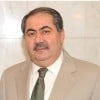
Iraqi Minister of Foreign Affairs Hoshyar Zebari (pictured) noted: “Iraq and Russia will proceed with the arms deal signed by Maliki during his most recent visit to Moscow.”
When the prospects of signing the contract turned bleak due to corruption concerns, Iraqi Defense Minister Saadoun al-Dulaimi appeared before the media to take responsibility for any corruption in the deal. He also denied that the government had signed the agreement or that any money had been paid.
In a press statement released on Feb. 22, 2013, Zebari affirmed that “the government is waiting for parliament to approve the 2013 budget to settle a down payment on the deal.”
The Iraqi parliament has been holding heated sessions for the past three weeks. However, it is still unable to ratify the budget due to disagreements between Sunnis, Shiites and Kurds over financial shares.
Posted in Iraq Industry & Trade News, Politics, Security Comments Off on $4bn Russian Arms Deal to Go Ahead
KRG Signs New Agreements with Gazprom
Posted on 26 February 2013 .
By John Lee.
The Kurdistan Regional Government is reported to have signed new agreements with Gazprom Neft, the oil-producing subsidiary of Russian gas monopoly Gazprom.
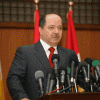
"We are satisfied with Gazprom Neft's work in the region. New agreements have been reached with this Russian company in recent days," KRG President Masoud Barzani (pictured) was quoted as saying by news agency Interfax.
Gazprom acquired interests in two Kurdistan blocks last August, but also has a contract with the Oil Ministry in Baghdad for the Badra oilfield in the South of the country.
(Source: upstreamonline)
Posted in Iraq Oil & Gas News Comments Off on KRG Signs New Agreements with Gazprom
KRG Pres Barzani meets Russian FM Lavrov
Posted on 24 February 2013 .
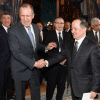
Russian Foreign Minister Sergey Lavrov hosted President Masoud Barzani in the Russian Foreign Ministry on Thursday for discussions on "bilateral relations" and the situation in Iraq and Syria.
In today’s meeting, both sides emphasized the need to strengthen relations between Russia on the one hand and Iraq and the Kurdistan Region on the other.
Foreign Minister Lavrov echoed President Putin’s words yesterday that Russia wants to establish strong ties with the Kurdistan Region of Iraq.
The two sides also discussed developments in Syria and the impact of this crisis on both Iraq and the Kurdistan Region. President Barzani said more than 75,000 Syrian refugees now reside in Kurdistan and the Kurdistan Regional Government now sends humanitarian aid across the border to refugees in Syria. He added that while it is for the Syrian people to decide their future, the rights of Syrian Kurds must be respected.
President Barzani and Foreign Minister Lavrov also talked about economic cooperation, particularly the role of Russian energy companies in Kurdistan and Iraq.
(Source: KRG)
Posted in Iraq Industry & Trade News Comments Off on KRG Pres Barzani meets Russian FM Lavrov