


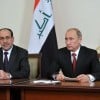
Press Statements Following Maliki-Putin Talks
Posted on 13 October 2012 .
By John Lee.
Presidents Maliki and Putin have issued the following statement after their meeting in Moskow:
PRESIDENT OF RUSSIA VLADIMIR PUTIN: Mr Prime Minister, ladies and gentlemen,
Our meeting with the Prime Minister of Iraq, Mr Nouri al-Maliki, was substantive and constructive.
Some significant changes have have been taking place in Iraq since Mr Maliki’s last visit to Moscow in April 2009 – changes for the better. Iraq’s leadership is doing much for complete national reconciliation and accord, socioeconomic problems resolution and restoring country’s positions in the region and on the international arena.
We sincerely wish our Iraqi friends success in rebuilding and strengthening their state and see the augmentation of our bilateral trade and economic relations and the deepening of our political dialogue as Russia’s input into the advancement of Iraq toward re-establishing its peaceful living.
During today’s detailed talks, we touched on nearly all the issues in our relations. We noted that, regrettably, we are still quite far from the trade level that had been achieved in 2003. At the same time, the growth rates in our relations are a cause for optimism. With every year, more and more Russian companies are participating in Iraq’s economic life.
We are grateful to the Iraqi side for resolving an issue that is highly important to us: ensuring security for our experts in Iraq.
We are seeing the renewel of our military and technical cooperation as well. Iraqi experts are familiar with our weapons, which have a good reputation, and I am certain that we will reach a mutual understanding in this important field, which certainly increases our trade and economic turnover and heightens the trust between our two states.
Posted in Investment, Iraq Industry & Trade News, Iraq Oil & Gas News, Politics, Security Comments Off on Press Statements Following Maliki-Putin Talks
Iraq "wants Russians to Replace Exxon at West Qurna"
Posted on 13 October 2012 .
By John Lee.
Iraq is considering replacing ExxonMobil at the supergiant West Qurna-1 oilfield with Russian companies LUKoil and Gazprom Neft, according to a report from Nefte Compass.
Iraq regards Exxon's contracts in the northern Kurdish region of the country as illegal.
But if any agreement was reached at this week's meeting between Iraqi Prime Minister Nouri al-Maliki and Russian President Vladimir Putin, it has not been made public.
Reuters cites a spokesman for LUKoil, which operates West Qurna-2, as saying the company is not planning to increase its exposure in Iraq by acquiring a stake in West Qurna-1, reiterating the company's official line that it is satisfied with its portfolio in Iraq.
Gazprom Neft, the oil arm of the world's top natural gas producer Gazprom, declined to comment.
Sources have told Reuters that Russia's top oil company Rosneft, may team up with Exxon in Iraq after the two have struck a landmark agreement to jointly tap Arctic hydrocarbon riches and oil and gas in North America.
Rosneft also declined to comment on the possibility of entering Iraq.
(Source: Reuters)
Posted in Iraq Oil & Gas News Comments Off on Iraq "wants Russians to Replace Exxon at West Qurna"
Iraq to Spend $1bn on Czech Attack Jets
Posted on 12 October 2012 .
By John Lee.
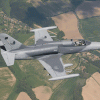
Iraq has agreed to buy 28 Czech-made Aero Vodochody L-159 advanced trainer/light-attack jets valued at $1 billion dollars (770 billions euros), a Czech defence ministry announced on Friday.
Agreement to buy the 24 new planes and four older army surplus aircraft was reached at the end of a two-day visit to Prague by Nouri al-Maliki.
Earlier in the week, Iraq and Russia announced a $4.2 billion arms agreement.
(Sources: Daily Star, Bloomberg, AFP)
Posted in Security Comments Off on Iraq to Spend $1bn on Czech Attack Jets
Video: Russia-Iraq Arms Deal - Business as Usual?
Posted on 12 October 2012 .
By John Lee.
Russia has agreed to sell up to $5bn worth of arms to Iraq.
Are the motives behind the deal purely financial, and does it impact the delicate balance of power in the region?
Guests: Sabah al-Mukhtar, Jorge Benitez, Dmitry Babich:
(Source: Al Jazeera)
Posted in Security Comments Off on Video: Russia-Iraq Arms Deal - Business as Usual?
From Russia With Love
Posted on 11 October 2012 .
By John Lee.
A high-level Iraqi delegation visiting Russia has made quite a stir this week:
- Arms deals worth $4.2 billion were announced, making Russia Iraq's second biggest supplier of arms after the US;
- A memorandum of understanding was signed for political and diplomatic cooperation between the two countries, with Iraq asking Russia’s help to exit Chapter VII;
- Gazprom Neft said it intends to remain active in both Iraqi Kurdistan and southern Iraq;
- The Iraqi government approved LUKoil's exploration of Block 10;
- Relations between Nouri al-Maliki and Vladimir Putin seemed to be very harmonious.
The Iraqi delegation was headed by Prime Minister Nouri al-Maliki, and included the Minister of Foreign Affairs, Hoshyar Zebari; Chairman of the Advisers Council at the Cabinet, Dr. Thamer Al Ghadban; Legal Advisor to the Prime Minister, Dr. Fadil Mohammed Jawad; Chairman of the National Investment Commission, Dr. Sami Al Araji; and Iraq’s Ambassador to Russia, Fayek Neroy.
But taking the long view, the closeness between these countries is nothing new, and indeed Putin was keen to point out that "regrettably, we are still quite far from the trade level that had been achieved in 2003"; in other words, under the regime of Saddam Hussein.
While Iraq needs to maintain friendly relations with as wide a range of countries as possible, this rekindling of old relationships has certainly raised some eyebrows in the West.
Please tell us your opinion of the Iraqi-Russian relationship in the comments section below.
Posted in Blog, Iraq Oil & Gas News, Politics, Security Comments Off on From Russia With Love
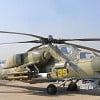
Russia Bags $4.2bn Iraq Arms Deals
Posted on 11 October 2012 .
By John Lee.
Iraq is to buy more than $4.2 billion of weapons from Russia under contracts signed in recent months, the Russian government announced on Wednesday, making it the largest weapons supplier to the Middle East country after the United States.
While a spokesman for Russia's state-controlled arms exporter, Rosvooruzheniye, said it never discusses content of arms deals, the contracts are believed to include 30 Mi-28NE combat helicopters and 42 Pantsir-S1 mobile rocket launchers.
Russian state broadcaster RT says Iraq may also purchase Russian MiG fighter jets as well as armored vehicles.
Iraq is sending a clear signal to the U.S. that it can conduct an independent policy,” said Alexei Malashenko, a Middle East analyst at the Carnegie Moscow Center. “The message is: ‘We can sign contracts with Russia if we like.’”
Ruslan Pukhov, director of the Russian security and defence think tank CAST, said "this is absolutely sensational".
(Sources: Reuters, Bloomberg)
Posted in Iraq Industry & Trade News, Security 1 Comment
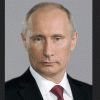
Putin Backs Russian Push for Iraqi Oil
Posted on 11 October 2012 .
By John Lee.
Russian President Vladimir Putin (pictured) lobbied Iraq's prime minister on Wednesday to support Russian energy investment, according to a report from Reuters.
At talks with Nouri al-Maliki in Moscow, he also called for Russia to strengthen its presence in the OPEC state.
Gazprom Neft denied on Wednesday that it had frozen its contracts in Iraqi Kurdistan.
Russia's second-largest crude producer LUKoil is developing the West Qurna-2 oilfield, while mid-sized Bashneft has won the right to develop Block 12 along with UK's Premier Oil.
LUKoil also bought Statoil's share of West Qurna-2 in March, and CEO Vagit Alekperov said he would be open to taking a new partner on board.
(Source: Reuters)
Posted in Iraq Oil & Gas News Comments Off on Putin Backs Russian Push for Iraqi Oil
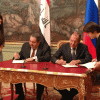
Iraq asks Russia's Help to Exit Chapter VII
Posted on 11 October 2012 .
By John Lee.
Iraq's Minister of Foreign Affairs, Hoshyar Zebari, and his Russian counterpart, Sergei Lavrov, signed a memorandum of understanding on Tuesday for political and diplomatic cooperation.
Following the signing ceremony, political and technical talks between the two sides took place on ways to develop relations between Iraq and Russia as well as exchanging views on the latest regional, international, and the Syrian crisis developments.
The two sides stressed the need to stop violence and bloodshed and to find a political solution to the deepening Syrian crisis.
The Iraqi side requested Russia's help to liberate Iraq from the remaining provisions of Chapter VII.
They also discussed mechanisms to end the mandate of the Special International Coordinator in charge of the Kuwaiti missing people and properties under Chapter VII. Both sides agreed to work together with the rest UNSC permanent members to issue a new resolution that ends the mandate before the end of this year.
The Iraqi delegation included of the Minister of Foreign Affairs, Chairman of the Advisers Council at the Cabinet Dr. Thamer Al Ghadban, Legal Advisor to the Prime Minister Dr. Fadil Mohammed Jawad, Chairman of the National Investment Commission Dr. Sami Al Araji, and Iraq's Ambassador to Russia Fayek Neroy.
The Russian side comprised Undersecretary of the Ministry of Foreign Affairs, Chairman of the Middle East Department, Senior Advisers at the Ministry for Arab and Iraqi affairs, and the Russian Ambassador in Baghdad.
Lavrov held dinner invitation in honor of Minister Zebari and his accompanying delegation.
(Source: Iraqi Foreign Ministry)
Posted in Iraq Industry & Trade News Comments Off on Iraq asks Russia's Help to Exit Chapter VII
Gazprom Denies Freezing Kurdistan Contracts
Posted on 11 October 2012 .
By John Lee.
Both Russia's Gazprom Neft and the Kurdistan Regional Government have denied that the company has frozen projects in Iraqi Kurdistan.
"Gazprom Neft is still working on these projects. The company keeps its interest in Kurdistan," a Gazprom Neft source told Reuters.
A spokesman for the KRG said Gazprom had informed the KRG on Wednesday that it remains committed to its contract in the Kurdistan region.
This follows a report from International Oil Daily, citing Iraqi Oil Minister Abdul-Kareem Luaibi [Elaibi] as saying Baghdad had received a letter from Gazprom, in which the company said it had frozen its contract with Kurdistan.
Gazprom management will travel to Kurdistan before the end of the year to discuss oil development in the province.
(Sources: Reuters, Bloomberg)
Posted in Iraq Oil & Gas News Comments Off on Gazprom Denies Freezing Kurdistan Contracts
Iraqi Oil to be Game-Changer for World Markets
Posted on 10 October 2012 .
Iraq’s energy sector holds the key to the country’s future prosperity and can make a major contribution to the stability and security of global energy markets, the International Energy Agency (IEA) says in a special report of the World Energy Outlook released today – the first time that the IEA has conducted a comprehensive review of the energy sector of a major Middle East producer.
The IEA’s Iraq Energy Outlook finds that Iraq makes by far the largest contribution to global oil supply growth over the coming decades, with current production of 3 million barrels per day (mb/d) more than doubling by 2020 and going on to reach more than 8 mb/d by 2035. Iraq becomes a key supplier to fast-growing Asian markets, mainly China, and the world’s second largest oil exporter by the 2030s, overtaking Russia.
"This landmark study confirms the increasing importance of Iraq to the global energy system, highlighting the key role it is expected to play in meeting growing energy needs and the responsibilities it will assume as a strategic source of world oil supply. Put simply, this report shows that we all have an interest in Iraq realising its potential and revitalising its economy," said IEA Executive Director Maria van der Hoeven.
"Developments in Iraq’s energy sector are critical for the country’s prospects and also for the health of the global economy." said IEA Chief Economist Fatih Birol, the report’s chief author. "But success is not assured, and failure to achieve the anticipated increase in Iraq’s oil supply would put global oil markets on course for troubled waters."
Catching up with rising demand for electricity is a critical domestic challenge, as prolonged power cuts are still experienced on a daily basis in many parts of the country. The report estimates that, if planned new capacity is delivered on time, electricity generation will meet Iraq’s demand for power in 2015. Natural gas can play a much more important role in Iraq’s future and a vital first step will be to reduce the amount of gas that is currently flared. Once domestic needs are met, Iraq can also provide a cost-competitive source of gas supply to neighbouring countries, to European markets and to Asia, according to the report.
Meeting the anticipated levels of oil, gas and power supply over the period to 2035 will require over $530 billion in energy investment in Iraq, with the annual investment need highest in the current decade. But Iraq stands to gain much more – almost $5 trillion in revenues from oil export over the same period (an average of $200 billion per year). Revenues of this magnitude can transform Iraq’s future prospects, with the potential to stimulate much-needed economic growth and diversification. To achieve these ambitions, Iraq will need strengthened institutions and human capacity, a stable regulatory framework and sound long-term strategies for the energy sector, and efficient, transparent management of revenues and spending.
The Iraq Energy Outlook has been produced in close co-operation with the federal government of Iraq, the regional and provincial governments and officials across many government bodies, including fact-finding visits by the IEA team to Baghdad, Erbil and Basrah.
To download the free report, please click here.
Posted in Iraq Oil & Gas News Comments Off on Iraqi Oil to be Game-Changer for World Markets