


Baghdad Governor Sacked Amid Protests
Posted on 08 October 2019 .
The Baghdad Provincial Council on Sunday voted to dismiss governor Falah al-Jazairi amid protests in the Iraqi capital, according to local media and Anadolu Agency.
The 58-member council voted unanimously to remove al-Jazairi from his post, Al-Iraqiya television said.
According to the report, the provincial council will accept applications within days from candidates for the position.
The move came amid demonstrations in Baghdad and southern provinces against high unemployment and rampant corruption since October 1.
At least 100 people have been killed and more than 2,500 others injured in the protests, according to an anonymous official from Iraq’s Health Ministry.
Protesters are demanding the resignation of Prime Minister Adel Abdul-Mahdi as well as improvements in living conditions and an end to corruption.
Discontent has been growing in Iraq in recent years due to rising unemployment and rampant corruption. Many in the country have limited access to basic services such as electricity and clean water, and unemployment is around 10%.
(Source: Middle East Monitor)
Posted in Politics, Security Comments Off on Baghdad Governor Sacked Amid Protests

New USAID Funding for Victims of ISIS Genocide
Posted on 05 October 2019 .
U.S. Agency for International Development (USAID) Administrator Mark Green announced the first tranche of recipients under USAID's New Partnerships Initiative (NPI) on Thursday during his remarks at the Accord Network's Annual Forum.
The organizations will carry out programs that improve global health outcomes in USAID's partner countries, and assist populations in the Republic of Iraq that are recovering from the genocide perpetrated by the so-called Islamic State in Iraq and Syria (ISIS).
Administrator Green launched the NPI in May 2019 to expand and diversify USAID's partner base and change the way the Agency does business. By working with new or underutilized partners, the Agency hopes to bring more innovative approaches to U.S. foreign assistance; focus on strengthening capacity and commitment in partner countries by tapping into existing networks of community- and faith-based organizations; and reach new populations.
Administrator Green also announced a new $18 million award to the International Organization for Migration (IOM) to support the return and recovery of displaced religious and ethnic minority communities in the Nineveh Plains and Western Nineveh Province. Long-time USAID partner Samaritan's Purse will receive $9 million of that total.
New USAID Assistance Through the NPI Direct to Local Iraqi Groups That Are Helping Victims of ISIS Genocide
USAID is awarding small grants through the NPI that total approximately $4 million to six local groups in Northern Iraq to help religious and ethnic minorities targeted by ISIS. The new NPI implementers in Northern Iraq are the following:
Philadelphia Organization for Relief and Development: The award will establish a community center in the town of Qaraqosh to provide services for people with disabilities, training in employment skills, child care, and a community food bank.
Catholic University of Erbil: The award will provide classes in business language and computer software for widows, victims of abuse, and former captives of ISIS.
Top Mountain: The award will support a business incubator and employment program for Iraqi youth, which will promote entrepreneurship, provide business training, and build commercial networks.
Shlama Foundation: The award seeks to improve job opportunities through training engineers on the installation on solar power, provide electricity for families, and install solar-powered pumps for farms and street lighting for villages.
Beth Nahrain: The award will help re-establish a local, women-led organization decimated by ISIS. The organization will also provide small-business vocational training to women in the Nineveh Plains.
Jiyan Foundation for Human Rights: The award will provide trauma-rehabilitation and resilience services to survivors of genocide; legal services and programs in justice/reparations; and activities to promote inter-religious and inter-ethnic dialogue.
The United States remains committed to supporting persecuted religious and ethnic minorities in Northern Iraq. With these new awards, the total assistance the U.S. Government has provided since 2017 in Northern Iraq is now more than $400 million. These programs complement H.R. 390, the Iraq and Syria Genocide Relief and Accountability Act of 2018, which passed with bipartisan support in the U.S. Congress and which President Donald J. Trump signed into law on December 11, 2018. Additional U.S. humanitarian assistance has also benefited the same Iraqi communities.
New Funding for the IOM and Samaritan's Purse to Help Victims of ISIS Genocide
Administrator Green also announced at the Accord Network that Samaritan's Purse will receive $9 million as a part of a new $18 million award to the International Organization for Migration (IOM), to support the return and recovery of displaced religious and ethnic minority communities in the Nineveh Plains and Western Nineveh Province in Iraq.
New USAID Assistance in Global Health Through the NPI
Administrator Green also announced two new awards under the Agency's NPI for global health. These awards, which total $68 million, will leverage the expertise and reach of local and locally established civil society and faith- and community-based organizations to increase the quality, access, and sustainability of health care.
The new NPI implementers for global health are the following:
World Relief: Working with local partners, World Relief will expand and leverage existing community networks in four countries to help strengthen maternal, reproductive, and child health at the local level.
Palladium International: This program will help reach USAID's goal of increasing access to, and the uptake of, high-quality health care across priority areas, in line with USAID's Journey to Self-Reliance. The partner will provide sub-awards to local organizations, along with mentoring and technical support to strengthen their capacity. Palladium will be expected to pass sixty-five percent of the total award to new and underutilized sub-awardees.
(Source: USAID)
Posted in Construction & Engineering In Iraq, Employment, Healthcare, Iraq Education and Training News, Iraq Industry & Trade News Comments Off on New USAID Funding for Victims of ISIS Genocide
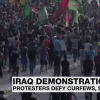
Video: Death Toll rises to 20 as Unrest Spreads
Posted on 04 October 2019 .
From Al Jazeera. Any opinions expressed are those of the authors, and do not necessarily reflect the views of Iraq Business News.
The death toll from three days of mass anti-government protests in Iraq has risen to 20, with hundreds more wounded as authorities imposed curfew in several cities and cut internet access across much of the country to quell unrest.
The protests, which began in capital Baghdad on Tuesday, are mostly spontaneous and without political leadership, staged by disenchanted youth demanding jobs, improved services, such as electricity and water, and an end to Iraq's endemic corruption.
The demonstrations have since spread to cities across the mainly Shia south, making it the most serious challenge to Prime Minister Adel Abdul Mahdi's year-old government.
Al Jazeera's Osama Bin Javaid has the latest:
Posted in Politics, Security Comments Off on Video: Death Toll rises to 20 as Unrest Spreads
China's CITIC may Finance Iraqi Projects
Posted on 27 September 2019 .
By John Lee.
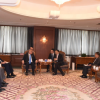
The Iraqi Minister of Finance has met with China's state-owned investment company CITIC Bank to discuss the financing of projects in Iraq.
Minister Fuad Hussein held talks with CITIC Bank chairman Chang Zhenming, in the presence of the Iraqi governors, transport minister, and electricity minister.
The projects are said to include rail and power infrastructure.
(Source: Iraqi Ministry of Finance, Reuters, Kurdistan24)
Posted in Construction & Engineering In Iraq, Investment, Iraq Banking & Finance News Comments Off on China's CITIC may Finance Iraqi Projects
CMEC to Expand in Iraqi Electricity Sector?
Posted on 26 September 2019 .
By John Lee.
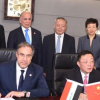
During their recent visit to China, the Deputy Prime Minister for Economic Affairs, accompanied by the Ministers of Transport and Electricity visited the China Machinery Engineering Corporation (CMEC), which specializes in transport, energy, communications and heavy engineering equipment.
The company is already involved in the reconstruction of Salah al-Din power station and is in negotiations regarding power stations in Al-Khairat and Karbala.
Iraq’s Electricity Minister Luay al-Khateeb said he hoped to establish a strategic economic partnerships with China, with a focus on the energy sector.
(Source: Iraqi Ministry of Finance)
Posted in Construction & Engineering In Iraq Comments Off on CMEC to Expand in Iraqi Electricity Sector?
China Railway Company considers Karbala-Najaf Railway
Posted on 25 September 2019 .
By John Lee.
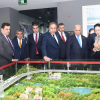
The Deputy Prime Minister for Economic Affairs, Fuad Hussein, accompanied by the Ministers of Transport and Electricity, a number of Governors, Advisors to the Prime Minister and a number of general managers visited the China Railway Company earlier this week.
Among the projects discussed were the building of the Karbala-Najaf railway.
The Minister of Transport stressed the importance of the project and said that Iraq is ready to complete negotiations on the technical specifications.
(Source: Iraqi Ministry of Finance)
Posted in Construction & Engineering In Iraq, Iraq Transportation News 1 Comment

Siemens and Orascom to rebuild Baiji Power Plant
Posted on 16 September 2019 .
By John Lee.
Germany's Siemens and Egypt's Orascom Construction signed an agreement with Iraq’s Ministry of Electricity to rebuild Baiji 1 and Baiji 2 power plants in northern Iraq.
The plants will have a combined generation capacity of 1.6 gigawatts (GW) when completed and are a major step in Siemens’ roadmap for rebuilding Iraq's power sector that has already added more than 700 megawatts to Iraq’s grid.
Work at Baiji, which is about 250 km north of Baghdad, will begin once the contracts are approved by Iraq’s Council of Ministers and a financial agreement is reached with the Ministry of Finance. The projects are expected to be completed within 28 months after the financial closing.
The power plants in Baiji were severely damaged by Islamic State militants. Recovering the lost capacity from the plants will help Iraq power its biggest oil refinery located in the city, a concrete plant, and will provide electricity to thousands of homes in Salahuddin province and other areas.
Iraq’s Electricity Minister Luay al-Khateeb, Siemens AG’s Joe Kaeser (pictured) and Osama Bishai, the CEO of Orascom Construction, witnessed the signing of the agreement on the sidelines of the Iraq Energy Forum 2019 in Baghdad.
Siemens will supply four new SGT5-2000E gas turbines and will inspect and revamp six exiting ones. The company will also provide two 400kV and one 132kV substations, along with generators, auxiliaries, automation and control systems, and related electrical equipment.
Dietmar Siersdorfer, CEO Siemens Middle East and UAE, said
“Iraq’s economic transformation is picking up pace, and this project demonstrates Siemens’ commitment to help Iraq’s Ministry of Electricity provide efficient and reliable power to all its people. We are proud to begin this project to help Iraqis in liberated areas recover and prosper.”
Discussing the deal, Karim Amin, CEO of Power Generation at Siemens AG, said:
“The reconstruction of Baiji 1 and 2 power plants mark the second phase of our roadmap in Iraq and will be the biggest so far in terms of power generating capacity when both plants are completed.
"The rebuilding of Baiji will secure 1.6 gigawatts and will create hundreds of jobs, which is a further demonstration of Siemens’ commitment to support knowledge transfer to the Iraqi people.”
Siemens’ footprint has been expanding in Iraq and the company is now active at over 20 locations, from Basra to Erbil. Siemens also has some recent experience in Baiji.
Earlier this month, Siemens delivered power equipment to ensure constant electricity for a clinic being built in the city and will also donate Siemens medical equipment for the facility. Al-Tawheed Center is expected to open this year and will be able to treat 10,000 patients a year.
Siemens and Iraq’s Ministry of Electricity signed an implementation agreement to kick off the execution of the roadmap for rebuilding Iraq's power sector in April 2019. Within the implementation agreement, the two agreed on the award of contracts valued at approximately €700 million for Phase 1 of the Roadmap.
(Source: Siemens)
Posted in Construction & Engineering In Iraq, Iraq Industry & Trade News Comments Off on Siemens and Orascom to rebuild Baiji Power Plant
Mass Global, GE to add up to 1.5 GW at Besmaya Power Plant
Posted on 16 September 2019 .
By John Lee.
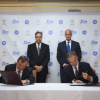
Under the guidance of the Iraqi Prime Minister, H.E. Dr. Adel Abdul Mahdi, the patronage of the Iraqi Minister of Electricity, H.E. Dr. Luay al-Khatteeb and in continuation of their dedicated efforts to strengthen Iraq’s power sector, Mass Energy Group Holding (MGH) and GE Power signed a new agreement that will help establish Phase 3 of the Besmaya [Bismaya] Power Plant, taking the total capacity of the facility up to 4.5 gigawatts (GW).
Under the scope of the agreement, GE will supply MGH with four 9F gas turbines and four generators to equip Besmaya Phase 3. The project has already been approved by Iraq’s Council of Ministers and MGH will supply electricity from the new extension of the plant to the Iraqi Ministry of Electricity under a 20-year power purchase agreement (PPA).
The agreement was signed in the presence of H.E. Dr. Luay Al-Khatteeb and John Rice, Chairman of GE Gas Power by Ahmad Ismail, Chairman of MGH and Joseph Anis, President and CEO of GE’s Gas Power Systems and Power Services businesses in the Middle East, North Africa and South Asia.
H.E. Dr. Luay Al-Khatteeb said:
“As the first independent power project in Central Iraq, Besmaya set benchmarks in public-private sector partnerships and contributions to Iraq’s electricity network.
"It has not only shown that Iraq can be an attractive destination for private sector investments in the energy sector but more importantly, it has played a critical role in helping the government to increase supplies of reliable, efficient, and affordable power to meet the needs of our citizens. We look forward to continuing our collaboration with MGH and GE through the further expansion of Besmaya Power Plant.”
Besmaya Phase 3 is the largest new power plant by output to be added to Iraq’s national grid since 2014. The project is anticipated to bring another 1.5 GW of power online by 2021, with the first 500 megawatts (MW) scheduled to be added to the grid as early as next year. Up to 1,200 people are expected to be employed in the construction of Besmaya Phase 3.
Ahmad Ismail said:
“At Mass Energy Group Holding, our mission is to make investments in the interests of the public by being an active contributor to the construction and development of Iraq’s power sector. In GE, we have found a reliable partner that is not only committed to the same values but also able to provide industry-leading technology, as well as world-class execution and service expertise on the ground in Iraq.
“We are excited to start working on the next phase of Besmaya today and remain committed to partnering with the government and people of Iraq to keep addressing the country’s power generation needs in the future as well.”
The agreement builds on a proven track record of successful power generation projects executed in collaboration between MGH and GE in Iraq. Besmaya is already the largest power plant in Iraq in terms of output and among the largest across the Middle East and North Africa.
Phase 1 of Besmaya Power Plant is capable of generating up to 1.5 GW of power, while Phase 2 can already produce up to 1 GW and is expected to add up to another 500 MW as it starts combined cycle operations during the end of 2019 / early 2020. GE has provided eight 9F gas turbines and 4 steam turbines for the first two phases of Besmaya. Moreover, MGH and GE have earlier brought up to 4 GW of power online in the Kurdistan Region of Iraq through the Erbil, Duhuk, and Sulaymania projects.
Joseph Anis said:
“On behalf of GE, I would like to thank MGH and the Ministry of Electricity for their continued trust in us. GE has been honored to collaborate with various organizations to support the development of Iraq’s electricity sector for over 50 years.
"From being among the first to help rebuild power infrastructure in conflict-affected areas such as Diyala and Mosul, to providing equipment and services for Iraq’s first independent power plant, we have not just promised but continuously delivered on our commitment to help power progress for the people of Iraq.”
(Source: GE)
Posted in Construction & Engineering In Iraq, Iraq Industry & Trade News Comments Off on Mass Global, GE to add up to 1.5 GW at Besmaya Power Plant
Iraq signs deal to Import Electricity from Gulf States
Posted on 16 September 2019 .
Iraq has signed a landmark deal with the Gulf Cooperation Council (GCC) for a power line to import 500 megawatts of electricity by 2020, local reports said on Sunday.
According to the Iraqi Electricity Ministry, the 300-kilometre line will run from Kuwait to Iraq’s southern port of Faw and be financed by the GCC.
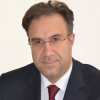
Electricity Minister Lo’ai [Luay] Al-Khatteeb (pictured) signed the agreement with the head of the GCC Interconnection Authority, Ahmad Ibrahim, on the sidelines of an energy conference held in Baghdad.
“This is the first deal of its kind with the GCC,” explained Al-Khatteeb. Iraq is also in separate talks with neighbours Saudi Arabia, Jordan and Turkey to import electricity.
“This first step will pave the way to discuss further and higher capacity projects,” the minister added, “not only to supply Baghdad and northern Iraq but also as a pathway to other countries.”
(Source: Middle East Monitor)
Posted in Iraq Industry & Trade News Comments Off on Iraq signs deal to Import Electricity from Gulf States
Iraq looking to Finance $3bn Upgrade to Power Grid
Posted on 12 September 2019 .
By John Lee.
Iraq's Minister for Electricity has said Iraq is looking to finance a $3 billion upgrade of its power transmission and distribution network.
The National quotes Minister Luay Al Khateeb as saying:
“We do have a fast track plan for $3 billion to upgrade the distribution and transmission of which $2bn is for the transmission and $1bn for the distribution.
"These are required immediately to make the national grid capable of delivering 20 hours of electricity across Iraq but this is all subject to the approval of the council of representatives for budget.
"I’m open to credit lines for financial support to finance these projects, even these require approval of council of ministers when it comes to planning for the budgets and government loans.”
(Source: The National)
Posted in Iraq Banking & Finance News, Iraq Industry & Trade News Comments Off on Iraq looking to Finance $3bn Upgrade to Power Grid