


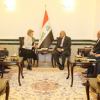
IBBC completes Largest Ever Trade Mission to Baghdad
Posted on 14 February 2019 .
IBBC completes Trade Mission to Baghdad with largest ever delegation of UK, International & Iraqi Businesses 9-12 Feb 2019
The Iraq Britain Business Council (IBBC) visited numerous Iraqi government ministers and officials during a highly successful trade mission to Baghdad on 9-12 February 2019.
The delegation was the largest ever led to the Republic of Iraq by the IBBC and included meetings with the Prime Minister, H.E. Dr Adil Abdul-Mahdi and Deputy Prime Minister and Finance Minister H.E. Dr Fuad Hussein.
The delegation was supported by Her Majesty’s Ambassador to Iraq Jon Wilks CMG and the UK’s Department of International Trade. A reception was held for members and guests at the British Embassy in Baghdad courtesy of the Ambassador on Sunday 10 February.
Meetings were held with the following officials:
- H.E. Dr Adil Abdul-Mahdi, Prime Minister
- Deputy Prime Minister and Finance Minister Dr Fuad Hussain
- Minister of Health Dr Ala Al Alwan
- Minister of Transport Dr Abdullah Luaibi
- Minister of Electricity Dr Luay Al Khateeb
- PM’s Advisory Commission
- Chairman of National Investment Commission Dr Sami Al Araji
Christophe Michels, Managing Director of IBBC stated:
“We were delighted to be able to organise such a large delegation of some of the most prominent UK, Iraqi & International companies operating in Iraq to meet with essential political figures in the new administration.
"After a series of highly productive meetings and discussions across a range of sectors, we feel confident that compared to previous years, Iraq in 2019 will see a significant level of progress in investment and economic growth to the benefit of the country and its people.”
The IBBC Spring Conference at the Mansion House taking place on 10 April in London will build upon the success of this mission. We expect a high-level delegation of Iraqi government figures to attend, as well a UK government presence and numerous senior industry and academic experts. For more information and registration: https://www.iraqbritainbusiness.org/event/spring-conference-at-the-mansion-house
Numerous IBBC Member companies joined the delegation, representing the major companies doing business in Iraq, across the most important sectors of the economy:
Al Bilal Group
Al Burhan
Al Nukhba-OFS FZCO
Al Maseer Insurance
ARCHS
Dar Group
EY
Exxon Mobil
Field Energy Services
G4S
GE
Gulfsands Petroleum
International Islamic Bank
Khudairi Group
KPMG
Management Partners
Menzies Aviation
Ratba’a Contracting Co. LLC
Serco
Siemens
Standard Chartered Bank
Zaha Hadid Architects
(Source: IBBC)
Posted in Iraq Industry & Trade News Comments Off on IBBC completes Largest Ever Trade Mission to Baghdad
GE, Siemens Electricity Deals "in Doubt"
Posted on 12 February 2019 .
By John Lee.
The Financial Times has reported that the recently-agreed electricity deals with Siemens and General Electric (GE) are not certain to be approved.
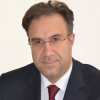
It quotes Minister for Electricity Luay Al-Khatteeb (pictured) as saying:
“I don’t have financial allocations or the processes available at hand, it doesn’t allow me to cherry-pick the right consultancies to deal with these multibillion-dollar deals. The bureaucracy that I inherited is . . . illogical. ... certainly it’s going to be quite challenging to blindly accept such proposals.”
Al-Khatteeb took his post after the non-binding deals, or “principles of co-operation” were agreed with his predecessor, Qasim Al Fahdawi.
He said he that “volunteer experts” are helping “read in between the lines of these sophisticated legal contractual documents.”
Last month, Lisa Davis, CEO of the Siemens Gas and Power Operating Company, and member of the corporation’s managing board, told The National last week that “discussions are ongoing.”
(Source: Financial Times)
Posted in Iraq Industry & Trade News, Iraq Public Works News, Politics 1 Comment
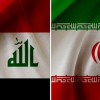
Iran, Iraq Deal to Boost Cooperation in Electricity
Posted on 09 February 2019 .
High-ranking officials from Iran and Iraq on Friday signed two memorandums of understanding (MoUs) and a contract to boost cooperation between the two countries in the electricity industry.
At the end of his three-day visit to Iran, Iraqi Minister of Electricity Luay al-Khatteeb signed two MoUs and a contract on the electric industry with Iranian Energy Minister Reza Ardakanian.
Speaking at the signing ceremony, Ardakanian said, “What is happening today as a result of the Iraqi minister of electricity's visit to Iran and the negotiations that took place during this visit is the beginning of a new chapter in the comprehensive cooperation between the two countries in the field of electrical industry.”
“Within the framework of this cooperation, we intend to not only continue electricity exports as long as and as much as required by our Iraqi brothers and sisters, but also cooperate with them in technical terms… in the field of electricity,” he added.
The agreements came as governors of the central banks of Iran and Iraq signed an agreement to develop a payment mechanism aimed at facilitating banking ties between the two neighboring countries.
The deal on the payment mechanism was signed in a meeting between Iran’s Abdolnaser Hemmati and Iraq’s Ali Mohsen al-Allaq in Baghdad on Tuesday.
In addition to natural gas and electricity, Iraq imports a wide range of goods from Iran including food, agricultural products, home appliances, and air conditioners.
Speaking at a joint press conference with Iraqi President Barham Salih in Tehran in November, Iranian President Hassan Rouhani said the value of trade and economic interaction between Tehran and Baghdad stands at around $12 billion, adding that the two neighbors have the potential for a $20-billion trade target.
Rouhani hoped that cooperation between Tehran and Baghdad would contribute to regional security and stability.
(Source: Tasnim, under Creative Commons licence)
Posted in Iraq Industry & Trade News Comments Off on Iran, Iraq Deal to Boost Cooperation in Electricity
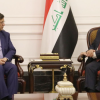
PM Urges Rapid Implementation of Iran Banking Deal
Posted on 06 February 2019 .
Governor of the Central Bank of Iran (CBI) Abdonnaser Hemmati said Iraqi Prime Minister Adil Abdul-Mahdi has voiced “his firm support” for the banking deal reached between the two countries on Tuesday night and called for its rapid implementation.
"After a long and four-hour meeting last night with the governor of the Central Bank of Iraq, I had a very good and constructive meeting with the Prime Minister of Iraq on Wednesday, February 6,” Hemmati said in a post on social media.
“I appreciated his determination to develop political and economic relations between the two countries,” he wrote.
“He declared his firm support for the two sides’ banking agreement and urged the governor of Iraq’s Central Bank to quickly pursue and implement the deal,” Hemmati stated.
In a meeting between Hemmati and his Iraqi counterpart, Ali Mohsen al-Allaq, in Baghdad on Tuesday night, the agreement to develop a payment mechanism aimed at facilitating banking ties was signed.
In addition to natural gas and electricity, Iraq imports a wide range of goods from Iran including food, agricultural products, home appliances, and air conditioners.
Speaking at a joint press conference with Iraqi President Barham Salih in Tehran in November, Iranian President Hassan Rouhani said the value of trade and economic interaction between Tehran and Baghdad stands at around $12 billion, adding that the two neighbors have the potential for a $20-billion trade target.
Rouhani hoped that cooperation between Tehran and Baghdad would contribute to regional security and stability.
(Source: Tasnim, under Creative Commons licence)
Posted in Iraq Banking & Finance News, Iraq Industry & Trade News Comments Off on PM Urges Rapid Implementation of Iran Banking Deal
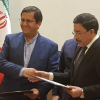
Iran, Iraq "Finalize" Payment Mechanism
Posted on 06 February 2019 .
Governors of the central banks of Iran and Iraq signed an agreement to develop a payment mechanism aimed at facilitating banking ties between the two neighboring countries.
The deal on the payment mechanism was signed in a meeting between Iran’s Abdolnaser Hemmati and Iraq’s Ali Mohsen al-Allaq in Baghdad on Tuesday night.
Speaking at the meeting, Hemmati described Iraq as Iran’s biggest trade partner and said banking relationship is the factor needed for the durability of bilateral ties between the two countries.
Hemmati further pointed to the US sanctions against Iran and said by waging an economic war against the Islamic Republic, Washington has made extensive efforts to disturb the economic and political conditions of Iran.
However, he added, with the arrangements made by Iran, fortunately, the enemy plots have been thwarted and the Iranian economy has become stable.
In addition to natural gas and electricity, Iraq imports a wide range of goods from Iran including food, agricultural products, home appliances, and air conditioners.
Speaking at a joint press conference with Iraqi President Barham Salih in Tehran in November, Iranian President Hassan Rouhani said the value of trade and economic interaction between Tehran and Baghdad stands at around $12 billion, adding that the two neighbors have the potential for a $20-billion trade target.
Rouhani hoped that cooperation between Tehran and Baghdad would contribute to regional security and stability.
(Source: Tasnim, under Creative Commons licence)
Posted in Iraq Banking & Finance News, Iraq Industry & Trade News Comments Off on Iran, Iraq "Finalize" Payment Mechanism
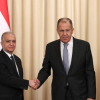
Russia wants More Projects with Iraq
Posted on 31 January 2019 .
By John Lee.
Russian Foreign Minister Sergey Lavrov has said that Moscow is very interested in increasing trade, economic and investment ties with Iraq.
Following a meeting on Wednesday with Iraqi Foreign Minister Mohamed Ali Alhakim, he said:
"In the field of investment, especially in the hydrocarbon sector, there is a very good result. Lukoil, Gazprom Neft, SoyuzNefteGaz are already working, Rosneft is interested in projects in Iraq. The total investment in this industry has already exceeded $ 10 billion.
"We want to promote projects in other areas. Today we talked about electricity, agriculture, industry, transport - all this will be considered in the context of preparations for the next meeting of the Russian-Iraqi Intergovernmental Commission on Trade, Economic, Scientific and Technical Cooperation."
He added that about 4 thousand Iraqi citizens are currently studying in universities of the Russian Federation, while dozens of diplomats from Iraq take part in special training courses at the Diplomatic Academy at the Russian Foreign Ministry.
(Source: Russian Ministry of Foreign Affairs)
Posted in Agriculture, Construction & Engineering In Iraq, Investment, Iraq Banking & Finance News, Iraq Education and Training News, Iraq Industry & Trade News, Iraq Oil & Gas News Comments Off on Russia wants More Projects with Iraq

$1bn UK Financing for Iraqi Electricity
Posted on 30 January 2019 .
UK Export Finance (UKEF) has announced it will support UK firms with US $1.02 billion to build two new power stations in Iraq and support the restoration of a number of electricity substations in the country.
- US $1.02 billion in support for UK firms to build two new power stations
- Agreement will help build and refurbish numerous electricity substations across Iraq
- Announcement reaffirms the UK’s commitment to Iraq’s continued economic development
US $620 million financing will go to support two contracts between GE and Iraq’s Ministry of Electricity to build two power stations in Samawa and Dhi Qar, located northwest of Basra, in southern Iraq.
UKEF had already provided initial support for the project; this additional financing supports the main construction phase of the project involving further procurement from UK suppliers through GE sub-contractor ENKA UK.
UKEF will also provide US $400 million to support a project by GE’s Grid Solutions, business to develop 14 sub-stations across Iraq. GE will build new substations on a turnkey basis and supply equipment such as transformers and other parts to rehabilitate existing substations, helping to bring power to areas with significant power shortages from the north to the south of the country.
This announcement follows the agreement between the governments of the UK and Iraq signed in March 2017, which re-affirmed the UK’s commitment to Iraq’s continued economic development.
This project will play a key role in bolstering the capacity of the Iraqi electricity grid, the two new power stations, located in the Basra region, will give citizens the access they need to critical infrastructure.
Baroness Fairhead (pictured), Minister of State for Trade and Export Promotion, said:
"The scale of these contracts illustrates the demand for British expertise in the utilities sector and the level of support the government can give to British businesses looking to make the most of similar opportunities across the globe.
"The UK Government continues to be committed to Iraq’s economic development and I am delighted that UK Export Finance is supporting projects that will have such a direct impact on improving the country’s critical infrastructure and the lives of the Iraqi people."
Guto Davies, GE Energy Financial Services’ Global Capital Advisory Managing Director, said:
"The announcement of these new facilities further strengthens GE’s collaborations in Iraq to support the country’s power infrastructure and meet the growing need for electricity. GE recognises the importance of UKEF in supporting critical infrastructure projects in Iraq and the UK supply-chain. We are delighted they continue to fund major projects in the country’s power energy sector."
Yavuz Akturk, Director at ENKA UK, said:
"Power shortages continue to halt Iraq’s reconstruction and addressing this scarcity is crucial to the country’s future. As ENKA, we have taken a significant role in rebuilding the country’s infrastructure, and with these projects we will help the people in the country which are in urgent need for electricity.
"It would not be possible without the continuous support of the UK Government and the highly dedicated UKEF team; and we as ENKA, are grateful for the high-level support for these projects which will also provide great opportunities for the UK exporters."
(Source: UK Govt)
Posted in Construction & Engineering In Iraq, Iraq Banking & Finance News, Iraq Industry & Trade News Comments Off on $1bn UK Financing for Iraqi Electricity
UK announces $43m Iraq Aid Package
Posted on 29 January 2019 .
A new UK aid package is to help the Government of Iraq to reinvigorate its economy and rebuild hospitals, schools and other vital infrastructure, allowing Iraqis displaced by conflict to return home and restart their lives, UK Minister for the Middle East Alistair Burt announced during a four-day visit to Iraq.
The UK is the first donor to the newly formed Iraq Reform and Reconstruction Fund (IRRF), following close cooperation between the Department for International Development (DFID), the Government of Iraq, the World Bank, Germany and other international partners to develop the fund.
The fund will:
- encourage innovative approaches and provide technical assistance to the Government of Iraq as it reconstructs areas affected by conflict, including the rebuilding of houses, schools, hospitals, factories and roads.
- provide opportunities to utilise UK and international expertise to help the Government of Iraq to carry out vital reforms that will make the country more business friendly.
- help unlock Iraq’s economic potential, generate jobs, boost potential for enhanced future trade with the UK and other international partners and lay the ground-work for long-term peace and stability following the conflict with Daesh.
In addition to tackling Iraq’s long-term recovery and reconstruction, Mr. Burt also announced further support to help meet the immediate humanitarian needs of the 1.8 million people still displaced from their homes within Iraq, and a boost for stabilisation efforts to ensure vital services such as healthcare and electricity are reinstated quickly in places such as Mosul.
During the visit in which Iraq and the UK agreed to a joint communique to further strengthen bilateral relations, Mr Burt held wide ranging discussions on UK-Iraqi cooperation, trade, development and regional security issues with the Iraqi President Barham Salih, the Prime Minister Adil Abdul Mehdi, Foreign Minister, Deputy Foreign Minister and the Trade and Planning ministers.
He also met Prime Minister of the Kurdistan Regional Government, Nechirvan Barzani, and the Prime-Minister designate, Masrour Barzani. Whilst in the Kurdistan Region, the minister also met Minister for the Interior, and for Peshmerga Affairs Karim Sinjari, as well as Deputy Prime Minister Qubad Talabani.
In support of the Foreign Secretary’s commitment to tackle the persecution of Christians across the globe, the minister also engaged with the Archbishop of Erbil, Bashar Warda and grassroots faith organisations to gain their perspectives on freedom of religion and beliefs in the region.
Speaking from Baghdad the Minister for the Middle East Alistair Burt said:
"The UK is a strong partner and friend of Iraq. We share a range of mutual and growing priorities which include security, development, foreign policy and trade.
"There is much to be celebrated about Iraq’s progress since the territorial defeat of Daesh in 2017. But there is more to be done to help Iraq develop the strong, stable future, decided on by all Iraqis, that its people deserve. The UK remains committed to supporting Iraq to develop along non-sectarian lines, and we are particularly concerned about the rights and freedoms afforded to Christians and other minority faith groups.
"I am proud that we will be the first donor to the Iraq Reform and Reconstruction Fund. UK aid will provide vital support to the people of Iraq as they rebuild their lives, their businesses and their economic independence."
UK aid announced today for the humanitarian response will support vulnerable people displaced by conflict, providing clean water, medicine and shelter. Since 2014, UK aid in Iraq has provided 4.1 million people with life-saving healthcare, 2 million people with safe water and sanitation, 836,500 people with shelter and more than 408,000 people with food.
£16 million will be allocated to the Iraq Reform and Reconstruction Fund (IRRF), run by the World Bank, from DFID’s budget. The IRRF will support Government of Iraq-led reconstruction efforts following the destruction caused by the conflict with Daesh, and support the implementation of longer term economic reform.
£6.9 million will be allocated to UNDP’s Funding Facility for Stabilisation (FFS) in Iraq from the UK Government’s Conflict, Security and Stability Fund (CSSF). It will directly support the rehabilitation of critical infrastructure in areas of Iraq liberated from Daesh. This will include hospitals, school, power plants and roads destroyed in the fighting.
£10 million will be allocated to UN OCHA’s Iraq Humanitarian Pooled Fund from DFID’s budget. It will support the ongoing humanitarian response, providing for the immediate needs of vulnerable people in Iraq displaced by conflict. It will help deliver clean water, medicine, shelter and a wide range of additional services to people living within temporary camps. Since 2014, UK aid in Iraq has provided 4.1 million people with life-saving healthcare, 2 million people with safe water and sanitation, 836,500 people with shelter and more than 408,000 people with food.
(Source: UK Govt)
Posted in Construction & Engineering In Iraq, Healthcare, Iraq Education and Training News, Iraq Public Works News Comments Off on UK announces $43m Iraq Aid Package
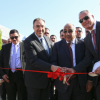
GE Power Substation Inaugurated in Baghdad
Posted on 25 January 2019 .
Iraqi Ministry of Electricity and GE Power celebrate inauguration of Baghdad West North Substation
Underlining their joint commitment to support the development of Iraq’s power infrastructure, the Iraqi Ministry of Electricity (MoE) and GE Power’s Grid Solutions business (NYSE: GE) celebrated the energization of the Baghdad West North substation.
Located about 35 kilometers away from the city, the substation can help connect up to 1,000 megawatts (MW) to the national grid, decreasing bottlenecks and increasing the hours of available power. The event was attended by H.E. the Prime Minister of Iraq, Adil Abdul-Mahdi, senior officials of the Iraqi Ministry of Electricity including H.E. Minister Luay Al-Khatteeb, various government entities, GE and other organizations.
H.E. Luay Al-Khatteeb, Minister of Electricity, said:
“The Iraqi Ministry of Electricity is seeking to provide reliable, uninterrupted power across the country. The opening of the Baghdad West North substation reflects our efforts to achieve this goal. The substation will play a critical role in helping to deliver much-needed power, especially in the upcoming summer months."
GE’s scope of work for the turnkey 400/132/11 kilovolt (kV) gas insulated substation project included the design, equipment manufacturing, site delivery, erection, testing & commissioning, and training of personnel. The project’s construction, erection, commissioning, and testing was completed by GE Iraqi engineers in collaboration with local Iraqi subcontractors.
The facility can feed 132 kV substations at Kadhmiya, Al Shualla and Al Sabbeaat, as well as another five substations that are planned to be developed in the future and helps connect power from the Basmaya Power Plant, Taji Gas Power Plant and mobile gas power plants to the national grid.
“The energization of the substation reflects our commitment to support Iraq in building a robust electricity infrastructure,” said Mohammed Mohaisen, President & CEO of GE Power’s Grid Solutions business in the Middle East, North Africa and Turkey.
“Our turnkey approach to project development helps bring best-in-class technology and expertise across every touch-point of the project. As a partner in the country’s progress, we will continue to deliver on our promise to the Iraqi people of supporting the government to build a stable electricity network that meets their needs.”
Following the agreement for the Baghdad West North substation, GE also signed a US$400 million agreement to develop and rehabilitate 14 additional electric substations, and to supply critical equipment such as transformers, circuit breakers and other related equipment.
The substations will connect power plants spread across the governorates of Ninawa, Salah Al Din, Al Anbar, Karbala, Baghdad, Qadisiyyah and Basra to the national grid. Several of the locations, in conflict-affected areas, have an immediate need of reliable power infrastructure.
GE employs up to 300 people in Iraq and has three offices in the country – in Baghdad, Basra and Erbil. Today, GE and its partner CFMI power more than 90 percent of the aircrafts operated by Iraqi Airways, the company’s technologies contribute up to 55 percent of the current electricity production in Iraq and nearly 4,000 GE Healthcare products are deployed in hospitals and clinics across the country.
(Source: GE)
Posted in Iraq Industry & Trade News Comments Off on GE Power Substation Inaugurated in Baghdad

"Discussions Ongoing" between Siemens and Iraq
Posted on 21 January 2019 .
By John Lee.
Talks are reported to be continuing between Germany's Siemens and the Iraqi Ministry of Electricity regarding a major investment in the country's electricity infrastructure.
Lisa Davis (pictured), CEO of the Siemens Gas and Power Operating Company, and member of the corporation's managing board, told The National last week that "discussions are ongoing”, adding, "we’re working on their timeline and within their structure to getting there as effectively as they can to bringing the projects to reality as they need.”
Following a hotly-contested competition last year, it was agreed that Siemens and GE would share the work to upgrade they system, with GE supplying 14 gigawatts (GW), and Siemens 11 GW.
(Source: The National)
Posted in Iraq Industry & Trade News, Iraq Public Works News Comments Off on "Discussions Ongoing" between Siemens and Iraq