


MAN Energy Solutions Cements Iraqi Deals
Posted on 17 January 2019 .
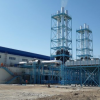
MAN Energy Solutions has successfully commissioned six MAN 18V32/40 engines in a cement factory in Samawa, Iraq, and delivered five more engines of the same type to a freshwater-treatment plant in Basra.
“The country's infrastructure has suffered greatly from armed conflict in the past and the re-electrification of Iraq is pivotal for further growth and new prosperity. We are very happy that our engines will bring such tangible, positive benefits to the Iraqi people," said Waldemar Wiesner, Head of Region MEA (Middle-East Africa), Power Plant Sales, MAN Energy Solutions.
Defying the desert
The six engines in Samawa form the backbone of a power plant that will generate around 54 MW of electrical energy for a new cement plant owned by Iraqi producer, Kairat Al Abar Iraqi Co. (KAAI).
Samawa has a population of around 150,000 and is located on the River Euphrates, half way between Baghdad and the Persian Gulf. Conditions locally are testing with a rainfall of just 100 mm over the course of a year, while temperatures peak at over 40°C from June to September. “The heat and dry desert climate create demanding conditions for industrial processes,” said Wiesner. “However, our MAN 32/40 engines are particularly robust and well capale of delivering a reliable power supply under such extreme climatic conditions.”
Fresh water in Basra
Five MAN 18V32/40 engines with a total capacity of 45 MW will guarantee the energy supply of a freshwater-treatment plant in Basra, a city with 2.5 million people located on the Persian Gulf. Normally, the plant operates with electricity from the public grid. However, since Iraq’s energy supply still fluctuates strongly, the MAN engines will serve as an important backup to ensure the reliable operation of the plant.
“In Iraq, more than five million people have only limited access to drinking water or sanitary facilities. With this new freshwater plant, the quality of life for the people of Basra will increase significantly,” said Wiesner. “In the event of power failures, which unfortunately still occur frequently, our engines will ensure a stable energy supply so that Basra’s population has access to fresh water at all times.”
(Source: MAN Energy Solutions)
Posted in Construction & Engineering In Iraq, Iraq Industry & Trade News 1 Comment

New Career Opportunities in Iraqi Kurdistan
Posted on 17 January 2019 .
By John Lee.
The United Nations has advertised new positions in Iraqi Kurdistan:
- Country Director, Danish Refugee Council (DRC)
- Project Coordinator - Economic Recovery, Danish Refugee Council (DRC)
- Technical Advisor, UNDP - United Nations Development Programme
- Electricity Law Specialist, UNDP - United Nations Development Programme
- Emergency Officer (Field Coordination), IOM - International Organization for Migration
- National Protection Officer, IOM - International Organization for Migration
- RRU Team Leader, IOM - International Organization for Migration
- RRU Regional Livelihoods Technical Advisor, IOM - International Organization for Migration
(Source: UN)
(Picture: Success, growth, career, development signpost from 3D_Creation/Shutterstock)
Posted in Employment Comments Off on New Career Opportunities in Iraqi Kurdistan
US Trying to get More out of Relationship with Iraq
Posted on 11 January 2019 .
From The Economist.
America is trying to get more out of its relationship with Iraq
US President Donald Trump thinks America is being ripped off. “We have spent $7trn—trillion with a T—$7trn in the Middle East,” he told a crowd last year, exaggerating slightly. “You know what we have for it? Nothing. Nothing.”
To right this perceived wrong, Mr Trump has long favoured seizing Iraq’s oil. But after he hinted at the idea with the Iraqi prime minister (who demurred), his aides admonished him. “We can’t do this and you shouldn’t talk about it,” said H.R. McMaster, the national security adviser at the time, according to reports. Still, Mr Trump may be getting what he wants from Iraq in other ways.
When America reimposed sanctions on Iran last year it gave some countries extra time to stop buying Iranian oil before they would lose access to the American market. Most were given 90-day exemptions. In November Iraq, which shares a long border with Iran, was given half that time to cut off electricity and gas imports.
As it negotiated for extensions, American companies made a push for Iraqi contracts. In December, Rick Perry, the energy secretary, led America’s largest trade delegation to Iraq in over a decade. “It was a quid pro quo,” says an oilman. “You give us priority and we’ll give you an exemption.”
Posted in Iraq Industry & Trade News, Iraq Oil & Gas News, Politics, Security Comments Off on US Trying to get More out of Relationship with Iraq
Iraq Falls in Ease of Doing Business Index
Posted on 07 January 2019 .
By John Lee.
Iraq has been ranked 171st out of 190 countries in the World Bank‘s recent Doing Business 2019 report, down from 168th place the previous year.
Top of the list were New Zealand, Singapore and Denmark, with last place going to Somalia, just behind Eritrea and Venezuela. Iran ranked 128th, with Libya 186th.
Doing Business measures regulations affecting 11 areas of the life of a business. Ten of these areas are included in this year’s ranking on the ease of doing business: starting a business, dealing with construction permits, getting electricity, registering property, getting credit, protecting minority investors, paying taxes, trading across borders, enforcing contracts and resolving insolvency. Doing Business also measures labor market regulation, which is not included in this year’s ranking.

(Source: World Bank)
Posted in Iraq Industry & Trade News 2 Comments

2019 - (Another) Key Year for Iraq
Posted on 03 January 2019 .
The past year has seen many developments in Iraq, including the successful completion of parliamentary elections (admittedly with a low participation of voters), the installation of a new cabinet (with a few posts still to be filled), and a considerably higher oil price than in the previous year (although that has fallen back considerably towards the end of the year).
Protests over the summer have highlighted unemployment, corruption, shortages of electricity, and problems in the delivery of basic services.
In the year to come, the new government of Prime Minister Abdul-Mahdi must focus on tackling these problems as a matter of urgency, while at the same time redoubling its efforts to rebuild the areas previously devastated by the Islamic State group.
There's a lot of work to be done, but there are several factors at the moment pushing Iraq towards a favourable outcome: Despite the current low oil prices, Iraq's oil production is at record highs; the new government appears highly motivated and seems to know it has a limited time to effect change; and international companies and institutions are keen to get involved.
If managed properly, this year could be the start of a real boom period for Iraq. The nearly ten-percent increase in the readership of Iraq Business News over the past year is just one indicator that more people are taking an interest in Iraq and the opportunities to be found there.
As we publish our first newsletter of the new year, we'd like to say a special word of thanks to all of our contributors, including our panel of Expert Bloggers, who have given us the benefit of their wisdom and observations over the past twelve months:
We look forward to reading more from them in the coming year.
We'd also like to thank all our readers and well-wishers for making Iraq Business News the must-read publication for everyone with an interest in Iraq, and we ask you to please support our valued advertisers, who make all of this possible.
It is also important to remember two Iraq-focussed charities that are doing amazing and much-needed work in the country:
Any donations made to them will make a big difference to the lives of so many vulnerable people in Iraq.
With another challenging but potentially rewarding year to come, Iraq Business News will be with you every step of the way, wishing all of you a happy, peaceful and prosperous 2019.
Posted in Blog Comments Off on 2019 - (Another) Key Year for Iraq
Iraq, Jordan to Ease Trade, Finalise Plans for Oil Pipeline
Posted on 02 January 2019 .
By John Lee.
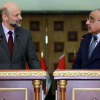
Prime Minister Adil Abd Al-Mahdi and Jordan's Prime Minister Dr. Omar Razzaz have agreed a series of measures to increase cooperation between the two countries.
Following a meeting at the weekend, they announced that, among other steps, they will finalize the framework agreement for the Iraqi-Jordanian pipeline which will run from Basra through Haditha to Aqaba in the first quarter of 2019.
The full (unedited) list of measures outlined in their joint statement is shown below:
In the transport sector:
- Opening the Jordanian-Iraqi border crossings (Al Karama-Trebil) in front of the (door to door) traffic to start the journey of goods that are perishable on 2-2-2019 and include all types of goods thereafter.
- Granting facilities for imported Iraqi goods via Aqaba, whose final destination is Iraq, a discount of 75% of the fees charged by Aqaba Economic Authority.
- Make an Agreement between the Royal Jordanian and Iraqi Aviation for mutual cooperation in various fields: (Code share).
- Training and cooperation in all areas of aviation and air transport.
In the industry and trade sector:
- Activating the Iraqi Cabinet decision for the year 2017 exempting a number of Jordanian goods from customs starting from 2-2-2019.
- The two councils of the two countries decided to allocate the agreed land on the Iraqi-Jordanian border to reach a depth of 2 km on the two sides of the border and a length of 6 km for the Iraqi-Jordanian Company. By 2-2-2019, in preparation for the company's presentation of the industrial zone to the private sector for operation and management on the basis of BOT.
In the financial sector:
- Forming a technical and financial legal committee between the two sides to develop solutions to the outstanding financial files between the two countries.
In the energy sector:
- The agreement was reached on the Jordanian-Iraqi electricity link through the network of interconnection, where the memorandum of understanding was signed in the presence of the prime ministers, in which the parties agreed to take the necessary measures to accelerate the exchange of electrical energy between the two parties through direct electrical connection to the electricity networks of Iraq and Jordan.
- It was agreed to finalize the framework agreement for the Iraqi-Jordanian pipeline which will extend from Basra through Haditha to Aqaba in the first quarter of 2019
- It was agreed that the technical committees will arrive to determine the details of transportation and pricing for the export of Iraqi crude oil to Jordan before 2-2-2019.
In the agriculture sector:
- Training in the fields of optimal use of water in the fields of aquaculture, water harvesting, seed propagation, biological control, the use of environmentally friendly pesticides and the training of Iraqi environmental police.
In the communications and IT sector:
- It was agreed to pass the Iraqi Internet capacity from Jordan in 2019 to support Iraq build the infrastructure.
- It was agreed on transport Jordan's experiences in the field of the financial technology to brothers in Iraq.
(Source: Media Office of the Iraqi Prime Minister)
Posted in Iraq Industry & Trade News, Iraq Oil & Gas News, Iraq Transportation News 1 Comment
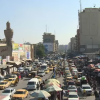
Video: Iran Sanctions threaten Iraq's Energy Supply
Posted on 20 December 2018 .
From Al Jazeera. Any opinions expressed are those of the authors, and do not necessarily reflect the views of Iraq Business News.
There is a fight over energy in Iraq between the US and Iran. Iraq relies on Iranian gas for nearly half of its energy - gas that is now subject to US sanctions on Iran.
The Iraqi government originally obtained a 45-day sanctions waiver from the US, but that waiver is set to expire next week.
Iraq is particularly sensitive to the issue after protests against electricity cuts rocked Basra earlier in the year and Iraq's new government is treading a thin line trying to keep both the US and Iran happy, and its people satisfied.
Al Jazeera's Charlotte Bellis reports:
Posted in Iraq Oil & Gas News 1 Comment
Germany Enhances Support for Community Policing in Iraq
Posted on 12 December 2018 .
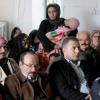
This week the German Federal Foreign Office bolstered IOM’s Community Policing (CP) programme in Iraq by providing an additional 1.7 million Euros, raising Germany’s total contributions to this important effort to 5.7 million Euros.
IOM’s CP programme aims to contribute to enhanced security and stability in Iraq, by facilitating dialogue between communities and law enforcement actors, through Community Policing Forums (CPF) in communities affected by conflict and displacement.
In the last three years 101 Community Policing Forums (CPFs) have been established across Iraq with the support of IOM. CPFs aim to resolve a variety of security concerns at the community level, including those related to housing, land and property (HLP) disputes, access to water and electricity, civil unrest, documentation for internally displaced persons (IDPs) and returnees, child protection, human trafficking, sexual harassment and domestic violence.
The German Ambassador to Iraq, Dr. Cyrill Nunn, said:
“Community Policing is an important strategy to bring together socially fragmented communities in Iraq to peacefully resolve security related problems. Germany supports Community Policing to build and strengthen mutual trust between citizens and law enforcement agencies, contributing to safe and stable communities - the building blocks of a stable Iraq.”
CPFs are facilitated by a CP officer from the local police department and by elected community members. IOM guides CPFs in the development of community safety plans which identify the most critical security and safety issues that can be addressed and tackled by the community and the police.
Gerard Waite, IOM Chief of Mission in Iraq commented:
“Issues are resolved mainly through identifying the correct entity to refer to, either law enforcement, public institutions, civil society organizations, or the community themselves.”
“The success of these forums can be seen through a variety of indicators, such as a decrease in crime, an increase in the level of cooperation from the community in solving security problems, and less use of force by police towards members of the community.”
Brigadier Khalid Falah Kadhim, head of Iraq CP Directorate within the Government of Iraq’s Ministry of Interior, testifies to the positive impact the CP model has had on local police structures at the community level:
“The logistical and technical support provided by IOM to rebuild infrastructure and strengthen the capacity of community policing has played a fundamental role in peace building in communities, and we are thankful to the Government of Germany for providing this support.”
(Source: IOM)
Posted in Security Comments Off on Germany Enhances Support for Community Policing in Iraq
Germany gives another EUR 22m for Stabilization in Iraq
Posted on 11 December 2018 .
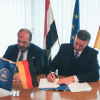
The German Ministry of Foreign Affairs has contributed an additional EUR 22 million to the UNDP Funding Facility for Stabilization (FFS), which finances fast-track initiatives in areas of Iraq liberated from the Islamic State of Iraq and the Levant (ISIL). This brings the Ministry’s contribution to EUR 80.2 million and the total support from the Government of Germany to EUR 209.9 million.
Acting UNDP Resident Representative for Iraq, Mr. Gerardo Noto, said:
“Enormous progress continues to be made across the liberated areas of Iraq, with seventy percent of those who were displaced during the conflict now returned home. UNDP deeply appreciates the timely funding provided by the German Ministry of Foreign Affairs, and while there remains a great deal of work to do, this generous contribution will help re-establish public services and rebuild social cohesion in the most vulnerable areas.”
The German Ambassador to Iraq, H.E. Dr. Cyrill Nunn, said:
“Germany continues to support Iraq’s stabilization efforts to shore up the progress made to date. As we look to the new Government to step forward to take increasing ownership of stabilisation and more long term development efforts, we will remain a committed partner for the people of Iraq and a strong supporter of the efforts of the United Nations.”
In addition to its Ministry of Foreign Affairs, Germany also contributes to FFS through its Ministry for Economic Cooperation and Development implemented by KfW, the German development bank.
At the request of the Government of Iraq, UNDP established the FFS in June 2015 to facilitate the return of displaced Iraqis, lay the groundwork for reconstruction and recovery, and safeguard against the resurgence of violence and extremism.
The Facility has a portfolio of over 3,000 projects – half of which are already completed – in the provinces of Ninewah, Anbar, Salah Al-Din, Diyala and Kirkuk.
The FFS repairs essential public infrastructure such as electricity, water and sewage system grids. It rebuilds schools, health centres and homes, and provides people with short-term employment through public works schemes in areas directly impacted by ISIL.
This investment in critical services sets the stage for recovery and resilience work, as well as longer-term reconstruction and development activities. Over 95 percent of all stabilization projects are carried out by local private sector companies, providing a key source of employment for local people.
(Source: UN)
Posted in Construction & Engineering In Iraq Comments Off on Germany gives another EUR 22m for Stabilization in Iraq
Iraq’s Democratic Experience - Prospects and Challenges
Posted on 07 December 2018 .
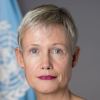
Statement by Alice Walpole, Deputy Special Representative of the Secretary-General
Iraq’s Democratic Experience - Prospects and Challenges
Rafidain Centre, Najaf
4 December 2018
Excellencies,
Ladies and Gentlemen,
Dear friends,
Thank you for the invitation to speak here today, at the Al-Rafidain Center, on Iraq’s democratic experience.
2018 has been both an encouraging and challenging year for Iraq and its citizens. On the positive side, we witnessed two broadly successful electoral processes, consolidating Iraq’s democratic credentials. In May, within the constitutional time-frame, Iraq held its national parliamentary elections. Candidates and political parties conducted largely honourable campaigns, under an Electoral Code of Conduct drafted by the United Nations Assistance Mission for Iraq, free from sectarian-based discourse or inflammatory statements. There was, however, disappointing abuse of some, primarily female, candidates. Elections were held on time, and most people (including the displaced) were able to cast their votes and select their representatives freely and safely. The liberated areas witnessed an open voting process for the first time since the defeat of Da’esh. I commend the efforts of electoral officials, party agents and the security forces in making the elections largely peaceful, secure and orderly.
But we should not be complacent. The national elections were marked by a low voter turnout of just 44%. The decision by more than half of the voting population not to exercise their democratic right sends a strong signal of dissatisfaction to politicians over failures to meet people’s expectations or to provide for their needs, and a strong message to place the interests of the Iraqi people and the nation above partisan, sectarian, individual or group interests. I encourage the Iraqi political elites, specifically incoming ministers and members of parliament, to draw the necessary conclusions on the need for improved representation, justice for all, democratic accountability and good governance free of corruption, sectarian quotas, nepotism and patronage.
You will recall that the post-election phase was marked by widespread complaints. Allegations of electoral fraud and mismanagement resulted in the decision, which the United Nations supported, to conduct a partial manual ballot recount. I would like to note the transparent, credible and well-organised conduct of the recount (which I myself witnessed in several recount locations). I commend the professionalism of all recount staff, both Independent High Electoral Commission and judiciary personnel, under the capable, impartial supervision of the Board of Judges. I believe the recount increased public confidence in the election results. I hope it also increased confidence more generally in the electoral process.
Ladies and Gentlemen,
Throughout the post-election and government formation period, the people took to the streets to express their dissatisfaction with the management of state affairs. Their demands must be taken seriously if the democratic process is to succeed in Iraq. The demonstrations which began in Basra in July and spread to other southern governorates including Missan, Muthanna, Qadisiya, Dhi Qar, Najaf, Karbala, Babil, Wasit, and then to Baghdad, were a clear call on the government to address the basic rights and needs of the people. The gravity of further violent protests in Basra in September sent a signal to the government to find tangible solutions to local problems of lack of delivery of basic services, shortages of electricity, lack of jobs and pervasive corruption. The protestors accused national leaders and successive governments of ignoring them and expressed deep and growing frustration with the political system, including a sectarian quota system they deem corrupt and dysfunctional, and perceived foreign interference in internal affairs.
While many political leaders expressed their support for the demands of the protesters, there has been little actual progress in effecting change. Former Prime Minister Abadi and the Council of Ministers made commendable efforts to implement some rapid relief measures, but these remain insufficient to address the depth of people’s needs and concerns. The new government now needs to prioritise political, economic and social reforms, justice, equality and accountability, reconciliation and the fight against corruption. Job creation will enable economic development, stability and prosperity, while Iraq should maintain its sovereignty and independence, free from foreign interference. The challenges faced by Iraq are deep-rooted and can only be tackled by strong and unified governance. Prime Minister Abdul-Mahdi and his cabinet of ministers must engage in a fight against corruption, while the new Council of Representatives should reform laws that do not embed justice and equality.
Ladies and Gentlemen,
I commend the successful completion of the Kurdistan Region parliamentary elections. Again, accusations of electoral fraud were fully investigated. On 30 October, the Electoral Judicial Panel of the Kurdistan Region Court of Cassation approved the election results. The Kurdistan Democratic Party and the Patriotic Union of Kurdistan have assured us of their intention to consult closely with all local political parties on government formation. The Kurdistan Islamic Union and the New Generation Movement have announced that they will form an Opposition in the Kurdistan Parliament. All this is welcome progress. However, to date there have been no formal agreements on government formation. In this regard we urge the Kurdish parties to complete negotiations and the formation of the parliament to ensure that the needs of the people can be proactively addressed.
Ladies and Gentlemen,
The United Nations was reassured to note that Mr Abdul-Mahdi, as PM-designate, received the endorsement of many prominent parliamentary blocs to choose his ministers freely, on the basis of their capabilities and experience rather than sectarian or political quota systems. We commended the democratic transfer of power between the outgoing Prime Minister, Haider al-Abadi and incoming Prime Minister Abdul-Mahdi within the Constitutional timeline. At the handover ceremony on 25 October, Mr. Abadi recalled the achievements of his government. He and his government, the Kurdistan regional government, the armed forces and the people of Iraq do indeed deserve acknowledgment and gratitude for the progress made thus far. While the government formation process has not been without difficulty, the political blocs have demonstrated willingness to act in support of the Prime Minister. Competition and differences have been largely political and not sectarian, and in this way, a break from the past. Iraq must now build on these foundations.
I remain concerned that the government formation process has stalled as disagreements over some ministerial posts continues to divide political parties and blocs. The United Nations urges Prime Minister Abdul-Mahdi and the political parties to reach agreement and complete the cabinet. All political forces now share a responsibility for creating an enabling environment for the new Prime Minister and government to deliver on their programme and for ensuring political stability. The Government’s new programme, on which the United Nations was invited to offer advice is ambitious and forward looking. It outlines specific plans for reform, investment and the private sector, tackling corruption and for transitioning Iraq from a crisis context to sustainable development. It prioritises job creation, greater governorate-level participation, rehabilitation and reconstruction of liberated areas and the return of the displaced. It focuses on strengthening security, fighting terrorism, enhancing law and order and the rule of law. Special attention will be given to resolving pending challenges with the Kurdistan Region, including the issues of budget allocation and financial resources, oil and disputed areas. For this programme to be achieved, Iraq will require the continued support of the international community but also sustained political support from political leaders and parties within the parliament. On international relations, I commend Iraq’s new leaders who have acted without delay in engaging regional governments - fostering bilateral relations, tackling regional challenges such as terrorism, water issues, and discussing economic cooperation and investment for the reconstruction of Iraq.
Ladies and Gentlemen,
Among the priority tasks for the new parliament is preparing the upcoming provincial council elections. With the expanding role of provincial councils in governance, the candidate choices made freely and fairly by the electorate will be extremely important for the country’s development. I welcome the Electoral Commission’s announcement of resumption of the biometric voter registration process. And I am pleased that for the first time since 2005, the Kirkuk governorate will participate in these elections - a critical step on the path to the normalisation of Kirkuk’s status and of politics in the governorate. Negotiations on the reactivation of the Kirkuk Provincial Council continue, with United Nations-supported discussions between local political actors from the Kurdish, Arab and Turkmen communities.
Ladies and Gentlemen,
I am pleased that several female candidates received a high number of votes within their political lists, and that 19 female candidates were elected to parliament on this basis. Our expectation for the future is that the 25% quota which currently guarantees 83 seats for women, will represent a minimum threshold, not a fixed number. I urge political leaders to ensure the full participation of women within the new government and their representation at the highest levels in Iraq’s political and decision-making structures in the parliament and the government. I very much regret that no female or minority candidates have yet been appointed to ministerial positions; and while I welcome assurances that Prime Minister Abdul-Mahdi will include them in future governmental posts, I feel that an opportunity has been missed. Women must get a full chance to play key roles in shaping the post-Da’esh future of their country. Equality and empowerment of women must be central to all peace, justice, legislative, reconciliation and reform efforts.
Ladies and Gentlemen,
Democracy and improved standards of living cannot be realised within an environment of persistent insecurity. Although Da'esh's so-called caliphate has been defeated, the terrorist organisation continues to pose a threat. Iraqi Security Forces and the Popular Mobilisation Forces have maintained constant pressure on the remaining Da’esh presence and activities across North, Central and West Iraq throughout the year through successive security clearance operations. Challenges however remain for improving the overall security environment. The new government must reform and rehabilitate its security sector, putting it firmly under state control.
Ladies and Gentlemen,
The United Nations works hard to support Iraq and its people. With the government formation process now close to completion, we hope that the country will continue on its journey to democracy. We will continue to offer advice and engagement. We will continue to work in partnership with the government and the people of Iraq to build progress. A prosperous future built on democracy and the rule of law – an Iraq in which the rights and needs of every citizen are recognized and fulfilled.
Thank you.
(Source: UN)
Posted in Politics, Security Comments Off on Iraq’s Democratic Experience - Prospects and Challenges