


CBI Dollar Sales Down to $127m
Posted on 19 May 2010 .
The Central Bank of Iraq’s (CBI) dollar sales went down to reach $127.903 million in its daily auction on Tuesday, compared to $227.996 in the previous session.
“The demand hit $7.540 million in cash, covered at an exchange rate of 1,183 Iraqi dinars per dollar, and $120.363 million in foreign transfers outside the country, covered at an exchange rate of 1,173 Iraqi dinars per dollar,” according to a CBI news bulletin received by Aswat al-Iraq news agency.
None of the 15 banks that participated in today’s session offered to sell dollars.
The Central Bank of Iraq runs a daily action from Sunday to Thursday.
( Aswat Al Iraq )
Posted in Iraq Banking & Finance News Comments Off on CBI Dollar Sales Down to $127m

Iraq Eyes Huge Crude Oil Increase
Posted on 19 May 2010 .
Minister says $1b project to raise export capacity to 4.5m bpd by 2012 is on track
Iraq expects crude output to increase by about 600,000 barrels per day (bpd) through 2011, based on initial plans from global firms for oilfields that were auctioned off last year, a senior oil official said yesterday.
Deputy Oil Minister Abdul Kareem Luaibi also said Iraq is moving ahead with a more than $1 billion (Dh3.67 billion) project to raise its export capacity to 4.5 million bpd by the end of 2011 through the construction of new offshore terminals and pipelines.
"The increase we expect, which is 10 per cent for the oilfields from the first auction and the initial production for the oilfields from the second auction, is a total of about 600,000 barrels per day," Luaibi told Reuters in an interview.
"That will be achieved over this year and the next year."
The Opec member has signed a clutch of deals with global oil firms that could boost its output capacity to 12 million bpd in six to seven years' time from 2.5 million bpd now. That would rival top producer Saudi Arabia's capacity, and is viewed by most industry experts as a highly ambitious target.
Nevertheless, Iraq hopes the deals will generate the billions of dollars desperately needed to rebuild the economy. Luaibi said Iraq needs more than $10 billion to rebuild and expand its export and storage facilities beyond the initial $1 billion investment, after years of war, insurgency and sanctions left its oil infrastructure in a dilapidated state.
The Oil Ministry aims to invite foreign firms to help with the expansion as it will be short of the needed funds.
"We had 58 storage tanks in the Fao [peninsula] that were totally destroyed during the Iraq-Iran war and we had dozens of tanks and pumps that were totally destroyed," he said.
"The rebuilding and rehabilitation process needs time and more importantly cash and we have a limited budget," he added. "That's why... we would seek foreign investment."
To meet the anticipated jump in crude production, Iraq has invited interest from contractors for services to enhance its export facilities and pipelines in the southern oil hub city of Basra.
The $1-billion project — partially funded by a Japanese government loan — includes installing three offshore pipelines plus four single-point moorings. This would raise Iraq's export capacity from Basra to 4.5 million bpd by the end of next year from 1.9 million bpd now, Luaibi said.
( Reuters )
Posted in Iraq Oil & Gas News 1 Comment
Iraq Mulls Inviting Cos to Develop Furat Oilfields
Posted on 17 May 2010 .
Baghdad, 17 May 2010 - Reuters
Iraqi Oil Minister Hussain al-Shahristani said on Monday the Oil Ministry was considering inviting foreign oil companies to develop the Middle Furat oilfields.
No bids were received for the cluster of three oilfields when they were auctioned off in Iraq's second round of oilfield tenders last December. The fields have estimated reserves of 600 million barrels of oil.
Posted in Iraq Oil & Gas News Comments Off on Iraq Mulls Inviting Cos to Develop Furat Oilfields
CBI Dollar Sales Down to $88m
Posted on 17 May 2010 .
The Central Bank of Iraq’s (CBI) dollar sales went down to reach $88.205 million in its daily auction on Sunday, compared to $137.925 in the previous session.
“The demand hit $8.330 million in cash, covered at an exchange rate of 1,183 Iraqi dinars per dollar, and $79.875 million in foreign transfers outside the country, covered at an exchange rate of 1,173 Iraqi dinars per dollar,” according to a CBI news bulletin received by Aswat al-Iraq news agency.
None of the 15 banks that participated in today’s session offered to sell dollars.
( Aswat Al Iraq )
Posted in Iraq Banking & Finance News Comments Off on CBI Dollar Sales Down to $88m
CBI Dollar Sales Up to $137m
Posted on 14 May 2010 .
The Central Bank of Iraq’s (CBI) dollar sales went up to reach $137.925 million in its daily auction on Thursday, compared to $115.301 in the previous session.
“The demand hit $4.780 million in cash, at an exchange rate of 1,183 Iraqi dinars per dollar, and $133.145 million in foreign transfers outside the country, at an exchange rate of 1,173 Iraqi dinars per dollar,” according to a CBI news bulletin received by Aswat al-Iraq news agency.
None of the 15 banks that participated in today’s session offered to sell dollars.
The Central Bank of Iraq runs a daily auction from Sunday to Thursday.
( Aswat Al Iraq )
Posted in Iraq Banking & Finance News Comments Off on CBI Dollar Sales Up to $137m
No Move to Auction More Oilfields, Says Iraq
Posted on 12 May 2010 .
Baghdad, 12 May 2010 - Reuters
Iraq’s two remaining supergiant oilfields, Kirkuk and East Baghdad, are not on the table for joint development with international oil firms following two oil contract bidding rounds last year, a senior Iraqi oil official said yesterday.
Emerging from violence, Iraq is in desperate need of billions of dollars to rebuild. It signed 10 deals with global oil companies to develop some of its largest oilfields, in a bid to boost its crude output capacity to near Saudi Arabian levels of 12mn bpd from 2.5mn bpd now.
Not all the oilfields that were auctioned in the two bidding rounds were awarded.
No deals were struck for the supergiant 8.1bn-barrel East Baghdad oilfield or the Kirkuk fields with an estimated 8.5bn barrels in reserves. Nor were bids made for the smaller Eastern Fields and Middle Furat.
Iraq and Royal Dutch Shell briefly explored the possibility of reviving talks over Kirkuk after the first bidding round last year, according to Iraqi officials, and there have also been some discussions over East Baghdad.
But Abdul-Mahdy al-Ameedi, director of the Oil Ministry’s licensing and contracting office, said that there were no talks now with any foreign oil companies to develop the fields.
“We have offers from many companies, they want to develop them but really we don’t,” al-Ameedi told Reuters in an interview.
Posted in Iraq Oil & Gas News Comments Off on No Move to Auction More Oilfields, Says Iraq

CBI Dollar Sales Down to $168m
Posted on 12 May 2010 .
The Central Bank of Iraq’s (CBI) dollar sales went down to reach $168.878 million in its daily auction on Tuesday, compared to $176.080 in the previous session.
“The demand hit $8.870 million in cash, covered at an exchange rate of 1,183 Iraqi dinars per dollar, and $160.008 million in foreign transfers outside the country, covered at an exchange rate of 1,173 Iraqi dinars per dollar,” according to a CBI news bulletin received by Aswat al-Iraq news agency.
None of the 18 banks that participated in today’s session offered to sell dollars.
The Central Bank of Iraq runs a daily auction from Sunday to Thursday
( Aswat Al Iraq )
Posted in Iraq Banking & Finance News Comments Off on CBI Dollar Sales Down to $168m
Iraq Plans Power Boost After Gas Fields Auction
Posted on 10 May 2010 .
Doha, 10 May 2010 - Reuters
Iraq plans to boost power capacity to 27,000 megawatts in four years after opening its gas sector to foreign investment and sealing a gas capture deal with Royal Dutch Shell, a minister said on Sunday.
The OPEC member would need to invest at least $3 billion to $4 billion per year to reach that target, Iraq’s Electricity Minister Karim Waheed told Reuters on Sunday.
He did not say how Iraq plans to raise such funds. It has struggled to finance its previous power generation plans.
Reaching the ambitious power capacity target would depend mainly on finalising a venture with Shell to capture and use gas now being burned in the southern oilfields around Basra, and on output from three gas fields, which Iraq is auctioning off in September, Waheed said.
‘This depends on both the gas fields — the announcement for the third round — and on capturing the burned gas deal with Shell,’ he said in an interview on the sidelines of an energy conference in Qatar.
Waheed said if Iraq does not come to an agreement with Shell, the ministry will have to rethink its power plans.
Iraq is close to signing a final deal between its South Gas Company, Shell and Japan’s Mitsubishi, after it sent the final draft of the agreement to the cabinet for approval, Iraqi Oil Minister Hussain Al Shahristani said on Thursday.
Shahristani also said that Iraq will invite 45 international companies, which were prequalified for two oil auctions last year, to bid to develop Akkas gas field in Iraq’s western desert, Mansuriyah gas field in eastern Iraq and Siba in the southern oil hub of Basra.
Waheed said he expects the gas fields now being tendered to start producing in two to three years.
TENDERS
Iraq plans to issue new tenders next week for installing turbines as part of the ministry’s plans to boost electricity capacity, Waheed said.
In 2008, it said it had agreed a 1.5 billion euro ($2.03 billion) deal with Siemens for 16 gas turbines and a deal with General Electric worth $3 billion for 56 turbines. The turbines are expected to add nearly 9,000 megawatts of capacity over the next few years.
Iraq scrambled for ways to finance the purchase after a plunge in oil prices in 2008 deprived it of revenues and forced it to slash its 2009 budget three times. It had offered investors stakes in the electricity turbines it has ordered, and said it would repay investors from future electricity sales.
In March, the finance minister said Iraq raised $2.1 billion from local banks via a one-year treasury bond issue to fund electricity projects.
‘Next week, we will tender for bids for installing turbines at two more sites, at Baiji for six turbines of 160 MW and Kirkuk for one turbine of 260 MW,’ Waheed said.
‘Some 38 companies will participate and compete for the deals. Just to install the turbines, we’ve already bought the turbines.’
Waheed put Iraq’s available power capacity at 9,000 MW, and installed capacity at 11,000 to 12,000 MW. Demand is estimated to be at least 12,000 MW.
Frequent fuel shortages and constant maintenance are a main reason behind the shortfall in available power capacity in Iraq, where dilapidated infrastructure has been hit hard by years of war, insurgency attacks and underinvestment.
Seven years after the U.S.-led invasion, Iraq’s national grid still only supplies a few hours of power each day. Intermittent electricity is one of the public’s top complaints.
Baghdad, the capital, is expected to enjoy about eight hours of electricity a day when temperatures hit 50 degrees Celsius in the summer, Waheed said.
With the new power plans, Baghdad, with current 3,000 MW of power available, could finally have 24 hours a day of electricity in two years.
Posted in Construction & Engineering In Iraq, Iraq Oil & Gas News Comments Off on Iraq Plans Power Boost After Gas Fields Auction
Iraq Announces 1st September for Gas Field Auction
Posted on 09 May 2010 .
Baghdad, 07 May 2010 - AFP
Iraq on Thursday invited international energy firms to submit bids for a September 1 auction of three of its gas fields, in the war-torn country's third major attempt to develop its oil and gas sector.
"We expect to receive the offers and we will open them on September 1," Oil Minister Hussein al-Shahristani told reporters in Baghdad.
Since November, Baghdad has signed contracts with foreign firms to develop 10 oil fields around the country, with the aim of raising its output, currently at 2.4 million bpd, to between 10 and 12 million bpd.
Those contracts followed two oil bidding rounds held in Baghdad, the first such auctions since the energy sector was nationalised by the Baath party in 1972, seven years before now executed dictator Saddam Hussein became president.
Posted in Iraq Oil & Gas News 1 Comment
Iraq to Launch 3rd Gas Field Auction
Posted on 07 May 2010 .
Baghdad, 06 May 2010 - AFP
Iraq is set to call for bids from energy firms to develop its gas fields, the oil ministry said on Wednesday, as the war-ravaged country seeks new revenue sources to rebuild its battered economy.
"The ministry will announce tomorrow (Thursday) the launch of a tender to develop gas fields and it will invite international companies to participate," ministry spokesman Assem Jihad said.
"The product of these fields will initially be used to supply electricity stations and for other domestic needs, with the rest to be exported. The ministry hopes that Iraq will reach the level of other gas producers in the region."
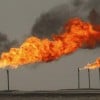
Iraq produces a negligible quantity of gas compared with the size of its reserves, and currently flares off most of what it produces.
A report last month in the Middle East Economic Survey (MEES), a regional oil and gas newsletter, said Iraq will offer three gas fields with more than 7.5 trillion cubic feet (tcf/210 billion cubic metres) of combined proven non-associated, or free gas reserves.
They are the 4.5 tcf (trillion cubic feet) Akkaz field in the western province of Anbar, the Mansuriya field in Diyala with three tcf and Sibba field in Basra with 60 billion cubic feet, MEES said, adding that 15 firms have been pre-qualified and invitations will be issued soon.
Akkaz and Mansuriya were offered in a round of bidding on oil fields last June but were not awarded.
French oil giant Total has already said it would "definitely" participate in the gas bid round.
Last year, Iraq awarded international oil majors contracts to develop 10 large oil fields in an attempt to ramp up its crude production capacity to 12 million barrels per day by 2017, from around 2.5 million bpd.
Iraq is highly dependent on crude exports for its government revenues, with 85 percent of its income coming from oil sales.
It has launched a major programme to build gas-fired power stations in an effort to triple electricity consumption nationwide by 2014, according to the planning ministry.
As part of the expansion plan, the government has signed contracts worth more than five billion dollars with General Electric and Siemens.
Posted in Construction & Engineering In Iraq Comments Off on Iraq to Launch 3rd Gas Field Auction