



US Assistance to Minorities in Iraq
Posted on 21 October 2018 .
US Assistance to Ethnic and Religious Minorities in Iraq
As part of the continued commitment by Vice President Pence, Secretary Pompeo (pictured), and USAID Administrator Green to support ethnic and religious minorities in Iraq as highlighted earlier this year at the first-ever Ministerial to Advance Religious Freedom, the United States is proud to announce over $178 million in U.S. foreign assistance to support these vulnerable communities in Iraq. This brings total U.S. assistance for this population to nearly $300 million since Fiscal Year 2017, implemented by both the State Department and USAID.
The preservation of Iraq’s rich historical pluralism is critical to reintegrating persecuted ethnic and religious minority communities into a peaceful Iraq. U.S. efforts to meet this objective span government agencies and are being implemented urgently, in close partnership with local faith and community leaders. Our efforts focus on the following areas:
Genocide Recovery and Persecution Response (GRPR)
- Over $133 million in recently launched activities supporting the four pillars of USAID’s GRPR Program, bringing total funding for GRPR to $239 million.
- Meeting Immediate Needs: Over $51 million in life-saving humanitarian assistance to populations from the Ninewa Plain and western Ninewa, includes safe drinking water, food, shelter materials and household items, medical care, and psychosocial support.
- Helping Restore Communities: $9 million in funding to support early recovery needs and restore access to services like health and education.
- Promoting Economic Recovery: $68 million in funding to improve access to jobs and markets, support local businesses, and revive the local economy.
- Preventing Future Atrocities: $5 million to address systemic issues affecting minority populations and prevent future atrocities.
Clearing the Explosive Remnants of War
- Approximately $37 million in funding to support explosive remnants of war (ERW) survey, clearance, and risk education in and around minority communities. This support has enabled the Department to significantly expand the number of U.S.-funded ERW survey, clearance, and risk education teams across Ninewa and fulfills the Secretary’s pledge to expand ERW clearance efforts in Iraqi minority communities made at the July 2018 Ministerial to Advance Religious Freedom.
Social, Economic, and Political Empowerment
- $8.5 million in additional assistance to projects that provide psychosocial services, legal support, and initiatives to help collect evidence of human rights abuses; increase minority representation in local and provincial government; increase access to justice for children; strengthen rule of law; and provide livelihoods support and access to economic opportunities for vulnerable groups bringing the FY 2017 total to $18.5 million.
Preservation of Historic and Cultural Heritage Sites
- $2 million in ongoing programming to support the preservation of cultural heritage sites in Northern Iraq that were targeted for destruction by ISIS and other terrorist groups, safeguarding, preserving, and restoring access to significant cultural heritage sites of minority communities.
(Source: US State Dept)
Posted in Security Comments Off on US Assistance to Minorities in Iraq
Launch of Price Monitoring Dashboard
Posted on 11 May 2018 .
Iraq: Launch of Price Monitoring Dashboard Enhances Analytical Capacity of Partners
As the situation in Iraq develops, the importance of cash as a means of aid delivery remains central. Increasingly, humanitarian actors find themselves in need of accurate price data to better inform their programs and policies.
In September 2016, the Joint Price Monitoring Initiative (JPMI) was launched by the Cash Working Group (CWG) Iraq and REACH to provide regular price data across central and northern Iraq to inform better cash programming. For the project, price data is analyzed and presented at the district level.
After 17 months of data collection, the CWG and REACH with the support of USAID, have introduced a new online interactive JPMI dashboard to increase data usability and user engagement. Previously the findings of the JPMI were disseminated through a factsheet shared each month, but this did not allow for an easy comparison of data over time.
Much of the narrative was static and users indicated that a snapshot of monthly price change rather than a substantial text document would be more consumable.
Based on the feedback from users and CWG partners, the REACH Iraq team have developed an interactive online dashboard to replace the monthly factsheet. The dashboard allows users to see overall trends, the findings for each assessed month and the findings for each assessed district over time, facilitating longitudinal data analysis that helps inform cash-based programming.
Moreover, through the dashboard, users are able to access every dataset released since November 2016, meaning that all the data collected through the initiative is available in one place.
The CWG and REACH Iraq believe this is a more user-friendly way to display longitudinal price data. The dashboard is a unique resource for cash actors in Iraq that provides 17 months’ of longitudinal price data at the click of a button, which can help inform cash and market-based programming.
Future developments will see the online dashboard integrate other cash-based assessment such as the JRAM and provide deeper insights on the determinants of monthly price change in each district.
(Source: REACH)
Posted in Iraq Industry & Trade News Comments Off on Launch of Price Monitoring Dashboard
US Mission to build New Compound in Erbil
Posted on 24 April 2018 .
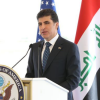
KRG Prime Minister Barzani's statement on the construction of US mission in Erbil:
Mr. Ambassador of the United States to Iraq,
Mr. Consul General
Ladies and Gentlemen,
Good morning. I am pleased to be here, with you, today and take part in the announcement of building a new compound for the U.S. Consulate General in the Kurdistan Region. I applaud such a decision and see it as an important step. I hope that the construction will be completed as planned and on schedule.
The U.S Consulate General in Erbil is considered to be the first consulate to build its own compound in Erbil. This shows the United States’ trust in the promising future of the Kurdistan Region and it is a sign of the United States’ will for strengthening its relations with the Kurdistan Region on the basis of the diplomatic relations that it has with federal Iraq.
Ladies and Gentlemen,
The relations between the United States and the Kurdistan Region are not new, but they have been formed and strengthened over the years. After the uprising of the people of Kurdistan in 1991, the U.S. and other members of the international community had a major role in introducing a safe haven, which resulted in the protection of the people of the Kurdistan Region.
During the overthrow of Baath regime and later in the fight against ISIS and their defeat, the U.S. continued to improve its relationships with the Kurdistan Region by supporting the stability of the region. Today, as we secured stability, the U.S. is starting to build a new home for its Consulate General in Erbil to continue its already strong relations with the Kurdistan Region and we hope that it will continue to develop strategic and long-term ties with the Region.
The people and the government of the Kurdistan Region highly appreciate the political, military and humanitarian supports provided by the U.S. The Kurdistan Region is eager to further develop strong relationships with the U.S., based on mutual interests in politics, economics, trade, science, culture and other fields. Similarly, the Kurdistan Region is trying to continue to build good relations with neighbouring countries, countries in the region and across the world.
The people of the Kurdistan Region and the Kurdistan Regional Government share the same values and principles as the U.S. and the modern world. They, too, believe in the same values and concepts such as freedom, democracy, human rights, diversity, openness, tolerance, youth and women empowerment and the free market. The Peshmergas fought alongside the American and international coalition forces to protect these values.
Ladies and Gentlemen,
I would like to congratulate and commend the representative of the U.S. diplomatic mission in Iraq, who came from Baghdad to join us today, for the construction of a new compound for their Consulate in Erbil. I also would like to take this opportunity to thank the former and current American ambassadors and consuls in Baghdad and Erbil for their efforts to improve the relations between the U.S. and the Kurdistan Region.
I would also like to thank the military, USAID teams and all the organizations and agencies from the U.S. that have worked and served in the Kurdistan Region. I commend them and we look forward to enhance the cooperation and collaboration between the United States of America and the Kurdistan Region.
We would like to see all the neighboring countries, countries in the region and across the world, to follow the United States in building diplomatic compounds in the Kurdistan Region, as we strive to build and improve good relations with them within a federal Iraq.
In the end, I wish to see all nations in the world enjoy peace, stability and prosperity.
Thank you and have a good day.
(Source: KRG)
Posted in Construction & Engineering In Iraq, Iraq Industry & Trade News, Politics Comments Off on US Mission to build New Compound in Erbil
USAID Holds Co-Creation Workshop in Baghdad
Posted on 21 March 2018 .
The United States Agency for International Development (USAID) concluded a two-day workshop in Baghdad with 33 organizations seeking to create and design activities together that will assist in the voluntary return of displaced Iraqis to the Ninewa Plain and western Ninewa, and to encourage those who are already in their communities to remain.
The workshop welcomed two senior advisers who attended on behalf of Vice President Mike Pence, further signaling the Administration’s strong commitment to finding innovative solutions to helping the return of displaced populations in Iraq and across the world.
“All Iraqi people suffered greatly during the cruel occupation by ISIS, and the United States is providing assistance to help displaced families return home, including to the Ninewa Plain and western Ninewa, two areas that exemplify Iraq’s unique cultural heritage and religious tolerance.
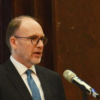
We look forward to reviewing the innovative proposals that come out of this workshop,” stated Ambassador Douglas Silliman (pictured).
With the liberation of ISIS-controlled territory, approximately 3.5 million Iraqis have already returned home, yet another 2.3 million remain internally displaced. Many of those are from smaller, more vulnerable ethnic and religious groups.
Communities in the Ninewa Plain and western Ninewa face unique and complex post-conflict challenges, and the factors that influence individuals to return to their homes and remain there need to be identified, assessed, and addressed.
USAID’s workshop provides an opportunity for organizations to create high-quality, effective, and efficient partnerships for research, development, and testing of innovative, practical, and cost-effective projects.
(Source: US Embassy)
Posted in Iraq Education and Training News Comments Off on USAID Holds Co-Creation Workshop in Baghdad
US contributes $80m for Stabilization in Iraq
Posted on 30 January 2018 .
The United States Agency for International Development (USAID) has contributed an additional US$ 80.85 million to The United Nations Development Programme (UNDP).
US$ 75 million will go to UNDP’s Funding Facility for Stabilization (FFS), with the remaining US$ 5.85 million committed to UNDP’s Funding Facility for Economic Reform (FFER). This brings the total United States contribution to UNDP to US$ 198.65 million since 2015.
UNDP’s FFS finances fast-track initiatives to stabilize areas liberated from the Islamic State of Iraq and the Levant (ISIL) to safeguard against the resurgence of violence and extremism, facilitate returns and lay the groundwork for reconstruction and recovery.
Through the FFER, UNDP helps the Government of Iraq to address key economic challenges and accelerate efforts to diversify the economy, increase national income and improve the management of national assets.
UNDP Resident Representative for Iraq, Ms. Lise Grande, said:
“The progress that is being made is tangible—you can see it everywhere in newly liberated areas. Electricity grids are starting to work, water systems are being repaired, schools are opening, health centres are functioning and people are getting back to work.
"More than half of the nearly six million people who fled their homes during the conflict have returned to their communities and started rebuilding their lives. There’s no question that a huge amount still needs to be done, most importantly in Mosul and the Nineveh Plains, and this is why this very generous contribution is so important for Iraq.”
The United States’ Ambassador to Iraq, Douglas Silliman stressed that the USA’s commitment to the Iraqi people did not end with the eradication of ISIS. “Communities in the liberated areas now face the daunting challenge of rebuilding their lives and restoring their cultural heritage. These funds will help restore basic services like water and electricity so that Iraqi families of all ethnic and religious backgrounds can return to their homes - safely, voluntarily, and with dignity," said Ambassador Silliman.
Established in June 2015, FFS is working in newly liberated areas in Anbar, Salah al-Din, Nineveh and Diyala Governorates in order to safeguard against the emergence of violent extremism, facilitate returns and lay the groundwork for reconstruction and recovery.
Two-thirds of the more than 1,600 projects currently underway are in Nineveh Governorate including 500 in Mosul and 280 throughout the Nineveh Plains. Established in September 2016, FFER is mobilizing expertise to support the implementation of top priority reform initiatives under the leadership of the Office of the Prime Minister.
(Source: UNDP)
Posted in Construction & Engineering In Iraq Comments Off on US contributes $80m for Stabilization in Iraq
US Supports Iraqi National Elections on May 12
Posted on 19 January 2018 .
The U.S. government strongly supports holding the Iraqi national elections in May 2018, in line with the Iraqi constitution.
Postponing the elections would set a dangerous precedent, undermining the constitution and damaging Iraq’s long-term democratic development.
To that end, the United States is providing assistance that will help ensure that all Iraqi voices are heard and counted, including the approximately 2.6 million Iraqis who remain displaced from their homes in the liberated areas.
USAID is assisting in the training of local civil society groups in election monitoring and providing Iraq’s Independent High Electoral Commission (IHEC) with six elections advisors who will help IHEC strengthen its electoral systems, personnel, and processes in the following ways:
- Enfranchise internally displaced Iraqis by focusing on voter registration and ensuring electronic voting systems are effective.
- Improve provincial electoral administrative capacity to support voting in recently liberated areas.
- Help the new IHEC Board of Commissioners finalize a sound operational plan for the May 2018 elections.
Support for Iraq’s democratic institutions is a key part of the United States’ ongoing commitment to a federal, democratic, prosperous, and unified Iraq. By exercising their constitutional right to vote, Iraqis will signal their commitment to governance through peaceful processes rather than through violence.
(Source: US Embassy in Baghdad)
Posted in Politics Comments Off on US Supports Iraqi National Elections on May 12
US Helps Meet the Needs of Minorities in Iraq
Posted on 16 January 2018 .
Continued U.S. Assistance to Better Meet the Needs of Minorities in Iraq
The United States Agency for International Development (USAID) and the United Nations Development Programme (UNDP) have agreed to increase assistance to Iraqis, particularly religious and ethnic minorities, to enable them to return to their homes in areas liberated from ISIS.
Following Vice President Pence's remarks in October of last year, USAID renegotiated the terms of its agreement to contribute to the UNDP Funding Facility for Stabilization (FFS) so that $55 million of a $75 million payment will address the needs of vulnerable religious and ethnic minority communities in Ninewa Province, especially those who have been victims of atrocities by ISIS.
The modified agreement ensures that the U.S. contribution will help the populations of liberated areas in Ninewa Province resume normal lives by restoring services such as water, electricity, sewage, health, and education.
The $75 million contribution is the first tranche of the $150 million announced for the FFS by U.S. Ambassador to Iraq Douglas Silliman in July 2017; fulfillment of the rest of that pledge will depend on UNDP's success in putting in place additional accountability, transparency, and due-diligence measures for the FFS.
USAID is also proceeding with a process called a Broad Agency Announcement to solicit innovative ideas that support the resettlement of ethnic and religious minorities in their ancestral homes in Iraq. The results of that competition will be available by early Spring.
(Source: UN)
Posted in Construction & Engineering In Iraq Comments Off on US Helps Meet the Needs of Minorities in Iraq
USAID helping Vulnerable Communities in Iraq
Posted on 15 December 2017 .
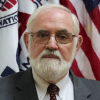
USAID Counselor Thomas H. Staal, a former USAID Iraq Mission Director and now one of the agency’s top officials, returned to Iraq December 5-10 to advance U.S. efforts to help Iraq’s most vulnerable communities following the defeat of ISIS.
While in Baghdad, Staal met with government officials including Dr. Mahdi al-Allaq, Secretary General of the Council of Ministers, to discuss how Iraq can strengthen its support for minority communities.
Staal also met with United Nations representatives who are implementing U.S.-funded stabilization programs in Anbar, Ninewa, and Salah ad Din provinces. He affirmed the U.S. government’s pledge to provide an additional $150 million to this effort.
With this new infusion of funds, the United States will have provided more than $265 million for stabilization projects and a separate $1.7 billion throughout Iraq for humanitarian assistance to Iraqis who were displaced by the ISIS threat beginning in 2014.
On December 6, Staal traveled to Erbil for a closer look at U.S. assistance to internally displaced persons (IDPs) in the Iraqi Kurdistan Region. After an initial meeting with the Ministry of Endowments and Religious Affairs, he sat down with NGO leaders and representatives from the Christian, Yezidi, Sabean-Mandean, Kakai, Baha’i, Zoroastrian, and Jewish communities to hear their concerns and needs post-ISIS.
Posted in Construction & Engineering In Iraq, Security Comments Off on USAID helping Vulnerable Communities in Iraq
Mobile Health Teams reach People in Newly Liberated Areas
Posted on 29 November 2017 .
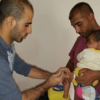
For more than 3 years, the people of Hawiija [Hawijah] district in Kirkuk governorate, were cut off from lifesaving health care and immunization services, leaving many children susceptible to vaccine-preventable diseases. “For years, I worried that my children may contract polio and measles or die,” said Hadija, a 32-year-old mother of 3.
In September 2017, the district became accessible following military operations launched by the Government of Iraq. WHO, together with Kirkuk Directorate of Health, immediately deployed mobile medical teams to provide immunization services, and health care for people suffering from trauma injuries or chronic disease conditions.
Five mobile medical teams were deployed to Khan, Tal Ali, Abbassi, Masanaa, Al Zab and Ryadh areas. Since then, from mid-September to 15 November 2017, more than 10000 people in Hawiija district have benefited from WHO’s support, including 1563 children vaccinated against childhood immunizable diseases.
Although these newly accessible areas are still security compromised, WHO saw an urgency in delivering health care to thousands of people that had been cut off from aid for years, and whose health was being compromised day by day. Five main health facilities have been partially or completely damaged, in addition to Hawija general hospital. Currently, only the Kirkuk Directorate of Health and WHO-supported frontline health teams are delivering immunization services in these areas.
Posted in Healthcare Comments Off on Mobile Health Teams reach People in Newly Liberated Areas
WHO Assistance for Earthquake Patients
Posted on 16 November 2017 .
WHO delivers urgent health assistance for earthquake trauma patients
In response to the recent earthquake in the border region between Islamic Republic of Iran and Iraq, the World Health Organization (WHO)’s office in Iraq has deployed a medical team supported with 3 ambulances, 4 tents and emergency lifesaving supplies to Sulaymaniyah governorate in northern Iraq.
The health supplies, sufficient for 200 surgical operations, have been prepositioned at the Emergency Hospital in Sulaymaniyah governorate.
An interagency assessment mission to Sulaymaniyah governorate reported that 8 people had been killed, more than 500 people injured and 3 health facilities damaged, 2 of which remain nonfunctional as a result of the earthquake.
WHO’s support is in response to a request from the Directorate of Joint Crisis Coordination Centre, Ministry of Interior, Kurdistan Regional Government and the Directorate of Health Sulaymaniyah.
On Sunday, 13 November 2017, an earthquake measuring a magnitude of 7.3 on the Richter scale struck approximately 32 kms from the city of Halabja, Iraq. The earthquake was felt across Iraq, including in the cities of Baghdad, Erbil, Sulaymaniyah, Kirkuk and Basra. Five districts in Sulaymaniyah were struck the hardest.
WHO and health partners continue to closely monitor the situation and will continue to deliver assistance to health facilities receiving patients affected by the earthquake. This emergency response by WHO has been made possible with funds from European Union Humanitarian Aid (ECHO) and the Office of U.S. Foreign Disaster Assistance (USAID/OFDA).
(Source: UNSMIL)
Posted in Healthcare 1 Comment