



Iraq, Libya Outages Could Cut OPEC Output
Posted on 11 August 2013 .
On Friday, the International Energy Agency warned that oil supply from the Organization of the Petroleum Exporting Countries was falling, as it raised its forecast for demand for the exporters group's crude this year.
"Continued supply outages in Iraq and Libya…may reduce the group's output in coming months," the IEA said in its monthly oil market report, adding that while global supply is still sufficient to meet demand, the market may be slow to adapt to the disruption.
The IEA, which represents some of the world's largest oil consumers, pegged demand for OPEC's oil at 29.8 million barrels a day this year, an increase of 200,000 barrels a day from last month's forecast. That is still comfortably below the group's average production in the first half of the year of 30.6 million barrels a day. Demand last year was 30.3 million barrels a day.
Disruptions to production in Libya and Iraq resulted in a fall in OPEC crude output of 170,000 barrels a day in July, compared with June, more than offsetting an increase in Saudi Arabian production to its highest level this year.
According to OPEC's latest monthly oil market report, also published Friday, the group's output fell in July to its lowest level since March.
However, strong supply growth from oil producers outside OPEC, coupled with easing demand from refineries in the coming months, could mitigate the disruptions, the IEA said.
According to the Wall Street Journal, markets could still be disrupted because the production growth is in a different part to the world to the supply disruptions, according to Antoine Halff, editor and head of the oil industry and markets division at the IEA.
"A lot of the disruption in supply is really affecting European and Asian market and supply is coming from the American market," he said. "It's not an immediate one-to-one replacement; if you lose it now in Libya, you can't make it up immediately with a barrel from the U.S."
The production of Libya's main grade of crude oil, called Es Sider, has collapsed after the terminal that exports the oil to global markets was shut by protesters demanding more jobs or unpaid wages, Libyan oil officials told The Wall Street Journal Wednesday.
These protests caused Libya's production to dwindle to just 400,000 barrels a day at the beginning of August compared with an already reduced output of 1 million barrels a day in July, according to the IEA's figures.
Oil supply from Iraq fell below 3 million barrels a day for the first time in five months in July as a result of attacks on a major pipeline, the IEA said. Production in the country is forecast to drop again in September by 500,000 barrels a day as a result of planned infrastructure work at its southern oil export terminals.
Based on July's production figures, that would take Iraq's output down to around 2.5 million barrels a day in September, its lowest level in more than two years.
The work planned for September on Iraq's southern export terminals is necessary to eliminate bottlenecks that already constrain production, said Mr. Halff.
Iraq aims to boost its oil production by 360,000 barrels a day by the end of the year, to reach 3.61 million barrels a day, Abdul Mahdy al-Ameedi, the head of the Iraqi oil ministry's petroleum contracts, told The Wall Street Journal Wednesday.
If they go according to plan, the infrastructure improvements will increase export capacity, said Mr. Halff, although he warned that the work could over run. "Officially they've said it's going to take a month, but expectations are it could be more like 5 or 6 months."
(Source: The Wall Street Journal)
Posted in Iraq Industry & Trade News, Iraq Oil & Gas News 2 Comments

OPEC Output Falls on Libya, Iraq Turmoil
Posted on 31 July 2013 .
By John Lee.
OPEC crude output hit a four-month low in July as unrest and conflict in Libya and Iraq disrupted supplies, a Reuters survey found on Wednesday.
Supply from the organization averaged 30.25 million bpd, down from 30.38 million bpd in June, and the lowest since March 2013 when the group pumped 30.18 million bpd, the survey of shipping data and sources at oil firms, OPEC and consultants found.
The survey further illustrates that internal strife is undermining supplies from African OPEC producers and putting a brake on the plans of Iraq, OPEC's second-largest producer, to expand exports - propping up oil prices.
In July, involuntary curbs by Iraq and Libya have outweighed extra crude from top OPEC exporter, Saudi Arabia, which industry sources say has refined more crude and sent more to domestic power plants to meet demand for air conditioning.
The most notable drop in OPEC output has come from Libya. Protests at oilfields and terminals have cut supply further to around 1.15 million bpd.
Iraq's exports have slipped to 2.25 million bpd in July, according to shipping data. Iraq's Sunni insurgents are targeting its northern pipeline, while technical problems in the south have also weighed on supply.
The world's fastest-growing exporter in 2012, Iraq is at risk of seeing its output decline this year.
(Source: Reuters)
Posted in Iraq Oil & Gas News 1 Comment

Volvo Expects Biggest Growth in Iraq
Posted on 25 July 2013 .
By John Lee.
Volvo Group Trucks is on track to grow by 30 percent in the Gulf region by 2015 on the back of a construction boom in Iraq and a strong economy in Saudi Arabia, according to a report from The National.
Stefan Soenchen, business team director in Iraq, said:
"The key markets are Saudi Arabia and Iraq, [which is] where we expect the biggest growth. The whole infrastructure was destroyed [after the invasion of Iraq], so it is necessary to do huge investment over the next five to ten years to rebuild the whole country. That is then a normal growth from year to year."
The company operates two truck centres in Iraq in partnership with ZamZam General Group and plans to open a third by the end of the year. There will also be a new truck assembly line in Babylon-Iskandariya, which will be one of the first in the country.
(Sources: The National)
Posted in Iraq Transportation News Comments Off on Volvo Expects Biggest Growth in Iraq
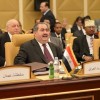
Iraq Rebuilds Ties to Saudi Arabia
Posted on 25 July 2013 .
By Mustafa al-Kadhimi for Al-Monitor. Any opinions expressed are those of the author, and do not necessarily reflect the views of Iraq Business News.
Iraqi-Saudi relations is the most complex issue that Iraq has to deal with. But, at the same time, it is the closest to being resolved if the political entities of both countries prove to be serious about resuming the historical relations that brought their countries together.
While Iraqi-Saudi relations were never at their best — except for short periods of time — the iciness that gripped them never prevented both from appreciating the reciprocal strategic, cultural, human and religious roles that they played in the region and the world.
By completely cutting off Iraqi-Saudi relations in the aftermath of Iraq’s invasion of Kuwait, Saudi Arabia joined the ranks of the front that endeavored throughout the 1990s to curtail the role played by Saddam Hussein’s regime, contain its regional ambitions and eventually lead the political charge that resulted in its downfall in 2003.
Everyone remembers that Saudi Arabian health and political crews rushed to enter Iraq in the early days that followed the toppling of the regime, in a clear indication that the kingdom was ready to open up politically and economically to Iraq.
But this openness never truly materialized as a result of mistakes committed by both sides.
First, Iraqi political leaderships that ruled the country from 2003 onward never really understood the strategic weight that Saudi Arabia possessed. Furthermore, they often behaved and reacted in an emotional and undisciplined manner when confronted with the role played by the kingdom in Iraq and the region. This behavior was construed in the kingdom as an indication of Iraq’s unwillingness to establish deep and strong relations with Riyadh, while rushing headlong to bolster relations with Iran.
Second, in turn, Saudi Arabia did not expend real effort to restore normal relations with Iraq, and did not return in force to the Iraqi arena — nor did it encourage Saudi investors to do so, which the Iraqis interpreted as an attempt by the kingdom to impose a conditional relationship.
In both cases, the subjects of terrorism and sectarian polarization in the region greatly affected the relationship. Iraqis did not differentiate between Saudi terrorist militants fighting in Iraq and the kingdom. Meanwhile, Saudi Arabia construed Iraq’s relationship with Iran as emanating from a Shiite desire to threaten the region’s Sunni Muslims.
All these ambiguities hampered the evolution of the relationship, and increased the coldness with which each country regarded the other.
In this regard, Ali al-Mousawi, spokesman for the Iraqi prime minister, told Al-Monitor on July 18 in Baghdad, "Relations between the two countries were in a holding pattern as each of them considered what their political stance would be."
The truth is that their relationship has undergone numerous developments during the past years, which portend to the possibility of greatly improving. Following the Arab Summit meeting held in Baghdad in 2012, Saudi Arabia decided to appoint a non-resident ambassador to Iraq — a move that was greatly welcomed by the Iraqis.
And, on June 15, in another sign of increasing trust, Iraq signed a prisoner exchange agreement with Saudi Arabia, which was followed by an actual exchange of prisoners between them as a prelude to this file being closed once and for all. Furthermore, Saudi sources confirmed earlier this month that a senior Saudi delegation would visit Baghdad soon to pave the way for the reopening of the embassy in Iraq.
All these indications are important, but, both sides must work toward bolstering their relationship and put an end to the probing and shaken confidence that has lasted for years.
Saudi Arabia must resume its active role in Iraq and open the door toward strategic long-term relations with Baghdad. This will not only serve the interests of both countries, but will effectively contribute in appeasing the sectarian tensions that have been markedly increasing in the Middle East over the past years.
The pivotal role that Iraq and Saudi Arabia can play in restoring balance to the region previously justified the prolonged periods of mistrust that characterized their relationship. It should now justify ending this period and start a new one predicated upon the preservation of their mutual interests.
Mustafa al-Kadhimi is an Iraqi writer specializing in defense of democracy. He has extensive experience in documenting testimony and archiving documentaries associated with repressive practices.
Posted in Construction & Engineering In Iraq Comments Off on Iraq Rebuilds Ties to Saudi Arabia

Iraq Offers India Three Oilfields
Posted on 14 July 2013 .
By John Lee.
Iraq has offered three discovered oilfields to India "on a nomination basis" and agreed to renegotiate a contract pending since 2000, reports Telegraph India.
Oil Minister M Veerappa Moily told reporters that Iraq offered to give state-owned Indian firms the Kifil, West Kifil and Merjan oilfields in the Middle Furat region in central Iraq.
The fields, south of Al-Razaza Lake, have estimated reserves of 600 million barrels of oil.
He said the “fields are discovered and work can start immediately”.
This is the first time in the recent history that Iraq has offered fields on a nomination basis -- previously it had asked Indian firms to participate in competitive bidding.
Also, Iraq has agreed to renegotiate and conclude the contract for Block 8 with ONGC Videsh Ltd (OVL), the overseas arm of Oil and Natural Gas Corporation. The block, located in the western desert in southern Iraq bordering Saudi Arabia and Kuwait, was awarded to OVL in November 2000 by the then Saddam Hussein government. It is estimated to hold 645 million barrels of in-place reserves, of which 54 million are recoverable.
Moily said Iraq also agreed to consider investment in the upcoming 15-million-tonne refinery of Indian Oil Corporation (IOC) at Paradip in Odisha.
The Opec producer further committed itself to meeting the long-term requirement of crude oil of India and was willing to consider favourable commercial terms, including extending the interest free credit period from 30 to 60 days.
Iraq supplied 24.04 million tonnes of crude oil to India in 2012-13.
(Source: Telegraph India)
Posted in Iraq Oil & Gas News 1 Comment
Iraq to Receive Russian Military Helicopters
Posted on 27 June 2013 .
By Ali Abel Sadah for Al-Monitor. Any opinions expressed are those of the author, and do not necessarily reflect the views of Iraq Business News.
On June 18, an Iraqi military source confirmed that the air force command will receive “Alligator” combat helicopters from Russia in the coming period.
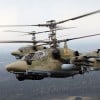
In a statement to Al-Monitor, the source, a senior Iraqi army officer, said that "the aircraft will be of the Ka-52 [pictured] and Mi-28NE models from the French Le Bourget Air Show.”
The source, who spoke on condition of anonymity, explained, “The Iraqi air force command will get a new source of strength with the acquisition of this model of helicopter.”
The source continued, saying, “The new Russian aircraft, especially the Ka-52, are distinguished by their ability to lead a squadron of helicopters and play the role of the command post, which defines and assigns the goals of the squadron’s helicopters.”
The source added that the Ka-52 “does not have less technical and combat characteristics than the US AH-64 Apache helicopters.”
This statement came one day after a Russian news agency published information on the completion of a purchase agreement between the Iraqi Ministry of Defense and the Russian government, dating back to 2011.
Iraqi Prime Minister Nouri al-Maliki had visited Moscow to hold negotiations for an arms deal. Yet, it was immediately halted after suspicions of corruption against officials close to Maliki.
Posted in Security Comments Off on Iraq to Receive Russian Military Helicopters
Iraq's Sunni-Shiite Divide About Governance
Posted on 09 May 2013 .
By Harith al-Qarawee for Al-Monitor. Any opinions expressed are those of the author, and do not necessarily reflect the views of Iraq Business News.
There are two conflicting trends at the core of the sectarian dispute that is intensifying in Iraq.
The first trend is influenced by domestic political considerations pertaining to the failure of the Shiite, Sunni and Kurdish forces to develop a governance and state administration formula that would reduce the sense of marginalization or exclusion by some parties that could lead to the division of the country.
The second trend is influenced by regional dynamics, and is represented by the more sectarian Sunni and Shiite groups. These groups see the current conflict in Iraq as an integral part of the wider conflict taking place in the Levant region divided between a Sunni camp led or supported by Sunni regional powers such as Turkey, Qatar, and Saudi Arabia, and a Shiite camp led by Iran.
As a result, the greater the disagreement and difficulty to reach an internal Iraqi solution, the greater the power of radical groups, and thus the impact of their narrative, which tends to portray the situation as a Sunni-Shiite cosmic struggle that does not recognize existing borders or internal environments.
Al-Qaeda in Iraq (AQI) and Jabhat al-Nusra in Syria are the two main manifestations of the presence of such cross-border ideologies and organizational relations among groups that espouse them. The war being fought by the two groups is not one aimed at "spreading democracy," achieving "social justice" or reaching a political system based on broad participation. This war aims to achieve victory for the sake of the Salafist jihadist version of Islam against its enemies, which in this case are the Shiite-led government in Iraq and the Syrian regime dominated by Alawites (dubbed by Jabhat al-Nusra as "Nusayri" as a kind of insult and disrespect).
Posted in Politics, Security Comments Off on Iraq's Sunni-Shiite Divide About Governance

Video: Turkey "Influencing Protests in Iraq"
Posted on 07 May 2013 .
From Iran’s PressTV. Any opinions expressed are those of the authors, and do not necessarily reflect the views of Iraq Business News.
"The Turkish government probably has some interests among the Sunnis and the surrounding countries like Saudi Arabia, Kuwait, also Turkey, don't like to have a government [in Iraq] which is generally a Shia government."
Press TV has conducted an interview with Dr. Jafar Hadi Hassan, a Middle East expert from London, about ongoing demonstrations in Iraq.
(Source: PressTV)
Posted in Security Comments Off on Video: Turkey "Influencing Protests in Iraq"

Iraq may Invest in Indonesian Oil Refineries
Posted on 05 May 2013 .
The Jakarta Post reports that Indonesia is likely to partner with Iraq to build oil refineries in Indonesia.
The director general for oil and gas at Indonesia's Energy and Mineral Resources Ministry, Edy Hermantoro, is quoted as saying:
"Both deputy energy ministers from the two countries have signed a memorandum of understanding [MoU] for cooperation in upstream and downstream sectors ...
"The door is open for both national oil and gas companies [Pertamina and the Iraq National Oil Company (INOC)] to form a business-to-business partnership."
In March this year, Deputy Energy and Mineral Resources Minister Susilo Siswoutomo joined a delegation led by the Coordinating Economic Minister Hatta Rajasa to visit Baghdad, the Post said.
Edy told the Post that both Susilo and Iraqi deputy oil minister Fayadh Hassan Nima had signed the energy cooperation’s agreements during the March visit.
(Source: Saudi Gazette, Jakarta Post)
Posted in Construction & Engineering In Iraq, Iraq Oil & Gas News Comments Off on Iraq may Invest in Indonesian Oil Refineries
Iraqi Kurdistan Open To Arab Investment
Posted on 24 April 2013 .
By Abdel Hamid Zebari for Al-Monitor. Any opinions expressed are those of the author, and do not necessarily reflect the views of Iraq Business News.
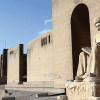
Arab states no longer look at the Kurdistan Region of Iraq with suspicion and apprehension, especially after the regional capital, Erbil, was selected as the Arab Capital of Tourism for 2014. Furthermore, economic and trade relations between these states and the Kurdistan region have evolved.
It appears that developments in economic and trade relations between Arab states and the Kurdistan region of northern Iraq have preceded the development of political ties. Statistics released by Kurdish institutions concerned with investment in the area show that Arab companies — particularly from the United Arab Emirates (UAE) and Lebanon — have invested billions of dollars in oil and construction in the region. This has led many Arab states to open consulates and representative commercial offices in Erbil.
Mufti Kamran Raqeeb, the general manager in the Kurdistan Regional Government's (KRG) investment agency, said:
"The KRG's investment law does not differentiate between national and foreign investors. They both have the same rights. This has led to the emergence of Arab and foreign investment in the region."
According to Raqeeb, the region has immense natural resources, including vast agricultural areas and numerous sources of water. This is in addition to other elements that might attract tourism investment. Raqeeb stressed:
"The region has succeeded in opening up politically and economically to the brotherly neighboring states, the Gulf states, Egypt and Lebanon. This includes many prospects for economic cooperation, given that there are many Arab businessmen who are investing their money in the region."
Raqeeb said that the Arab investments have accounted for 10% of all investments in the region, which amounts to $26 billion dollars. The regional government has worked to adopt an investment policy that focuses on three strategic sectors — industry, agriculture and trade — as priorities for the coming years. Said Raqeeb, "We are hoping to expand investment in the region, particularly Arab and foreign investment."
Posted in Construction & Engineering In Iraq, Investment, Iraq Industry & Trade News 4 Comments