


Japan gives $15m to UN-Habitat Projects in Iraq
Posted on 08 March 2016 .
United Nations Human Settlements Programme (UN-Habitat) has received USD 15 million from the Government of Japan to implement two projects in Iraq: “Gender-sensitive Durable Shelter Support for Internally Displaced Persons in Iraq” and “Promoting Urban Recovery in Newly Liberated Areas in Iraq.”
The conflict with the Islamic State of Iraq and the Levant (ISIL) has had profound humanitarian consequences throughout Iraq. More than three million Iraqis have fled their homes and three million more are living under ISIL control. Some of the major cities in Iraq already have more number of internally displaced persons (IDPs) than their original population, putting communities hosting IDPs under severe pressure.
Inadequate and insecure shelter conditions endanger women and girls, making them increasingly vulnerable to sexual and gender-based violence. Even after liberation of cities once controlled by ISIL, only small portions of IDPs have returned, because cities are devastated with buildings and houses burned, shops looted, roads damaged from bombs and electricity grid destructed, after going through major military operations.
Despite the efforts of the Government of Iraq in providing support to IDPs and returnees, the severe budget crises because of the decline in the oil prices and the cost of the war against ISIL necessitate the mobilization of substantial humanitarian support.
Posted in Construction & Engineering In Iraq, Security Comments Off on Japan gives $15m to UN-Habitat Projects in Iraq
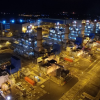
ABB wins $100m Order Supporting Iraq Power Infrastructure
Posted on 04 March 2016 .
Switzerland's ABB has won an order worth around $100 million from Mass Global Holding to deliver a gas-insulated switchgear (GIS) substation that will help integrate 3,000 megawatts (MW) of electricity generated by a combined cycle power plant, utilizing Iraq’s natural gas resources.
The government is rebuilding the country, investing in national housing programs and has ambitious plans for developing its power infrastructure to meet electricity needs. The order was booked in the fourth quarter of 2015.
Claudio Facchin, president of ABB’s Power Grids division, said:
“This advanced GIS substation will help bring much needed electricity by expanding capacity and strengthening Iraq’s power infrastructure ...
“This project adds to our extensive installed base in the region and supports our Next Level strategic thrust on growing markets.”
ABB will be responsible for the design, engineering, supply, installation and commissioning of the transmission and distribution substation excluding civil works.
This will be the largest 400/132 kilovolt (kV) substation in Iraq, equipped with state-of-the-art gas-insulated switchgear. ABB’s GIS technology will enhance operational reliability, efficiency and safety while minimizing substation footprint and maintenance requirements.
ABB will also deliver two 400/132 kV autotransformers to step down the voltage for distribution to, and advanced IEC 61850-compliant open automation, protection and telecommunication systems for local and remote control and monitoring of substation assets.
(Source: ABB)
Posted in Construction & Engineering In Iraq, Iraq Public Works News Comments Off on ABB wins $100m Order Supporting Iraq Power Infrastructure

Is the KRG heading for Bankruptcy?
Posted on 03 February 2016 .
By Amberin Zaman for Al-Monitor. Any opinions expressed are those of the author, and do not necessarily reflect the views of Iraq Business News.
When the Iraqi Kurds come to Washington, it is often to ask for guns to fight the Islamic State (IS). Now they are pleading for cash, warning that their campaign against the jihadis is threatened by an economic “tsunami” that has left their quasi-independent state teetering on the brink of collapse.
“Is this only our fight or yours, too?” asked Fuad Hussein, chief of staff of Iraqi Kurdistan Regional Government (KRG) President Massoud Barzani, after briefing top US officials in Washington last week.
The Iraqi Kurdish peshmerga warriors and the Syrian Kurdish People’s Protection Units are critical allies in the fight against IS, wresting back huge chunks of territories including the town of Sinjar in Iraq and the Tishreen dam in Syria. But Hussein cautioned that IS remains “a big threat” and could “regroup at any time.” Unless the Kurds’ allies step in with financial aid, the Kurds' capacity to fend off the jihadists will wane, he said. “You cannot win the fight when you can’t survive economically,” Hussein told Al-Monitor in an interview.
That message was driven home in back-to-back meetings at the State Department, the White House, the National Security Council and also on Capitol Hill, where the Kurds met with Sens. John McCain and Dianne Feinstein, among others. “We haven’t been going around asking people to pull out their checkbooks,” said Bayan Sami Rahman, the Kurdistan Regional Government’s (KRG) representative in Washington.
“But people don’t appreciate enough that this is an incessant fight,” she said in an interview with Al-Monitor. “Never mind the cost of running a war, our peshmerga don’t even have winter gear. The purpose of our mission here is to help our friends understand that this is not sustainable, that we need nothing less than a Marshall plan,” Rahman added.
Posted in Iraq Oil & Gas News, Politics Comments Off on Is the KRG heading for Bankruptcy?
Essential Services Reestablished in Tikrit
Posted on 02 February 2016 .
Mayor of Tikrit: With the help of UNDP, people have reestablished essential services for our community
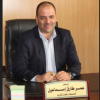
The Mayor of Tikrit, Omar Tariq Ismail, says he is proud of the progress his city has made in the past seven months following liberation from the control of the Islamic State of Iraq and the Levant (ISIL).
“With the help of the United Nations Development Programme (UNDP), the people of Tikrit have reestablished the essential services for our community. With water stations and electrical grids repaired and police stations, healthcare centres and schools rebuilt, people can now restart their lives.”
The Mayor was a major part of the operation to retake Tikrit, and he reentered the city just after ISIL was pushed out.
“Water, electricity and healthcare were the first services that had to be restored. Following that we needed to provide livelihoods for people,” Ismail stated. He credits UNDP’s Cash for Work programme as instrumental. “Through those programmes, we were able to clean up our community, provide income for the youth and keep them occupied with productive activities,” the Mayor commented.
Stabilization support through FFIS has been provided in Tikrit, where 90 percent of families have returned to their homes and are rebuilding their lives. Nearly 65,000 people are now receiving safe drinking water from three rehabilitated water pumping stations and treatment plants; 30,000 people are accessing rehabilitated primary health care centres and using ambulance services; and 43,200 people have better electricity supply and expanded coverage.
New initiatives are underway in liberated areas of Salah al-Din, Diyala, Ninewah and Anbar. All activities are implemented based on the Government’s assessed priorities.
Since its establishment in June 2015, UNDP’s FFIS has been channelling fast-track support to help rehabilitate civic infrastructure, kick-start local economies, boost government capacity and promote community reconciliation in newly liberated areas in Iraq.
(Source: UNDP in Iraq)
Posted in Construction & Engineering In Iraq, Healthcare, Iraq Public Works News, Security Comments Off on Essential Services Reestablished in Tikrit
Explosion Damages Gas Pipeline Near Kirkuk
Posted on 01 February 2016 .
By John Lee.
An explosion on Friday has damaged a section of the pipeline that supplies gas for about half of the electricity generation in Iraqi Kurdistan.
The KRG's Interior Ministry said an investigation was underway to find the cause of the explosion near the district of Shwan.
The pipeline feeds gas from the Khor Mor field to two power plants in the Erbil and Sulaimaniyah provinces.
According to BasNews, there were no casualties reported.
(Sources: BasNews, Shafaaq)
(Sabotage image via Shutterstock)
Posted in Iraq Oil & Gas News, Security Comments Off on Explosion Damages Gas Pipeline Near Kirkuk

What’s next for Anbar?
Posted on 31 January 2016 .
By Omar Sattar, for Al-Monitor. Any opinions expressed are those of the author, and do not necessarily reflect the views of Iraq Business News.
The city of Ramadi was liberated on Dec. 28, and Iraqi security troops accompanied by the Tribal Mobilization Forces, which are affiliated with the Popular Mobilization Units, advanced toward the remaining cities of Anbar province that were overrun by the Islamic State (IS) in May 2015.
Despite this, fears remain that political and tribal conflicts would erupt as a result of the sharp divisions that exist between the various components of the province, leading to some political factions warning about the futility of liberating cities without instituting a plan for the post-military operations phase.
Other pressing problems exist, the solutions to which require reaching political understandings and agreements between tribes and forces with influence on the ground. These issues include the fate of volunteer tribesmen, the reconstruction of the province and the return of refugees.
As proof of these problems, political disagreements have already taken shape. Local Anbar government member Mezher al-Mulla told Al-Monitor, “Some political blocs are trying to fish in troubled waters by demanding the dissolution of the Anbar provincial council [and the holding of elections for a new provincial council] with the aim of attaining posts that they failed to reach through [past] elections.”
Posted in Politics, Security Comments Off on What’s next for Anbar?
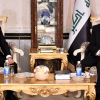
Foreign Minister Receives the Head of JICA
Posted on 29 January 2016 .
Minister of Foreign Affairs Dr Ibrahim Al-jaafari received the head of the Japanese International Cooperation Agency (JICA) Mr Shinichi Kitaoka, at the Ministry Headquarter, in Baghdad.
The two sides discussed horizons of mutual relations and means to promote them in order to meet the aspirations of the two friendly countries.
The minister said that Iraq is looking forward to establish strong strategic relations between institutes of the two countries so as to promote cooperation and benefit the Japanese experiences. The minister called on Japan to support Iraq in fields of environment, oil, energy, education, and health.
His Excellency asserted:" Japan's experience in the reconstruction and development fields, the trust of Iraqi citizens in the Japanese products and the depth of relations between our two countries make us insists on providing further efforts, further work, opening further horizons of mutual cooperation, and reconstructing the liberated areas". The minister referred that Iraq has multiple resources that must be invested for the interest of the Iraqi people.
Dr Al-Jaafari praised the supportive stances of Japan, expressing his gratitude for the Japanese loans and development assistance to promote the infrastructure, electricity, transportation, energy and Umm Qasr Port.
In turn, Mr Kitaoka emphasised that Japan supports Iraq's unity, stability and the reconstruction of Iraq, commending the military triumphs achieved by the Iraqi Armed Forces against the terrorist gangs of Da'esh and the success of the Iraqi diplomacy.
Mr Kitaoka expressed the readiness of his organisation in reconstructing the infrastructure of the liberated areas, he also commended the achieved success in the files of relations and cooperation between the two countries. He pointed out that Japan will host the Group of Seven summit this year, and shall put forward the files of supporting Iraq, countering terrorism, and the displaced persons and shall work together with UN organisations to address all issues which may assist Iraq.
(Source: Ministry of Foreign Affairs)
Posted in Healthcare, Investment, Iraq Education and Training News, Iraq Industry & Trade News, Iraq Oil & Gas News Comments Off on Foreign Minister Receives the Head of JICA
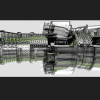
Iraq agrees $328m GE Electricity Deal
Posted on 26 January 2016 .
By John Lee.
Iraq has reportedly agreed a $328.8 million deal with General Electric.
Electricity Ministry spokesman Musab al-Mudaris told Reuters that GE will provide equipment and maintenance for 10 power plants across the country, boosting capacity by 1,000 megawatts (MW).
He added that Baghdad will pay GE in instalments over three years, starting in 2017, because the Ministry's 2016 budget was cut by more than half to 1.185 trillion Iraqi dinars ($1 billion).
GE must finish procurement and servicing for the power plants by the beginning of July; peak electricity demand during the summer is about 21,000 MW, far exceeding the 13,000 MW that the grid is currently providing.
(Source: Reuters)
(Picture: GE 9E gas turbine)
Posted in Construction & Engineering In Iraq, Iraq Public Works News 1 Comment
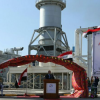
Al-Abadi Opens New Power Station
Posted on 16 January 2016 .
By John Lee.
Prime Minister Dr. Haider Al-Abadi has inaugurated the new 500-MW Najibiyah gas power station in Basra province.
The Prime Minister congratulated the citizens and the people of Basra on this important achievement which will increase the supply of electricity.
Dr. Haider Al-Abadi said electric power is the lifeblood of the country and an important element to drive the economy forward and must be preserved and not wasted and to provide the necessary fuel and petroleum derivatives.
(Source: Office of the Prime Minister)
Posted in Iraq Oil & Gas News, Iraq Public Works News Comments Off on Al-Abadi Opens New Power Station
Shingal City Rapid Damage Assessment
Posted on 13 January 2016 .
As a necessary step after the liberation of Shingal district mid November 2015, the Ministry of Interior of the Kurdistan Regional Government (KRG), Joint Crisis Coordination Centre (JCC) has conducted a rapid damage assessment on the early recovery needs for the town of Shingal.
On the 13th of November 2015, the Peshmerga forces, supported by the International Coalition, launched the Free Shingal Operation and liberated the district. Shingal and 28 villages were retaken after 15 months of ISIS occupation.
ISIS systematically targeted the Yezidi population for their distinct religious identity. Among the most heinous atrocities committed by the group were mass execution of civilians, abduction and enslavement of women and girls, as well as the killing of Yezidi men. Consequently, the Yezidi population has suffered the gravest atrocities committed by the group, have lost all their sources of subsistence and been displaced across the Kurdistan Region.
The town is severely damaged and the infrastructure is either completely destroyed or heavily impaired. It is important to note that the population, particularly the Yezidis, need extensive assistance for safe and dignified return to their homes.
However, the findings presented in the attached assessment present an overview of the level of damages caused by the invasion of ISIS and an estimated cost for immediate recovery for transportation networks, water sanitation, health, education, electricity, housing, and public buildings.
The KRG calls upon and seeks assistance from the members of International Community, organisations, NGOs and individuals to contribute in reviving and restoring services in Shingal.
Please contact the Kurdistan Regional Government Representation office in the United Kingdom to find out more about the immediate needs to help the Yezidis and other minorities live again.
(Source: KRG)
Posted in Construction & Engineering In Iraq, Iraq Public Works News 5 Comments