


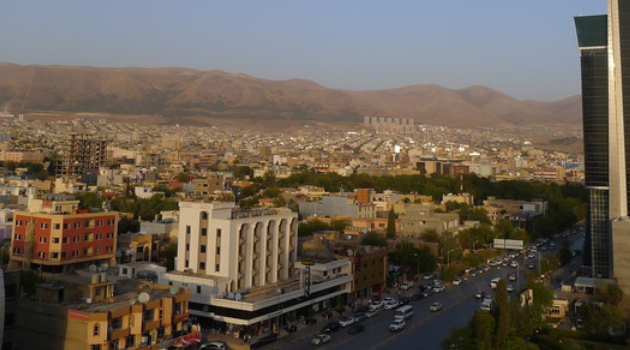
After 2003’s US-led invasion of Iraq, Sulaymaniyah did actually prosper for some time, along with the rest of the semi-autonomous northern region, Salih points out. “But political conflicts over the past few years have halted that growth and conditions are worsening,” he notes.
“If the Ministry of Trade were to conduct research in Sulaymaniyah today they would find that the city doesn’t come near its former economic highs,” Mahmoud Rashid says. “Investment in Sulaymaniyah has almost completely stopped and formerly profitable sectors have stopped being so. In the past investors were funding the power-generation sector, investing some US$3 billion in power plants, but now work in that area has been suspended, thanks to political conflict and economic insecurity.”
Mahmoud Rashid says he knows of at least 11 major investors who have left the city and put their money into businesses in Iran and Turkey instead. “Sulaymaniyah is closing up,” he adds. “Foreign investors are not coming here and local investors are running away.”
There are two options that Sulaymaniyah’s leaders and people have today: Stop protesting and fighting, or keep on with those contrarian ways. Given the nature of the city’s culture though and the pride locals seem to have in their willingness to ask questions and to debate the answers, it’s more than likely that the latter will be their choice – which means it’s also likely the city will continue to pay an economic price for its open but difficult ways.
Comments are closed.