


Work Begins on Yusifiya Thermal Power Plant
Posted on 20 November 2025 .
By John Lee.
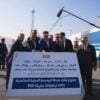
The Iraqi Prime Minister has laid the foundation stone for the 1,400 MW Yusifiya Thermal Power Plant.
The plant, which had been stalled since 1990, is being completed to strengthen the national electricity network and support long-term demand.
It is being built on a build-own-operate (BOO) model, with the involvement of Al-Rida (AlRida) Holding.
(Source: PMO)
Posted in Construction & Engineering In Iraq, Iraq Industry & Trade News Comments Off on Work Begins on Yusifiya Thermal Power Plant

Youth and Innovation Power Iraq's Green Future
Posted on 16 November 2025 .
From United Nations Iraq:
Over sixty young innovators, including many talented young women, gathered at the American University of Iraq - Baghdad (AUIB) for the Green Iraqi Innovators Conference and Competition.
The event was co-organized by the UN Youth Advisory Council (UNYAC) and the Green Club at AUIB, in collaboration with the United Nations in Iraq and coordinated by the Resident Coordinator's Office (RCO).
Representing the UN Resident Coordinator, Ms. Hind Jalal, UNFPA Representative in Iraq, delivered remarks on behalf of Mr. Ghulam M. Isaczai, highlighting the creativity and determination of Iraq's youth - and the importance of giving equal opportunities to young women and men to drive sustainable change.
She noted that the path toward a greener Iraq cannot be separated from the country's broader development challenges. Despite progress, many young Iraqis continue to face barriers to employment, with youth unemployment exceeding 31 percent, and young women particularly affected, at around 40 percent. Addressing these gaps, she said, is essential to unlocking Iraq's full potential.
"Iraq's future lies not only in its rich history and natural resources, but in the boundless creativity and determination of its young people," Ms. Jalal emphasized.
The event featured a panel discussion on "The Future of Green Innovation in Iraq" with experts from the UN, academia, and the private sector, followed by a youth competition where six teams presented practical ideas on renewable energy, sustainable agriculture, waste management, and digital innovation. Judges from FAO, the Iraq Green Building Council, and the Center for Climate Change, Water Security and Environmental Sustainability selected the winning projects.
Three projects stood out for their creativity, scientific depth, and potential impact:
1. Fuel and Lead - by Yaqoob and Arwa
A research-based project assessing the health and environmental impact of lead in fuel through field sampling and community awareness campaigns, calling for stricter fuel regulations and public education to reduce pollution and protect children's health.
2. ABZU Project - by Ameer Saad
An innovative dual-purpose system that generates clean electricity while purifying water, designed to be low-cost, scalable, and environmentally sustainable.
3. Climate Change Consultant Internship (CCCI) - by Qaysar Alwardi
A six-month training programme creating Iraq's first generation of climate consultants through scientific sessions, fieldwork, and partnerships with green companies.
The atmosphere was filled with energy and optimism as participants showcased innovative solutions to some of Iraq's most pressing environmental challenges, ranging from renewable energy and waste recycling to sustainable construction and green technology.
Ms. Hind Jalal commended the enthusiasm and creativity of the young participants, noting how both young women and men are taking ownership of Iraq's green future and finding smart, practical ways to protect the environment. She emphasized that Iraq's youth are not waiting for solutions - they are creating them.
Organized under the theme "Youth for a Sustainable Iraq", the conference provided a platform for participants to share ideas, network with mentors, and explore opportunities to advance climate action and innovation in their communities.
The Green Iraqi Innovators Conference is part of the UN's ongoing efforts, coordinated by the RCO, to promote youth participation, women's empowerment, and sustainable development in Iraq.
Congratulations to all participants and the winning team for their passion and innovative spirit in building a greener, more inclusive Iraq.
Posted in Iraq Education and Training News, Iraq Industry & Trade News Comments Off on Youth and Innovation Power Iraq's Green Future

Dinar RV: What does Sudani's Victory mean for Speculators?
Posted on 14 November 2025 .
By Guest Blogger. Any opinions expressed are those of the author(s), and do not necessarily reflect the views of Iraq Business News.
Dinar RV: What Does Sudani's Victory Mean for Speculators?
Following Tuesday's parliamentary election, Iraqi Prime Minister Mohammed Shia Al-Sudani's Reconstruction and Development coalition emerged as the largest bloc in the new assembly.
Predictably, dinar speculation communities are buzzing with excitement, convinced this political development brings them closer to the mythical revaluation, or "RV", that will make them wealthy overnight.
The reality? Sudani's electoral success changes nothing about the fundamental impossibility of the dinar RV fantasy.
The Latest Chapter in a Familiar Story
Every Iraqi election produces the same cycle in dinar speculation forums: initial euphoria, elaborate theories connecting the election to imminent revaluation, breathless predictions from self-proclaimed "gurus," and eventually, silence as nothing happens. Then the cycle begins anew with the next political milestone.
Al-Sudani's coalition victory is already being woven into RV narratives. Speculators claim his economic policies, his relationships with international institutions, or his commitment to "reconstruction and development" are secret codes signaling revaluation plans. Some are likely citing fabricated "sources" claiming Sudani has privately committed to an RV once his government is formed.
None of this is true.
Why Political Stability Doesn't Equal Currency Miracles
It's worth acknowledging what Sudani's apparent re-election actually might mean for Iraq. Political continuity could potentially provide:
- More consistent economic policymaking
- Continued infrastructure development efforts
- Maintained relationships with international partners
- Progress on anti-corruption initiatives
These are genuinely positive developments for Iraq as a country. Gradual economic improvement could, over many years, lead to modest appreciation of the dinar through normal market mechanisms. But this has nothing to do with the "RV" that speculators imagine.
The RV fantasy involves an overnight revaluation where the dinar suddenly becomes worth hundreds or thousands of times its current value. This would require Iraq to declare that each dinar is now worth $1, $3, or even higher-rates that appear in speculation forums despite being economically absurd.
The Economic Reality Check
Consider what such a revaluation would actually do to Iraq:
- Exports would collapse. Iraqi oil is priced in dollars on global markets. If Iraq artificially inflated the dinar's value, it would receive fewer dinars for each barrel sold, devastating government revenues that fund everything from salaries to services.
- Imports would flood the market. Foreign goods would become artificially cheap, destroying domestic industries and employment while draining foreign currency reserves.
- Economic chaos would ensue. The sudden shift would obliterate business planning, investment, and trade relationships.
No responsible government would deliberately cause this type of economic catastrophe. The Central Bank of Iraq has repeatedly stated it has no such plans, but speculators dismiss these clear statements as "disinformation" meant to hide the imminent RV.
Sudani's Actual Economic Record
Prime Minister Sudani has focused on practical economic initiatives: infrastructure projects, electricity sector improvements, and efforts to diversify Iraq's oil-dependent economy. These are sensible policies for long-term development.
What he has not done, will not do, and cannot do is suddenly declare the dinar worth exponentially more. Central bank independence, and economic fundamentals, mean currency policy isn't determined by prime ministerial decree, and even if it were, the economic devastation would be immediate and severe.
The Promotion Machine Spins Up
In the wake of the election results, dinar dealers and promoters are already capitalizing on renewed interest:
- YouTube channels are releasing videos hailing Sudani's win as a game-changer
- Conference call "intel providers" are sharing elaborate stories about secret meetings and imminent announcements
- Dealer websites are likely seeing increased traffic as hope surges again
- Forum "gurus" are setting new predicted dates, typically just far enough away to maintain suspense
These promoters profit from selling dinars at massive markups, and from ad revenue, donations, and paid subscriptions to their "insider information." They have financial incentives to keep the dream alive, regardless of reality.
The Pattern Never Changes
Look back at previous Iraqi political milestones that supposedly would trigger the RV:
- Formation of previous governments: No RV
- Iraq's exit from Chapter VII UN sanctions in 2013: No RV
- Infrastructure projects and economic initiatives: No RV
- International agreements and partnerships: No RV
Al-Sudani's electoral victory will join this long list of non-triggers. In a few months, when nothing has happened, speculators will pivot to the next milestone: budget approval, a diplomatic visit, an economic conference, or some other event that will supposedly finally bring the RV.
What This Really Means for Dinar Holders
If you're holding Iraqi dinars hoping for an RV, Sudani's re-election means:
- In the short term: Absolutely nothing. The exchange rate will continue to be determined by Iraq's economic fundamentals, oil prices, and central bank policy-not by who wins elections.
- In the long term: Possibly modest, gradual appreciation if Iraq's economy genuinely improves under stable leadership. This would occur over years or decades, not overnight, and would represent normal currency behavior, not the fantasy RV.
- For your investment: You're still holding an illiquid, exotic currency from a developing economy. Political continuity might be mildly positive for Iraq's long-term prospects, but you've already lost money to dealer markups and opportunity costs.
Moving Beyond the Fantasy
Iraqi politics matter for Iraqis who live with the consequences of governance, economic policy, and development decisions. Elections have real importance for real people.
But for foreign speculators, trying to read secret RV signals into election results is a fool's errand. Al-Sudani's coalition victory is a political event, not a financial catalyst for an impossible currency revaluation.
The dinar RV has always been a speculative fantasy that ignores economic reality. No prime minister, no matter how popular or how committed to reconstruction, can or will create the magical wealth transfer that speculators imagine.
The sooner investors recognize this, the sooner they can make financial decisions based on facts rather than false promises perpetuated by those who profit from keeping the dream alive.
For more information on the Iraqi dinar, check out IBN's Dinar Page here: https://www.iraq-businessnews.com/the-dinar-page/?swcfpc=1
See also:
Stability of the Iraqi Dinar Exchange Rate: CBI Paper
Dinar RV: Will Iraqi Election Speed the Process?
Dinars to Dollars: Official List of Approved Banks
Posted in Iraq Banking & Finance News Comments Off on Dinar RV: What does Sudani's Victory mean for Speculators?
Jordan Discusses Renewable Energy Investment Opportunities in Iraq
Posted on 11 November 2025 .
By John Lee.
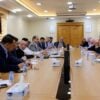
Jordan's Minister of Energy and Mineral Resources, Saleh Al-Kharabsheh, chaired a meeting of the Energy Partnership Council on Sunday to discuss ways to benefit from investment opportunities in Iraq's renewable energy sector, particularly in residential solar power systems.
The meeting followed a proposal by Iraq's Minister of Trade, Dr Athir Al-Ghurairi, made during his meeting with Al-Kharabsheh on the sidelines of the Iraq Investment Forum 2025, held in Baghdad in September. The proposal aims to utilise Jordanian expertise in renewable energy to meet the electricity needs of employees of Iraq's Ministry of Trade, guaranteed by the Ministry and implemented through the General Company for Construction Materials Trading.
Al-Kharabsheh said the initiative could be expanded across Iraq through coordination with other ministries, presenting a key opportunity for the Jordanian private sector to participate in solar energy projects. He noted Iraq's clear progress in increasing the share of renewable energy in its total energy mix and affirmed Jordan's readiness to enhance cooperation and exchange expertise for the benefit of both countries.
Secretary-General of the Ministry, Engineer Amani Al-Azzam, discussed the technical aspects of the initiative with private sector representatives in preparation for developing implementation mechanisms and exploring potential expansion.
Several private companies expressed interest in the initiative, emphasising the importance of partnership and the mutual benefits of expanding such projects.
(Source: Ministry of Energy and Mineral Resources - Jordan)
Posted in Iraq Industry & Trade News Comments Off on Jordan Discusses Renewable Energy Investment Opportunities in Iraq
Al Busttan signs Contract with TotalEnergies for Ratawi Development
Posted on 30 October 2025 .
Al Busttan Company for General Services has signed an Engineering, Procurement, Construction, Lease and Operate (EPCLO) contract with TotalEnergies EP Ratawi Hub (TEPRH) for the design, build and operation of a 200-man Pioneer Camp in the Ratawi Field in Basra.
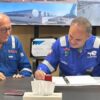
Pictured at the signing ceremony held at Al Busttan's North Rumaila office are Mr Ismael Shakir, Managing Director of Al Busttan and Mr Kamal Al Atassi, Project Director, Associated Gas Upstream Project-2 (AGUP-2), one of the four major projects that TEPRH is delivering in the Ratawi Field as part of the Gas Growth Integrated Project (GGIP) operated by TotalEnergies. The Pioneer Camp wil comprise a range of single and multi-occupancy rooms, dining and recreational facilities (including a fully equipped gymnasium and a sports field), offices for 60 persons and a medical clinic.
Camp occupants will include TEPRH AGUP-2 Project personnel and early works personnel for the planned CPF-2 and Network and Wellpads (NWP) projects. Construction on the multi -million-dollar project will start imminently and is scheduled for completion in February 2026. Al Busttan will then operate the facility for an extended period providing the full suite of life support services including catering and facility management.
The Associated Gas Upstream Project Phase 2 (AGUP2) of the Ratawi oil field's redevelopment will increase production to 210,000 barrels per day (bpd) without routine flaring, starting in 2028.
The GGIP is designed to enhance the development of Iraq's natural resources to improve the country's electricity supply. This 4-in-1 multi-energy project comprises the recovery of gas that is currently flared at three oil fields in southern Iraq to supply electric power plants, the redevelopment of the Ratawi oil field, the construction of a 1 GWac (1.25GWp) solar farm and of a seawater treatment plant.
(Source: Al Busttan)
Posted in Construction & Engineering In Iraq, Iraq Oil & Gas News Comments Off on Al Busttan signs Contract with TotalEnergies for Ratawi Development
Excelerate Energy Signs Floating Gas Platform Deal in Iraq
Posted on 29 October 2025 .
By John Lee.
Prime Minister Mohammed Shia Al-Sudani has confirmed that the Iraqi government has established a defined timeline to achieve its energy project goals, during a meeting with U.S. Deputy Secretary of Energy James Patrick Danly and his accompanying delegation in Baghdad on Tuesday. The meeting was also attended by U.S. Chargé d'Affaires Joshua Harris.
The Prime Minister highlighted the importance of strong and productive cooperation between Iraq and the United States across various sectors, noting that his government has launched numerous energy projects that have brought about significant improvements nationwide.
He stated that Iraq has already achieved self-sufficiency in the production of high-octane gasoline, and is continuing efforts to reach full self-sufficiency in gas production by 2028 through government-led initiatives. Al-Sudani emphasised the importance of collaboration with U.S. energy companies to advance technical expertise, train Iraqi personnel, and apply modern technologies in oil field development and power generation.
Deputy Secretary Danly commended the notable progress achieved in Iraq-U.S. energy cooperation, affirming that the U.S. administration's vision is centred on partnership and investment to enable Iraq to reach energy self-sufficiency and eventually export surplus power.
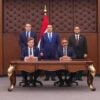
Following the meeting, Prime Minister Al-Sudani presided over the signing ceremony of a contract between the Ministry of Electricity and Excelerate Energy for a floating storage and regasification unit (FSRU) with a capacity of 15 million cubic metres per day. The five-year renewable agreement will supply natural gas to power generation plants, supporting diversification of gas sources to meet national demand. The FSRU is considered a flexible and cost-effective solution compared to fixed infrastructure, enabling faster project execution and reduced implementation costs.
According to a statement from Excelerate Energy:
"The integrated project includes a five-year agreement for regasification services and LNG supply with extension options, and a minimum contracted offtake of 250 million standard cubic feet per day (MMscf/d).
"Under the agreement, Excelerate will construct the floating LNG import terminal, which is designed to accommodate a guaranteed 500 MMscf/d of regasification capacity.
"The Company will deploy Hull 3407, its newest floating storage and regasification unit (FSRU), and will be responsible for delivering the topside equipment and berth modifications to enable FSRU operations at the jetty.
"The total project investment is expected to be approximately $450 million, inclusive of the cost of the FSRU."
(Source: PMO)
Posted in Construction & Engineering In Iraq, Iraq Oil & Gas News Comments Off on Excelerate Energy Signs Floating Gas Platform Deal in Iraq
KRG Expands Electricity Capacity
Posted on 27 October 2025 .
By John Lee.
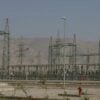
The Ninth Cabinet of the Kurdistan Regional Government (KRG) has announced that it has reinforced electricity infrastructure to achieve a continuous, 24-hour power supply across the region.
The Ninth Cabinet has expanded power generation by 1,840 megawatts through new power stations, and completed more than 3,500 distribution and 61 transmission projects to strengthen the electricity network.
The Garmian, Khurmala, Bazian and Khabat power stations were among the most prominent electricity generation projects implemented during this period. Major accomplishments in electricity generation, transmission and distribution have included:
- 1,840 MW increase in total electricity generation capacity
- 3,503 electricity distribution projects completed
- 61 electricity transmission projects implemented
- 550 MW of thermal power generation capacity added
- 500 MW of clean energy developed
- 500 MW of combined-cycle power capacity established
- 290 MW generated from waste gas
Electricity Generation by Energy Source in the Kurdistan Region:
- Natural gas: 83%
- Hydropower: 1%
- Crude oil: 11%
- Petrol: 5%
In parallel with the construction of new power plants, the government has implemented robust environmental protection policies.
(Source: KRG Department of Media and Information)
Posted in Construction & Engineering In Iraq, Iraq Industry & Trade News Comments Off on KRG Expands Electricity Capacity
GE to Build Iraq's Largest Gas-Fired Power Plant in Basra
Posted on 21 October 2025 .
By John Lee.
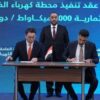
The Ministry of Electricity has announced the signing of a contract for the implementation of the Al-Faw Gas Power Plant project in Basra - the largest investment-based gas-fired station in southern Iraq.
The 3,000-megawatt combined-cycle plant will be built by GE and will include four gas turbines and two steam units. It will also feature advanced seawater desalination technology to meet its operational requirements.
The contract was signed between the General Company for Electricity Production (Southern Region) and the investor, Advanced Technology Systems Company, under a "Take and Pay" model, which ensures payment only upon delivery of generated power. Unlike previous agreements, the investor company will also be responsible for providing the plant's operating gas supply.
Minister of Electricity Ziyad Ali Fadel, who attended the signing ceremony, praised Prime Minister Mohammed Shiaa Al-Sudani's continued support for the energy sector and his commitment to removing obstacles to new power projects.
He explained that Al-Faw was chosen for its strategic location and symbolic importance, especially given its proximity to the Grand Faw Port and the new electrical interconnection with Kuwait via the Wafra-Faw line.
Basra currently operates 15 power plants with a total output of around 7,000 MW, exceeding the province's actual demand of about 5,000 MW, with the surplus exported to neighbouring governorates via newly inaugurated 400 kV transmission lines.
The Minister also highlighted ongoing projects, including the 1,000 MW Shams Al-Basra solar initiative, rehabilitation works at the Hartha Power Plant, and several new investment opportunities to strengthen Iraq's national power grid.
(Source: Ministry of Electricity)
Posted in Iraq Industry & Trade News Comments Off on GE to Build Iraq's Largest Gas-Fired Power Plant in Basra
Khor Mor Gas Expansion Completed Eight Months Early
Posted on 16 October 2025 .
By John Lee.
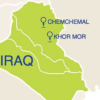
Dana Gas and Crescent Petroleum have announced the start of commercial gas sales from the KM250 gas expansion project at the Khor Mor facility in the Kurdistan Region of Iraq, marking a 50% increase in processing capacity.
Completed eight months ahead of schedule, the KM250 project adds 250 million standard cubic feet per day (MMscf/d) of new capacity, boosting Khor Mor's total output to 750 MMscf/d. The expansion - with a total investment of $1.1 billion - is expected to enhance Iraq's power generation and industrial output while supporting the Kurdistan Regional Government's initiative to deliver 24-hour electricity.
Financed by the Bank of Sharjah, the US Development Finance Corporation (DFC), and proceeds from Pearl Petroleum's $350-million senior secured bond, the project employed more than 10,000 people and required over 6.2 million man-hours of work, making it one of Iraq's largest private energy infrastructure undertakings.
Majid Jafar, CEO of Crescent Petroleum and Board Managing Director of Dana Gas, praised the achievement as a testament to strong cooperation with the KRG and local authorities, while Dana Gas CEO Richard Hall highlighted that assuming operational control allowed the project to be completed ahead of schedule.
The KM250 facility will also produce 7,000 barrels per day of condensate and 460 tonnes per day of LPG, supplementing existing outputs of 15,200 barrels and 1,070 tonnes respectively.
Operated by Pearl Petroleum - a consortium including Dana Gas and Crescent Petroleum (each with 35% equity), alongside OMV, MOL, and RWE (each with 10%) - Khor Mor currently supplies gas to four power plants, meeting over 80% of the Kurdistan Region's power needs and serving more than six million people.
(Source: Dana Gas)
Posted in Iraq Oil & Gas News Comments Off on Khor Mor Gas Expansion Completed Eight Months Early
Work Starts on Iraq's Strategic Third Offshore Pipeline
Posted on 14 October 2025 .
By John Lee.
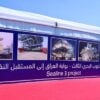
The Ministry of Oil has inaugurated the strategic Third Offshore Pipeline Project ('Sealine 3' Project), one of the most important initiatives aimed at strengthening Iraq's southern crude oil export system.
Deputy Prime Minister for Energy Affairs and Minister of Oil Hayan Abdul Ghani said during the inauguration ceremony in Basra that the project represents a qualitative leap for Iraq's export capacity. The pipeline has a design capacity of 2.4 million barrels per day (bpd) and an operational capacity of around 2 million bpd, providing Iraq with greater flexibility in managing exports.
The project includes a 48-inch offshore pipeline extending about 70 kilometres (61 km offshore and 9 km onshore), two offshore platforms (VS-1 and VS-2) near the Al Basra Oil Terminal (ABOT) and Khor Al-Amaya, a Single Point Mooring (SPM-4) buoy, and a 60-kilometre dual subsea power and communications cable, in addition to systems for control, electricity, communications, and cathodic protection.
Abdul Ghani noted that the project adds 2 million bpd of new export capacity and offers multiple export routes through its three terminals: the Basra Oil Terminal, Khor Al-Amaya, and the SPM-4 buoy.
The contract for project completion was signed on 13 April 2025 between Basra Oil Company (BOC) and a consortium of Turkey's ESTA Construction and Italian company Micoperi, with a planned execution period of 757 days and expected completion by the end of 2027.
He added that the project underscores the Ministry's vision to build an integrated system that secures Iraq's export capacity and enhances its position in global oil markets, expressing appreciation for the efforts of national staff and international partners in achieving this milestone.
Iraq Business News understands that Japan Oil Engineering (JOE) will contribute to the project, which is being funded with assistance from the Japan International Cooperation Agency (JICA).
(Source: Ministry of Oil)
Posted in Iraq Oil & Gas News Comments Off on Work Starts on Iraq's Strategic Third Offshore Pipeline