



When Will the Blackouts End?
Posted on 15 August 2013 .
Iraq's Ministry of Electricity has just promised that shortages will be eliminated by the end of the year. Readers of Iraq Business News will remember a previous commitment, made in strident terms just four months ago, to end blackouts by the end of October.
Ministry spokesperson Musaib Mudaris claims the country now produces around 11,000 megawatts, still short of the country’s total needs, estimated at 13,000 megawatts. From a first glance at these figures, one might expect that most residents and businesses have power most of the time, but the reality on the ground is different.
Al-Monitor's Ali Abdel Sadah, for example, reports that Baghdad residents on average enjoy six hours of electricity a day, while some areas of the city remain completely without electricity. So in addition to some scepticism about the numbers, there appears to be a major problem of distribution.
The good news is that funds are being directed to solving these problems, with the Ministry's budget for this year being increased to $14 billion. And while many contracts have already been issued, this should still create more opportunities for engineering businesses.
Meanwhile, we will continue to watch the real availability of electricity throughout the country, and remind the Ministry of its commitments.
If you are in Iraq, please tell us your experience of electricity supply in the comment section below.
Posted in Blog, Construction & Engineering In Iraq 2 Comments
Govt Allocates $14bn for Electricity
Posted on 15 August 2013 .
By John Lee.
The Ministry of Electricity’s 2013 budget has soared to $14 billion to help it end power outages in the country, reports Azzaman.
But the ministry’s spokesperson Musaib Mudaris said the blackouts will continue until the end of the year, by which time output will reach 13,000 megawatts, enough to meet the country’s domestic needs.
Mudaris said half of this year’s allocations were invested in power plants and enhancement of the national grid.
The ministry’s operating costs amount to $7 billion a year, he added.
Mudaris also revealed that Electricity Ministry’s budget in the years from 2003-2012 had amounted to $37 billion.
Currently, he said, Iraq’s combined power output was in the range of 11,000 megawatts, still short of the country’s total needs, estimated at 13,000 megawatts.
However, many in Iraq doubt whether the ministry will be able to put an end to outages any time soon, given the precarious security situation and the dramatic increases in demand due to improved living standards.
However, Mudaris insisted that the country to be able to produce up to 20,000 megawatts by the end of 2014.
(Source: Azzaman)
Posted in Construction & Engineering In Iraq, Iraq Oil & Gas News, Iraq Public Works News 1 Comment
Iraqi Power Plants Use 60m L/Day Fuel
Posted on 15 August 2013 .
By John Lee.
Iraqi power stations are using nearly 60 million liters of fuel per day, according to a report from Azzaman.
The Oil Ministry issued the statistics in response to complaints by the Ministry of Electricity, which has repeatedly blamed lack of fuel for power shortages.
Last month Iraq signed a multi-billion deal with Iran for the import of Iranian natural gas to feed two power plants in Baghdad and one in Diyala.
Besides major plants linked to the national grid, there are thousands of small generators across the country, which are put to work to once the national grid is off.
Private generators consume more than 8 million liters of gas oil per day, the Ministry added.
The fuel supplied to owners of private generators is subsidized since most households in Iraq either own one or are linked to medium size generators serving several households.
(Source: Azzaman)
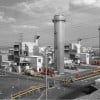
(Picture: Taji Power Station)
Posted in Iraq Oil & Gas News 1 Comment
Iraqi Parties Circle Around Election Bill
Posted on 14 August 2013 .
By Laith Hammoudi of IWPR. Any opinions expressed are those of the author, and do not necessarily reflect the views of Iraq Business News.
Jasim Mohammed is sick and tired of the current political set-up in Iraq, and is not sure whether he will even bother to vote in next year’s parliamentary election.
“I will participate in the 2014 election only if someone I trust is standing,” Mohammed, who heads an NGO in Baghdad, told IWPR. “I don’t feel that the people we voted in represent us.”
Mohammed says that if people like him like him carry on backing the same old parties and politicians, they will be opening the way for them to “plunder the nation’s wealth”.
He is not alone in his disillusionment with the democratic process. Ten years after Saddam Hussein was toppled, elected politicians are unable to stop the daily violence or deliver basic services like electricity and water.
Some believe the electoral system itself is to blame and needs to be amended. This month, the Iraqi parliament, the Council of Representatives, is to hold a vote on a revised electoral law. But some commentators fear the proposed changes could make things worse, not better.
The legislation envisages a return to the controversial system employed for polls in 2005 but dropped for the 2010 election. Called the “closed list”, it is a version of proportional representation where voters simply pick the party they favour, and its leader then decides who will take up the seats it has been allocated nationwide. The alternative, “open list” method would allow voters to go for named candidates and avoid anyone they do not like.
Posted in Politics, Security 2 Comments
Iraq's Dysfunctional Elite
Posted on 14 August 2013 .
By Harith Hasan for Al-Monitor. Any opinions expressed are those of the author, and do not necessarily reflect the views of Iraq Business News.
Last month, demonstrators in the southern Iraqi cities of Nassiriya and Basra organized nightly rallies to protest the government’s failure to provide enough electricity for households during the notoriously hot summer.
With temperatures exceeding 113 degrees Fahrenheit during July and August, most households get less than 12 hours a day of electric power. The Iraqi government spent $28 billion to reform electricity services, which became one of the most critical problems in the country since the second Gulf War in 1991.
The failure to handle this problem is another cause for the increasing disillusionment with the government. Responding to the popular rage, Prime Minister Nouri al-Maliki said in a TV interview that he was manipulated by the minister of electricity and his staff, who provided him with incorrect information about their system's capacity. Although the minister of electricity position has been rotated among five people since 2006, none of them managed to make tangible improvements.
But this did not prevent political parties from competing to obtain this position, a contest driven less by a "commitment" to social welfare and more by the fact the ministry is contract-rich. During a TV interview, Khalaf al-Ileyan, whose party was "awarded" this ministry according to a 2006 power-sharing agreement, said that he was offered a $2 million "down payment" and a monthly $1 million if he accepted a nomination for this position.
This confession might be shocking, but in fact it reflects habitual relations within Iraqi elite. "Buying" a ministry is nothing new in Iraq. The ritual of power-sharing has become all about finding ways to distribute the growing oil revenues among political parties and transforming state institutions into fiefdoms of competing groups.
Initially, the power-sharing formula was presented as a method to create an inclusive system of government that departs from the legacy of exclusionary politics. In practice, power-sharing has become a power apportionment, what Iraqis call: Muhasesa. This is partly because it emphasized ethnic and sectarian categories in determining political weights, which turned institutions into instruments of political conflicts rather than being frameworks to solve them.
Posted in Iraq Industry & Trade News, Politics Comments Off on Iraq's Dysfunctional Elite
Iraq Suffers Power Crisis As Temperatures Soar
Posted on 02 August 2013 .
By Ali Abdel Sadah for Al-Monitor. Any opinions expressed are those of the author, and do not necessarily reflect the views of Iraq Business News.
Iraqi Prime Minister Nouri al-Maliki has admitted to a “defect and stupidity” in the contracts signed by Iraqi officials with international companies to improve his country's power distribution.
On July 23, in a Baghdad meeting with economic affairs experts broadcast by Iraqi satellite channels, Maliki said that he had “formed a committee to investigate the failure of Iraqi officials specialized in electricity.” He charged, “They were giving me wrong numbers. They said that Iraqis are getting 30,000 MW [megawatts] and that this amount exceeds their needs and can be exported abroad.”
On June 20, prominent Shiite leader and Deputy Prime Minister for Energy Affairs Hussein al-Shahristani had asserted, “By the end of this year, power generation in Iraq will be sufficient to meet the citizens’ needs, as pledged by the Ministry of Electricity.” He also claimed, “Electricity distribution hours in Baghdad range from 15 to 16 hours a day.”
Despite promises by officials that residents would receive 18 hours of power a day in 2013, the current reality indicates that they are receiving much less. Indeed, based on the firsthand experience of this Al-Monitor correspondent, Baghdad residents on average enjoy six hours of electricity, at most, while some areas of the city remain completely without electricity.
Iraqis are frustrated and exhausted by the country's power supply problems. Officials have for eight years alleged progress in the electricity sector. Today, Iraqis have no confidence in the validity of such statements and generally ridicule them.
Posted in Iraq Public Works News, Iraqi Communications News 4 Comments

Calik to Supply 1/8 of Iraq's Power
Posted on 01 August 2013 .
By John Lee.
According to a report from World Bulletin, a new 750-megawatt (MW) power plant in Mosul city is planned to be completed and operating by September 2013.
Build and run by Turkey's Calik Energy [Calik Enerji], it will be Iraq's fourth-largest power station; the company's other plant at al-Khairat in Karbala is the country's largest, currently generating 1000 MW electricity with eight turbines, but due to increase to 1,250 when two more turbines start operation after the Ramadan holiday (Eid al-Fitr).
Calik will then be producing a combined total of 2,000 MW from the two plants, representing about one-eighth of Iraq's production.
The Mosul plant employed 110 engineers and 1000 employees, and cost $388.5 million to build.
(Source: World Bulletin)
Posted in Construction & Engineering In Iraq, Iraq Public Works News 2 Comments
Iraq to Import Natural Gas from Iran
Posted on 23 July 2013 .
By John Lee.
A spokesman for the Electricity Ministry, Musab al-Mudaris, confirmed on Tuesday that Iraq has signed a deal with Iran to import natural gas for power generation.
Associated Press reports that under the four-year deal, Iraq buy 850 million cubic feet a day of gas at international market prices, but UPI says no financial details were disclosed.
The gas will feed a power plant in Diyala, and two others in the Baghdad, generating 2,500 MW.
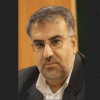
Javad Oji [Owji, Ouji] (pictured), managing director of the National Iranian Gas Co, said:
"Construction of the 140-mile [long] 48-inch [diameter] gas pipeline is nearing completion and its extension in Iraq territory will also come to an end in the next two months."
(Sources: Associated Press, UPI, Dow Jones)
Posted in Iraq Oil & Gas News, Iraq Public Works News 2 Comments
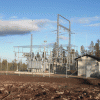
ABB Wins $30 Power Grid Order
Posted on 19 July 2013 .
ABB has won an order worth around $30 million from Zagros Energy to build four new transmission and distribution substations in the Kurdistan region of Iraq, as part of an overall initiative to expand and strengthen the regional power grid. The order was booked in the second quarter.
Demand for reliable power is growing at a rate of 10 to 25 percent per annum, thanks to industrial growth, construction projects and overall economic development. Currently, the Kurdistan power grid supplies around 2,750 megawatts (MW) of electricity with more than 90 percent of the capacity owned and operated by independent power companies.
The increasing demand for electricity means that outages and blackouts are frequent. In the short term, a capacity expansion to approximately 4,000 MW is planned; longer term, the ambition is to reach 10,000 MW, which would open up the possibility of exporting power to neighboring countries.
ABB’s project scope includes the design and supply of the substations and will enable an additional 600 MW of power to the region. The substations are based on GIS technology, which was selected for its compact footprint, since they are to be located in the center of the city.
Two will be connected with 132 kilovolt (kV) underground cables due to the lack of space for overhead lines. Circuit breakers and air-insulated switchgear, control and protection systems, capacitor banks as well as power transformers and other high-voltage equipment, will form part of the key product supplies. The project is scheduled for completion in 2014.
“These substations will go a long way towards helping this developing region meet the increasing demand for electricity,” said Oleg Aleinikov, Head of ABB’s Substations business within the company’s Power Systems division. “They will also strengthen the grid, reduce outages and improve the reliability of power supplies to consumers.”
(Source: ABB)
Posted in Construction & Engineering In Iraq, Iraq Public Works News Comments Off on ABB Wins $30 Power Grid Order
Mass Global Selects GE Turbines for Erbil
Posted on 17 July 2013 .
By John Lee.
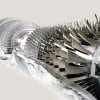
Mass Global Investment Company has selected GE steam turbine technology to increase the efficiency and the output of the Erbil Power Plant in Iraq's Kurdistan region.
In operation since late 2008, the Erbil plant plays a vital role in meeting the growing power needs of Kurdistan, Iraq.
Under the new agreement, GE will supply two steam turbines that will be used to convert the Erbil plant from simple to combined-cycle operation, boosting plant output by 500 megawatts, enough additional electricity to serve 100,000 Iraqi households. The agreement also includes installation services.
Ahmad Ismail, Chairman of Mass Global, said:
"Mass Global continues to be at the forefront of meeting the power requirements of the Kurdistan Iraq region. Converting our Erbil facility to combined-cycle service supports the Kurdistan Regional Government's policy to increase the thermal efficiency of its power generation facilities. This new agreement builds on our growing relationship with GE, a global technology leader, whose proven and reliable advanced energy technology has been employed in our gas power facilities since 2006."
The project will increase thermal efficiency to more than 48%, making Erbil among the most efficient power plants in Iraq. The GE C-7 steam turbines will join eight GE Frame 9E gas turbines already operating at the site and further expands GE's growing relationship with Mass Global.
Posted in Construction & Engineering In Iraq, Iraq Public Works News Comments Off on Mass Global Selects GE Turbines for Erbil